
Angelo Lagusa doesn't blink when the guns go off. He's just a kid watching his father, mother, and little brother get shot to pieces in their own home on his birthday, and that's how the 91 days anime mafia drama and story starts. No slow build, no training montage, just blood on the floor and a boy crawling out the window to spend seven years doing absolutely nothing but waiting and burning. The show isn't about becoming strong enough to win. It's about becoming empty enough to destroy everything including yourself, then standing in the wreckage wondering why you don't feel better.
Seven years later he gets a letter. Names. The men who were there that night. Angelo burns his old identity like trash and becomes Avilio Bruno, a drifter with dead eyes and a plan that doesn't include surviving past day ninety-one. He heads back to Lawless, a town that lives up to its name during Prohibition where the mafia runs the booze and the cops don't bother showing up because they're either paid off or scared. The Vanetti family controls this place with an iron grip that looks like a friendly handshake. Vincent Vanetti ordered the hit on the Lagusas back in 1921. His sons Nero and Frate run different parts of the business now, with Nero being the heir apparent, all charm and nervous energy, the kind of guy who trusts too easily because he still thinks family means something sacred. Avilio knows better. Family is just the word they use before they put bullets in your skull.
How Avilio Dismantles the Vanetti Family from Inside
The revenge plot in 91 Days works because Avilio isn't a fighter. He's a virus wearing a human mask. He doesn't shoot up the Vanetti compound like some action hero in a bad movie. He walks in the front door with a fake smile that never reaches his eyes and starts dismantling the family from the inside by becoming exactly what Nero needs. A friend. A brother. Someone who has his back when the Orco family starts moving in on their territory or when the Galassias start making demands from Chicago. Avilio engineers chaos while looking like the only sane man in the room, and that's what makes him terrifying.
He manipulates alliances with surgical precision, feeds information to enemies like he's tossing bread to pigeons, and watches the Vanettis tear themselves apart because that's how you kill a family properly. You don't gun them down in the street. You make them trust you until they're aiming at each other. When Vanno Clemente dies, it's not because Avilio pulled the trigger. It's because Avilio made sure Vanno was in the wrong place at the wrong time with the wrong information. When Frate turns against Nero, it's because Avilio whispered poison in his ear about loyalty and weakness. The kid is a ghost, moving through the story and leaving bodies behind him like footprints.
Corteo and the Cost of Being Human
Corteo is the wrench in the gears of Avilio's machine. He's Avilio's only real connection to his past, the kid from the old neighborhood who brews the illegal liquor that keeps the mafia running and dreams of getting enough money to get out of Lawless forever. Corteo thinks he's helping Avilio get close to the Vanettis so they can both escape with their lives and maybe open a legitimate business somewhere warm. He doesn't realize Avilio checked out years ago and he's just going through the motions of a plan that ends with everyone dead including himself.
Their friendship is painful to watch because Corteo represents everything Avilio lost. Loyalty without calculation. Love without an angle. A reason to live that isn't written in blood. When Corteo gets dragged into the bloodshed, which was always going to happen because Avilio doesn't care about collateral damage and views everyone as expendable chess pieces, that's when you see how far gone the protagonist really is. He'll sacrifice his only friend to maintain cover. He'll pull the trigger himself if Nero asks him to prove his loyalty, and he does exactly that in one of the most brutal scenes in the series. The show doesn't flinch from showing that revenge turns you into the same kind of monster you're hunting, maybe worse because you chose to become this.
Fango and the Breakdown of Mafia Codes
Then there's Fango. This guy is weird in the best possible way for a story like this. He's the Orco family's enforcer but he's got his own plans and a screw loose that makes him completely unpredictable. While everyone else is playing by old school mafia codes and talking about honor and family respect, Fango is feeding people to alligators, setting himself on fire to make a point, or laughing while he gets beaten half to death. He's the wild card that keeps the plot from being too predictable or too stiff.
When Avilio thinks he has everything calculated down to the minute, Fango does something insane that blows the plan sideways and forces improvisation. The scene where Corteo kills Fango is one of the few moments where the show lets someone other than Avilio have agency in the violence, and it hits hard because Corteo isn't built for this. He's soft. He makes booze and reads books. Watching him bash Fango's head in with a wrench is the moment you realize nobody gets out clean in this world, not even the innocent bystanders. Fango's death marks the point where the story stops being about strategic revenge and starts being about survival in a burning house.
The Three Families and Prohibition Politics
The politics between the three families, Vanetti, Orco, and Galassia, form the backbone of the conflict that Avilio exploits. Vincent Vanetti is old school, dying of something unspecified in his lungs, trying to secure his legacy through an arranged marriage between his daughter Fio and Ronaldo Galassia. That's how these things work in the real mafia world the show is copying. You don't fight the bigger family from Chicago. You marry into them and hope they don't swallow you whole. But Nero doesn't like being told what to do and Frate is weak, looking for any advantage to push his brother out of the succession, which makes him perfect for Avilio's manipulations.
Avilio plays them against each other with cold precision. He doesn't need to fire many shots himself. He just whispers in the right ears and lets the paranoia do the rest. When the Galassias get involved, the stakes jump from local turf wars to something that could get everyone killed in a basement. The show gets the power dynamics right. The Vanettis think they're big fish until the Chicago outfit shows up and reminds them they're just middle management in a larger machine.
The Ending That Broke Everyone's Brains
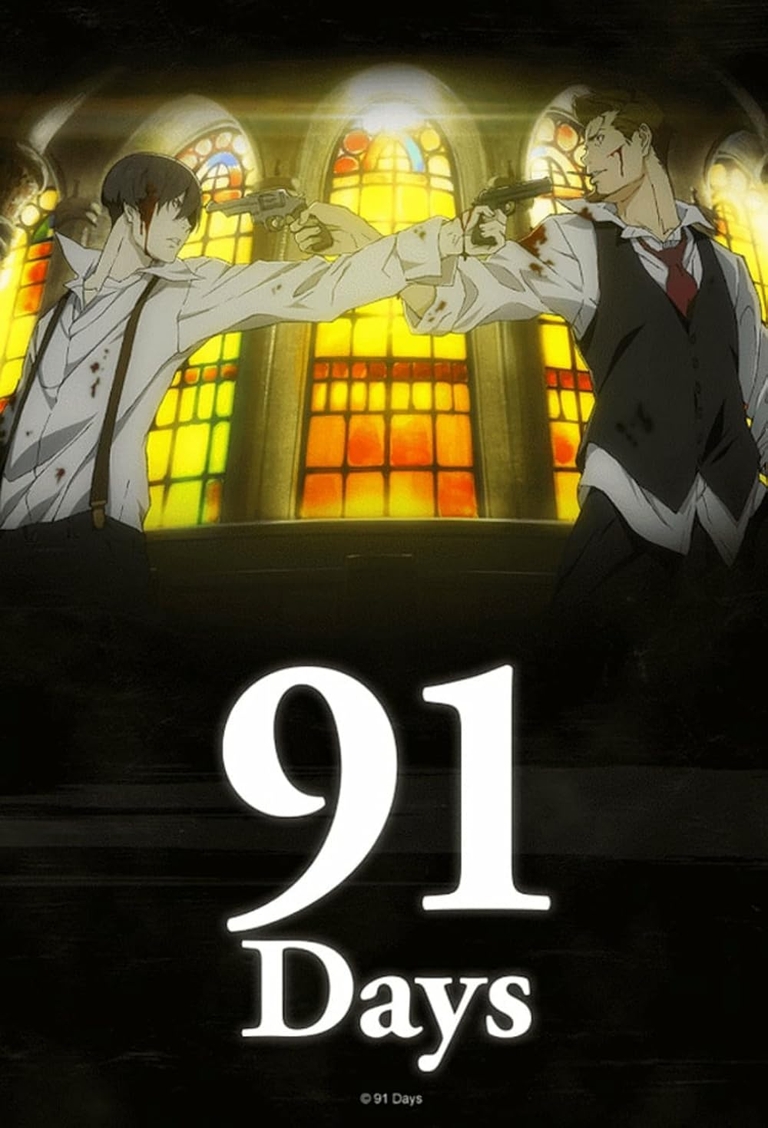
The ending of 91 Days breaks people's brains because it refuses to give them what they want. After twelve episodes of setup, after Avilio has killed or caused the death of everyone who was in that room seven years ago except Nero, they end up on a beach together in the final minutes. Nero knows everything by now. He knows Avilio is Angelo. He knows Avilio killed his father Vincent, his brother Frate, destroyed his family and his legacy. He shoots Avilio, or maybe he doesn't, the screen cuts away and we see Avilio lying there bleeding out or maybe just resting while Nero drives away in his car.
Some people hate this ambiguity. They wanted a clear resolution where Nero pulls the trigger and walks away with tears in his eyes or they both die in a blaze of glory on the sand. Instead we get a quiet moment where Avilio's revenge is technically complete but feels completely hollow. He has nothing left. No family. No Corteo. No purpose. Just a hole where his heart used to be. Nero drives away with a look on his face like he's seen a ghost, which he has. The cycle of violence hasn't solved anything. It's just made two more dead men walking, one literally and one spiritually.
The empty gun theory floats around forums where people argue whether Nero fired blanks or missed on purpose or if Avilio was already dying from previous wounds. I don't think it matters. The point is that revenge didn't set Avilio free. It just gave him a different kind of prison cell. When he tells Nero he didn't kill him because he "just didn't want to," that's not redemption. That's exhaustion. He's been carrying this weight for seven years and once the other names are crossed off his list, he doesn't have the energy to finish the job. Or maybe he realizes killing Nero, the one person who actually showed him kindness and friendship during those ninety-one days, would make him worse than the men who murdered his family.
Visual Style and That Muted Color Palette
The look of the show matches the content perfectly. Muted browns and grays and dirty greens. The animation isn't flashy or pristine. Sometimes it gets stiff, especially in the middle episodes where the budget shows cracks and characters go off-model for a few seconds. But the backgrounds capture that 1930s American Midwest vibe even though everyone is speaking Japanese. The cars look right. The suits look right. The Thompson submachine guns don't sound like sci-fi laser beams. They're loud and ugly and heavy.
The soundtrack uses a lot of guitar and piano that feels period-appropriate without being distracting. The opening song Signal by TK has these whispered vocals that sound like someone trying not to scream, which fits Avilio's internal state perfectly. The ending theme Rain or Shine is softer, more resigned, like someone giving up. The direction uses shadows well, hiding Avilio's face in darkness when he's plotting, letting the light hit Nero's face when he's being genuine so the contrast hurts more when the betrayal comes.
Why This Revenge Story Actually Works
What makes 91 Days stand out from other revenge stories in anime is that it doesn't pretend killing the bad guys fixes anything. Avilio doesn't get his life back at the end. He doesn't smile. He doesn't find peace. He just stops moving. The show argues that revenge is a disease you catch from the people who hurt you, and the only cure is dying. When Avilio says his revenge was "all for nothing" in the final episode, he means it literally. He traded his soul for a pile of corpses and now he has to figure out how to live with that, or whether to live at all.
People argue about whether the pacing works for a twelve episode series. The first three episodes hook you hard with the family massacre and the infiltration. Then there's a stretch in the middle where it feels like the story is spinning its wheels, setting up dominoes that won't fall until the final episodes. Episode 4 with the assassin Goliath is the weakest link, a one-off bounty hunter plot that doesn't add much except to show Avilio can pick pockets and Nero can juggle. But the payoff in the last four episodes is brutal enough to make up for the slow middle. The theater shootout. The forced killing of Corteo. The reveal of the fourth man who was there that night. It all comes together in a way that feels inevitable rather than clever, which is exactly how a tragedy should feel.
The Godfather Comparison Everyone Makes
Yeah, it's got DNA from The Godfather and Goodfellas and every other mafia movie you've ever seen. The show knows it and leans into it hard. There are shots that mirror Coppola's work, scenes of men talking in dimly lit rooms while women are pushed to the background, the whole thing about family being everything even while they're destroying each other. But 91 Days is smaller, more personal, and way more cynical. It doesn't have the operatic scope of the Corleone saga. It's just about one boy who couldn't let go of a grudge and the family he burned down to feel warm for a minute.
Some folks call it Godfather The Anime and that's fair enough, but it's missing the romanticism. The Vanettis aren't tragic kings. They're small time bootleggers who got too big for their boots and forgot that the guy smiling at you across the dinner table might be measuring you for a coffin. The show strips away the glamour and leaves you with the rot underneath.
Final Thoughts on the 91 Days Structure
91 Days anime mafia drama and story delivers exactly what it promises on the tin. A gritty, depressing look at organized crime where the heroes are just villains who haven't been caught yet and the villains are just survivors who got tired of running. It doesn't romanticize the Prohibition era or the mafia lifestyle. Everyone is scared. Everyone is dirty. The booze flows but nobody is having fun drinking it. The women are bargaining chips. The men are calculating how many bullets they have left. If you're looking for a show where the good guy wins and gets the girl and rides off into the sunset, go watch something else. This is about a boy who became a ghost to kill other ghosts, and ended up haunting himself for ninety-one days until he didn't have anywhere left to stand.
The ambiguous ending isn't lazy writing. It's the only honest conclusion to a story like this. Revenge isn't a path to healing. It's a treadmill that speeds up until you fall off or break down. Avilio ran for ninety-one days and then he stopped. Whether he died on that beach or lived to be an old man with empty eyes doesn't matter because the Avilio who wanted revenge died the moment he realized it wouldn't bring his family back. That's the real tragedy. Not the blood. Not the bullets. The fact that he had seven years to build a life and instead he built a coffin.