
Akudama Drive's cyberpunk heist plot looks like generic Suicide Squad bait at first glance. Seven criminals with bomb collars forced to rob a bullet train sounds like edgy nonsense cooked up by committee. But here's the thing, it isn't. The show takes that setup and weaponizes it against the entire cyberpunk genre, turning what looks like a flashy action romp into one of the angriest critiques of police states I've seen in anime.
The series comes from Too Kyo Games, that's the studio founded by Kazutaka Kodaka who wrote Danganronpa, and Pierrot handled the animation. You can tell Kodaka touched this because everyone looks like they stepped out of a killing game but with neon lighting. They pitched it as a cyberpunk Tarantino story and yeah, you get Reservoir Dogs vibes immediately. But where Tarantino plays with cool criminals, Akudama Drive wants you to know that calling someone a criminal is just something the state does before it kills them.
The Setup Is a Trap
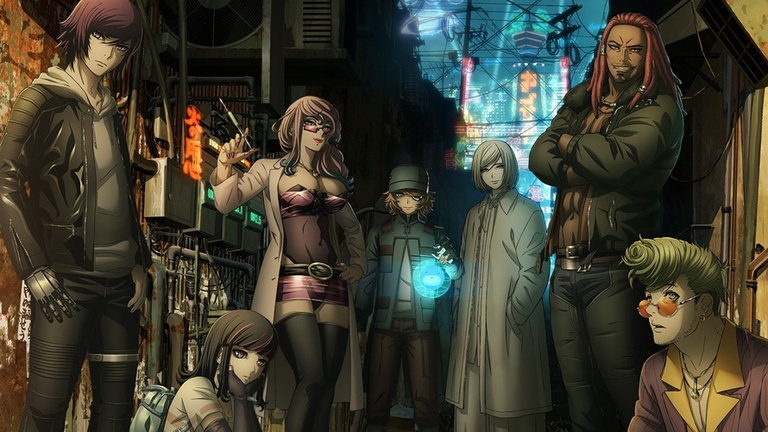
Kansai is a mess. Decades ago Kanto dropped a nuke on them and now Kansai exists as a vassal state, which is just a fancy word for colony. The city looks like Osaka got blended with Blade Runner, all neon signs and smog, but the technology is only there to keep people controlled. The police aren't just cops, they're Executioners with lightsaber weapons who can kill anyone they label as an Akudama on sight.
And that's the twist. "Akudama" doesn't mean murderer or thief. It means anyone who doesn't fit Kanto's vision for Kansai. You could be a petty swindler or a mass murderer, the state puts you in the same box. I saw some data that explained how the term is basically a catch-all for nonconformity, which makes the whole heist setup way more disturbing than it first appears. The government uses the label to dehumanize people before executing them publicly for entertainment.
The plot kicks off when a mysterious client, who turns out to be a robotic black cat, recruits seven high-level Akudama. The job seems simple. Break into Kansai Police Headquarters to rescue Cutthroat, a mass murderer facing public execution. Then steal a specific package from the Shinkansen, that super-secure train that connects Kansai to Kanto. The pay is one billion yen. The catch is bomb collars that will explode if they don't cooperate or if they try to remove them.
Seven Criminals Who Arent Heroes
The character dynamics are what keep this from being a boring action flick. You've got Courier, the silent delivery guy with a high-tech motorcycle that shoots lasers and swings him between buildings like Spider-Man. He's got this metal hand and zero patience for anyone's nonsense. Then there's Brawler, this huge idiot who just wants to fight strong people, and Hoodlum, a small-time yakuza wannabe who attaches himself to Brawler like a remora.
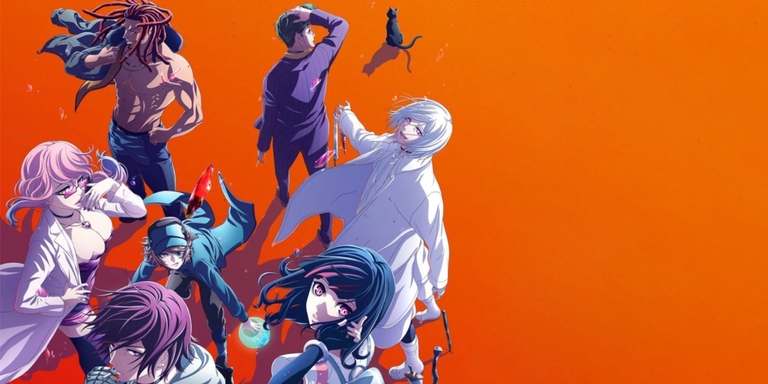
Hacker is the one-eyed tech kid who treats the whole thing like a video game. Doctor is the pink-haired surgeon who can reattach her own head and has this weird blood fetish. Cutthroat is the chaotic murderer with a childlike personality and an obsession with the color red that gets real dangerous real fast. And then there's Swindler, who isn't actually an Akudama at all.
Swindler is just some girl who tried to return change to Courier at a takoyaki stand and got arrested because the stand was cash-only. She accidentally gets swept up in the police station break-in and has to pretend she's a criminal mastermind called Swindler to avoid getting shot. Her whole arc is about how the system forces innocence to become criminality just to survive.
The Heist Mechanics Actually Make Sense
The first three episodes are pure heist movie structure and it's tight. The team has to hit the Shinkansen during its one stop at Kansai Station where it loads cargo for twenty minutes. The problem is the train has plasma shields that vaporize unauthorized cargo and the platform requires two people hitting switches on different floors simultaneously. Plus Courier can't get near the tracks because of electromagnetic barriers.
According to one breakdown, the show spends time establishing how each character's specific skill solves specific problems. Cutthroat throws knives to disable energy shields. Brawler smashes the shield generators with his bare hands. Hacker hacks the surveillance systems while Swindler uses one of his drones to trigger the final switch because Cutthroat runs out of knives. It's messy and chaotic but everyone has a job.
The operation goes sideways when Executioners show up. These aren't beat cops, they're elite killers with energy blades who treat murder like a religious duty. The fight choreography here is insane, especially when Courier uses his bike to blast through a police tank or when Brawler goes hand-to-hand with the Executioner Pupil. The animation by Studio Pierrot is fluid in a way you don't usually see from them since they're mostly known for long-running shonen.
The Real Enemy Isnt Corporate
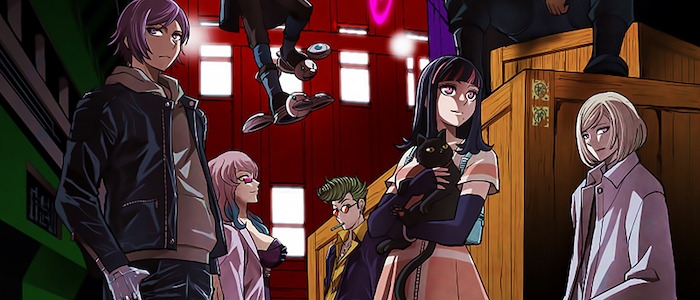
Here's where the cyberpunk heist plot morphs into something else entirely. Classic cyberpunk is all about evil corporations owning everything. Akudama Drive says that's outdated. The real threat is the police state and the militarized justice system. The Executioners don't work for a company, they work for the government, and they have absolute power to kill without trial.
This analysis gets into how the show critiques modern police violence. The Executioners manipulate public fear through propaganda featuring these creepy mascots Bunny and Shark. They get the citizens to demand more executions, which lets them label anyone an Akudama. It's a cycle where the police create the criminals they need to justify their existence.
The heist falls apart around episode six or seven because the team discovers what's actually on the train. It's not money or weapons. It's Brother and Sister, two kids who are experiments from Kanto. Kanto isn't a utopia, it's a floating mass of debris where people uploaded their consciousness to a server to escape the nuclear wasteland. The kids are the key to accessing it. This revelation shifts the story from a robbery into a protection mission where Swindler has to keep these kids away from a system that wants to erase them.
Why It Looks Like Danganronpa
You can't talk about this show without mentioning the visual DNA. Kazutaka Kodaka didn't write the scripts, he just did the original concept, but Rui Komatsuzaki did the character designs and Cindy H. Yamauchi adapted them. That's why everyone has those distinct proportions and crazy fashion sense. The color coding is intense, especially Cutthroat's red obsession which literally dictates his actions.
The influences are everywhere if you know where to look. Every episode title references a movie. Episode one is "Se7en," episode two is "Reservoir Dogs," later you get "The Shining" and "Mission Impossible." The Reddit threads pointed out how the creators cited Blade Runner and Tarantino as primary inspirations, and you can see it in the cinematography and the way characters talk in pop culture references.
But the Danganronpa connection is deeper than just looks. It's about how the show treats hope and despair. The Akudama are terrible people by most metrics. They've killed, stolen, and destroyed. But compared to the systematic cruelty of the Executioners and the Kanto government, they're the virtuous ones. The show argues that breaking the law is sometimes the only moral choice when the law itself is corrupt.
The Ending Doesnt Pull Punches
People die in this show. The opening sequence changes each week to show which characters are still alive, and by the end it's mostly empty space. Hacker leaves the group midway through to journey to Kanto on his own, chasing the digital ghost of his childhood. He finds the truth about the server world and sacrifices himself to give the others a chance to escape.
Courier's final ride is something else. He takes a bullet to protect Swindler and the kids, then uses his last energy to get them to Shikoku, which is apparently the only place not controlled by Kanto. Swindler dies too, but not before she fully embraces being an Akudama not because she's a criminal, but because she chose to protect the innocent from state violence. Her death is broadcast live, and the people of Kansai finally see the Executioners for what they are.
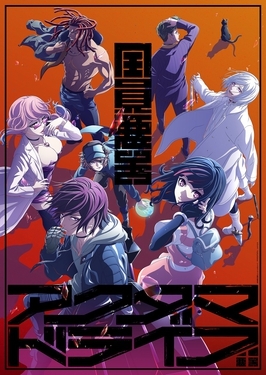
Akudama Drive hates cops in a way that most anime won't commit to. It gets police states right by showing how the system manufactures consent through fear. The heist plot was never about the money. It was about exposing the machinery of control.
The series is only twelve episodes and it's completely self-contained. No manga to read, no light novels, no sequel bait. That's rare for an original anime. The story starts as a simple robbery and ends as a tragedy about sacrifice and systemic violence. If you want cyberpunk that remembers the "punk" part is about fighting authority, not just wearing leather jackets in the rain, this is the one to watch.