
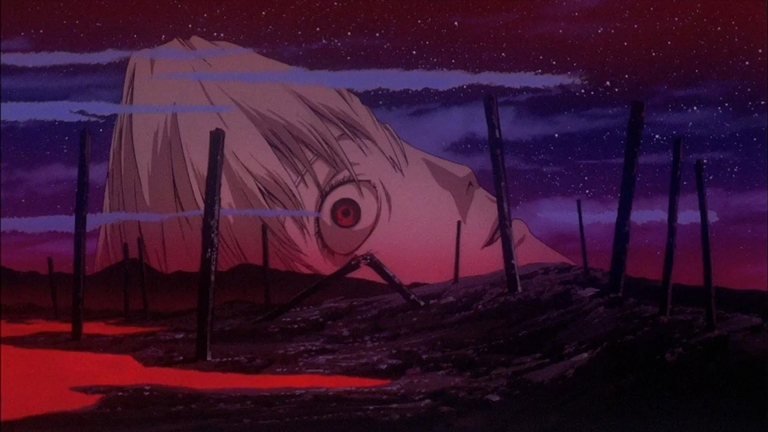
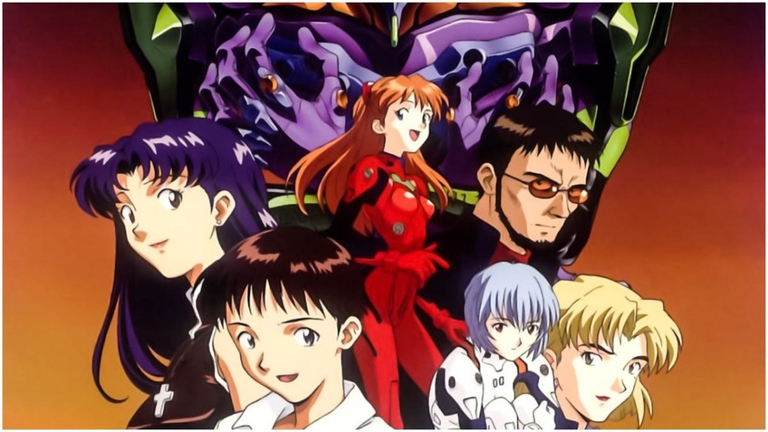
Anime like Neon Genesis Evangelion are tough to recommend because Eva isn't just a mecha show with depression, it's a specific cocktail of religious symbolism, teenage paralysis, and Gainax animation that shouldn't work but does. If you're hunting for anime to watch if you like Neon Genesis Evangelion, you need to know what specific itch you're trying to scratch. Some shows copy the surface level, giant robots piloted by damaged kids, while others nail the psychological rot underneath. Most fail at both.
The good news is that several shows capture specific pieces of Eva's DNA. Some share the director, Hideaki Anno, and his particular brand of emotional masochism. Others nail the apocalyptic dread or the way trauma warps a protagonist's view of the world. You won't find a perfect replacement because Eva is a product of its director's specific breakdown and the economic collapse of 90s Japan, but you can find shows that hit similar nerves without feeling like cheap photocopies.

The Direct Bloodline
If you want anime like Neon Genesis Evangelion that share DNA with the source, you start with Gunbuster. This is Anno's directorial debut from 1988, and it's basically Eva's rough draft crammed into six episodes. You've got Noriko, a teenage girl who doesn't want to pilot a giant robot but has to anyway, fighting aliens while dealing with time dilation that turns every battle into a nightmare of isolation. The physics are harder sci-fi than Eva, but the emotional beats, the self-doubt, the crushing weight of responsibility, they're all there. It ends with a finale that predates End of Evangelion's cosmic mind-screw by a decade, and you can see exactly where Anno practiced the visual language he'd later use to break Shinji Ikari.
Then there's FLCL, which is what happens when the same studio takes the same themes and decides to have fun with them instead of wallowing. It's six episodes of pure chaos where robots pop out of a kid's head as a metaphor for puberty, and while it's way more energetic and comedic than Eva, it shares that core idea of adolescence as a violent, confusing transformation. The animation is wild, the soundtrack by The Pillows is perfect, and it captures that specific late-90s Gainax energy where everything feels like it's about to fly apart.
RahXephon and the Clone Wars
I have to talk about RahXephon because any list of anime to watch if you like Neon Genesis Evangelion has to address the elephant in the room. Yes, it's basically Eva with the serial numbers filed off. You've got Ayato instead of Shinji, the RahXephon instead of an Eva, the Mulians instead of Angels, and a mystery organization called TERRA instead of NERV. The plot beats are eerily similar, right down to the time dilation and the apocalyptic stakes.
But here's the thing, RahXephon isn't bad. It's actually solid. It trades Eva's Judeo-Christian symbolism for Sumerian mythology, and instead of ending with a complete psychological collapse, it gives you a romance with time travel elements that actually makes sense. The characters are less damaged, which means it's less emotionally punishing, but the mecha designs are clay-based and weird in a good way. If you want the mechanical experience of Eva, teenagers in robots fighting incomprehensible enemies while the adults scheme in the background, RahXephon delivers. It just doesn't have that specific Anno-brand self-loathing that makes Eva unique. RahXephon details line up closely with Eva's structure if you're looking for that specific fix.
When Mecha Becomes a Death Sentence
If what you loved about Eva was the way it treated piloting as a traumatic burden rather than a power fantasy, you need to watch Bokurano. This show takes fifteen kids and tells them they have to pilot a giant robot to save the world, which sounds standard until you learn that each battle kills the pilot. Permanently. No resets, no respawns, just death after death.
Bokurano is relentless. It doesn't have Eva's budget or visual flair, but it doubles down on the psychological horror of child soldiers. Each episode focuses on a different kid's backstory before they die, and it explores how the knowledge of impending death warps their relationships and decisions. It's grim in a way that makes Eva look almost hopeful by comparison, and it completely destroys the heroic mecha pilot trope. Bokurano's approach to character psychology through the lens of forced obligation mirrors Eva's darkest moments.
Then there's Darling in the FranXX, which tries so hard to be Eva and fails so spectacularly. It's got the teenage pilots, the biomechanical mechs, the post-apocalyptic setting, and the mysterious adults with hidden agendas. But it trades Eva's psychological complexity for fanservice and a love story that collapses in the second half. Watch it if you want to see what happens when a studio copies Eva's homework without understanding the assignment.
Deconstructing the Genre Completely
Puella Magi Madoka Magica is what happens when you apply Eva's deconstructive lens to magical girls instead of mecha. It starts looking like a cute show about middle school girls fighting witches with magic, then pulls the rug out to reveal a system of cosmic horror, sacrifice, and inevitable despair. The protagonist Madoka faces choices about power and responsibility that feel ripped straight from Shinji's playbook, and Homura's time-loop trauma is pure psychological damage.
What makes it work is that, like Eva, it asks why a system would use children as weapons and what that does to their psyche. The witch designs are surreal and disturbing, the animation gets experimental when things go wrong, and the third movie, Rebellion, dives into the same kind of reality-warping metaphysics that made End of Evangelion confusing and beautiful. It's short, only twelve episodes, but it hits with the same force.
Revolutionary Girl Utena is another one that looks nothing like Eva on the surface but shares its DNA. It's about a girl who wants to become a prince, fighting duels in a surreal academy to possess the Rose Bride. Underneath that weird premise is a brutal examination of gender roles, abuse cycles, and the stories we tell ourselves to survive trauma. Kunihiko Ikuhara, who worked on Sailor Moon, directs with a theatrical style full of repeated visual motifs and symbolic imagery that rivals Eva's religious iconography. It's slow, strange, and ends with one of the most ambitious psychological finales in anime.
The Psychological Labyrinth
For the pure existential dread and reality-bending confusion that Eva traffics in, Serial Experiments Lain is mandatory. It's a thirteen-episode cyberpunk nightmare about a girl who gets sucked into the Wired, which is basically the internet but also maybe God, and the show spends its runtime asking whether she exists at all. It's slower than Eva, with almost no action, but the atmosphere is thick with paranoia and technological anxiety.
Lain questions identity, memory, and consciousness in ways that echo Eva's Instrumentality project. The animation is stark and unsettling, the soundtrack is industrial and creepy, and it ends with a dissolution of self that's as confusing and beautiful as anything in Eva's TV finale. If you liked the parts of Eva where reality stopped making sense and characters dissolved into primordial soup, Lain is your next stop.
Ergo Proxy offers a different flavor of existential anime. It's set in a domed city after an ecological disaster, where androids called AutoReivs are gaining self-awareness due to a virus, and the government is hiding experiments on immortal beings called Proxies. The protagonist, Re-l Mayer, investigates murders that unravel the nature of her reality, and the show spends twenty-three episodes weaving through philosophy, noir aesthetics, and post-apocalyptic survival.
It's slower and talkier than Eva, but it shares that focus on what makes someone human when the world is artificial. The ending gets abstract in a way that will feel familiar to Eva fans, and the overall tone of oppressive mystery matches NERV's headquarters perfectly.
Texhnolyze is the darkest recommendation on this list. Set in the decaying underground city of Lux, it follows a mute fighter who gets cybernetic limbs and becomes embroiled in a three-way war between gangs, cultists, and surface dwellers. It's bleak in a way that makes Eva look colorful, with long stretches of silence and decay. But if you want existential dread, body horror, and the sense that humanity is evolving into something unrecognizable and terrible, this is it. The ending is nihilistic and perfect.
Paranoia Agent, directed by the late Satoshi Kon, takes Eva's interest in psychological trauma and applies it to modern Japanese society. It's about a mysterious kid with a golden bat who attacks people at random, but really it's about how stress, escapism, and collective delusion break reality. The structure is unorthodox, the animation is surreal, and it captures that same sense of societal collapse that Eva hints at with its adult characters who are all broken in different ways.
Apocalyptic Visions and Body Horror
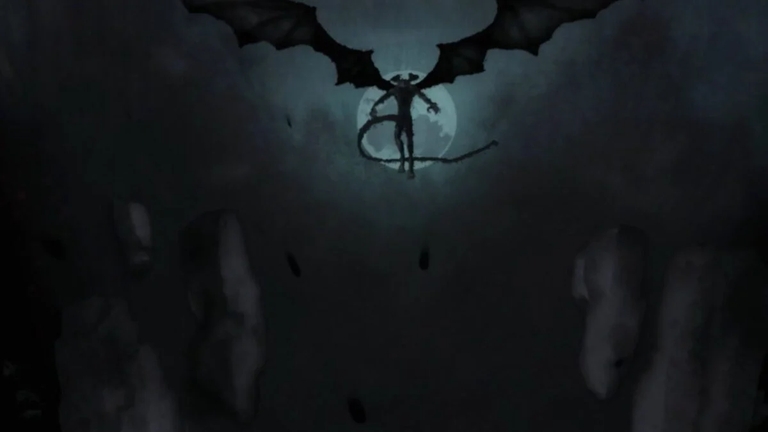
Devilman Crybaby is the 2018 Netflix reboot of Go Nagai's 70s classic, and it's basically Eva's spiritual grandfather. The original Devilman manga was a huge influence on Anno, and this adaptation takes that DNA and cranks it to eleven. Akira Fudou becomes a demon to fight demons, and the show descends into apocalyptic chaos, body horror, and mass extinction.
It shares Eva's interest in human evolution, apocalyptic Christianity, and the fragility of the human mind when faced with cosmic horror. The animation is fluid and weird, the gore is extreme, and the ending is a complete extinction event that makes Third Impact look tame. If you want the raw emotional devastation of Eva without the mecha framework, this is the one. Devilman Crybaby's themes parallel Eva's exploration of humanity's end.
Attack on Titan shares Eva's siege mentality. Humanity lives inside walls fearing giants that want to eat them, and the story follows Eren Yeager as he discovers he can become one of the monsters he's fighting. It's not a mecha show, but the Titans function similarly to Angels, incomprehensible enemies that require desperate, traumatic measures to defeat.
The psychological exploration isn't as deep as Eva's, but the body horror is there, and the way the series reveals conspiracy after conspiracy about the true nature of the world mirrors Eva's gradual revelation of the Human Instrumentality Project. It's brutal, political, and ends with a cosmic horror twist that recontextualizes everything.
Now and Then, Here and There looks like a kids' adventure show for about five minutes. Then a boy gets transported to a desert world where water is scarce, children are conscripted as soldiers, and rape is used as a weapon of war. It's unrelentingly grim, showing how war destroys innocence completely. There's no mecha, but the theme of children forced into violence and the complete absence of adult saviors makes it feel like an Eva side story where Shinji never got to go home.
The Outliers That Still Work
Code Geass takes the mecha and teenage protagonist elements but adds chess-like politics and a protagonist who actually has confidence. Lelouch is basically the anti-Shinji, he wants to pilot the robot, he wants to change the world, and he has a superpower that lets him control people's minds. But the show shares Eva's interest in moral ambiguity, the cost of war, and apocalyptic stakes. The mecha fights are tactical rather than emotional, but the ending is almost as controversial as Eva's.
Gurren Lagann is another Gainax production that acts as Eva's optimistic twin. Made by many of the same staff after Eva nearly broke them, it's about believing in yourself and punching the universe until it submits. Simon starts as a Shinji-like coward but grows into a hero who embraces his destiny rather than fearing it. If Eva left you feeling hopeless, Gurren Lagann is the palette cleanser that still respects the mecha genre enough to play with its tropes intelligently.
Haibane Renmei is gentle compared to Eva, but it shares the religious symbolism and the theme of guilt and redemption. It's about angel-like beings living in a walled town, unable to remember their pasts, seeking forgiveness for unknown sins. It's slow, atmospheric, and deeply concerned with atonement and self-acceptance, themes that Eva circles around in its final episodes.
Why Nothing Truly Replaces It
At the end of the day, anime like Neon Genesis Evangelion can only ever offer pieces of the puzzle. Eva is a singular artifact of one director's vision during a specific moment in anime history. The combination of budget constraints that forced creative solutions, Anno's personal depression bleeding into the script, the Christian symbolism added because it looked cool to Japanese audiences, and the way it accidentally predicted the internet's obsession with trauma and mental health, you can't replicate that.
What you can do is find shows that share specific wavelengths. If you want the mechanical deconstruction, watch RahXephon or Bokurano. If you want the psychological collapse, watch Serial Experiments Lain or Paranoia Agent. If you want the apocalyptic religious imagery, watch Devilman Crybaby or Haibane Renmei. And if you just want more Gainax energy, watch FLCL or Gunbuster.
The key is accepting that Eva's magic came from its imperfections, its budget running out, its story changing because the staff was in therapy. Most modern anime are too polished, too committee-driven, to ever capture that specific lightning. But the shows on this list come close enough to matter. They prove that the conversation Eva started about trauma, adolescence, and giant robots is still ongoing, even if nobody will ever speak with exactly that voice again.