
Best mystery anime recommendations always get ruined by shows that pull solutions out of thin air. You know the type. You're watching some supposedly smart detective piece and the killer turns out to be a twin brother who was never shown until the final episode. Or the answer involves some obscure piece of knowledge the main character learned off-screen twenty years ago. I've sat through too many series that mistake confusion for complexity. Real mystery writing isn't about hiding the ball. It's about showing you the ball and letting you miss it because the lighting was tricky. The anime on this list don't insult your intelligence. They lay out the breadcrumbs. If you don't spot them, that's on you. When the reveal hits, you get that satisfying slap of realization instead of the empty feeling of being cheated. These are the shows that respect your intelligence and treat you like someone who can think.
The Psychological Heavyweights That Define the Genre
Monster sits at the top of every list for a reason. It's seventy four episodes long and not a single one is filler. Dr. Kenzo Tenma is a neurosurgeon who saves a young boy named Johan instead of the mayor. Nine years later, that boy has become a serial killer who manipulates people into destroying themselves. The mystery isn't a whodunit. You know Johan is the monster. The mystery is why he does it and how Tenma will stop him while wrestling with the fact that he created this evil. The show moves slow and methodical. It introduces side characters who seem unrelated, then shows you how Johan touched their lives years ago. The clues about Johan's childhood at 511 Kinderheim and his relationship with his twin sister Anna are scattered through flashbacks and newspaper clippings. When the truth comes together in the final episodes about what made Johan empty inside, it doesn't feel like a shock. It feels like a tragedy you saw coming but couldn't prevent.
Death Note is the other giant. Light Yagami finds a notebook that kills anyone whose name he writes in it. He decides to become the god of the new world by executing criminals. L is the detective who figures out that Light is the killer but needs to prove it. The mystery here is pure cat and mouse. Both sides are operating with limited information but infinite intelligence. Light has to kill without leaving evidence. L has to catch him without legal proof. Every episode introduces a new constraint. Light loses the notebook and his memories. L puts cameras in Light's house. Near and Mello show up later to continue the game. The beauty is that you see both sides planning. You're not waiting for a hidden clue to drop. You're watching two geniuses try to outthink each other while the walls close in. The rules of the Death Note are established early and never broken. When Light wins or loses, it's because he followed the logic of his own madness.
Perfect Blue is a movie, not a series, but it hits harder than most shows. Mima is a pop idol who quits her group to become an actress. Then people around her start dying. She starts losing her grip on reality. The mystery plays with identity and stalking. The clues about who is responsible aren't in dialogue. They're in the background posters, the reflections in windows, and the subtle changes in Mima's apartment. It's a messy, psychological thriller about the price of fame. The solution is visual and fair. If you watch the backgrounds, you can piece together the fracture before Mima does.
Time Travel Mysteries That Don't Cheat
Time travel usually ruins mystery shows. Writers use it as a reset button when they write themselves into corners. Erased is the exception that proves the rule. Satoru Fujinuma has a power called Revival that sends him back a few minutes before accidents happen. When his mom gets murdered, he gets sent back eighteen years to his childhood. He realizes the murder is connected to a series of kidnappings that happened when he was in fifth grade. The mystery of who the killer is works because the show gives you the suspects early. You see them in the background of the school. You see them interacting with the victims. The killer isn't some random person introduced in the final episode. They were there the whole time, acting slightly off in ways that make sense once you know the truth. The show plays fair with the time travel rules. Satoru can't just keep looping until he wins. Every loop costs him something. The solution is heartbreaking because it was hiding in plain sight among the people he trusted.
Summertime Render is newer and even tighter with its mechanics. Shinpei Ajiro returns to his home island for his adoptive sister's funeral. He thinks she drowned. Then he sees bruises on her neck. Before he can investigate, he gets killed by a doppelganger called a Shadow. Then he loops back to the moment he got off the boat. The mystery involves these Shadows, which can copy people and kill the original. The rules are established fast. Shadows can't cross running water. They need to see the original to copy them. Every loop gives Shinpei new information. The mystery of what the Shadows want, who the original Shadow is, and why the island is cursed gets peeled back layer by layer. By the final episodes, every weird detail from the first episode, every offhand comment by a side character, clicks into place. It's a masterclass in planting seeds early that bloom into trees of revelation.
Supernatural Sleuths and the Rules of Magic
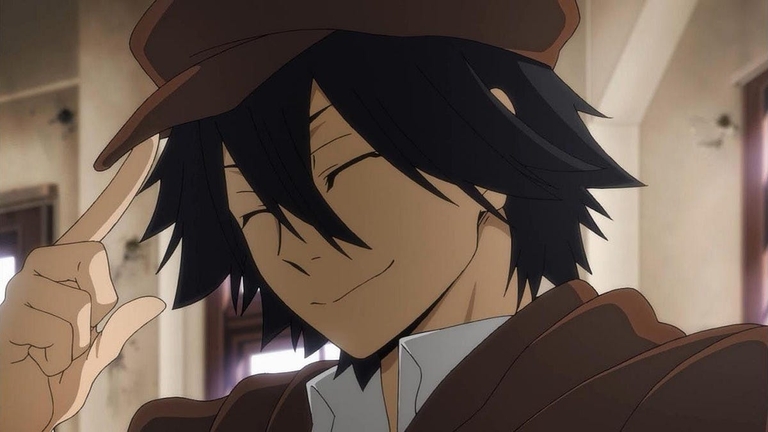
Bungo Stray Dogs looks like a typical shonen with superpowers at first. Season one is a bit rough, I'll admit. The pacing is weird. But once it gets going, the mysteries get solid. The Armed Detective Agency handles cases that are too weird for the police. The members have powers based on literary authors. Dazai can nullify any ability by touch. Ranpo has ultra deductive reasoning. The key is that the show establishes how the powers work, then uses those rules to solve crimes. It's not just about punching harder. It's about figuring out the trick. When they face the Port Mafia or the Guild, the battles become logic puzzles. How do you beat someone who can control gravity? You figure out the range and timing of their ability. The detective work mixes with the action in a way that respects the mystery genre.
Mononoke is weirder and more artistic. The Medicine Seller travels feudal Japan killing spirits called Mononoke. But he can't just stab them. He has to learn their Form, Truth, and Reason. Each arc is a locked room mystery with supernatural elements. In the Zashiki Warashi arc, a pregnant woman is trapped in an inn with vengeful spirits. The Medicine Seller has to figure out what wrong was done to the spirits before they kill everyone. The visuals are psychedelic and the stories dig into human darkness like abortion and abuse. The clues are there in the dialogue and the background art. You can solve it if you pay attention to the symbolism and the historical context.
ID:Invaded goes full sci-fi. Detectives use a machine called the Mizuhanome System to enter the unconscious minds of killers. They manifest a virtual world called an id well based on the killer's cognition particles left at the crime scene. Only killers can enter id wells, so they use a captured criminal named Akihito Narihisago as their agent. The mystery involves a serial killer called John Walker who seems to be creating other killers by entering their dreams. The rules of the id wells are consistent. Time moves differently. The avatar forms are based on the killer's self image. The detectives have to solve the symbolism in the dream to find clues about the real world location of the victims. It's high concept but the logic holds up. The best mystery anime recommendations often include this one for how it blends tech with deduction.
Historical and Medical Mysteries
The Apothecary Diaries is set in historical China, not Japan, which already makes it stand out. Maomao is a pharmacist's daughter who gets kidnapped and sold into servitude at the imperial palace. She tries to keep her head down but ends up solving a poisoning attempt on the emperor's concubines. The head eunuch Jinshi figures out she's smart and promotes her to lady in waiting. The mysteries rely on her knowledge of herbs, poisons, and medicine. She solves cases involving fake pregnancies, cursed music boxes, and political assassinations using chemistry. The show respects that she's smart and so are you. The solutions are technical but explained clearly. You learn about toxins and antidotes along with the characters. The court politics add another layer of mystery as Maomao navigates which concubine is scheming against which.
Un-Go is a post-war detective show set in a devastated Japan. The detective Shinjuurou Yuuki solves mysteries with the help of a supernatural boy named Inga who can force people to tell the truth by possessing him. The catch is that Inga eats the soul of the person who confesses. The mysteries reflect on war, propaganda, and the nature of truth. In a world where the government controls the narrative, Shinjuurou has to uncover what really happened while Inga extracts the truth from the guilty. It's short, only eleven episodes plus a prequel movie, but it packs in complex mysteries about terrorist attacks and media manipulation.
The Recent Gems People Sleep On
Odd Taxi looks like a weird cartoon about animals. It's about a walrus taxi driver named Hiroshi Odokawa who has a neurological condition that makes him see everyone as animals. He gets wrapped up in a missing girl case involving a high school student named Yuki. The writing is razor sharp. Every passenger he picks up connects to the main plot somehow. The missing girl, the struggling comedians, the nurse, the yakuza enforcer, the cop with the gambling debt. They all intersect in ways you don't see coming but make perfect sense in retrospect. The mystery of what happened to Yuki and why Odokawa is involved gets peeled back through dialogue that seems casual but is actually dense with clues. The ending hits hard because they seed the truth so early you don't notice it. When you rewatch it, you see the hints everywhere.
Undead Murder Farce is set in an alternate 19th century where humans and monsters coexist. Tsugaru is a half oni who acts as a detective. Aya is an immortal woman who exists as just a head in a cage. They solve supernatural cases starting with the murder of a vampire in a locked tower. The chemistry between the sarcastic Aya and the calm Tsugaru carries the show, but the mysteries are solid locked room puzzles with monster logic. How do you kill an immortal? How do you steal a head that can talk? The answers are clever and based on the rules established for the supernatural creatures.
Pluto is based on Naoki Urasawa's manga, which reimagines Astro Boy as a dark sci-fi mystery. Inspector Gesicht is a robot detective investigating the murders of the world's most advanced robots and their human allies. Someone or something is targeting the seven most powerful robots in the world. Gesicht discovers that the killer might be a robot named Pluto who shouldn't exist. The mystery explores what it means to be human through the eyes of machines. The clues about the Bora survey and the Persian War are scattered through the victims' memories. It's a slow burn that asks heavy questions about hatred and trauma while delivering a fair play mystery.
Horror Mystery Hybrids
Higurashi When They Cry is a village mystery with heavy horror elements. Keiichi Maebara moves to the rural village of Hinamizawa in 1983. He befriends a group of girls. Then people start dying during the annual festival. He tries to figure out why, descends into paranoia, and usually gets murdered. Then time resets and we see the same summer from a different angle. It's a loop mystery like Summertime Render but bloodier and more psychological. The answer to what's happening involves a parasite disease, a government conspiracy, and a centuries old curse. The clues about the syringes, the dam project, and Rika's weird behavior are there if you look. The second season, Kai, explains everything and shows how the loops connect. It's a mystery about breaking fate through trust.
Shiki is about vampires invading a rural town called Sotoba. The local doctor Toshio Ozaki notices people are dying of anemia. He teams up with a broody teenager named Natsuno to figure out why. They slowly realize the new family in the European style mansion are vampires turning the villagers. The mystery becomes a war between the humans and the shiki. The horror comes from watching the town descend into chaos as the body count rises. The mystery of who is a vampire and how to stop them without becoming monsters themselves drives the plot. It questions what makes someone human when survival is on the line.
The Promised Neverland starts as a mystery. Emma, Norman, and Ray are orphans at Grace Field House. They take tests and play. Kids get adopted and never write back. They discover the orphanage is a farm raising them as food for demons. The first season is a brilliant escape mystery. The kids have to outsmart Mama Isabella without her knowing they know. They use the layout of the house, the tracking devices, and the shipments to plan their escape. The clues about the books, the coordinates, and the walls are fair. The problem is the second season deviates from the manga and ruins the mystery. Stick to season one for a perfect closed circle escape story.
The Mind Benders and Classics
Serial Experiments Lain is dense and psychological. Lain Iwakura is a shy girl who gets an email from a classmate who committed suicide. It leads her into the Wired, a virtual network that connects everyone's consciousness. The mystery is about identity and reality. Is Lain real? Is she a program? What is the connection between the Wired and the real world? The show doesn't hand you answers. It gives you fragments of dialogue, static, and surreal imagery. But it plays fair. The answers are there if you piece together the references to Schumann resonances and the history of the Wired. It's a mystery about the nature of existence itself.
Ghost in the Shell Stand Alone Complex is cyberpunk mystery at its finest. Section 9 hunts the Laughing Man, a hacker who can edit people's memories in real time. They also tackle cases involving rogue AIs, corporate espionage, and political assassinations. The mysteries rely on understanding how cyber brains work, how to hack ghosts, and what constitutes a soul in a mechanical body. The clues are technical. You need to pay attention to the jargon about firewalls, viruses, and prosthetic bodies. When Major Kusanagi solves a case, it's because she followed the data trail logically, not because of a hunch.
Hyouka is about a high school kid named Oreki who wants to conserve energy. He joins the Classics Club to keep it from shutting down. There he meets Chitanda, a girl who can't stop asking why. They solve mundane mysteries. Why did the librarian get upset? How did a locked room get unlocked? Who is the anonymous author of a decades old anthology? The mysteries are small scale but the logic is airtight. The show proves you don't need murder to have a compelling mystery. Sometimes figuring out how someone made chocolate with fewer cups than they had is enough when the character work is this good.
Why Mystery Anime Fail or Succeed
A mystery anime fails when it breaks its own rules. If you establish that vampires can't cross running water, then have a vampire cross a puddle to kill the hero, you've cheated. If the detective solves the case using knowledge they never had access to, you've cheated. The shows on this list avoid that trap. Monster never has Tenma figure something out without showing you the medical report he read. Odd Taxi never introduces a character in the final episode who wasn't in the background of the first. Erased gives you the killer's face in episode one, just not their evil expression.
The best mystery anime recommendations work because they trust you to pay attention. They don't have characters explain the plot every five minutes. They let you sit with the confusion until the pattern emerges. That's the difference between a mystery and a puzzle. A puzzle has all the pieces in the box. A mystery hides the pieces in the scene and hopes you notice the shape. When you finish one of these shows and immediately want to rewatch episode one to catch the foreshadowing, that's when you know you've found a good one. Don't settle for the cheap twist. Demand the real thing.