
Blue Exorcist anime series review discussions always start with the same warning and that's because the watch order is completely broken. You've got Season 1 from 2011 that goes off the rails halfway through, then Season 2 that pretends the last nine episodes never happened, plus three more seasons that came out years later to fix everything. It's annoying. But here's the thing. Despite this production chaos, Blue Exorcist hits harder than most demon-themed shonen because it cares more about broken families than power levels.
Rin Okumura is Satan's literal kid. He finds this out when his foster dad dies. That's the hook. Instead of becoming a villain, he decides to punch his biological dad in the face by becoming an exorcist. It's simple. It's stupid. It works. The show blends high school drama with religious horror and somehow makes both sides click even when the plot is falling apart.
People keep coming back to this series because the characters feel real even when the timeline doesn't make sense. You've got twin brothers who love each other but are growing apart. You've got kids dealing with trauma while learning magic sword techniques. The anime stumbles hard in places, especially that original ending from 2011, but the core cast keeps you locked in. That's rare for a show this old.
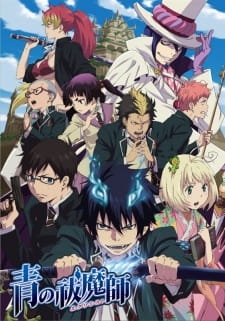
The Watch Order Is Cursed and You Need a Guide
Don't just start at episode one and binge. You'll hate it. Season 1 runs for 25 episodes but only the first 15 or so follow the manga. Then it goes anime-original because the show caught up to the source material. The studio made up an ending that feels rushed and weird, with Satan showing up too early and character arcs getting cut short. It's not good.
Then Season 2, called Kyoto Saga, drops in 2017 and says "ignore episodes 17 through 25." It picks up after episode 16 and follows the actual manga storyline. But here's where it gets annoying. Season 2 assumes you watched those bad filler episodes from Season 1, so there are references that don't make sense. Some folks on Reddit recommend watching Season 1 up to episode 16, then jumping to Season 2, then going back to finish Season 1 if you really want to. That's confusing and nobody should have to do homework to watch a cartoon about demon hunters.
After Kyoto Saga, you get the Shimane Illuminati Saga, then Beyond the Snow Saga from late 2024, and finally Blue Night Saga which just finished airing. These newer arcs follow the manga strictly and get way darker than the early stuff. The timeline jumps around but the emotional throughline stays consistent. Rin and Yukio's relationship is the anchor that keeps you from getting lost in the mess.
Rin Is a Good Boy in a Bad Situation
Rin Okumura shouldn't work as a protagonist. He's the son of the devil, he has blue flames that destroy everything, and he's got that typical shonen "I'll never give up" attitude that we've seen a thousand times. But he's charming. He's a delinquent with a heart who just wants friends and normal food. He isn't trying to be the strongest fighter in the world. He just doesn't want to hurt people.
His chemistry with the other students at True Cross Academy carries the early episodes. The show spends time on them eating together, studying for tests, and dealing with stupid school rules. It feels like a slice of life show that occasionally has demon attacks. That balance is what makes the heavy moments land harder. When Rin does let loose his powers, you feel the weight of it because you know he's scared of hurting his friends.
The anime does a solid job showing his internal struggle without being too preachy. He knows he's dangerous. He knows people are afraid of him. But he keeps smiling because that's how he copes. It's heavy stuff for a shonen series that also has a character named Mephisto who wears a top hat and acts like a circus clown.
Yukio's Downward Spiral Is the Real Story
Everyone talks about Rin because he's the main character with the cool sword, but Yukio is where the show gets interesting. He's Rin's twin brother but he looks older and acts like a tired dad. He starts as the perfect exorcist, the youngest teacher at the academy, and the responsible one. But he's cracking under the pressure.
In the newer seasons, especially Beyond the Snow and Blue Night Saga, Yukio becomes the most compelling character. He's dealing with his own demonic powers that he hid from everyone. He's getting approached by Lucifer and the Illuminati. He's watching his brother get stronger while he feels stuck. The show turns him into a tragic figure who might become the villain even though he loves his brother.
This isn't your typical rivalry where two brothers just punch each other to see who's stronger. Yukio is genuinely suffering from depression and identity issues. The anime doesn't always handle this delicately, but it doesn't look away either. When Yukio breaks down, it hurts to watch because you've seen him holding everything together for dozens of episodes.
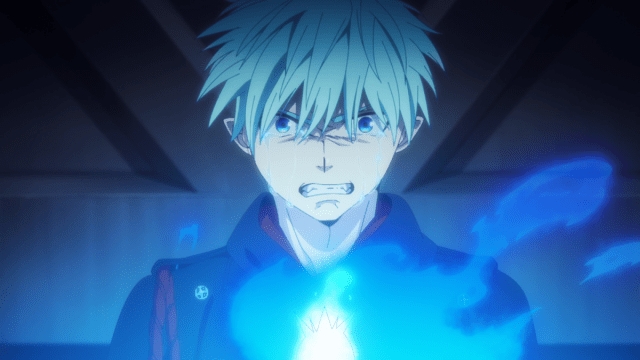
Why Season One's Filler Ending Still Stings
Let's talk about that original ending from 2011 because it almost killed the franchise. The studio ran out of manga content so they made up a final battle against Satan that happens way too fast. Characters make dumb decisions. The power scaling makes no sense. Rin goes from fighting low-level demons to fighting his dad, the king of hell, in like three episodes.
It feels like they were told the show was ending on Friday so they wrapped everything up on Thursday afternoon. The emotional beats don't land because there's no time to breathe. Satan shows up and acts less like a terrifying villain and more like a confused dad who lost his kids at the mall. It's weak.
If you're new to the series, you can skip episodes 17 through 25 of Season 1 and not miss anything important. The Kyoto Saga replaces that timeline anyway. But if you do watch them, just know they aren't canon and the manga tells a completely different story that's way better. The anime-original content isn't the worst thing ever made, but it wastes the potential of what came before it.
Kyoto Saga Tries to Fix the Timeline
When the anime came back for Season 2, they had to pretend those filler episodes didn't exist while still acknowledging some character developments from them. It's awkward. The Kyoto Saga follows the manga's Impure King arc where the characters go to Kyoto to fix a cursed demon problem.
This arc focuses heavily on Bon and his family issues with the temple. It also introduces more of the exorcist hierarchy and shows Rin struggling to control his flames in a way that actually feels earned. The fights are slower but have more weight. The animation by A-1 Pictures is cleaner here too, with better shading and more detailed backgrounds.
But the weird timeline placement creates confusion. Characters reference events that didn't happen in the canon timeline but did happen in the filler episodes. It's a mess that could have been avoided if they just rebooted the whole thing instead of continuing from a broken foundation.
The Newer Seasons Get Grim and That's Good
When Blue Exorcist came back with the Shimane Illuminati Saga, it felt like a different show. The colors got darker. The jokes stopped landing as often. People started dying or getting seriously hurt. Then Beyond the Snow Saga and Blue Night Saga doubled down on this grim tone.
Beyond the Snow follows Bon as he investigates the Far East Laboratory and learns messed up secrets about the exorcist organization. He works with Lightning, a weird teacher who investigates conspiracies. They uncover stuff about god-level beings and human experiments that makes the early school episodes feel like a different universe. Anime News Network noted how dark these investigations get.
Blue Night Saga goes full flashback mode to show Rin and Yukio's birth, their mom Yuri, and how Shiro Fujimoto became their dad. These arcs don't pull punches. They show war crimes, genetic experiments, and parental death. AnimeRants covered how the final episodes of this arc hit hard emotionally.
The Girls Deserve Better But Get Good Arcs Eventually
Shiemi starts as the typical shy girl who needs rescuing. She's the gardener who wears an apron and gets flustered easily. Early episodes don't give her much to do besides blush and support Rin. But later seasons fix this. She develops her own goals about becoming an exorcist for personal reasons, not just to help the boys.
Izumo gets one of the best backstory episodes in the whole series involving her family and demons. Her arc with the nine-tailed fox spirits is tragic and scary. She starts as a mean girl but becomes someone you root for.
Then there's Shura. She shows up as the bikini-wearing sword instructor and seems like pure fanservice at first. But her backstory in Beyond the Snow reveals a tragic curse and a weird relationship with a snake demon that gets pretty dark. She's more than eye candy, though the show still uses her for that sometimes which feels cheap.
Mephisto and the Adult Mysteries
Mephisto Pheles runs True Cross Academy but he's clearly got his own agenda. He might be helping the Illuminati. He might be stopping them. He knows everything about Rin and Yukio's birth but explains nothing until it's too late. The anime never quite commits to making him a full antagonist or ally, which is frustrating but also realistic for a centuries-old demon.
The adult characters in general get more focus in the newer seasons. You learn about the Grigori, the high council of exorcists, and their dirty secrets. The show stops being just a school anime and becomes a conspiracy thriller about religious organizations covering up war crimes.
The Animation Quality Rollercoaster
A-1 Pictures handled the first two seasons and they look fine. Standard 2010s anime style with bright colors and clean lines. The action scenes in Season 1 get choppy during the filler arc because the budget was clearly running out.
Studio VOLN took over for the newer seasons and you can see the difference immediately. They use more shadows and darker color palettes. The character designs stay sharp but the movement gets more limited. There are more still frames during conversations. But when they do animate a fight, it looks brutal and heavy.
The blue flames look better in the newer seasons too. In 2011 they looked like regular fire tinted blue. Now they look like liquid energy that burns reality itself. It's a small detail but it sells the power better.
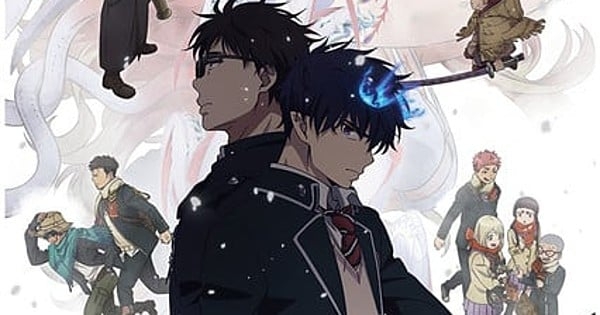
The Music Carries the Emotional Weight
Hiroyuki Sawano worked on the music for the newer seasons and you can feel his presence. The orchestral tracks with heavy guitars make every confrontation feel massive. Even when characters are just talking about their feelings, the background music is swelling like the world is ending.
The early seasons had solid opening themes too. UVERworld did the first OP and that song still goes hard. It's fast and angry and matches Rin's energy perfectly. The endings vary in quality, with some being forgettable pop tracks, but the overall sound design enhances the mood. When Rin draws his sword and the blue flames erupt, the audio cues tell you this is serious business even if the animation gets choppy.
Voice acting is strong across the board. Nobuhiko Okamoto makes Rin sound like a gruff puppy who's trying his best. Jun Fukuyama gives Yukio that perfect exhausted tone of a kid who never got to be a child. Even the side characters get performances that elevate the material. Wendee Lee plays Shura in the dub and she's great.
The Comedy Sometimes Kills the Mood
Blue Exorcist can't decide if it wants to be a serious show about religious trauma or a silly high school comedy. One minute you're watching a child get possessed by Satan and commit suicide, the next minute Rin is drooling over food with big cartoon eyes. The tone whiplash is real.
The early episodes lean hard into school life comedy. Rin gets bad grades. He fights with his brother. He tries to make friends but says the wrong thing. It's cute but it undercuts the horror elements. When demons show up and start killing people, it feels like we're supposed to forget the last ten minutes of slapstick.
Later seasons fix this by getting rid of most of the comedy. Beyond the Snow Saga and Blue Night Saga are almost completely serious. The jokes that do land are dry and character-based rather than physical gags. It's a better fit for the story being told.
The English Dub Is Solid
If you watch the dub, Johnny Yong Bosch plays Yukio and he captures that exhausted genius energy perfectly. Wendee Lee plays Shura and she's having a blast with the role. The actor for Rin, Bryce Papenbrook, screams a lot which fits the character but might hurt your ears during fight scenes.
The sub is great too with Nobuhiko Okamoto and Jun Fukuyama. You can't go wrong either way. The dub script takes some liberties with the dialogue but the meaning stays the same. Some fans prefer the sub for the newer seasons because the emotional scenes hit harder in Japanese, but the dub for Season 1 is nostalgic for a lot of people.
The Manga Tells a Different Story
If you read the manga, you'll notice big differences after episode 15. The manga doesn't have that rushed ending. It takes time to develop the Illuminati plot and Yukio's breakdown. The anime skips some fights and character moments to fit everything into 25 episodes.
The manga is still ongoing and goes into way more detail about the Blue Night and the history of the exorcists. Some characters who die in the anime filler are alive in the manga. Relationships develop differently. If you love the anime, you should read the manga from chapter 1 to see what you missed. MyAnimeList users often mention how the manga fixes the anime's pacing issues.
Why Satan Is a Weak Villain
Satan as a character is boring. He's just evil because he's evil. The show tries to give him motivation through Yuri, the twins' mom, but it doesn't land. He wants to merge the human world and demon world because... reasons. He's not charismatic like Aizen from Bleach or terrifying like Meruem from Hunter x Hunter.
The real villains are the human organizations. The Illuminati and the Grigori are scarier because they have bureaucratic power. They make decisions that hurt people while wearing suits and sitting in meetings. That's more interesting than a big red demon who shoots fire.
The Power System Keeps It Simple
Don't expect Hunter x Hunter levels of complexity here. Exorcists get ranked from Page to Paladin. They use guns, swords, or magic depending on their class. Rin has a sword that seals his demon powers until he draws it. That's pretty much it.
Some fans complain that the fights are basic and the characters don't show much growth in their abilities. Rin is still using the same flame attacks in episode 50 that he used in episode 5, just bigger. But the show isn't really about learning new techniques. It's about controlling your emotions so you don't hurt people.
The combat serves the character drama rather than the other way around. When Rin and Yukio fight, it's not about who has the better technique. It's about whether Yukio will finally snap and kill his brother. The stakes are emotional, not mechanical. That won't satisfy everyone who wants intricate battle systems, but it fits the story being told.
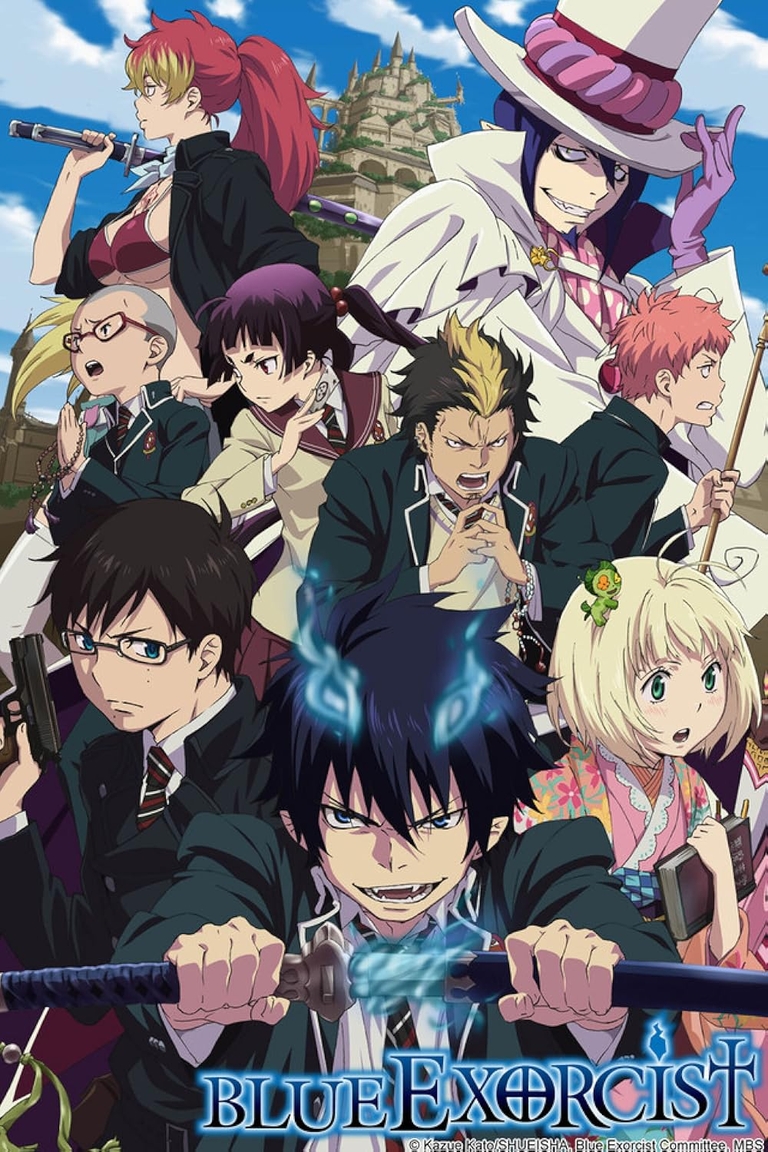
The Future Looks Bright
With Blue Night Saga finishing the origin story, the anime is set up to continue into the next major manga arc. Studio VOLN seems committed to adapting the canon material properly now. The series has found its footing after years of confusion.
If they keep following the manga and avoid original endings, Blue Exorcist could become one of the great shonen anime of the decade. It took a decade to get here, but the messy timeline might finally be untangled.
Blue Exorcist anime series review scores are all over the place because the quality jumps around so much. The first season is a 6 out of 10 that could have been an 8. The Kyoto Saga is a solid 7. The newer seasons are probably 8s or 9s if you're already invested in the characters. It's a weird curve where the show gets better the longer it goes on, which is the opposite of most long-running anime.
You should watch it if you like stories about found family and brothers trying not to kill each other. Don't watch it if you need perfect consistency or a power system that makes logical sense. The show has heart. It has great music. It has characters you'll care about despite the messy timeline. That's enough for most people.
Start with the first 16 episodes of Season 1, then watch Kyoto Saga, then continue with the newer arcs. Skip that original ending unless you want to see how badly anime adaptations can go wrong when they run out of source material. Check out this detailed watch guide if you get confused. Rin and Yukio's story is worth the confusion. The blue flames look cool. The feelings are real. That's what matters.