
Assassination Classroom anime characters and Class 3-E work because the show refuses to treat its students like background noise. Most anime classrooms have three main kids and twenty-five extras who never speak. That's lazy writing and everyone knows it. But this series takes all twenty-eight kids in the End Class and gives them distinct jobs, personalities, and growth arcs that actually impact the plot.
The premise sounds stupid at first. A yellow octopus who moves at Mach 20 blows up the moon and says he'll destroy Earth next year unless his students can kill him first. So these rejects from Kunugigaoka Junior High have to assassinate their teacher while he teaches them algebra and fixes their personal problems. It shouldn't work. It really shouldn't. But it does because the anime commits to making every single kid in Class 3-E count for something.
You get snipers, chemists, tech experts, and straight-up brawlers all working together. They're not just trying to save the world. They're trying to prove that being labeled worthless by a corrupt school system doesn't make it true.
The E-Class System Is Designed to Break Kids
Kunugigaoka Junior High runs on a twisted version of the 20:20:60 worker ant ratio that Chairman Gakuho Asano cooked up after a student committed suicide on his watch. The system works like this: twenty percent of students are exceptional, sixty percent are ordinary, and twenty percent are worthless. Class 3-E exists to be that worthless category so the other students have someone to look down on. It keeps them motivated through fear and disgust.
But Asano didn't stop at just labeling these kids. He sabotages them actively. The Class 3-E building sits on a mountain a kilometer away from the main campus, isolated and run-down. It used to be a cram school where Asano himself taught with kindness, but after that student's death, he flipped his philosophy completely. Now he wants strong students instead of good ones, and he uses Class E as a scapegoat to terrorize the rest into compliance.
The discrimination is blatant and cruel. Other students throw trash at them. Teachers give them broken equipment. They're banned from extracurricular activities and forced to take exams at the main campus where everyone mocks them. The goal is to make sure they stay in the mud so the other ninety-five percent stay scared. It's messed up but it creates a group of kids who have nothing to lose and everything to prove.
Before Koro-sensei arrived, Aguri Yukimura taught them. She died shortly after the moon's destruction, and the class was drifting until the government stuck them with an alien teacher who could dodge bullets and grade papers simultaneously.
Why Koro-sensei Actually Teaches Despite Being the Target
The central joke of the series is that this tentacled monster who can travel at Mach 20 is the best teacher these kids have ever had. He's literally training them to kill him, offering a 10 billion yen reward to whoever succeeds, yet he stays up all night making individual study guides and fixing their family problems.
Koro-sensei wasn't always an octopus. He used to be the Reaper, the world's greatest human assassin, until his apprentice betrayed him and scientists experimented on him with antimatter. That's how he got his powers and why he'll explode and destroy Earth if he isn't killed by March. Aguri Yukimura, the previous Class 3-E teacher, was his observer during those experiments. She taught him compassion before dying in a trap meant for him, and her last wish was for him to teach her students.
So he's fulfilling a promise while knowing these kids need to murder him to save the planet. He rotates between yellow for calm, green for excited, purple for romantic, and black for serious moods. He moves so fast he can create afterimages and he insists on being called Koro-sensei because it sounds like unkillable teacher. But he also cries when his students succeed and throws himself in front of danger to protect them from other assassins.
This contradiction drives the whole show. The kids grow to love him while developing the skills necessary to end his life. It's weirdly wholesome and deeply tragic at the same time, and it works because he treats them like people instead of failures.
The Main Trio Carries Different Types of Trauma
Nagisa Shiota looks like a quiet blue-haired girl but he's actually a boy with serious assassin potential. His mom is abusive and forces him to keep his hair long so she can live vicariously through him, which is why he's so good at reading people's wavelengths of consciousness. He records all of Koro-sensei's weaknesses in a notebook and develops the Stun Clap technique, using his bloodlust to paralyze opponents. He's the one who delivers the final killing blow to Koro-sensei in the end, and he grows up to become a teacher who uses that same bloodlust to rehabilitate delinquents.
Karma Akabane sits in the back row with his hands behind his head looking smug because he is that smart. He was suspended for beating up a teacher who betrayed his trust, and he's the first student to actually injure Koro-sensei with a rigged handshake. He represents pure academic genius mixed with violent rebellion. He fights Nagisa during the civil war arc over whether to save or kill their teacher, and when he loses, he acknowledges Nagisa's growth instead of holding a grudge.
Kaede Kayano acts like the cheerful pudding-obsessed girl who gave Koro-sensei his name, but she's actually Akari Yukimura, Aguri's younger sister. She infiltrated Class 3-E with implanted tentacles to avenge her sister's death, believing Koro-sensei killed her. She hides this for almost a year, enduring constant pain from the tentacles eating her body from the inside. When she finally attacks, Nagisa stops her with a kiss that calms her down, and Koro-sensei surgically removes the tentacles before they kill her. Later she gets mortally wounded during the final battle and Koro-sensei saves her again, exhausting the last of his energy before his execution.

Every Student Has a Specific Combat Role
What separates Class 3-E from other anime groups is that the other twenty-five students aren't just cheering from the sidelines. They have distinct specializations that the series actually uses in serious combat situations.
Ryunosuke Chiba and Rinka Hayami handle long-range shooting. Chiba specializes in speed shots that force Koro-sensei into his Absolute Defense form, while Hayami hits moving targets with precision and handles disarming enemies like Gastro. They train with actual sniper rifles and become legitimate marksmen who can calculate wind speed and trajectory.
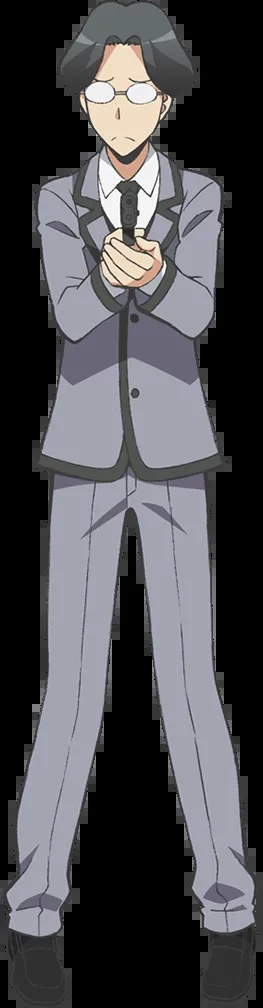
Kotaro Takebayashi wears glasses and handles explosives. He's the chemistry nerd who builds bombs and later becomes a scientist. You can see his focus here as he calculates blast radiuses and chemical reactions to trap Koro-sensei without hurting him permanently.
Manami Okuda does poisons and chemistry experiments. She tries to poison Koro-sensei early on but fails because he can process toxins instantly. Instead of giving up, she learns to make incapacitating agents and smoke bombs that actually work during serious missions like the hotel infiltration.
Sosuke Sugaya is the artist who makes disguises and camouflage. He builds decoys that fool professional assassins and creates fake noses for Koro-sensei as jokes. During the Reaper arc, his camouflage suits bypass security cameras completely, allowing the class to move undetected.
Ryoma Terasaka starts as a bully who tries to get Nagisa killed through manipulation, but he transforms into a resilient leader who prevents Nagisa from murdering the sadistic trainer Takaoka in cold blood. He takes hits and keeps going, eventually becoming a politician who helps people instead of crushing them.
Yuma Isogai is the class representative who comes from a poor family and works part-time jobs to support his siblings. He's handsome and popular but never lets it go to his head. During the athletic festival, he uses historical military strategies to outmaneuver Class 3-A's Big Five, proving that brain beats privilege every time.
The Code Names Reveal Everything
The government assigns code names to everyone in Class 3-E for security reasons, and these names tell you exactly who they are. Nagisa is Gender because of his looks. Karma is Halfway Chuunibyou because he's edgy but self-aware. Irina is Bitchy Bitch which she hates but can't shake. Karasuma is Straight-Lace because he never breaks rules.
Some of the best ones include Taiga Okajima as End Of Perversion because he's the class perv with a camera, Hinata Okano as Amazing Monkey because she's a gymnast who climbs everything and uses knives mid-flip, and Taisei Yoshida as Home Base because he's obsessed with motorcycles and serves as the group's rally point during battles.
Ritsu gets Moe Box because she's an AI installed in a computer who eventually transfers into a mobile chassis and becomes sentient. Itona is Rolling Riser because he shows up with tentacles like Koro-sensei and keeps rising up after getting knocked down, refusing to stay defeated.
These aren't just jokes. They reflect how each student is viewed by the organization and how they view themselves. By the end of the series, they've all grown into or out of these labels, becoming more complex than their code names suggest.
The Transfer Students Change the Dynamic
Halfway through the series, two new kids join the existing twenty-eight. The first is Ritsu, an artificial intelligence created by the government to kill Koro-sensei. She starts as a literal computer on a cart that rolls around, but Koro-sensei upgrades her with more personality and mobility until she becomes a full member of the class who can hack security systems and coordinate attacks via electronics.
The second is Itona Horibe, who claims to be Koro-sensei's brother because he has the same tentacles growing out of his head. He starts as an antagonist trying to kill Koro-sensei for the scientist Shiro, but after losing his tentacles he joins Class 3-E and becomes their tech expert. He builds recon vehicles and gadgets, using his knowledge of electronics to support the others instead of trying to murder their teacher.
Both of them start as tools or enemies but end up as family. That's the pattern for Class 3-E. They take in broken things and fix them, whether it's an AI learning to feel emotions or a tentacle monster learning to be human.
The Faculty Is Equally Weird
Tadaomi Karasuma is the government agent assigned to train the kids in assassination. He's stiff, professional, and goes by Straight-Lace, but he genuinely cares about the students' safety and growth. He teaches them hand-to-hand combat and tactical thinking, eventually marrying Irina after the series ends despite their opposite personalities.
Irina Jelavic is a Serbian assassin who initially tries to seduce and kill Koro-sensei. She fails spectacularly because he moves too fast, and she sticks around as the English teacher, using her seduction techniques to teach languages and infiltration. The students call her Professor Bitch and she hates it but earns their respect by actually teaching them useful skills for espionage and by protecting them from threats.
Then there's Akira Takaoka, a soldier who briefly replaces Karasuma and tortures the students because he thinks pain creates strength. Nagisa takes him down twice, once with the stun clap and later when Takaoka returns with poison. Takaoka represents everything wrong with the education system that Class 3-E fights against, showing that cruelty doesn't make students stronger, it just breaks them.
The War Against Class 3-A Proves Their Worth
The main school looks down on Class 3-E as losers and dropouts who deserve their misery. The student council president Gakushu Asano leads the Big Five, the top students who represent the exceptional twenty percent. They think Class E is trash until the athletic festival where they get completely outplayed.
Isogai organizes Class 3-E using historical battle formations and psychological warfare drawn from his part-time job experience managing people. They don't just win; they dominate, using teamwork that the individualistic Class 3-A can't match because they're too busy competing with each other. It proves that the E-Class system doesn't identify weakness, it creates it artificially by isolating kids who just needed different teaching methods or who were going through hard times.
Karma goes toe-to-toe with Gakushu in academic competitions, and the rivalry pushes both to get smarter. But while Gakushu cracks under his father's impossible pressure, Karma grows genuinely supportive of his classmates, learning that being the best means lifting others up instead of stepping on them.
The Graduation Nobody Wanted
The series builds toward March 13th, the day Koro-sensei will explode and destroy Earth if not killed. The students spend the whole year growing attached to him while training to murder him. It's a ticking clock that hurts more as it gets closer because you see how much he's helped them.
In the final arc, they launch a massive coordinated attack using everything they've learned. Chiba and Hayami shoot, Okuda poisons, Takebayashi explodes things, and Nagisa sneaks in for the kill. They succeed, and Koro-sensei lets them, smiling as he turns to light particles because he's proud of them.
Afterward, the government offers them 30 billion yen for completing the assassination. They take just enough to pay for college and buy the old Class 3-E building and the mountain it sits on as a memorial. Seven years later, they return to repair it, and Nagisa, now a teacher, hopes to use it to help other rejected kids just like Koro-sensei helped him.
Assassination Classroom anime characters and Class 3-E stick with you because they earn every emotional beat. The show doesn't cheat by having the main character talk about friendship while the side characters stay static. Every one of those twenty-eight kids has a moment where their specific skill saves the day, where their personal trauma gets addressed, and where they grow into someone new.
Most anime would have focused on Nagisa, Karma, and Kayano while letting the rest fade into background noise. Instead, this series treats the entire class as the protagonist. You remember their names, their specialties, and their code names because the writers respected your time enough to make them matter.
The classroom on that mountain becomes more than a setting. It becomes a place where broken kids learn they're not worthless, where an alien monster learns to be human, and where the act of assassination becomes an expression of love. That's why people still talk about this show years later. It committed to its cast in a way few anime bother to do, and it paid off with an ending that actually hurts to watch.