
Devilman Crybaby doesn't care about your comfort. The anime grabs you by the throat in episode one and keeps squeezing until the final frame shows two moons in the sky and you're left staring at the screen wondering what just punched you in the gut. If you're looking for a devilman crybaby anime analysis and ending breakdown that treats this story like some cute superhero cartoon, you're in the wrong place. This show is about how humanity tears itself apart with zero help from the demons, and the ending makes sure you know that love only matters when it's too late to fix anything.
People keep asking what the point is. They watch Akira Fudo get ripped in half by his best friend Ryo Asuka, who turns out to be Satan with amnesia, and they think it's just shock value. It's not. The whole series builds toward that moment where Satan realizes he killed the only thing he ever cared about, and that realization happens after the world is already a cinder. That's the whole point. You don't get redemption arcs here. You get a cosmic reset button and a crying devil.
You might think you know what you're getting into because you've seen Evangelion or Berserk. You don't. This thing is meaner than both of those combined because it doesn't even give you the satisfaction of a bittersweet ending. It gives you lava and tears and a reset button that ensures nothing you watched mattered in the context of the universe, even though it mattered immensely to the characters.
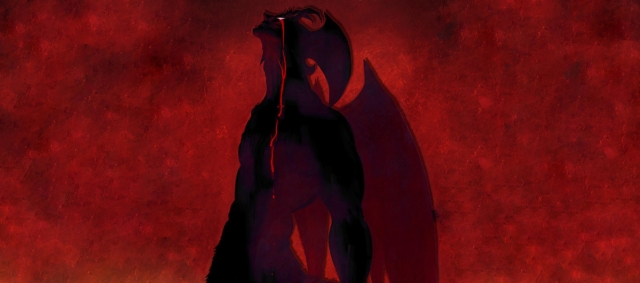
The Ending Isn't Complicated But It Hurts
The devilman crybaby ending explained simply is this: Ryo remembers he's Satan, triggers the apocalypse, kills Akira in a fight he can't lose, then breaks down crying when he realizes Akira was his only friend. Then God drops meteors and resets everything. That's it. That's the whole thing. But the pain comes from how we get there, not the mechanics of who punches harder.
Ryo isn't just a villain who lied. He's a cosmic being who fought God, lost, got reborn on Earth as a human baby, and genuinely forgot he was Satan. He grows up as Ryo Asuka, meets Akira as a kid, and spends the whole series manipulating events while thinking he's just a weird genius trying to expose demons. When he remembers everything, he doesn't suddenly become evil. He was always ruthless. The difference is now he knows he's supposed to destroy humanity to build a demon army to fight God again, and he thinks Akira will join him because they're best friends.
The fight at the end isn't fair. Satan is an angel. Akira is a guy who merged with a demon. Even with other Devilmen helping, Akira gets wrecked. Ryo blasts him with enough energy to melt a continent, and then he just stands there looking at the mess he made. The scene where he talks to Akira's dismembered head, remembering their childhood while the world burns around them, that's the emotional core. He finally understands what love feels like, but only because he destroyed it. That's not a happy ending. That's a cosmic joke.
The specifics of the final fight matter. Satan doesn't just beat Akira. He annihilates him with a beam of light that carves through the earth's crust. The animation switches to this rough, sketchy style where the lines shake and the colors invert. It looks like the animation itself is breaking down, which fits because the world is literally ending. Ryo stands in the lava with wings that span miles, and he looks empty. He's won. He has his demon army. Earth is cleared for his war against God. And he doesn't care because Akira is dead at his feet.
The dialogue in this scene is minimal. Ryo keeps saying "Akira" like he's trying to wake him up. He talks about their childhood when they caught that cat, or when they played in the snow. These are memories from when they were kids, before any of this started. He keeps talking to the corpse like Akira can hear him, and maybe he can, but it doesn't matter because the body is in pieces. Then the sky opens up and the meteors start falling, and Ryo doesn't even try to fly away. He just holds what's left of his friend and waits for God to wipe the slate clean again.
Humans Are The Real Monsters And The Show Makes Sure You Know It
Every anime tries to do the "humans are worse than monsters" thing, but most of them wimp out and show some good people saving the day. Devilman Crybaby doesn't do that. It shows you exactly how fast your neighbors would kill you if they thought you were different, and it makes you watch every second of it.
The series sets up three groups that matter. You've got the Demons, who are just animals following instinct. They eat people and cause chaos, but they're not evil. They're hungry. Then you've got the Devilmen like Akira, who keep their human hearts inside demon bodies. They're the balance. Then you've got regular Humans, who have reason and ethics and social media, and they use all of it to murder each other the second Ryo suggests anyone acting weird might be a demon.
The witch hunt happens fast. Ryo goes on TV and says demons are hiding among us, and within days the world is burning. People post videos of their neighbors getting lynched. The military starts firing on civilians. Nuclear missiles fly. All because humans are so eager to find an enemy that they'll kill their own families to feel safe. The demons didn't destroy civilization. We did that ourselves with smartphones and paranoia.
Why Miki's Death Is The Point Of No Return
Miki Makimura is the only genuinely good person in the whole show. She's not perfect, but she believes in Akira and she tries to use social media to spread peace while everyone else is posting death threats. She runs track. She eats dinner with her family. She feels real. That's why they make you watch a mob of people she knows personally hack her to pieces and mount her head on a stick.
This isn't just gore for gore's sake. Akira was holding onto his humanity through his love for Miki. When he comes home and finds her head on that pole, surrounded by the smug faces of people who think they did something heroic, something breaks in him that can't be fixed. He cries blood. He stops being the crybaby who cares about everyone. He becomes a demon in full, slaughtering the mob with zero hesitation.
That scene is the turning point because it proves the show's argument. Empathy doesn't win. Love doesn't protect you from violence. The mob kills Miki because she dared to say humans and demons could coexist, and they do it with baseball bats and kitchen knives while filming it on their phones. After that, Akira doesn't care about saving humanity anymore. He just wants to kill Ryo for causing all of this, and he fails.

Ryo's Amnesia And The Love That Destroys Everything
People get confused about why Satan would have amnesia. It seems like a weird plot twist, but it's the whole reason the tragedy works. Ryo isn't faking his friendship with Akira. He genuinely loves him as a human, separate from his identity as Satan. That's what makes the ending so brutal.
When Ryo remembers he's Satan, he doesn't stop caring about Akira. He thinks he can convince Akira to join him in wiping out humanity to make room for demons. He thinks they're still friends on the same team. But Akira saw what happened to Miki. He knows Ryo caused the panic that killed her. So they fight, and because Satan is basically a god and Akira is just a strong demon, Akira dies.
The moment after the killing blow is what breaks you. Ryo holds Akira's remains and realizes that he just destroyed the only being he ever loved. He spent the whole series looking down on humans for being emotional and weak, but now he's crying like a baby because he finally gets it. Love isn't a weakness. It's the only thing that matters, and he killed it. Then God shows up and resets the world because the experiment failed, and Ryo has to do it all over again.
The Time Loop Theory And Why We're All Trapped
If you watched past the credits, you saw the sky with two moons. That's not just a pretty image. It's the setup for the next cycle. The theory that makes the most sense is that this has happened before and will happen again, and it's God's way of punishing Satan.
Think about it. Satan rebels against God, loses, gets sent to Earth, forgets who he is, meets Akira, falls in love with him, kills him by accident, realizes he loved him, then gets wiped out by meteors. Rinse and repeat. It's a hell designed specifically for Satan. He gets to feel love and connection every time, then he has to destroy it himself, then he has to feel the guilt of that destruction for eternity.
Some people say this means the story is pointless because nothing changes. That's the wrong way to look at it. The point is that Ryo/Satan is trapped in a cycle where he learns empathy too late to save anything. Every time he resets, he forgets again. He has to relearn how to love, then immediately lose it. That's way worse than just dying. It's eternal recurrence of the same tragedy.
The post-credits scene isn't just fan theory bait. It's structural. We see the same beach from episode one, but now there are two moons. Some folks think this means Akira and Ryo will meet again in the next cycle as different people. Others think it means Satan has failed so many times that the universe itself is changing. Either way, it undoes the finality of death just enough to make the tragedy worse.
If it ended with everyone dead and that's it, you could mourn and move on. But the loop means Akira suffers again. Ryo suffers again. Miki dies again. Every good moment gets erased and every bad moment gets repeated. The two moons are a promise that this wasn't a one-time mistake. This is forever. God isn't just killing them. God is making them rehearse their own failure for eternity.
Yuasa's Visual Style Makes You Feel Unclean
Masaaki Yuasa didn't make this show look like your standard anime. It's messy. The lines are wobbly. The colors are too bright and then suddenly muted. The characters move like they're underwater or having seizures. It looks gross on purpose because the story is gross.
The modern updates matter too. Go Nagai wrote the original manga in 1972, but Yuasa sets this in the present day with smartphones and viral videos. When the demons attack, people livestream it. When the witch hunt starts, it spreads through social media likes and shares. The rap battles between Koda and the other characters feel weird at first, but they ground the show in modern youth culture. These aren't 70s disco kids. These are kids who know how to use Twitter to destroy someone's life.
The sex and violence aren't there to titillate you. They're uncomfortable to watch. The Sabbath party in the early episodes is all writhing bodies and fluids and body horror that goes on too long. You want to look away. That's the point. The show wants you to feel like you're watching something you shouldn't, because that's how Akira feels when he first transforms. Everything is too much. Everything is overwhelming. The art style puts you inside his head.
Nihilism Or Just Brutal Honesty About People
Some folks call this show nihilistic because everyone dies and nothing gets better. Others say it's absurdist because the universe keeps resetting and trying again. I think it's just honest. The show doesn't believe humans are fundamentally good, but it doesn't say we're fundamentally evil either. It says we're scared, and fear makes us do disgusting things.
Akira starts out thinking love can save everyone. He cries for strangers. He tries to protect people who end up killing his girlfriend. By the end, he's dead and the world is lava. But the show isn't saying "give up because nothing matters." It's saying "if you don't fight against your own fear and hatred, this is what happens." The tragedy is that Akira did fight. He was the one good devilman trying to bridge the gap, and he still died. But his death breaks Satan's heart, which is the only thing that might eventually change the cycle.
Is that hopeful? Not really. Is it realistic? More than most anime that pretend one hero can fix everything. The ending shows you that sometimes the mob wins. Sometimes love isn't enough. Sometimes your best friend is Satan and you don't know until it's too late. That's not nihilism. That's just paying attention to history.
The 1972 Manga vs This Adaptation
Go Nagai wrote the original Devilman in 1972 for a shonen magazine, but he filled it with gore and sex that got censored when they made the first anime series. That 70s cartoon turned Akira into a generic superhero who fought monsters of the week. It was safe. It was boring. It missed the point entirely.
Yuasa's version puts back everything Nagai wanted. The body horror is back. The nudity is back. The ending where everyone dies is back. But Yuasa updates the context. Nagai wrote his version during the Cold War when nuclear annihilation felt imminent. Yuasa made his during the social media age when viral panic and online mobs feel more dangerous than bombs. Both work for their times, but the Netflix version hits harder if you're under thirty because you've seen exactly how fast Twitter turns into a witch hunt.
The core beats are the same. Miki still dies. Ryo is still Satan. The world still ends. But the pacing is faster, the colors are more intense, and the emotional beats land harder because you spend less time on monster fights and more time watching Akira try to hold onto his humanity while everything falls apart.
Miko And Koda Matter More Than You Think
People focus on Akira, Ryo, and Miki, but Miko and Koda are just as important for what the show is saying. Miko is the track star who gets possessed by a demon but keeps her human mind longer than anyone else. She represents the pressure to succeed and how that breaks people. She's also a lesbian character whose love for Miki is treated with respect, not as fanservice.
Koda is the rapper who sees Akira's transformation early on. He represents the youth culture that sees through the lies but can't do anything to stop the machine. When he dies, it shows that even the people who understand the situation can't escape the violence.
These characters matter because they show that the tragedy isn't just about the main cast. Every Devilman is someone who got unlucky. Every human who dies in the riots is someone who got caught in the crossfire. The show makes sure you feel the weight of the crowd, not just the leads.
The Soundtrack Manipulates Your Emotions Perfectly
Kensuke Ushio did the music, and he understands that silence is louder than noise. The show uses these ambient electronic hums that build tension until you want to scream. When the violence happens, sometimes there's no music at all. Just the sounds of bones breaking and people screaming.
The rap battles are written into the script by Ichiro Okouchi, and they serve as Greek chorus commentary on what's happening. When Koda raps about being a devilman before anyone knows what that means, it's foreshadowing that pays off in the worst way. The music doesn't comfort you. It keeps you on edge, which is exactly where you need to be to understand how Akira feels for nine episodes.
When people ask me if they should watch Devilman Crybaby, I don't say yes immediately. I ask them if they can handle watching something that hates humanity but loves individual people. I ask if they can sit through nine episodes of escalating dread knowing the ending is a massacre. Because if you go in expecting Akira to pull off a last-minute save, you're going to have a bad time.
The devilman crybaby anime analysis and ending discussion will continue for years because it refuses to give easy answers. It shows us that we are all capable of being the mob that kills Miki. We are all capable of being Ryo, destroying what we love because we think we're right. And we are all capable of being Akira, crying while the world burns because we couldn't stop it.
That's why it works. It doesn't flinch. It shows you the worst parts of yourself reflected in neon colors and screams, then it shows you that even in that darkness, love exists. It just gets there too late to save anyone. Watch it once to experience it. Watch it twice to understand that the loop means we're all trapped in our own cycles of learning empathy too late. Then maybe go outside and try to be kind to someone before it's too late. The show would hate that I suggested something so sentimental, but that's the point.