
Dorohedoro anime review and analysis starts with admitting this show is a complete disaster area. A beautiful, violent, weird disaster that doesn't care if you're comfortable or if you think anime should look pretty. MAPPA dropped this thing back in 2020 and people still walk into it blind, expecting some standard fantasy garbage, then get their heads spun around when they realize it's about class warfare, body horror, and dumplings. You've got a guy with a reptile head biting magic users in a post-apocalyptic slum while his best friend runs a restaurant. That's the show. That's the whole pitch. And somehow it sticks the landing harder than anything else in the seinen catalog.
People keep comparing it to Harry Potter because there are two worlds and magic involved, which is lazy and stupid. This isn't about a chosen one learning friendship spells. It's about a guy who got his head cursed off and now he murders sorcerers to find out who did it. The magic here isn't waving wands and saying Latin words. It's biological. Sorcerers have tumors in their heads that produce black smoke that lets them rearrange your organs or turn you into a mushroom. The whole thing feels like someone threw Akira, FLCL, and a rusty pipe into a blender and hit puree.
The Setting Eats Other Anime Worlds for Breakfast
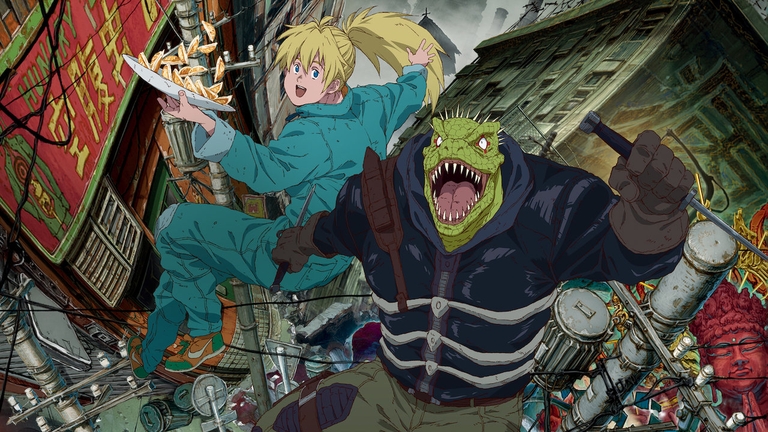
Most fantasy anime give you a generic European village or a Tokyo that got teleported somewhere. Dorohedoro gives you the Hole, and the Hole is a nightmare. It's this massive slum where humans live in crushed buildings and broken streets while sorcerers drop in from another dimension to use them as lab rats. There's no government, no police, no help. Just pollution, crime, and the occasional magic user turning someone inside out for practice. The place looks like someone took a city, smashed it with a hammer, then let it rot for fifty years.
Then you've got the sorcerers' world on the other side of those magic doors. It's clean. It's organized. It's got shopping malls and nice houses. The contrast isn't subtle and it isn't trying to be. One group has power literally growing out of their brains, the other group gets to be target practice. The show doesn't hold your hand explaining why this is bad. It just shows you Caiman finding another victim of a smoke experiment and you figure out real fast which side you're supposed to hate.
The background art deserves its own paragraph because it's doing heavy lifting. Apparently the art director Shinji Kimura went absolutely insane with the textures. Everything looks grimy. You can practically smell the rust and blood through the screen. When they switch to the sorcerers' dimension, everything gets cleaner but somehow still feels wrong. Like it's too sterile. Too fake. The environments aren't just backdrops, they're telling you the story without words.
Caiman and Nikaido Shouldn't Work But They Do
Caiman is this big idiot with a lizard head and amnesia. He can't remember who he was before the curse, he doesn't know who cursed him, and he doesn't really care about much except gyoza and killing sorcerers. He shoves their heads in his mouth because a mysterious figure lives in his throat and identifies them. Yeah, you read that right. There's a guy inside his throat who looks at the sorcerers and tells Caiman if they're the one who cursed him. It's gross and weird and never gets explained fully in season one, which drives some people crazy but I think it's perfect.
Then there's Nikaido. She's a small woman who runs the Hungry Bug restaurant and she's also secretly one of the most dangerous fighters in the Hole. She wears this apron and shorts combo that shouldn't work for combat but she'll kick a sorcerer's head clean off. The relationship between these two is the glue holding the whole show together. They don't have some tragic romance or complicated backstory. They're just friends. Really good friends who trust each other completely while they hunt people. It's refreshing. No will-they-won't-they garbage. Just two weirdos eating dumplings between murdering magic users.
The En Family Are the Real Stars
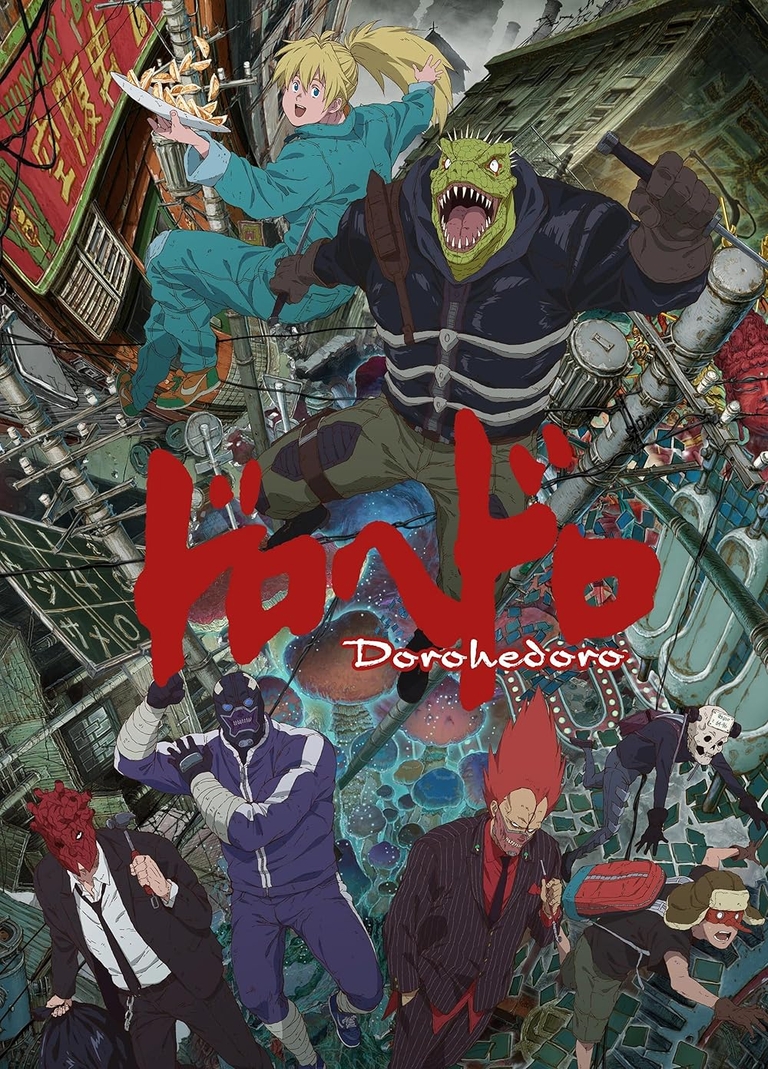
Every review of this show mentions the En Family and there's a reason for that. En himself is this mushroom-obsessed crime boss who can turn anything into fungus with a touch. He's terrifying but also weirdly domestic. He collects antique furniture and gets angry when people track mud in his house. His underlings Shin and Noi are basically the main characters of the sorcerer side, and they're more interesting than most protagonists in other anime.
Shin wears this heart-shaped mask and uses a hammer to smash people's heads in, but he's also polite and professional. Noi is this massive woman who heals people by hugging them until their bones snap back together, and she's obsessed with being strong to protect Shin. Their whole deal is about loyalty and family bonds, same as Caiman and Nikaido, just on the opposite side of the war. The show doesn't treat them like villains even though they work for the bad guy. They're just people doing their jobs, and their jobs happen to involve murder.
Then you've got Ebisu, this disaster of a sorcerer who keeps getting her face bitten off, and Fujita, the useless henchman who survives everything by accident. These two are comedy gold but they also show how the magic world grinds people up. Ebisu starts as this terrifying mask-wearing killer and ends up as a traumatized kid who can't remember her own name. Fujita is just trying to keep his job and not die. They're pathetic and sad and you end up rooting for them even though they work for the faction that's torturing humans.
That CGI Everyone Hates is Actually Perfect
Okay, let's talk about the elephant in the room. The character animation uses a lot of 3D CGI and it looks weird. People complain about it constantly. They say it looks like a video game cutscene from 2005. And yeah, it's janky sometimes. The movements aren't smooth like traditional 2D. But here's the thing: it fits. The whole show is about things being wrong and broken and ugly. Having these characters move in this stiff, unnatural way makes them feel more like puppets or corpses. It adds to the horror.
When the action starts, the CGI actually helps. The camera moves in ways you can't do with 2D animation. It spins around fights and goes through walls and makes everything feel chaotic. The backgrounds are hand-painted and gorgeous, and they clash with the 3D models in a way that makes the whole world feel off-balance. Some people say it's bad animation. I say it's deliberate aesthetic choices that most anime fans aren't ready for because they want everything to look like Demon Slayer.
Apparently the production team had to fight to keep the style faithful to Q Hayashida's manga, which is famously sketchy and detailed. They could have cleaned it up and made it generic, but they didn't. They kept the grime and the weird proportions and the off-putting vibes. That takes guts when you're spending Netflix money.
The Violence is Ridiculous But Never Pointless
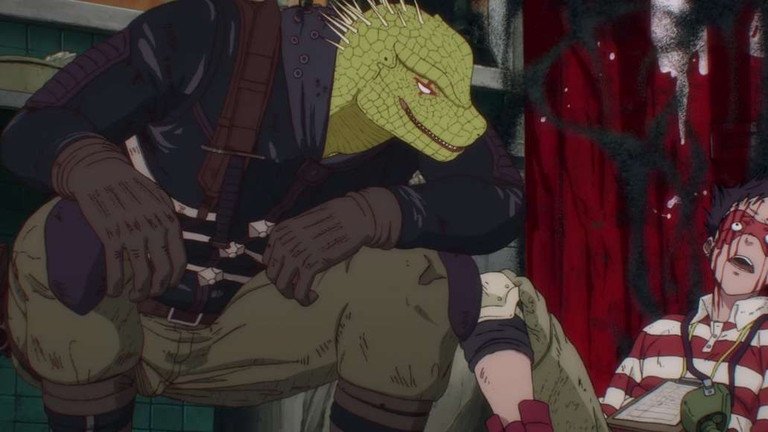
This show is gory. Like, ridiculously gory. People get cut in half, turned into pies, melted, exploded, and eaten. But it never feels like torture porn because the tone is so weird. Characters crack jokes while they're bleeding out. En will turn someone into a mushroom and then complain about the mess. Caiman gets his head sliced open and his main concern is whether he can still eat gyoza afterward.
This tonal whiplash is what makes Dorohedoro work. It refuses to be a dark edgy show about how sad everything is, even though the subject matter is genuinely horrifying. It's more interested in how people survive horror than how they suffer from it. Everyone in the Hole has seen terrible things, so they develop black humor as a survival mechanism. When Shin and Noi go out for drinks after a massacre, it doesn't feel like they're evil. It feels like they're coping.
The show also doesn't sexualize the violence, which is rare for seinen anime. Nikaido fights in shorts and a tank top but the camera doesn't creep on her. Noi is built like a statue but she's treated like a person with agency, not fan service. Even when characters are naked or injured, it's gross and medical, not titillating. That distinction matters.
It's About Class Warfare Whether You Like It Or Not
Underneath all the lizard heads and mushroom magic, Dorohedoro is screaming about economic inequality. The sorcerers are the rich kids who come to the slum to party and break things. The humans are the poor who can't fight back because they don't have the biological privilege of smoke. The doors between worlds might as well be border walls or gated communities.
Caiman is interesting because he's in between. He's got the lizard head so he's not fully human anymore, but he doesn't have smoke so he's not a sorcerer. He's the liminal figure who can move between worlds and see how stupid the whole system is. When he bites sorcerers, he's not just looking for his memory. He's biting back against the oppressors. The show doesn't hit you over the head with this metaphor, but it's there in every frame. The Hole is covered in trash and the magic world has clean streets because one group has power and the other doesn't.
Even the magic system reinforces this. Sorcerers are born with their power. It's genetic. You can't earn it or learn it. You're either born lucky or you're born in the Hole. That's a pretty blunt statement about real-world privilege wrapped up in a story about a guy with a reptile face.
Season One Only Scratches the Surface
If you watch the twelve episodes expecting answers, you're going to be angry. The season ends on a massive cliffhanger. We don't find out who cursed Caiman. We don't find out what's in his throat. We don't resolve the war between the Hole and the sorcerers. What we get is character setup and world building, which is actually the smart move.
The anime covers roughly the first forty chapters of the manga, which ran for 167 chapters total. That's not even a quarter of the story. But what it does is establish the rules and the players so that when things get crazy later, you care about who's getting hurt. By the end of episode twelve, you know Caiman, Nikaido, Shin, Noi, En, and the rest well enough to worry about them.
Some people complain that it's just a long advertisement for the manga, and they're not totally wrong. The pacing is deliberate, sometimes slow. There are episodes where nothing explodes and people just talk about their feelings or eat food. But that's what makes the violence matter later. If everyone is always fighting, fighting gets boring. Dorohedoro knows when to shut up and let characters breathe.
Looking Ahead to 2026 and Beyond
They finally announced season two is coming in 2026, which means we've got a wait ahead of us. The first season came out in 2020 and dropped on Netflix, where it sat in that weird spot of being critically loved but not talked about enough because it wasn't a shonen battle anime. Now that MAPPA is famous for Jujutsu Kaisen and Chainsaw Man, maybe more people will check out their older work.
Season two needs to cover the rest of the story or at least get us to the final arc. There's a lot of plot about Nikaido's past, the creation of the Hole, and the true nature of the sorcerer society that we haven't touched yet. The manga ending is controversial among fans, so it'll be interesting to see if the anime changes anything or sticks to the source material.
What I'm hoping for is more of the same weird energy. More gyoza. More mushroom magic. More of Shin and Noi being terrifyingly competent. More of Caiman being a dumb lizard who loves his friend. If they can keep the CGI style consistent and don't try to mainstream it into something boring, season two could be even better than the first.
Dorohedoro anime review and analysis always comes back to this: it's a show about broken people finding family in the worst place possible. Whether that's Caiman and Nikaido eating dumplings, or Shin and Noi protecting each other, or even En being weirdly paternal to his murder employees, the heart of the show is connection. Everything else, the gore, the magic, the mystery, is just window dressing for a story about how we survive when the world treats us like garbage. It's messy and ugly and doesn't answer all your questions, but neither does real life. That's what makes it stick with you.