
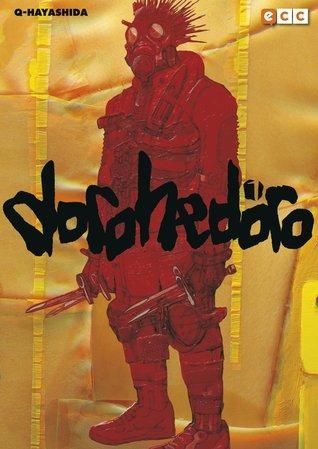
Dorohedoro world building and magic ending explained isn't some tidy package you can wrap up with a bow. People want hard rules for how the smoke works and clear logic for why Caiman has a lizard head, but that's not what Q Hayashida built. She made a biological horror story dressed up as a buddy comedy, and the ending reflects that chaos perfectly. You can't approach this like it's Avatar or Fullmetal Alchemist with their neat elemental tables. The magic here is messy, personal, and sometimes doesn't make sense because magic isn't supposed to make sense. It's a bodily function that happens to tear holes in reality.
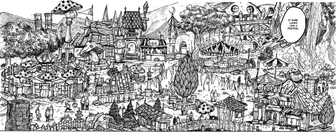
The whole story runs on two tracks that keep slamming into each other. You've got The Hole, this grimy human city that looks like a perpetual back alley after a rainstorm, and then you've got the Magic User World, this separate dimension that Chidaruma built to keep sorcerers from falling straight into hell when they die. The contrast isn't just visual, though the backgrounds in the manga show that off with these hand-drawn sketch lines that make everything feel dirty or too clean. It's about power. Humans in The Hole are guinea pigs. Sorcerers pop through magic doors to test their smoke on people, turning them into meat blobs or furniture or worse. The rain in The Hole isn't just weather either. It's residual magic falling from the sky, toxic to the sorcerers who never see rain in their world. That single detail tells you everything about the relationship between these places. One world dumps its waste on the other.
The Hole Is a Garbage Dump That Fights Back
The Hole sucks to live in. That's the baseline. It's industrial, cramped, and full of these massive dilapidated buildings that loom over everyone. Humans there have adapted to being prey. They've got the Hospital Wing dedicated to fixing what sorcerers break, and they've learned to hate magic users with a passion that keeps them going. Caiman and Nikaido run the Hungry Bug diner here, serving gyoza that becomes weirdly important to the plot later. The city itself becomes a character because it changes by the end. When those Hole-kun statues start appearing, built from the rage of every human ever tortured by magic, the power dynamic shifts hard. The Hole literally creates these guardians to smash sorcerers flat. That's not technology or magic in the traditional sense. It's the accumulated trauma of a place manifesting physically to bite back.
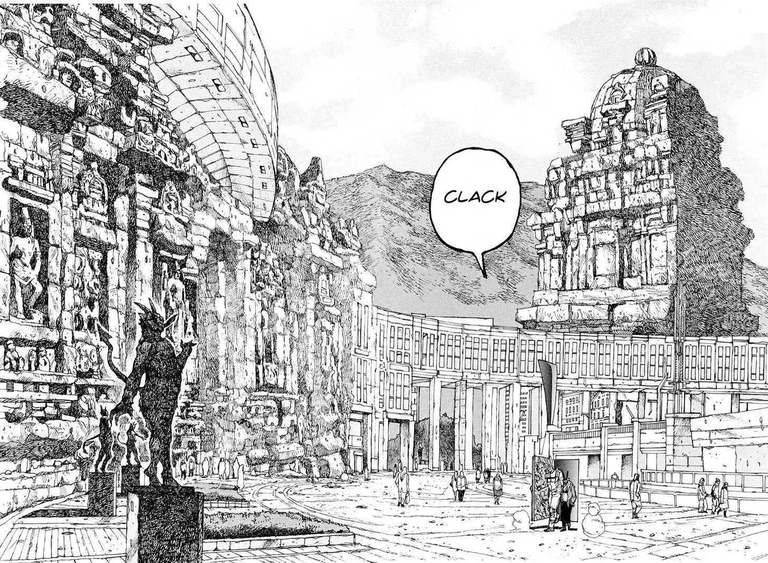
The architecture tells the story without words. In The Hole, everything is too big and falling apart. In the Magic User World, buildings never get taller than mansions except for En's place, which is this ridiculous sprawling estate that shows off his dominance. The sorcerer world looks cleaner but it's just as brutal. There are no police. People get murdered in the street over smoke quality. If your magic is useless, you're homeless. If it's too good, you get harvested by gangs until you die. En supposedly brought order to this chaos, but it's the order of a crime boss who controls the economy through mushrooms. Literally everything in that world runs on mushrooms because En's smoke turns anything into fungus, and he cornered the market on food and materials by threatening to turn opponents into compost.
Black Smoke Is Not A System
Here's where people get confused and annoyed. They want to know the rules for how magic works. The answer is there aren't any. Sorcerers produce black smoke from their bodies. That's it. That's the whole mechanic. Some produce it from their hands, some from their eyes, some from wounds in their heads. The smoke's effect depends entirely on the individual. Shin can sever people without killing them. Noi can heal anything. En makes mushrooms. Fujita makes weak explosions. The power level depends on how much smoke you can produce and how refined it is. There's no training montage to learn new spells. You are born with your magic and you live with it. If you're smokeless, like the Cross Eyes, you're trash in this society. The magic is biological, not learned. It's like having a really specific, really dangerous blood type.
This biological approach means magic is inconsistent by design. A sorcerer might have incredible power that's difficult to access, like Shin needing to work himself up to use his full abilities. Others might have useless magic that only works under specific moon phases. The magic system details don't form a coherent structure because Hayashida didn't want one. She wanted magic to feel like a weird body thing, like sweating or bleeding, but with supernatural consequences. When Caiman gets his head chopped off and it grows back, that's not a spell. That's just what his body does now. When Nikaido manipulates time, it's limited by her physical stamina and the number of uses she has stored. It's all meat and smoke and exhaustion.
En Was A Slave Who Became A Mushroom Dictator
To understand why the world works this way, you have to look at En. He wasn't born rich. His magic manifested as a kid and turned his parents into mushrooms. Then he got captured and enslaved for nine years in a factory that harvested his smoke to feed other sorcerers. He died from exhaustion and went to Hell, but his rage was so intense that Chidaruma sent him back. When he returned, he murdered his way through the factory owners and started building his family. He didn't create the hierarchy, he just made it more efficient. Under his rule, weak sorcerers still get exploited, but there's a structure to it. You can join his family and get protection if you're useful. If you're not, you starve in the Magic User World where it never rains and the sun always shines too bright.
En's cleaners, Shin and Noi, show how partnerships work in this broken economy. They're bonded by a contract that lets them feel each other's status. Noi heals, Shin cuts. They cover each other's weaknesses because alone, they'd be vulnerable to the endless backstabbing that defines sorcerer society. En forces Nikaido into a similar contract when he discovers she has time magic, which is rare enough to be dangerous. The whole world runs on these forced partnerships and economic dependencies. Magic isn't just combat ability. It's currency, it's status, it's your entire social security number written in black smoke.
The Cross Eyes Are Smokeless And Angry
Then you've got the Cross Eyes, led by Kai, who is also Aikawa, who is also Caiman. Try to keep up. The Cross Eyes are sorcerers born without smoke, or with such weak smoke they might as well be human. In a world where your worth is literally measured by how much black gunk you can exhale, these guys are the ultimate underclass. They form gangs and sell black powder, this drug that temporarily boosts magic, but really they're just trying to survive. Kai's whole deal is that he wants to kill every sorcerer with strong magic and reset the world. He goes about this by taking over Aikawa's body, who happens to be Caiman's original form, and then things get weird with Risu's curse and Ebisu's lizard magic.
The Cross Eyes represent what happens when you push biological determinism too far. If magic is genetic and you lost that lottery, you're either prey or you become a terrorist. They have their own hideouts and their own economy based on stealing magic tumors from strong sorcerers. That's the only way they can compete, by literally cutting the power source out of others and eating it. It's gross and desperate and exactly what you'd expect from people told they have no value.
Caiman's Identity Is A Mess Of Three People
Caiman isn't just one guy. That's the twist that breaks people's brains. Caiman is the lizard head. Inside that head, or controlling it, or memories of it, you've got Aikawa, the original sorcerer who got cursed. Then you've got Kai, the evil personality that took over Aikawa. Then you've got Risu, the guy whose curse actually created the lizard head in the first place because of Ebisu's smoke mixing with his during a fight. When Caiman shoves sorcerers into his mouth to ask what the man inside said, he's talking to Risu, or maybe Aikawa, or maybe the residual memory of Kai. It's a haunted house where the walls are scales and the ghosts are trauma.
This isn't a clean split personality situation either. The bodies transform, merge, separate, and regenerate according to rules that only make sense to the author. Aikawa can pop out as Caiman without the lizard head, having no memory of being Caiman. Kai can take over and turn into a monster. Risu can manifest as a separate curse entity. By the end, they're all fighting for control while also trying to stop the world from ending, and somehow gyoza fixes part of it. If you're looking for logical consistency in how these transformations work, you're reading the wrong manga. It's body horror. Bodies don't follow logic. They follow nightmare logic.
Devils Just Mess With Everyone
Above the sorcerers are the Devils, and they're the worst. Chidaruma created the Magic User World on a whim. The Devils make bets on human outcomes for fun. They kill Asu just because they lost a wager. They can do literally anything, travel through time, reshape matter, resurrect the dead, but they mostly use this power to be petty and cruel. When the ending discussion mentions the conclusion feeling abrupt, it's because the Devils wrap everything up by changing the rules of reality on a bet.
Chidaruma gets cursed to be human for five thousand years as punishment for losing. That's the only reason Nikaido gets brought back after being cut into pieces. It's not heroism that wins. It's cosmic luck and the whims of beings who view everyone else as toys. The Devils don't care about the struggle between The Hole and the sorcerers. They set up the whole system and watch it burn for entertainment. When you realize that, the ending makes more sense. How do you resolve a story where the gods are trolls? You let them lose a bet and call it a day.
The Ending Destroys Everything To Save It
So the ending discussion online gets heated because people expect catharsis. They want Ebisu to get her memory back fully. They want Risu and Asu to get a happy ending instead of becoming Devils. They want the massive final battle against Holey, the entity made of human resentment and tube goo, to feel world-shaking. Instead, En's family uses Mr. Sho's dematerialization power to disrupt the monster, Caiman tricks his way into being a sorcerer using a gyoza wand, and they stab the tumor until it dies. Then everything goes back to normal.
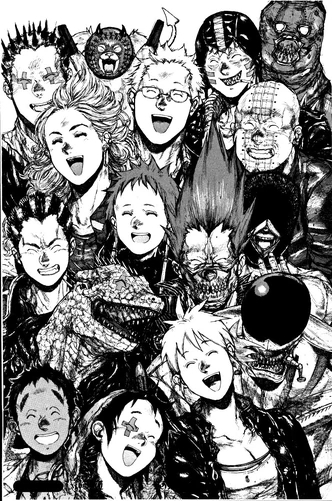
The Magic User World gets wrecked by the goo, but En rebuilds. The Hole gets Hole-kun statues that can fight back against sorcerers, so humans aren't prey anymore. Caiman and Nikaido reopen the Hungry Bug and serve gyoza. That's it. Business as usual. Some fans hate this. They call it anticlimactic. But that's the point. The world doesn't end with a bang or a transformation into some utopia. It just keeps going, slightly less terrible than before. The Cross Eyes are done. En is back with his family. Caiman is mostly Aikawa again but he still hangs out with everyone. The cycle of violence slows down but doesn't stop because that's what cycles do.
Why The Gyoza Shop Finale Is Perfect
People complaining about the ending miss what the story was actually about. It wasn't about defeating evil permanently or unlocking the ultimate magic technique. It was about finding your people and surviving. Caiman spent the whole series looking for his identity, but he already had it. He was Nikaido's friend. He was the guy who protects the weak in The Hole. Whether he's Aikawa or Kai or Caiman doesn't matter to the relationships he built. The lizard head was a curse, but the person under it was real.
Nikaido kept her time magic but chose to make gyoza instead of being a Devil. En went back to being a crime boss but now he knows his family loves him. Shin and Noi are still cleaning up messes. The world is still unfair, still weird, still running on black smoke and mushroom economics. But the characters found their spots in it. That's the resolution. Not a bang, not a whimper, just the sound of dumplings frying in a shop that shouldn't have survived but did.
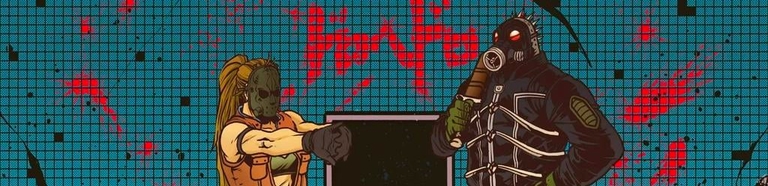
The Dorohedoro world building works because it doesn't try to explain everything. It gives you the feel of a place, the smell of it, the rules that aren't really rules but suggestions. The Hole is depression. The Magic User World is anxiety. The Devils are the random cruelty of the universe. And Caiman is just a guy trying to get his head straight while eating good food with his best friend. If you want hard magic systems, go read something with a rulebook. If you want to know how Dorohedoro ends, it ends with breakfast service at the Hungry Bug, and that's exactly right.