
Female character archetypes in anime aren't a bug in the system. They're the entire operating system. When someone dumps on about how Taiga Aisaka is just another tsundere or how Yuno Gasai ruined yanderes for everyone, they're missing the point. These aren't mistakes or shortcuts. They're compression algorithms. Japanese animation runs on tight budgets and tighter schedules. You don't have three episodes to establish that this girl likes the protagonist but has attachment issues. You give her orange hair, have her call him an idiot while blushing, and boom. Everyone knows the rules. Everyone understands the game. That's not bad writing. That's efficient communication using a shared visual and behavioral language that's been evolving since Urusei Yatsura put Lum on screen back in the 80s. The thing is, people think archetypes are cages. They're not. They're foundations. You can build a skyscraper or a shack on the same concrete slab. The problem is when writers only know how to build sheds, but that's not the concrete's fault.
The word "dere" itself comes from "deredere," an onomatopoeia for being lovey-dovey or swooning. Apparently that's how Japanese linguistics works, they just turn feelings into sound effects and run with it. The taxonomy breaks down into roughly five major categories that everyone recognizes even if they claim they hate them. You've got tsundere, yandere, kuudere, dandere, and deredere. Each one represents a different malfunction in human attachment. Tsunderes are aggressive to mask vulnerability. Yanderes are obsessive to the point of psychosis. Kuuderes are flatlining emotionally to protect themselves. Danderes are just scared of everything. Derederes are the baseline healthy human being who likes people openly, which ironically makes them the rarest in dramatic fiction because healthy people don't drive plots forward.
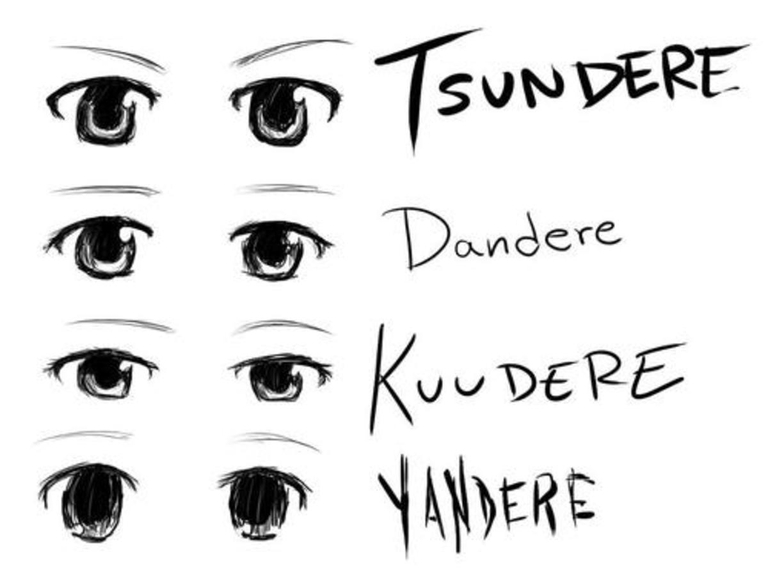
Tsundere: The Original Sin of Anime Romance
Tsunderes are everywhere and everyone's sick of them except they're not because they keep watching Toradora reruns. The archetype is simple on paper. A Type tsunderes act hostile and cold normally but get soft around their crush. B Type tsunderes are nice to everyone but get violent with the person they actually like. Both types are coping mechanisms for girls who think wanting affection makes them weak. That's the mechanical core. It creates instant conflict. You don't need a villain if your love interest is punching you in episode three because she can't process her own hormones.
Lum Invader from Urusei Yatsura is supposedly patient zero for this disease. She electrocutes Ataru constantly but worships him. That pattern got refined through the 90s and 2000s until you get Taiga Aisaka, who's basically a walking anxiety attack wrapped in a small package. The visual language is rigid. Red hair or twin tails optional but recommended. Violent outbursts that would get someone arrested in real life played for laughs. The tsundere is annoying because she's relatable. Everyone's known someone who lashes out when they feel exposed. The anime just cranks that up to eleven and adds sparkles when she finally says something nice. It works because it's cathartic. You get to watch someone struggle with the exact same emotional constipation you see in real life, except this version gets a happy ending.
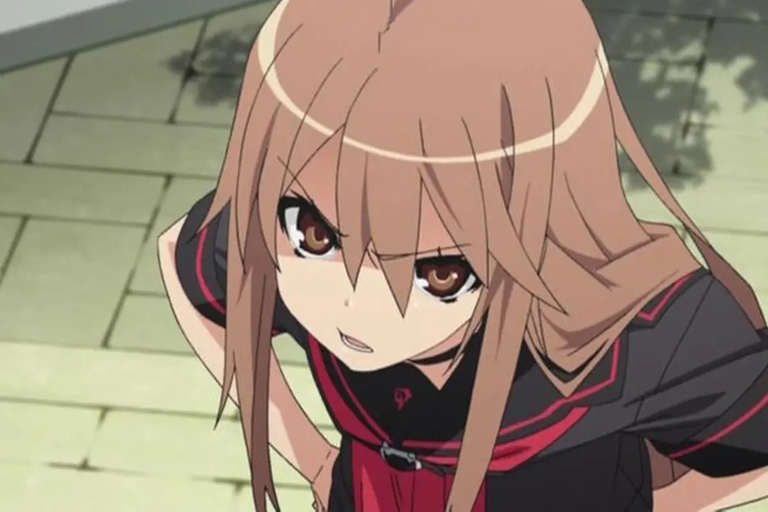
The voice acting for these characters is specific too. They need that sharp, nasal tone that can crack into a whine when embarrassed. Rie Kugimiya built an entire career on this sound. It's not subtle. Subtlety doesn't sell merchandise. When a tsundere stutters and says "it's not like I did this for you," followed by the stinger chord, that's a Pavlovian bell for otaku. It triggers the recognition of vulnerability through the armor of hostility. That's the job. The character isn't a person, she's a mechanical device for delivering moments of softness that feel earned because they were hard to extract.
Yandere: When Attachment Becomes a Horror Movie
Yanderes are what happens when you take the tsundere's fear of rejection and replace it with a complete lack of survival instinct. The word comes from "yanderu" meaning sick or mentally ill, plus the dere. These girls aren't just clingy. They're dangerous. Yuno Gasai from Future Diary is the poster child, standing there with an axe covered in blood while smiling like she just brought you lunch. The mechanics here are about stakes. A yandere raises the cost of the protagonist's choices. Every interaction has potential body count.
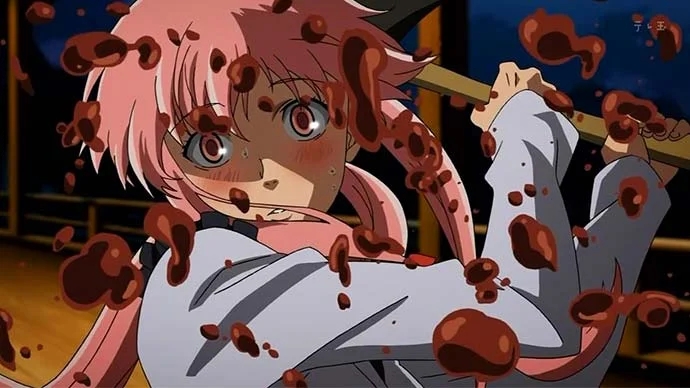
The narrative function is tension through obsession. Normal romance has misunderstandings. Yandere romance has knives. The archetype exploded in popularity because it solves the harem problem. If you have five girls who all like the protagonist but none of them act on it, you get a stalemate. Add a yandere and suddenly there's an active threat keeping everyone else away. She's the bouncer for the relationship. Other girls get near the protagonist, they might get stabbed. It forces the plot to move because the status quo is literally lethal. The psychology behind why viewers like this is darker. It's the ultimate fantasy of being wanted that badly. Someone so devoted they'll kill for you. It's messed up but it's honest about the possessive streak in romantic fantasy.
There are variants like yangire, which is the same violent energy but directed at protecting friends or family rather than romantic obsession. That distinction matters to hardcore fans but to the average viewer, an axe is an axe. The visual coding is pink hair usually, big eyes that go flat when she's in kill mode, and that specific giggle that voice actresses use when the character is three seconds from murder. It's horror movie logic applied to slice of life settings. The dissonance is the point.
Kuudere and Dandere: Ice vs Anxiety
People mix these up constantly but they're mechanically opposite. Kuuderes are cold because they're in control. Danderes are quiet because they're out of control. A kuudere like Rei Ayanami or Yuki Nagato operates on logic first. They calculate social interactions like math problems. When they show warmth, it's significant because they chose to. It's an active decision to lower the walls. The kuudere is often the smartest person in the room, sometimes literally a robot or an alien, and their arc is about learning that emotions aren't inefficient.
Danderes like Hinata Hyuga or Sawako Kuronuma are just terrified. They want to talk but their throat closes up. They want to be social but the room is too loud. They're not calculating, they're buffering. The kuudere chooses silence. The dandere has silence thrust upon them by their own nervous system. Both get marketed as "mysterious quiet girls" but the experience of watching them is totally different. Kuuderes make you lean in because they're unreadable. Danderes make you protective because they're obviously suffering.
The kuudere often gets a Type A and Type B classification like tsunderes. Type A is cold to everyone equally. Type B is cold to the world but secretly warm to the protagonist. Both types speak in monotone or with minimal inflection. Their character designs use blue or white color schemes, straight hair, and small expressions. When they do smile, it's framed like the sun coming out. That's the mechanical payoff. You waited twelve episodes for that half inch lip movement and it feels like winning a prize.
The Royal Court: Himedere and Company
Beyond the big five, you get the royalty complex characters. Himedere girls demand to be treated like princesses. Noelle Silva from Black Clover is a perfect example, looking down her nose at commoners while secretly craving acceptance. The mechanical purpose is class conflict. They create instant social friction. You've got a character who thinks she's better than everyone else but the narrative is going to humble her, usually through friendship or love. It's a redemption arc waiting to happen.
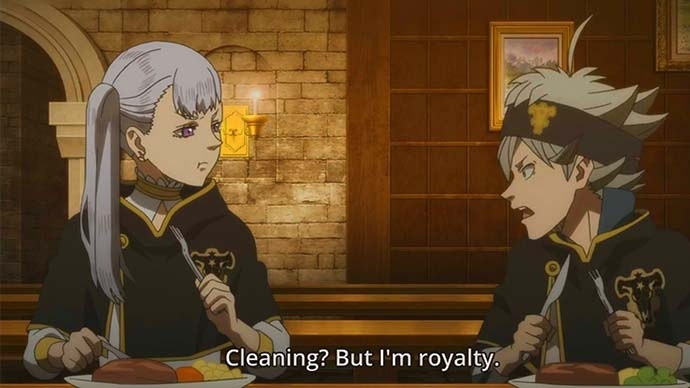
Kamidere is the god complex variant, where the character thinks they're literally divine or at least destined to rule. Both types serve as barriers for the protagonist to overcome. They start unlikable and either stay that way as villains or soften into allies. The visual language is frilly clothes, haughty laughter, and the arms-crossed-under-breasts pose that anime uses to signal arrogance. They're fun because they give the viewer permission to dislike a female character at first, then redeem her later. It's a forgiveness machine.
Then you've got the bakadere, the idiot. These girls are clumsy, airheaded, and usually falling over while carrying toast in their mouth. The morality of this archetype is questionable because it's infantilization disguised as charm. The character has the mental age of a child but the body of an adult, and the show treats this as desirable. It's a power fantasy for viewers who want someone dependent and non-threatening. The genki girl is adjacent, all energy and shouting, but she's competent. The bakadere isn't. That incompetence is the feature, not the bug. It makes the viewer feel needed.
The Cultural Machinery Behind the Boxes
Japan didn't invent these archetypes in a vacuum. The dere system grew out of moe culture, which is this whole economic engine built on making characters that trigger protective or romantic impulses. Moe originally meant something like "budding" or "burning," referring to that feeling when you see something so cute or vulnerable you get chest pains. The anime industry weaponized this. They figured out that if you give a character a specific set of traits, you can sell merchandise to people who imprint on that type.
The female character archetypes in anime reflect Japanese gender expectations turned up to cartoon levels. The yamato nadeshiko ideal, the perfect traditional wife, lurks behind a lot of these designs. Even the violent tsundere usually learns to cook by the finale. The warrior woman archetype exists, your Mikasas and your Sabers, but they're often emotionally stunted to compensate. A woman can't just be strong. She has to be strong and broken, or strong but secretly wants to be domestic. The cultural pressure is always there, pushing these characters back toward nurturance even when the story gives them swords.
Voice acting reinforces the archetypes. Each type has a vocal range. Tsunderes get the squeaky tsun voice that drops to a whisper for dere moments. Kuuderes get flat affect. Danderes get the trembling stutter. Yanderes get the sing-song lilt that goes sharp when angry. Japanese voice actors are trained to hit these notes precisely because the audience expects the audio cue to match the visual cue. It's a full sensory package. When you hear that specific "uguu" noise, your brain knows exactly what kind of scene you're in for.
Why Writers Keep Using These Crutches
Here's the truth nobody wants to print on marketing materials. Archetypes are deadline savers. When you've got four weeks to write a light novel volume or a manga chapter, you don't have time to invent a fully realized human being from scratch. You grab the tsundere template, change the hair color, and get writing. The reader fills in the blanks. They know how tsunderes work. You can skip three chapters of character establishment and jump straight to the plot. It's not laziness. It's logistics. The anime industry produces more content per year than any human could watch. To maintain that volume, you need shorthand. The dere types are that shorthand.
Harem anime especially need the archetypes because they have to differentiate five girls who all serve the same narrative function. You can't have five unique complex personalities competing for screen time in twelve episodes. You'd get a mess. So you assign the tsundere to girl A, the kuudere to girl B, the dandere to girl C. Now the viewer can tell them apart instantly. The writer can give each one a single episode of focus that hits their specific archetype beats, then rotate to the next girl. It's assembly line storytelling but it works. It delivers emotional beats on schedule.
The problem comes when writers think the archetype is the character. When they never develop past the initial template. That's when you get the complaints about flat characters and boring romance. But a good writer treats the archetype like a starting position. Taiga Aisaka starts as a tsundere but grows into someone who can express fear without anger. Yuno Gasai stays a yandere but you understand why. The archetype isn't the ceiling. It's the floor.
Breaking the Mold and Subverting Expectations
Some shows mess with the formula on purpose. Monogatari takes the tsundere, the childhood friend, the class president, and peels them apart to show the trauma underneath the trope. Evangelion gave us Rei Ayanami, the kuudere prototype, then asked what kind of messed up existence would create a person with no ego. These shows use the audience's familiarity with the archetypes against them. They show you the box you think you know, then reveal it's full of broken glass.
Modern anime is slowly diversifying. You're seeing more genki girls who have depression, more warrior women who don't need a love interest to validate them, more characters who start as one archetype and mutate into something unclassifiable. The demand for multifaceted female characters is rising globally and Japan is responding, albeit slowly. The economics still favor the tried and true dere types for merchandise sales, but the critical darlings are increasingly the ones that break the templates.
The future probably isn't the death of archetypes. It's hybridization. Characters who are tsundere about their yandere tendencies, or kuuderes who are secretly deredere but only for their cat. The boxes will get more specific, more niche, until they're basically useless as categories. That's probably good. Categories are for filing cabinets, not people. But for now, when you watch a new season and see that girl with the twin tails calling the protagonist trash, you'll know exactly what you're looking at. It's not a mistake. It's a language. Learn to read it or don't, but don't pretend it's gibberish.
Female character archetypes in anime are going to stick around because they work. They're the grammar of the medium. You can write poetry or you can write instruction manuals using the same words. The words aren't the problem. The writer is. So next time someone complains about another tsundere winning the protagonist bowl, remember that she's not just a character. She's a device designed to deliver a specific emotional payload, and if she hits, it's because the mechanics were solid, not because the writers were lazy.