
Fire force company members and roles aren't just random anime tropes slapped onto firefighters. You've got eight separate companies with different bosses, different loyalties, and different secrets they're hiding from each other. Most shonen anime give you one team to root for and call it a day. Fire Force said no, let's make seven other teams that might be corrupt, definitely have their own agendas, and sometimes try to kill the main characters.
Company 8 gets all the screen time because they're the protagonists, but understanding what the other seven companies do is crucial to getting why the Tokyo Empire is such a mess. Each company answers to a different power structure. Some work for the military. Some work for a church. Some work for a corporation that basically owns the entire economy. And Company 8? They technically don't answer to anyone, which is why they can get away with investigating the other seven without getting court-martialed immediately.
The rank structure looks straightforward on paper until you realize half these people are double agents or have secret fire powers that break the rules. You've got Captains who can't create fire fighting alongside Second Class soldiers who can melt steel. You've got nuns who pray for the dead but might also be cosmic pillars destined to destroy the world. It's messy. It's weird. It's way more political than a show about burning demons has any right to be.
Fire Force Company Members and Roles in the Independent Eighth
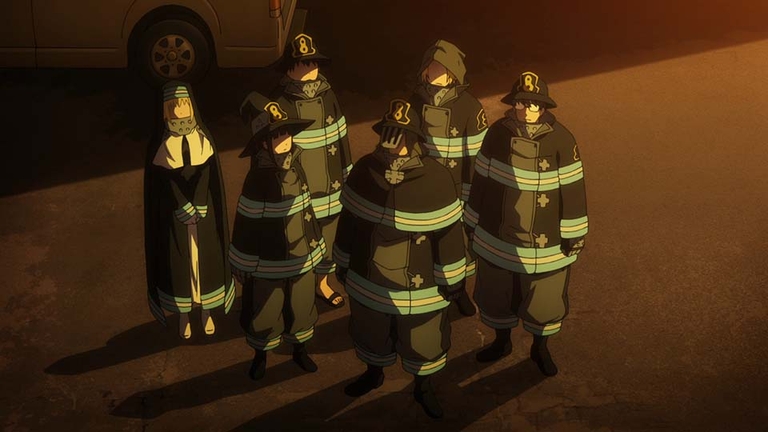
Company 8 shouldn't work as well as it does. On paper it's a hodgepodge of misfits with conflicting personalities and powers that don't complement each other so much as they explode near each other. But that's exactly why they're the only ones really getting anything done in this broken system.
Captain Akitaru Obi runs the show despite having zero fire abilities. None. He can't generate a spark. He can't control heat. He's just a guy who works out too much and has a bunker suit that lets him punch Infernals hard enough to crack their skulls. People sleep on Obi because he doesn't shoot flames from his hands, but he nearly beat Benimaru Shinmon in a straight fight using nothing but grit and tactical violence. His role isn't just leadership. He's the moral compass that keeps Company 8 from becoming as corrupt as the organizations they're investigating. He trusts his team enough to let them operate independently but steps in when they need an adult who won't back down.
Lieutenant Takehisa Hinawa handles the actual discipline and shooting. He's a Second Generation pyrokinetic, which means he manipulates existing fire rather than creating it. He uses this to control the trajectory and explosive power of bullets he fires from specialized guns. His bullets hit like tank shells because he can heat them mid-flight or detonate them with pinpoint accuracy. Hinawa creates most of Company 8's rules and enforces them with the enthusiasm of a disappointed father. He seems cold but cares deeply about not letting rookies die stupid deaths. He was there when the company formed, so he remembers how small they started and how much they have to lose.
Maki Oze serves as First Class Fire Soldier and resident muscle. She's another Second Generation user with a military background that she tries to escape but can't because her family keeps showing up to drag her back into Tokyo Army politics. Her power lets her control flames and shape them into fire spirits, little living fireballs that follow her commands. Vulcan later upgrades her gear to give her giant metal hammers that she powers with her flames, letting her smash through enemies that should be way out of her league. She's physically strong enough to wrestle Infernals to the ground without using her powers, which makes her terrifying in close combat. Her dad is a general and her brother is a lieutenant in the regular army, so she constantly deals with pressure to quit Company 8 and join a real military unit.
Shinra Kusakabe and Arthur Boyle occupy the Second Class Fire Soldier ranks but they're both Third Generation, meaning they create their own flames from their bodies. Shinra generates fire from his feet, giving him insane mobility and kicking power that lets him fly and fight in midair. Everyone calls him a devil because of how it looks. He joined to find out who killed his family and became a hero instead. Arthur generates plasma through his delusion that he's a knight king, wielding a sword made of pure plasma that gets stronger the more he believes his own hype. They're rivals who can't stop competing even when it nearly gets them killed. Arthur's power is unique because plasma isn't normal fire, making him one of the only people who can counter certain electrical attacks from the White Clad.
Tamaki Kotatsu technically isn't a permanent Company 8 member but she stays there after getting suspended from Company 1. She's Third Generation with cat-themed fire powers called Nekomata that manifest as pink flames around her hands and feet. She suffers from Lucky Lecher Lure Syndrome, which is as annoying as it sounds and mostly serves as fan service, but her combat potential is solid when she isn't getting groped by accident. She's currently training under Benimaru to stop being a joke character and start utilizing her Third Generation abilities properly. She transferred because her own Lieutenant in Company 1 turned out to be a terrorist.
The support staff matters just as much as the fighters. Iris serves as Sister, praying for Infernals' souls during purification. She wears the standard nun outfit and has no combat ability but she's revealed to be the Eighth Pillar, making her crucial to the Evangelist's plans to recreate the Great Cataclysm. Viktor Licht works as the scientist, initially a spy for Haijima Industries who switched sides because he found Company 8 more interesting than his corporate overlords. He understands combustion on a level that borders on supernatural obsession and maintains a secret alliance with Joker. Vulcan Joseph handles engineering as the self-proclaimed God of Fire and Smithing. He builds their gear and weapons, including specialized equipment that lets non-powered members fight on equal terms with pyrokinetics. His family originally built the Amaterasu reactor before Haijima stole their work. Lisa Isaribi works as his assistant after being rescued from the White Clad's brainwashing. She was codenamed Feeler and can summon octopus tentacles made of fire which is exactly as weird as it sounds. She provides emotional support to Vulcan while helping maintain their mechanical arsenal.
The Other Seven Companies and Their Dirty Secrets
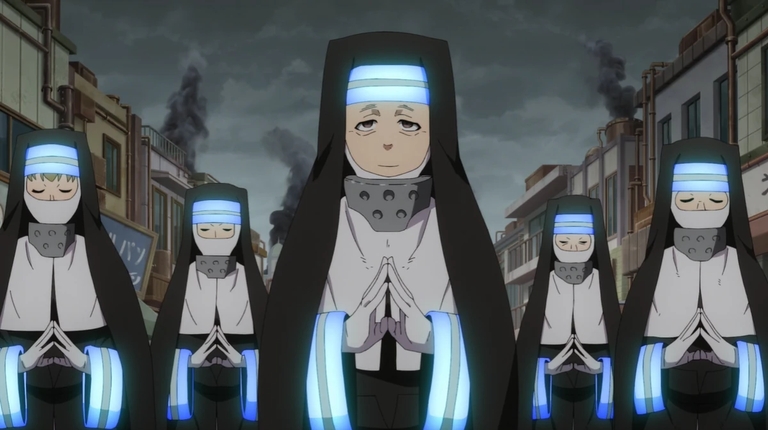
Company 1 operates out of the Holy Sol Temple and basically functions as the church's military arm. They're elites, mostly Third Generation users with religious fervor backing up their firepower. Leonard Burns used to captain this unit before certain revelations changed things. He's a veteran with enhanced strength and durability from increasing his body temperature, and he experienced an Adolla Link with Joker years ago that warped his perspective on the world. Karim Flam serves as Lieutenant, converting heat into sound and ice using a musical instrument, which is a weird power that works better than you'd expect. Rekka Hoshimiya was a Lieutenant here too before everyone found out he was a White Clad infiltrator creating Infernals instead of stopping them. Tamaki came from here originally. These guys pray before battles and genuinely believe they're doing holy work, which makes them dangerous when the church itself turns out to be corrupt. They also have Onyango, a retired Fire Soldier who came back because he understands Burns better than most.
Company 2 belongs to the Tokyo Army, making them straight-up military firefighters who follow chain of command above all else. Captain Gustav Honda generates flames from his scalp and focuses on overwhelming force and strict discipline. Takeru Noto, nicknamed Juggernaut, creates explosive flames despite being terrified of fire himself, which is ironic and inconvenient but makes him sympathetic. They're disciplined but rigid, and their connection to the army means they sometimes prioritize orders over saving lives. Taguchi serves as another Lieutenant there. They're the muscle when the government needs to suppress something but don't expect creative thinking from them.
Companies 3 and 5 both answer to Haijima Industries, the massive corporation that builds all the weapons and runs the economy. Company 3 got infiltrated hard by the White Clad, with Dr. Giovanni running the place while secretly serving the Evangelist. Giovanni is a creepy former scientist who wants to live forever and see the world burn. Flail and Mirage were impostors working from within, members of the Ashen Flame Knights who posed as normal Fire Soldiers. Company 5 focuses more on research and experimentation, led by Princess Hibana who manipulates cherry blossom-shaped flames. She initially antagonizes Company 8 because she's willing to experiment on Infernals to learn about combustion, which violates the whole purification with dignity thing. Tōru Kishiri creates exploding bubblegum balloons as a rookie there. The Three Angels of the 5th are female Fire Soldiers who serve under her. Setsuo Miyamoto was a murderer they experimented on before he became an Infernal.
Company 4 handles the boring administrative stuff through the Fire Defence Agency. Pan Ko Paat captains this unit with heat resistance abilities that make him tough to burn. Ogun Montgomery, Shinra's friend from the academy, creates fire spears and tattoos flames onto his body for power boosts. He chose Company 4 over Company 8 because he wanted to help people through training and administration rather than just fighting. They train new recruits and handle standard fires, making them the most normal firefighters in the bunch. Sōichirō Hague used to captain this company before his Adolla Link experience made him weird and obsessed with ashes.
Company 6 specializes in medical treatment and also answers to the Holy Sol Temple. Kayoko Huang leads them, using a flaming Rod of Asclepius for healing instead of hurting. She can cauterize wounds and treat burns that would kill normal patients. Asako Hague serves as Lieutenant and is Sōichirō's granddaughter. They're the ones who patch people up after the other companies break them, running field hospitals and recovery wards. If you get injured fighting an Infernal, you pray Company 6 is nearby.
Company 7 stands alone in Asakusa with no corporate or religious ties. Benimaru Shinmon captains this two-man army, and he's a hybrid Second and Third Generation user who can both create and manipulate fire. He's arguably the strongest fighter in the entire series, capable of leveling city blocks when serious. He uses a traditional firefighting technique called Iai Hand Form that looks like martial arts mixed with pyrokinesis. His Lieutenant Konro suffers from Tephrosis, a condition he got from absorbing an Infernal's power, which limits his lifespan but makes him experienced and pragmatic. The twins Hinata and Hikage provide backup and comic relief. They're weird, isolated, and don't trust the Tokyo government, which makes them Company 8's only reliable allies among the other brigades. Benimaru trains Tamaki and serves as a benchmark for how strong a Captain can really be.
Special Fire Force structure explained
Ranks and Generations Actually Matter
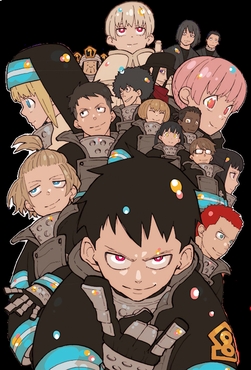
The rank structure isn't just for show. Captains command entire companies and are expected to be the strongest fighters or smartest tacticians. Lieutenants serve as second-in-command, and most companies have multiples handling different aspects like combat or logistics. Fire Soldiers split into First Class and Second Class based on experience and capability, not just power level. Sisters provide spiritual support and last rites. Engineers and Scientists handle the technical aspects that keep everyone alive.
But the generational classifications determine everything about how you fight. First Generation victims just become Infernals with no control, mindless burning zombies that need to be put down. Second Generation users manipulate existing flames, making them perfect for support roles, defense, and creative battlefield control. They can't create fire from nothing, so they need a source, but their precision is unmatched. Third Generation users create their own fire from their bodies, usually through specific body parts like feet, hands, or mouths. They serve as the heavy hitters and frontline fighters but risk overheating if they push too hard. Then you've got the rare Fourth Generation, the Pillars, who connect to the Adolla Burst and can access godlike power that breaks physics entirely. Shinra, Sho, Iris, Haumea, and several others fall into this category, making them targets for the White Clad's apocalypse cult.
The uniforms tell you who someone works for and what they do. Field operations use black and gray bunker gear with neon stripes and cross-shaped buttons. Formal uniforms vary by company. Company 2 wears olive green gakuran jackets while Company 8 wears black ones. Women in Company 8 wear white shirts with blue ties and dark jackets. The helmets say "FIRE FORCE # TOKYO" with the company number. Off duty they wear orange jumpsuits. Officers salute with their right hand only, a small detail that shows the military discipline ingrained in the organization.
Why This Messy Structure Creates Better Drama
Fire force company members and roles work because the friction between companies feels real. Company 8 can't just walk into Company 5's labs and demand evidence. They have to sneak, fight, or negotiate because Haijima owns the government and funds half the other brigades. When Company 1 members show up, there's always tension about whether they're serving God or the corrupt church leadership that hides the truth about Raffles I's murder. Company 2's military discipline clashes with Company 8's rogue attitude constantly, leading to standoffs where both sides have weapons drawn but can't technically shoot without starting a civil war.
The diversity of powers within single companies also prevents the everyone has the same ability boredom you see in other team-based anime. Company 8 specifically has a non-powered captain, Second Generation bullet controllers, Third Generation plasma knights, and engineers building mecha suits. They have to coordinate abilities that don't naturally synergize, which creates more interesting fights than everyone just throwing fireballs at each other. When they fight together, you see Obi directing traffic while Hinawa snipes and Maki controls the battlefield geometry with her fire spirits.
Company 8's specific mission to investigate the other seven adds a layer of paranoia. Everyone is a suspect. That Lieutenant who seemed helpful? White Clad spy. That friendly Scientist? Corporate mole. It means every interaction carries weight because half these people are hiding something that could end the world. The show uses the company structure to create mystery and suspicion. You can't trust Company 3 because Haijima is evil. You can't trust Company 1 because the church lies. You can trust Company 7 but they're isolationists who don't care about Tokyo's politics.
Company 8 ranked by usefulness
The White Clad infiltrated almost every level of the Fire Force structure, which makes sense given how compartmentalized the companies are. Information hoarding between brigades allowed the Evangelist's cult to plant agents in Companies 1, 3, and elsewhere without anyone noticing. The system of separate corporate, military, and religious oversight created gaps that a unified terrorist organization exploited easily. Dr. Giovanni ran Company 3's research division while actively working to destroy the world. Rekka Hoshimiya was a Company 1 Lieutenant converting people into Infernals for the Evangelist. The fragmentation that was supposed to provide checks and balances instead provided cover for the bad guys.
Understanding who reports to whom explains why certain characters can get away with blatant corruption while Company 8 gets investigated for doing their actual job. When you're backed by Haijima Industries or the Holy Sol Temple, you have diplomatic immunity that independent Company 8 lacks, forcing them to be smarter and more careful. Hibana can experiment on Infernals because Company 5 has corporate lawyers. Obi has to break into her lab because Company 8 has no political cover.
The roles also reflect the characters' personalities perfectly. Hinawa's rigid control matches his bullet manipulation that requires mathematical precision. Obi's lack of powers forces him to be the strategist who thinks three moves ahead. Arthur's delusional knight persona generates plasma because his self-image literally creates his reality. Even Tamaki's embarrassing Lucky Lecher Lure fits her chaotic, accident-prone personality that contrasts with the disciplined military structure she came from. Vulcan's role as engineer suits his anti-corporate mindset because he builds things that last instead of consuming what Haijima sells.
Final Thoughts
Fire force company members and roles create a military hierarchy that functions as a storytelling device rather than just background noise. When you watch the show understanding that Company 3 works for the same corporation that manufactures the guns, or that Company 1 answers to the church that's hiding the truth about the Great Cataclysm, every interaction gains subtext. You understand why Benimaru doesn't trust anyone from the capital and why Hibana thought she could get away with torture.
The rank system isn't arbitrary. It determines who can order whom around, who has access to classified information about spontaneous human combustion, and who gets thrown under the bus when things go wrong. Company 8's independence lets them break rules that would get other soldiers executed, which is why they can uncover the conspiracy that the entrenched powers want buried. They're the only ones who can act because they don't have corporate sponsors or religious overseers pulling their strings.
Whether it's the corporate drones in Company 5, the religious zealots in Company 1, or the loose cannons in Company 8, each group serves a specific function in the Tokyo Empire's broken system. Knowing their affiliations and internal hierarchies isn't just trivia. It's essential to understanding why the world burns and who profits from keeping the fires lit. The show isn't just about fighting fire demons. It's about surviving a bureaucratic nightmare where your allies might be owned by the same people starting the fires.