
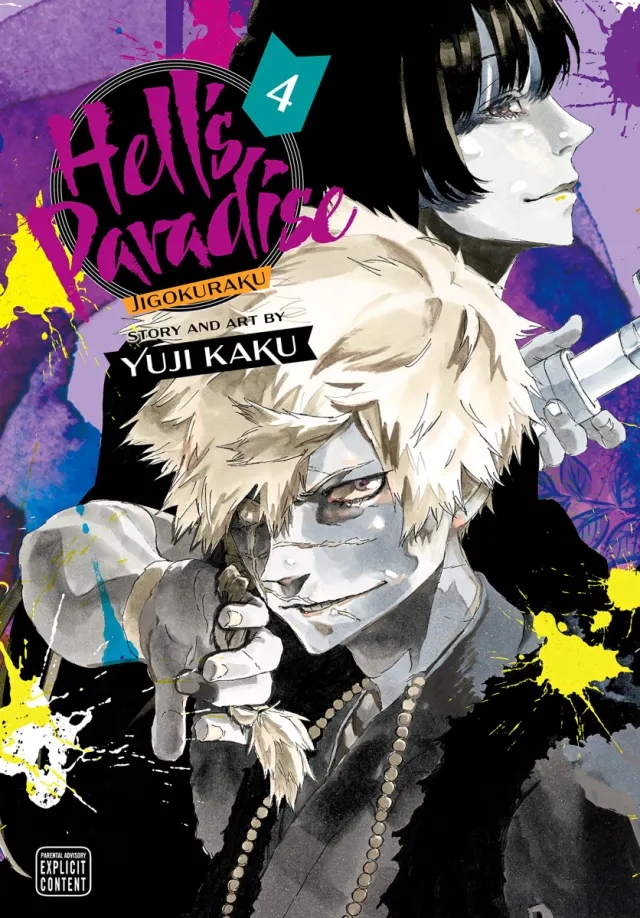
Gabimaru the Hollow starts off as an unkillable freak who won't die no matter how many times the shogun's executioners try to chop his head off. That's the cold open of Hell's Paradise: Jigokuraku Tensen lore and Gabimaru's journey, and it hooks you immediately not because of the violence, but because of the contradiction. Here's this guy who claims he wants to die, yet his body refuses to let him. Turns out he's got a wife back home named Yui, and his subconscious will to see her again is literally keeping his head attached to his shoulders. That's the whole emotional engine driving this story, and it's way more interesting than the standard battle shonen power-ups.
The series dumps Gabimaru on Kotaku island, also called Shinsenkyō, alongside other death row convicts and their Yamada Asaemon executioners. They're supposed to find the Elixir of Life for the shogun. The ones who return get pardoned. Sounds like a standard suicide mission setup until you realize the island isn't just dangerous because of monsters. It's a laboratory. Everything there is designed to either kill you or turn you into fertilizer for the Tensen, seven immortal beings who run the place like deranged botanists. The horror comes from the fact that death isn't the worst outcome here. Getting turned into a tree through arborification is.
Who Gabimaru Actually Is
Before he was Gabimaru the Hollow, he was just Saku, a kid born to two Iwagakure shinobi who tried to escape the village and got executed for it. The Iwagakure chief took Saku and put him through training so brutal it would make Orochimaru flinch. They starved him, beat him, and taught him that emotions are weakness and killing is the only truth. This creates the Hollow persona, a guy who can slaughter twenty men without getting scratched and who thinks his own life has zero value if he dies in combat. He's the 58th person to hold the Gabimaru title, having killed the 57th in the Rite of Succession.
The village chief gave him Yui, his eighth daughter, hoping they'd breed more perfect killers. Instead, Yui did something weird. She treated Gabimaru like a human being. She told him he deserved a normal life and someone who accepts him despite all the blood on his hands. This broke his programming. He started sparing targets and leaving apology letters, which got him labeled a traitor. The chief had him arrested and scheduled for execution, but Gabimaru couldn't bring himself to care about dying until he remembered Yui's face. That's when the survival instinct kicked back in. It's solid character writing because his strength doesn't come from getting angrier or finding a magic sword. It comes from learning to feel things again, which is the exact opposite of every edgy anime protagonist from the 2000s.
The Island of Kotaku and Its Biological Horrors
Kotaku looks beautiful at first. There are weird flowers blooming everywhere and the air feels heavy with life. Gabimaru notices something's wrong immediately because incompatible plant species are growing together in ways that shouldn't work. The island is artificial, created by Rien, a Taoist priestess who spent a thousand years experimenting on the place to revive her dead husband Jofuku. She used the Flower Tao, a botanical form of immortality that turns living things into plant-human hybrids.
The scariest part of the island isn't the monsters, though the Wadatsumi with their eel bodies and human faces are nightmare fuel. It's the arborification. If you get exposed to the Paradise Butterflies or the Tan inside them, your body starts turning into wood. You sprout flowers from your skin. Your limbs become roots. Eventually you become one of the blooming trees that dot the landscape, just another ingredient in the elixir-making process. The island literally eats people and turns them into medicine. The Tensen harvest this Tan by grinding up the transformed humans, which is basically the same concept as Fullmetal Alchemist's philosopher's stone but with more body horror and botanical terminology.
The Tensen Are Terrifying Plant Gods
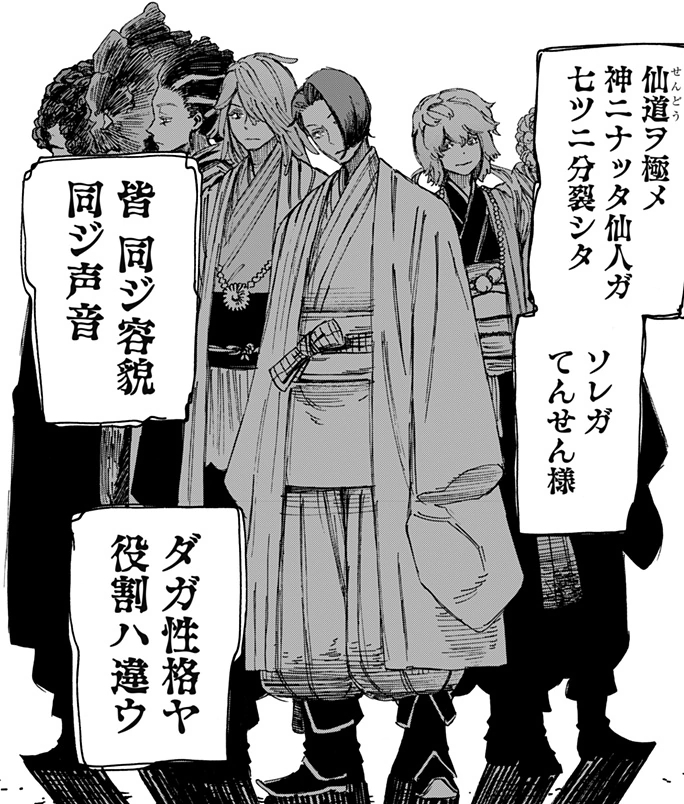
The seven Lord Tensen are synthetic humans created from a single Tao puppet by Rien. They include Ju Fa, Tao Fa, Mu Dan, Ran, Zhu Jin, Gui Fa, and Rien herself depending on how you count. These aren't your typical anime villains who want to rule the world or prove they're the strongest. They're essentially gardeners maintaining a crop. They view humans as fertilizer and they have absolutely zero empathy for the suffering they cause. What's weird about them is their biology. They can shift between male and female forms at will, representing the yin-yang balance of Tao, and they're made of plant matter that regenerates instantly.
Each Tensen controls Tao, the life force energy that flows through everything. They can sense your presence, read your intentions, and hit you with attacks that disrupt your internal Tao balance. Normal weapons don't work on them because they just regrow limbs like vines. Cut off an arm and it snakes back to the body and reattaches. The only way to kill them is to destroy their tanden, the energy center that stores their Tao, or hit them with an opposite elemental force that disrupts their regeneration. When they get serious, they enter Kishikai form, transforming into massive monstrous versions of themselves that look like something out of a Junji Ito sketch crossed with a botany textbook.
Tao Changes Everything About Fighting
Tao isn't just chakra or nen with a different name. It's a complete energy system based on Chinese philosophy where everything has an elemental attribute. Wood, fire, earth, metal, water. Each one counters another. Wood beats earth, earth beats water, water beats fire, fire beats metal, metal beats wood. Gabimaru starts with Fire-attribute Tao, which is aggressive and explosive but gets countered by Water. The Tensen have spent centuries mastering this stuff, so when Gabimaru first fights Zhu Jin, he gets wrecked because he's just throwing punches while Zhu Jin is manipulating the fundamental energy of the universe.
Learning Tao requires you to sense the flow of life in yourself and others. You have to let your guard down and feel your own vulnerability, which is exactly what Gabimaru sucks at because Iwagakure trained him to be a stone-cold machine. Sagiri helps him here because she's got Wood-attribute Tao that focuses on sensing and restoration. The fights in this series become weird dance-like battles where you're trying to read your opponent's Tao wavelength and match or counter it. It's messy and hard to follow at first, which is why some readers bounce off the middle chapters, but once it clicks, the combat has a unique flow that separates it from other shonen series.
Gabimaru's Emotional Awakening Is the Real Power-Up
Everyone thinks Gabimaru is overpowered because he survived boiling oil and decapitation attempts, but his real struggle is internal. When he arrives on the island, he's still mostly Hollow. He tries to kill Sagiri at one point because he sees her as an obstacle. But Yui's influence keeps making him hesitate. He can't bring himself to murder indiscriminately anymore, and he starts caring about his allies. This manifests literally in his fighting style. When he awakens to his Tao, it's because he stops trying to be a killing machine and starts accepting that emotions make him stronger, not weaker.
There's this key moment where he meets Mei, a little girl who's actually a defective Tensen who lost her immortality. Gabimaru ties her up and hangs her from a tree to get information, which is the old Hollow move, but then he sees her crying and feels bad about it. He starts protecting her like a daughter figure. He even promises to help her reunite with Rien and Jofuku, not knowing Rien is the big bad yet. This emotional growth allows him to use Tao properly because Tao requires harmony between body and spirit. You can't be a blocked-off murder hobo and master life energy. It's physically impossible in this system. The series argues that empathy is a combat skill, which is a refreshing take in a genre that usually treats feelings as something to discard for more power.
The Major Battles and Acquiring Flower Tao
Gabimaru's first real fight against a Tensen is against Zhu Jin, and it's a disaster. He gets impaled and would have died if Mei hadn't dragged him to safety. This humbling is necessary because it forces him to learn. Later, he fights Ran alongside Yuzuriha, and this is where things get weird. Gabimaru lets himself get infected with Flower Tao by injecting Mu Dan's stinger into his own body. This gives him regenerative immortality similar to the Tensen, but with a catch. His body starts sprouting peony flowers and he risks full arborification if he overuses it or gets hit by Water Tao.
The fight against Ran in his Kishikai form is brutal because Ran can rearrange the palace architecture using his Tao. Gabimaru has to use his intelligence more than his fire powers, redirecting Ran's own energy back at him. It's not about who's stronger. It's about who understands the system better. Gabimaru wins by being adaptable, not by screaming louder or unlocking a new form. He collapses afterward and nearly dies from arborification, which shows the cost of borrowing Tensen powers. The series doesn't let him keep this upgrade for free. There's always a price tag attached to immortality.
Rien's Thousand-Year Laboratory
The big twist is that the Elixir of Life isn't some magic potion sitting in a chest. It's a process. Rien has been running this island as a giant chemistry set for a millennium, trying to perfect the resurrection of Jofuku, who died of arborification while searching for immortality for Emperor Qin Shi Huang. The Tensen are her children, sort of, created to help her manage the island and refine the Tan production. She plans to sail to Japan and use the entire population as raw materials to complete the elixir and revive her husband.
This puts Gabimaru's quest in perspective. He's not just fighting to get a pardon anymore. He's fighting to stop a zombie apocalypse where everyone turns into flowering trees. The mythology here pulls from actual Chinese and Japanese folklore, specifically the story of Tajimamori searching for the Tokijiku no Kagu no Mi, the timeless fruit. The series connects historical figures like Xu Fu with the fictional Jofuku, blending real mythology with the body horror elements. It's a solid lore foundation that makes the Tensen feel like they belong to a specific cultural context rather than being generic anime immortals.
Why This All Works Together
Hell's Paradise succeeds because it commits to its weirdness. The Tensen aren't just strong enemies. They're sad, lonely beings who don't understand humanity because they were created as tools. Gabimaru isn't a chosen one. He's a damaged guy learning to cry again. The power system requires you to be vulnerable to be strong, which is the opposite of Dragon Ball or Naruto where you have to get angrier and more isolated to win.
The series also doesn't pull punches with consequences. Characters die and stay dead, mostly. When Chobei gets killed by a Tensen, it sticks for a while, and his brother Toma's grief is handled with weight. The body horror is genuinely disturbing, not just edgy for edge's sake. Arborification looks painful and wrong because it is. The flowers growing out of people's eyes aren't pretty. They're grotesque symptoms of the island consuming you.
The Second Landing Party Complicates Everything
Just when the surviving convicts start figuring out the island, the shogun sends a second team led by Shugen, the second-rank Asaemon. Shugen is annoying in the best way because he's a fanatical purist who thinks executioners should kill criminals without question. He slaughters an entire clan of island natives, including babies, because he thinks they're contaminated. This forces Gabimaru to fight other humans while also dealing with the Tensen. It raises the stakes because now there are three factions: the convicts trying to escape, the Tensen protecting their elixir, and Shugen's squad trying to complete the mission by any means necessary.
Shija, the Iwagakure shinobi who infiltrated the second party, adds another layer because they're obsessed with Gabimaru. Shija killed the other candidates during the Gabimaru selection process just to ensure Saku would win. This creates a personal rivalry where Gabimaru has to fight someone who knows all his techniques but is completely insane. These human conflicts ground the story when the Tensen lore starts getting too abstract with the Tao mechanics.
The Ending and Gabimaru's Resolution
The final arc involves Rien fusing with the Banko, a massive plant monster that takes over Horai. Gabimaru teams up with basically everyone left alive to stop her from reaching Japan. He fights while suffering from intense arborification, with flowers literally blooming out of his hair and skin. Sagiri has to behead him temporarily and use Tao restoration to save him, which is one of the weirdest medical procedures in manga.
When Gabimaru finally confronts Rien, he hesitates to destroy Jofuku's gilded corpse because he understands what it's like to love someone that much. He sees Yui in his mind and realizes Rien isn't evil, just desperate. This empathy allows Rien to accept defeat and crumble away peacefully. It's not a big punch-up victory. It's a psychological win. Gabimaru returns to Edo, gets his pardon through some paperwork trickery by Jikka, and reunites with Yui. The last chapter shows him a year later, actually smiling and laughing with Sagiri and Yuzuriha when they visit. He's not Hollow anymore. He's just Saku, living a normal life, which was the real elixir all along.
Hell's Paradise: Jigokuraku Tensen lore and Gabimaru's journey works because it uses the immortality quest as a backdrop for a story about learning to value life. The Tensen represent eternal stagnation, unchanging and perfect but empty. Gabimaru represents messy, painful growth. The island tries to turn him into a plant, into something eternal and unfeeling, but he fights it by choosing to feel pain, love, and fear. That's harder than any fire jutsu he pulls off. The series ends with him crying in front of his wife, and that's more powerful than any Kishikai transformation could ever be.