
Girls und Panzer Anime Story Explained
The premise sounds stupid when you say it out loud. High school girls drive World War II tanks as a competitive sport. Their schools are massive aircraft carriers. Nobody ever dies despite firing live rounds at each other. If you stopped there, you'd think this was some throwaway trash anime made for lonely dudes to screenshot. But you'd be wrong. The Girls und Panzer anime story works better than it has any right to, and that's because it commits fully to being a sports anime where the equipment just happens to weigh thirty tons and shoot shells.
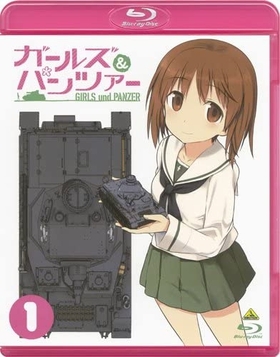
Miho Nishizumi is the heart of this whole thing. She comes from the Nishizumi family, basically royalty in the tankery world. Her older sister Maho is the perfect heir, cold and calculating and obsessed with winning. Miho ran away from that life after a match went sideways. During a championship, an opposing tank fell into a river. Miho ditched her own tank to save the crew inside. Her school lost the tournament. Her family called her weak. So she transferred to Ooarai Girls Academy, a school so broke it didn't even have a tankery program. She thought she was safe. She thought wrong.
What Sensha-dō Actually Means
Sensha-dō, or "the way of the tank," gets treated like flower arrangement or tea ceremony in this universe. It's a feminine art form. The logic doesn't make sense if you poke it, so don't poke it. The show never bothers explaining why only girls do this or why society decided tank combat was proper for young ladies. It just is. The sport uses restored WWII tanks with carbon-lining inside the armor that somehow makes shells non-lethal. People still get knocked around hard. Tanks still explode. But everyone climbs out rubbing their heads and complaining about losing.
The rules are simple enough. Each team fields a certain number of tanks. You win by knocking out the enemy flag tank or eliminating all opponents. Matches happen on massive open fields, deserted towns, or snow-covered valleys. The anime spends serious time getting the tank models right. You'll see Panzer IVs, StuG IIIs, Sherman tanks, T-34s, and even a monstrous Maus. The production team consulted actual military historians according to details from the production background, and you can tell. The tanks move with weight. The treads squeak. The cannons recoil hard enough to rock the whole frame.
The Crew of the Anglerfish Team
Miho doesn't do this alone. The student council basically blackmails her into joining by threatening to make her life hell unless she helps restart the school's tankery program as detailed in this plot breakdown. They need her because she's the only one with experience. She picks up four weirdos who become her crew.
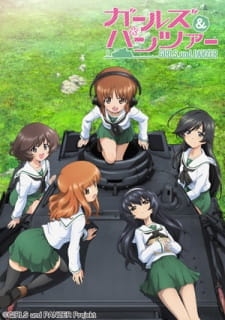
Saori Takebe works the radio. She's boy-crazy and chatty and basically the heart of the team socially. Hana Isuzu handles the gunnery. She comes from a family of flower arrangers and initially joined tankery to find her own path separate from her mother's expectations. Yukari Akiyama is the loader and resident tank otaku. She sneaks onto rival school carriers to take photos of their tanks like some kind of military espionage nerd. Mako Reizei drives despite being narcoleptic and barely functional before noon. She's brilliant but lazy.
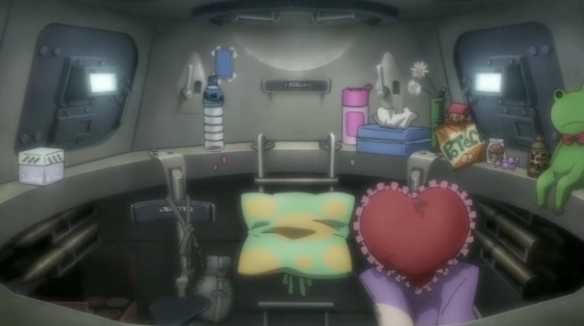
These five operate a Panzer IV Ausf. D, eventually upgraded to an Ausf. H with spaced armor. They call themselves the Anglerfish Team because of a dumb dance they do for good luck. The dance looks ridiculous. Every team does it. It's part of the charm.
The Other Teams at Ooarai
Ooarai doesn't just field one tank. They scrape together enough vehicles to form a full squadron, though most are operated by other clubs that convert over. The Turtle Team uses a Czech 38(t) tank and consists of the student council members who forced Miho into this. Anzu, Yuzu, and Momo basically command the whole operation while driving their own tank.
The Hippo Team drives a StuG III and comprises historical reenactors obsessed with specific eras. They dress like samurai or wartime soldiers and quote history constantly. The Duck Team uses a Type 89B I-Go medium tank and comes from the former volleyball club. The Rabbit Team gets Sherman tanks and brings chaotic energy from a group of first-years who panic constantly. The Mallard Team operates a French Char B1 bis and comes from the public morals committee. The Anteater Team drives a Japanese heavy tank prototype and consists of kids who played tank games online. Finally there's the Leopoon Team with their Tiger(P), automotive club members who actually understand engines.
Each group gets their own quirks. The show juggles like thirty characters across twelve episodes. Not everyone gets deep development, but you remember them. That's more than most anime manage with half the cast.
Tournament Arc Breakdown
The main series covers Ooarai's run through the National Sensha-dō Championship. They start as massive underdogs because the school had discontinued tankery years ago. They're using borrowed tanks and borrowed time.
The first real match hits against St. Gloriana Girls Academy, the British-themed school. They field Churchill tanks and Matildas, slow but heavily armored. Darjeeling commands with a tea cup perpetually in hand. This match teaches Ooarai that they can't just run and gun. Miho develops her own style here, using terrain and misdirection instead of brute force. They lose the practice match but learn enough to survive later.
Saunders University High School represents America with a flood of Sherman tanks. Kay commands with overwhelming numbers and cheerful aggression. Miho beats them by outsmarting their numerical advantage, using smoke and positioning to isolate and destroy. The match shows Ooarai can hang with rich schools that have better equipment.
The Anzio battle got its own OVA because the TV series skipped past it too fast according to discussions about the missing episode. Anchovy leads the Italian school with dubious tactics and ridiculous confidence. Her Carro Armato P 40 tanks and Semoventes fight in the desert. This match emphasizes Miho's growth as a commander who protects her crew above all else.
Pravda Girls High School brings the Soviet armor, T-34s and KV-2s, commanded by tiny tyrant Katyusha and her towering second-in-command Nonna. This battle spans two episodes in the snow. It nearly breaks Ooarai. Miho's leadership gets questioned when team members ignore orders and fall into a trap. They survive by endurance and a desperate plan involving the tank equivalent of a sled ride down a mountain. The stakes get explicit here. If Ooarai loses, the school closes permanently.
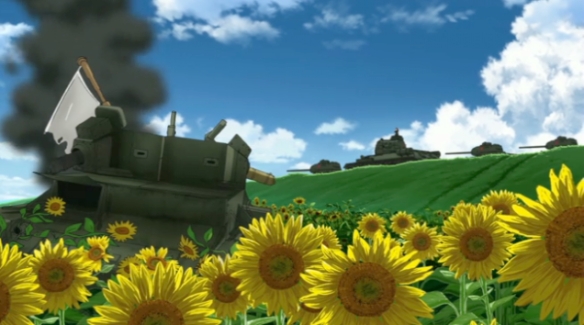
The finals push Miho against Kuromorimine Girls Academy, her old school. Her sister Maho commands the German super-heavy lineup including Tigers, Panthers, and the ridiculous 188-ton Maus. This isn't just about the championship anymore. It's about Miho proving her way works. The Nishizumi style demands victory at any cost. Miho believes in winning while protecting everyone, including the enemy. She proves it by defeating Maho through tactics that shouldn't work but do. Ooarai wins. The school stays open.
The Movies Continue the Story
Girls und Panzer der Film came out later and isn't just fan service. It introduces proper tank vs. tank action with a university team led by a middle school prodigy named Alice. The university uses modern Cold War era tanks against high schoolers with WWII equipment. The match is unfair by design. Ooarai has to fight alongside their former rivals, all the schools they beat in the tournament joining forces against a common enemy. It's the sports anime trope of "everyone teams up" taken to a logical extreme.
Das Finale is a six-part movie series still releasing that covers a new tournament arc. It follows Ooarai through winter matches against new opponents. The animation budget went through the roof here. The tank battles look movie-quality throughout. We're talking mud physics, ice physics, individual track links animated in 3D that blend with 2D characters seamlessly.
Why the Setting Works Despite Being Absurd
You have to buy that tanks are safe. You have to buy that schools float on carriers. You have to buy that this is somehow feminine. The show never apologizes for any of it. That's the trick. It treats Sensha-dō as deadly serious business. The girls cry when they lose. They bleed sometimes. They pass out from exhaustion. The carbon lining explanation gets mentioned once and then ignored because the show knows you don't care about the physics. You care about whether the Rabbit Team panics when a shell whistles past their turret.
The anime also dodgers the usual cheap fanservice. There's no beach episode. There's no wardrobe malfunctions during combat. The girls wear practical uniforms. When they do the Anglerfish dance in swimsuits it's so goofy it loops back around to being charming rather than creepy. The focus stays on the machinery and the strategy.
Real Tank Nerds Made This
You can tell the difference between anime that use tanks as set dressing and anime made by people who spent weekends measuring mantlet angles on Panzer IIIs. Yukari's lectures in the OVAs explain actual tank history. The Fandom wiki documents every specific model variant used by each school as shown in their vehicle breakdowns. When the Hippo Team quotes Erwin Rommel's tactics, they're quoting accurately. When Pravda sings Katyusha, it's the actual song.
This accuracy grounds the absurdity. You believe these girls know their machines because the show proves it constantly. The tanks have personality. The Panzer IV gets upgraded over time like a character growing stronger. The StuG III gets camo paint that matches the Hippo Team's historical obsession. Even the Japanese tanks get respect despite being objectively worse than the German or Russian machines.
The Emotional Core
Strip away the metal and diesel and you're left with a story about a girl recovering from trauma through found family. Miho starts unable to even look at tanks without remembering the drowning incident. By the end she's commanding with confidence because she trusts her crew and they trust her. Hana finds independence from her mother's flower shop. Yukari makes friends who appreciate her obsession instead of finding it weird. Mako finds motivation to wake up in the morning. Saori finds something real to care about beyond chasing boys.
Even the rivals get arcs. Maho isn't a villain. She respects Miho's choice even while disagreeing with it. Darjeeling becomes a genuine mentor. Katyusha's Napoleon complex gets softened by Nonna's steady support. Anchovy's bluster hides real insecurity. These aren't one-note opponents. They're kids playing the same game with different philosophies.
The series argues that competition doesn't require cruelty. Miho wins by being kind. She wins by prioritizing people over points. In a genre full of "win at all costs" protagonists, she's refreshing. Her victory in the finals isn't just tactical. It's moral. She proves you don't have to be a monster to be the best.
Where to Start Watching
Don't overthink it. Watch the twelve episode TV series first. It's paced perfectly with matches taking one or two episodes each according to episode structure breakdowns. Then watch the Anzio OVA because it fills a gap in the tournament. Then watch der Film for the big spectacle. Then Das Finale if you want more. Skip the chibi comedy spin-offs unless you're desperate.
The English dub is solid. The tank terminology gets pronounced correctly which matters when you're throwing around words like "Saukopfblende." The Japanese track is obviously authentic for the military marches each school uses. Saunders plays the Battle Hymn of the Republic. Pravda gets Katyusha. Kuromorimine gets Panzerlied. It's unsubtle but effective.
Girls und Panzer shouldn't work. The elevator pitch sounds like a parody of anime. But the execution is sharp enough to cut. Twelve episodes of pure sports anime mechanics applied to armored warfare. Five movies of escalating tank action. Dozens of characters you actually remember. If you wrote it off based on the title or the promo art, you missed out. The story explains itself through action and momentum. Just watch the first two episodes. By the time Miho pulls her first impossible maneuver to save her crew, you'll know if you're in or out. Most people stay in. The tanks get their hooks in deep.