
Girls und Panzer should not work. The premise sounds like someone threw darts at a board covered in anime tropes and hit cute high school girls and World War II tanks and just decided to roll with it. But this 2012 series pulls off one of the most solid sports anime experiences you'll find, even if the sport involves 30-ton death machines firing explosive rounds at each other. I'm not going to pretend this is high art or some profound commentary on war. It's a show about teenage girls driving Panzers and somehow it manages to be both educational and genuinely exciting.
I remember hearing about this back when it aired and thinking it was going to be another forgettable moe blob that happens to have military hardware in the background. You know the type. Cute girls doing cute things while occasionally looking at a tank. But Girls und Panzer commits to its bit completely. The tanks aren't just props. They're characters. The battles aren't filler between tea parties. They're the main event. And while the cast is massive and some characters get barely any lines, the core team carries enough weight to keep you invested through twelve episodes of increasingly ridiculous tank combat.
What Sensha-do Actually Means
The show calls it Sensha-do or Tankery depending on which translation you're watching. It's described as a martial art for girls that teaches grace and femininity through the operation of historical armored vehicles. Yeah, I know. It sounds like complete nonsense when you write it out. The series tries to sell this idea that piloting a Panzer IV is equivalent to learning flower arrangement or the tea ceremony. There's even a line about how hard it is to imagine boys doing this stuff which is played completely straight.
But here's the thing. Once you accept that this is just the rules of the universe, the show stops trying to justify itself and just shows you tank battles. And that's where it shines. The sport has rules. Schools are located on massive aircraft carriers because apparently that's normal in this timeline. The tanks fire special non-penetrating rounds that somehow don't kill anyone but still explode with enough force to flip vehicles. Nobody questions why high schoolers are doing this or why there are apparently no safety regulations worth mentioning. You just roll with it because the alternative is missing out on some of the best animated tank combat in the medium.
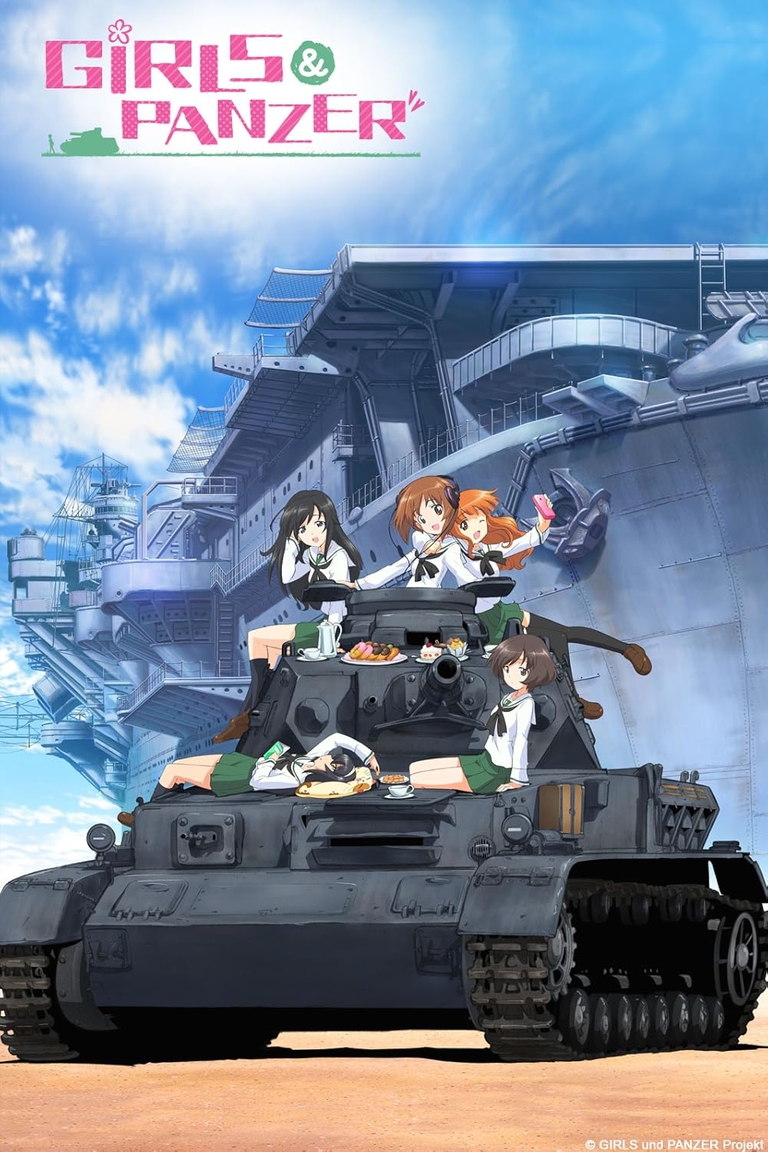
The setting itself is bonkers. Ooarai Girls Academy sits on a converted aircraft carrier that sails around Japan. Students live in dormitories on the ship. They take classes in regular school buildings that just happen to be on a floating city. When they need to practice tankery, they sail to designated combat zones. Other schools have their own ships. Some are based on battleships, others on carriers. It's never explained how this is economically feasible or why the government funds this instead of normal sports. The show just presents it as fact and moves on to the next explosion.
The Tournament Structure And Underdog Story
Girls und Panzer follows the classic underdog sports formula that you've seen in every sports anime ever made. Ooarai is a dead-last school facing closure unless they win the national championship. Their tank club was defunct until the student council decides to revive it using whatever rusty hulks they can find in the ship's basement. Miho Nishizumi gets roped into commanding despite having transferred specifically to avoid tanks. You've seen this setup a hundred times. The ragtag team of misfits has to beat the rich fancy schools with better equipment and more experience.
What makes it work here is the variety of opponents and how each match plays out differently based on historical tank characteristics. St. Gloriana shows up first with their British Churchill tanks and acts like proper gentlemen. They drink tea during combat breaks and follow honorable engagement rules. Their commander Darjeeling quotes military history and acts refined while her Matilda tanks absorb punishment. Saunders represents American quantity over quality with endless Sherman tanks and a commander named Kay who personifies American optimism and resource abundance. They overwhelm with numbers rather than tactical sophistication.
Then you hit Pravda and things get serious. They're the Russian-themed school with T-34s and heavy IS-2 tanks. Their commander Katyusha has a Napoleon complex and literal height issues. She uses winter terrain and defensive positions to force opponents into killing fields. The battle against them spans two episodes and features a Stalingrad-style siege where Ooarai gets trapped in a church and has to break out using smoke screens and coordinated fire. It's some of the most tense moments in the series because Pravda doesn't play nice. They use ambushes and psychological warfare.
Anzio gets skipped in the original broadcast but their OVA shows Italian tankettes that are fast but made of paper. Their commander Anchovy is loud and dramatic and obsessed with pasta. It sounds stupid and it is, but it's also charming in its own way. Finally you reach Kuromorimine, the German super school with Tigers, Panthers, and Jagdpanthers. They're led by Miho's sister Maho and represent everything Miho ran away from. Cold efficiency, overwhelming firepower, and a win-at-all-costs mentality. The final match is less about tactics and more about Miho proving her way of fighting, valuing her friends' lives over victory, is valid.
Miho Nishizumi And The Main Cast
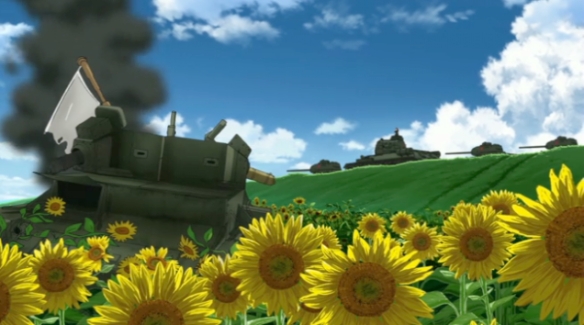
Miho starts as a transfer student running from her family legacy. Her mother and sister are tankery royalty at Kuromorimine and they follow the Nishizumi style which treats combat like a cold chess game where pieces are expendable. Miho bailed on a championship match to save some teammates from drowning when their tank fell into a river. This caused her school to lose the tournament. Her family considers this weakness of character. So she shows up at Ooarai hoping to leave it all behind only to get blackmailed by the student council president Anzu who literally threatens to kick her out of school if she doesn't join the tank club.
It's classic reluctant hero stuff but it works because Miho is genuinely good at tactics while being terrible at standing up for herself. Her growth comes from learning that her way of doing things is valid. By the end she's facing her sister Maho in the finals and proving that you can win without sacrificing your crew. The family drama isn't subtle. Their mother shows up and disowns Miho for her unorthodox methods. Maho is simultaneously trying to uphold family tradition while secretly respecting Miho's choices. It's soap opera levels of drama but it gives weight to the tank battles.
Her crew makes up the Anglerfish Team. Saori is the radio operator who's boy-crazy but reliable in combat. She talks too much over the comms but never misses a message. Hana is the gunner who comes from a flower arranging family and finds that shooting tanks requires similar focus and breathing techniques. Her mother initially disapproves of tankery as unladylike but comes around when she sees Hana's dedication. Yukari is the loader and resident military otaku who spouts historical facts, does reconnaissance photography like she's on a special ops mission, and breaks into enemy territory to steal intel. She's probably the most popular character with actual tank nerds because she represents the audience surrogate who knows all the technical specs.
Mako is the driver who sleeps constantly, can barely stay awake during meetings, and looks like she's about to pass out at any moment. But she has perfect reflexes when it counts and can drive anything. Her backstory involves her parents dying and her grandmother raising her which explains the sleep issues and her fear of being late. She gets character development when she has to wake up early for practice and realizes she cares about the team enough to fix her schedule. It's simple stuff but it works.
The Side Teams Get Short Shrift
Here's where the show gets messy. Ooarai has something like eight different tank crews. You've got the Turtle team with the student council in a 38(t), the Duck team with former volleyball girls in a Type 89, the Hippo team with history buffs in a StuG III, the Rabbit team with first years in an M3 Lee who treat it like a video game, the Mallard team, the Anteater team, and the Leopon team with auto club girls who soup up a Tiger(P). That's over thirty characters the show tries to juggle in twelve episodes.
Some teams get maybe three lines total. The Anteater team shows up late in the game and you barely learn their names. The Leopon team gets one highlight moment where they use their automotive knowledge to fix engine troubles and then fade into the background. This isn't necessarily a dealbreaker since the tanks themselves are treated as extensions of the crews and you can tell them apart by vehicle type, but if you're looking for deep character development from anyone outside the main five, you're going to be disappointed.
That said, the show does a decent job giving each team a distinct flavor so you can tell them apart. The history nerds on Hippo team dress like German officers and quote Rommel and von Manstein while arguing about tactics. The volleyball girls on Duck team use tactics based on their former sport like setting and spiking formations. The student council on Turtle team barely knows what they're doing but have sheer determination. It keeps things visually interesting even when you don't know everyone's names.
The Tank Accuracy Is Surprisingly Solid
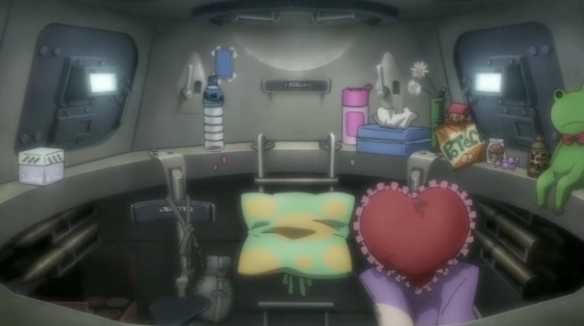
A huge chunk of this show's appeal is military hardware accuracy. The studio worked with the Japanese Self-Defense Force to get the mechanics right. When a Panzer IV fires, the recoil looks right. The treads kick up dust properly. The engines sound distinct. You can tell a Tiger tank from a Sherman just by the silhouette and the way it moves. The attention to detail is obsessive.
They use CG for the tanks which was controversial back in 2012 but holds up better than most anime from that era. The models are detailed enough that tank nerds can identify specific variants by the hull shape or gun mantlet. Yukari's educational segments in the OVAs explain the technical specs of each vehicle and they're surprisingly informative. If you've ever wanted to know the difference between a Panzer III and Panzer IV or why the Churchill tank had such a weird shape or how the Hetzer's gun placement worked, this show will teach you.
The battles themselves are directed with a sense of weight. These aren't fast-paced mecha fights. Tanks are slow. They get stuck in mud. They run out of gas. They can't turn on a dime. They have blind spots. The show respects that limitation and builds tension around positioning and ambushes rather than just having them drift around like cars. Though there is one infamous scene where they actually drift a tank on ice while Eurobeat plays which is exactly as ridiculous as it sounds and people love it.
The tactics make sense too. They use smoke screens properly. They talk about armor penetration angles and how sloped armor works. They know that German guns overpenetrate light armor and waste energy. They use hull-down positions and defilade. When a tank gets hit, they show the crew getting concussed and bruised even if the carbon lining keeps them from dying. It's clear someone involved knew their stuff about armored warfare.
Sound Design And Music Integration
The audio work on this show deserves mention. When tanks fire, you feel it in your chest. The clanking of treads, the grinding of gears, the ping of shells bouncing off armor, the screech of metal on metal, it's all recorded or synthesized to sound authentic. The voice cast does solid work too with Ai Kayano standing out as Saori and Mai Fuchigami giving Miho the right amount of hesitant determination without sounding whiny.
The soundtrack mixes military marches with J-pop in a way that shouldn't work but does. You'll hear the Battle Hymn of the Republic playing while American tanks roll out or Katyusha blasting while Soviet T-34s advance across the snow. The Panzerlied plays during German school scenes. It's nationalist music used for comedic effect but also to set the tone for each school's personality. The opening song Dream Riser by ChouCho is generic uplifting pop but the ending Enter Enter Mission fits the military theme better. There's also the infamous Anglerfish dance which is stupid and goofy and somehow became a meme that the show acknowledges in-universe during celebrations.
The OVAs And Missing Content You Need To See
The original broadcast skipped a whole match against Anzio Academy which got released later as a 40-minute OVA. You should absolutely watch this if you're going through the series because it fills in a gap in the tournament bracket and introduces Anchovy who is one of the more entertaining rival commanders with her ridiculous Italian accent and pasta fixation. There are also six short OVAs called Akiyama Yukari's Tank Corner where Yukari explains tank facts in a documentary style that are genuinely educational.
The movie Girls und Panzer Der Film continues the story after the series ends and features a 30 versus 30 tank battle that is pure fanservice for anyone who wanted more tactical variety and crazier set pieces. Then there's Das Finale which is an ongoing film series that started in 2017 and is still releasing episodes sporadically with massive gaps between parts. The production history is a mess with delays caused by the studio re-evaluating animation strategies as the show got more popular, but the content is there if you want more after finishing the main series.

Why The Premise Doesn't Collapse Under Its Own Weight
You'd think a show about high school girls in tanks would fall apart under its own silliness. The schools are on aircraft carriers. The ammo is supposedly safe but can flip a tank. Nobody dies despite direct hits from 88mm guns. The economy of this world apparently runs on competitive tank warfare. It's nonsense from top to bottom.
But the show commits completely. It never winks at the camera or tries to be ironic about how ridiculous it is. The characters take tankery seriously as a sport and a way of life. When Miho talks about the Nishizumi style of combat, she's treating it like a legitimate martial arts philosophy. When the teams face off, they show sportsmanship and respect. They bow to each other before and after matches. This sincerity sells the absurdity. You're not laughing at the show, you're laughing with it while also getting genuinely hyped about whether the Panzer IV can outmaneuver a Tiger tank using speed and positioning.
The show also wisely decouples the tanks from their historical context. These are sporting equipment, not weapons of war in this universe. They don't talk about the Holocaust or the Eastern Front or war crimes. The tanks are treated like vintage race cars or historical artifacts. It's a fantasy world where these machines exist in a vacuum as competition vehicles. That separation keeps the show from getting dark while still allowing it to celebrate the engineering and history of the vehicles themselves.
The Pacing Hits Hard And Fast
The series is only twelve episodes long plus recap episodes that nobody watches. This creates some compression problems. The first episode is slow and slice-of-life heavy which turns some people off. You need to get to episode four to see the first real match against St. Gloriana. After that it picks up considerably with each match taking one or two episodes.
The final arc against Kuromorimine feels a bit rushed because they have to resolve the family drama, the championship, and the school closure plot all at once. Some of the intermediate teams get barely any screen time. Saunders gets two episodes, Pravda gets two, and then suddenly you're at the finals. It works for keeping the momentum up but you get the sense that they could have used a 24-episode season to breathe and give the side characters more development.
Who Should Actually Watch This
If you hate moe art styles or cute girl shows, this might convert you or it might annoy you. The character designs are soft and round with big eyes and colorful hair. It's definitely aimed at the demographic that likes cute things. But if you can get past that, the tank combat is legitimately good military fiction that respects the hardware.
If you're a history buff who knows tank specs, you'll appreciate the attention to detail and the historical references. If you like sports anime underdog stories, this hits those beats perfectly with the tournament structure. If you want a serious war drama with death and consequences, look elsewhere. Nobody dies. There are no war crimes. It's a competition sport with tanks. The stakes are high school drama stakes, not Saving Private Ryan.

Real World Impact And Tourism
The show became a massive hit in Oarai city, the real location that inspired Ooarai. They have Girls und Panzer themed buses, train wraps, merchandise shops, and events. The economic impact was significant enough that the town embraces the connection completely. Fans pilgrimage there to see the locations and buy limited edition goods. It's one of those cases where anime tourism actually saved a small town from declining economically.
The franchise also spawned video games including appearances in World of Tanks and several dedicated games on PlayStation and Switch. The model kit sales for the tanks featured in the show went through the roof. It created a whole generation of anime fans who can identify a Char B1 bis or a StuG III on sight which is a weird cultural impact but not a bad one.
Final Verdict On This Mess
Girls und Panzer is a solid B+ anime that punches above its weight class. It shouldn't be as good as it is. The premise is stupid, the cast is too big, the worldbuilding makes no sense, and the production had delays that pushed the final episodes back by months. But the tank battles are so well executed and the main characters are so likable that you forgive the flaws. It's twelve episodes of fun that respect the viewer's intelligence regarding military tactics while asking you to ignore the absurdity of the setting.
Watch at least through episode four before you decide if it's for you. That's when the first match happens against St. Gloriana and you'll know immediately if the tank combat hooks you. If you find yourself caring about armor penetration angles and ambush tactics, you're in for a good time. If you're bored by then, drop it. Not every show works for everyone.
But for me, it's one of the few anime that combines cute girls and military hardware without either side feeling like an afterthought. The tanks are accurate. The tactics make sense. The characters grow just enough to matter. And sometimes that's exactly what you need. It proves that you can take the dumbest premise in the world and make it work if you just commit to the bit and do your homework on the technical details.
If you want to read more detailed episode breakdowns, Weekend Otaku's review covers the pacing issues well. For historical accuracy discussions, the MyAnimeList community reviews go deep into the tank specs. And if you're curious about the production history, Natalie.TF's writeup explains the broadcast delays.