
Most Boys Love anime is trash. Let's get that out of the way. For every decent story, you get ten adaptations packed with non-consensual tropes, paper-thin characters, and fetishized nonsense that treats gay men like collectible items rather than people. So when Given popped up on Noitamina in 2019, people expected more of the same garbage. They were wrong. This given anime series review isn't about whether the boys kiss (they do), or whether the music sounds pretty (it does). It's about how this show understands that grief is a physical weight that sits on your chest, and sometimes the only way to breathe is to scream into a microphone until your throat bleeds.
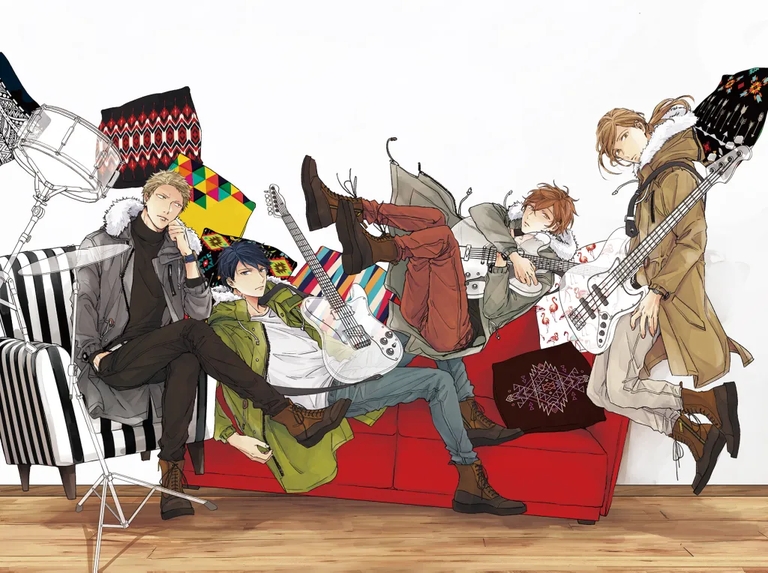
The premise sounds like a setup for disaster. Ritsuka Uenoyama is a high school guitarist in a slump. He meets Mafuyu Sato, a quiet kid holding a broken Gibson ES-330 on a staircase. Ritsuka fixes the strings. Mafuyu wants lessons. They form a band with two college students, Akihiko Kaji on drums and Haruki Nakayama on bass. On paper, this looks like every other "talented kid meets mysterious transfer student" story that anime has churned out for decades. The difference is that Mafuyu's guitar isn't just a prop. It belonged to his dead boyfriend. And Yuki didn't die in an accident or from illness. He killed himself. That guitar is a coffin that Mafuyu carries around his neck, and the show treats that weight with a seriousness that hits you in the gut.
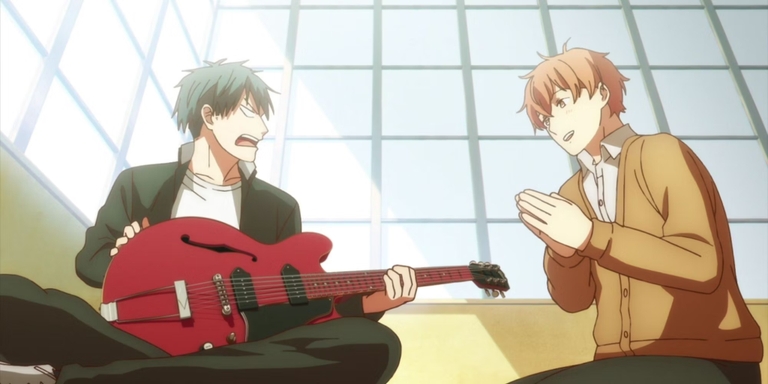
The Setup That Should Have Failed
Studio Lerche took a huge risk adapting Natsuki Kizu's manga. The BL genre is crowded with garbage that relies on assault-as-romance plot points and seme/uke dynamics that feel like they were written by people who have never met a real gay person. Given could have easily fallen into those same traps. Ritsuka is technically the "top" and Mafuyu is the "bottom" if you want to force those labels onto them, but the show never treats them like cardboard cutouts fulfilling a role. Ritsuka is a mess of a teenager who is losing his passion for the one thing he was good at, and Mafuyu is so traumatized he literally cannot speak his feelings out loud.
The band forms naturally, not because the plot demands it, but because these kids need something to do with their hands while their hearts are breaking. Haruki is in love with Akihiko, who is sleeping with his ex-boyfriend Ugetsu while stringing Haruki along. Ritsuka is trying to figure out why he cares so much about Mafuyu's progress on the guitar. And Mafuyu is stuck, unable to write lyrics for the song the band is working on because every time he opens his mouth to sing, he sees Yuki's dead body. The pacing is slow. Some people hate that. They want the romance to move faster, for the band to get famous quicker, for the drama to resolve in neat little bows. Those people should watch something else. Given takes its time because healing doesn't happen on a schedule.
Mafuyu's Grief Is the Real Main Character
People talk about the romance between Ritsuka and Mafuyu like it's the center of the story, but they're wrong. The real relationship here is between Mafuyu and his own guilt. Yuki's suicide isn't revealed as a cheap twist. It's there from the start, hanging over every scene like humidity. When Mafuyu clutches that red Gibson, he's not holding an instrument. He's holding the last physical connection to a person he loved who left without saying goodbye. The show gets something that most media about suicide misses. It shows the survivors as angry, not just sad. Mafuyu is furious at Yuki for dying, furious at himself for not seeing the signs, and furious at the world for moving on like nothing happened.
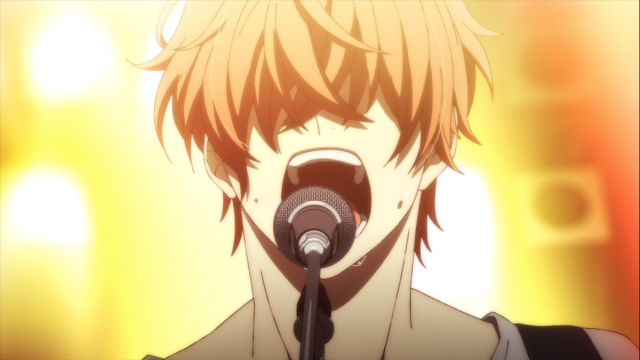
The breakthrough comes in episode nine, which is the reason you watch this show. The band is performing live. Mafuyu still hasn't written lyrics. The music starts, and he's frozen. Then something breaks inside him, and he starts singing. The song is "Fuyu no Hanashi" (A Winter's Story), and it isn't pretty. It's raw, ugly, screaming grief set to melody. Shougo Yano's voice performance here isn't technically perfect, and that's the point. It sounds like someone tearing their own heart out through their throat. This isn't a polished J-pop performance. It's a funeral and a confession and a scream into the void all at once. When the song ends, Mafuyu hasn't magically healed. He's just finally admitted that he's alive, and that living hurts. That's more realistic than any therapy session scene I've seen in anime.
Ritsuka Isn't Here to Fix Anyone
Ritsuka Uenoyama could have been the worst kind of protagonist. The savior. The guy who shows up and teaches the sad boy how to live again through the power of love. The show actively avoids this trap. Ritsuka doesn't understand Mafuyu's trauma for most of the series. He's jealous of Yuki. He's confused about his own feelings. He gets angry when Mafuyu won't open up. He's a teenage boy who is good at guitar and bad at emotions, which is exactly what he should be.
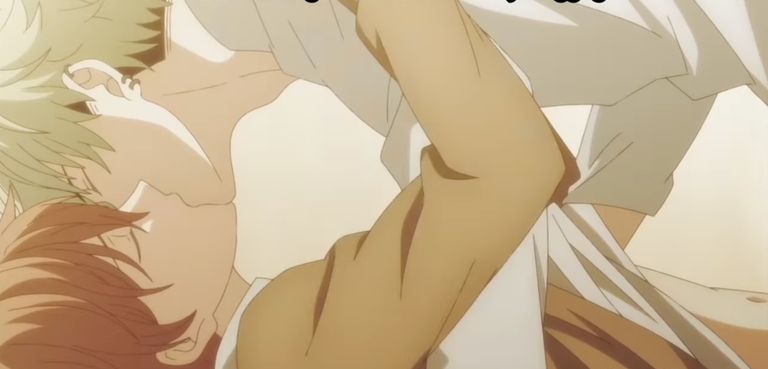
Their relationship works because Ritsuka doesn't try to solve Mafuyu's grief. He just stays. He sits next to him on the stairs. He fixes the guitar strings when they break. He writes music that gives Mafuyu a container to pour his pain into. The scene where they kiss backstage isn't played as a victory. It's awkward and desperate and real. Ritsuka tells him, "You did so damn well," and that's it. That's the romance. Not flowers or promises, but one person seeing another person's pain and choosing to witness it without looking away.
The Music Is Doing the Heavy Lifting
Let's talk about Centimillimental. The project, led by Atsushi, composed every original track for this anime, and without that music, the show doesn't work. The opening "Kizuato" hits different when you realize it's about scars that don't fade. The ending "Marutsuke" sounds like a lullaby for people who can't sleep because they're haunted. But the real star is the integration of the band's music into the plot.
The anime uses a mix of 2D animation and rotoscoping for the performance scenes, and opinions are split on this. Some people think the CG guitars look clunky. They're not wrong. You can see the 3D models shifting in certain scenes, and it pulls you out of the moment. But the fingerings are accurate. The way Ritsuka holds his pick, the way Akihiko adjusts his hi-hat, the way Haruki's bass lines anchor the melody, it's all correct. As someone who plays guitar, I noticed the details. The distortion pedals are real models. The Gibson ES-330 is rendered with care. When Mafuyu finally plays that guitar on stage instead of just holding it, it means something because the show earned it through those technical details.
Some data shows that viewers consistently rank the audio as the strongest part of the series, and that's because the music isn't just background noise. It's the language the characters use when words fail them. Mafuyu can't say "I'm sad," but he can sing about winter and silence and goodbyes that weren't said.
The Older Couple Got Screwed by the Runtime
Haruki and Akihiko have the more complicated relationship, and the 11-episode series doesn't have time to give them justice. Haruki has been in love with Akihiko for years, watching him bounce between partners, including Ugetsu Murata, who is a violinist and a toxic mess. Akihiko is bisexual, messy, self-destructive, and genuinely cares about Haruki but doesn't know how to stop hurting himself long enough to be good to someone else.
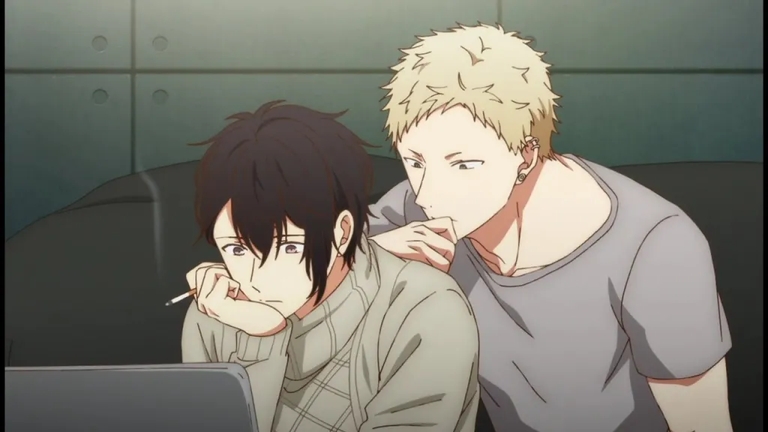
Their arc is condensed, rushed, and relies on tropes that the main couple avoids. The anime sets up their tension but resolves it too quickly in the final episodes. Apparently, the 2020 movie fixes this by focusing entirely on them, but if you're just watching the TV series, their relationship feels like a trailer for a better story. It's frustrating because Haruki is the heart of the band, the guy who keeps everyone fed and scheduled and sane, and he deserves better than being treated like a consolation prize.
When the Visuals Fail
The animation outside of the music scenes is serviceable but not spectacular. The character designs are sharp, with Ritsuka looking like a delinquent and Mafuyu looking like he might float away if nobody holds him down. The lighting is good, especially in the rehearsal studio scenes where the shadows feel heavy and real. But the budget shows in the corners. Background characters are blobs. Some of the walking animations are stiff. And that CG guitar during the climactic concert scene is rough. It doesn't ruin the moment because the audio is so strong, but it's a reminder that this wasn't a blockbuster production.
Reddit users have pointed out that the show captures awkward silences better than almost any other romance anime, and that's true. The pauses between lines, the way characters look away from each other, the physical space between them on the bed or the bench, it all communicates more than dialogue could. The direction understands that intimacy is sometimes about sitting in the same room without talking, and that's where the show saves money on animation to spend it on the things that matter.
Why This Isn't Just Another BL Entry
Here's the thing that makes Given different. It doesn't fetishize its characters. There are no scenes where one character forces himself on another and it's played as romantic. There are no "if I don't hold you down you'll run away" moments that plague this genre. The consent is clear. The attraction develops organically. When Ritsuka realizes he's in love, he doesn't panic about being gay. He panics about being worthy of Mafuyu's pain. That's a huge distinction.
The show also treats the music industry with respect. These kids aren't instant superstars. They practice until their fingers bleed. They play at small venues for tiny crowds. They argue about setlists and chord progressions. One reviewer mentioned that the depiction of band life feels authentic compared to the usual high school music anime melodrama, and they're right. It captures the boredom of rehearsal and the terror of performance and the specific loneliness of being on stage with three other people who know exactly what you're thinking without you saying it.
The Verdict
Given isn't perfect. The pacing drags in the middle. The side characters get shortchanged. The CG is distracting. But it succeeds where dozens of other romance anime fail. It makes you believe that these people exist. It makes you feel the weight of that guitar case. It makes you understand that sometimes love isn't about saving someone. It's about handing them an instrument and saying "make noise with me until we both feel better."
If you're looking for a given anime series review that tells you whether to watch it, here it is. Watch it if you've ever lost someone and felt like you were the one who died. Watch it if you play music and need to see your specific brand of obsession portrayed accurately. Watch it if you're tired of BL that treats its characters like dolls to be posed. Skip it if you need fast plots or if realistic depictions of suicide and grief will trigger you, because this show doesn't pull punches.
The series ends with the band named Given, taken from the guitar Yuki gave to Mafuyu. It's a name about receiving something you didn't ask for, something broken that you have to learn to play anyway. That's what this show is about. Taking the broken things, tuning them up, and making music that hurts so good you can't stop listening.