
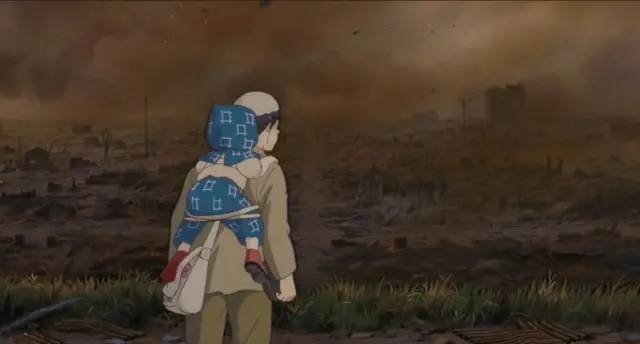
Grave of the fireflies historical context and thematic analysis starts with accepting that the movie hates you a little. It opens with a dead teenager in a train station. Seita tells you flat out, "September 21, 1945. That was the night I died." Most films hide the ending to create suspense. Takahata puts it first because he doesn't want you hoping. You're not here to see if they make it. You're here to watch exactly how a fourteen-year-old boy and his four-year-old sister starve to death in the richest empire in Asia during the final months of World War II. The historical setting isn't backdrop. It's the murder weapon.
The film is based on Akiyuki Nosaka's short story, which he wrote while drunk and suicidal in 1967. He lived through the Kobe firebombing of March 1945. He watched his parents die. He tried to raise his younger sister Keiko. He failed. She died of malnutrition in his care. Nosaka wrote the story as an apology to her corpse, calling it a "lie" because in reality he wasn't the devoted brother Seita pretends to be. He stole her food. He ignored her sickness. He killed her through arrogance and incompetence. Takahata took this confession and turned it into an animated film that refuses to let anyone off the hook, not the Americans who bombed the city, not the Japanese society that abandoned the kids, and definitely not Seita himself.
The Kobe Firebombing Was Methodical Destruction
People confuse this with the atomic bombings, but Grave of the Fireflies sticks to the March 1945 firebombing raids on Kobe. On March 16 and 17, the US Army Air Forces sent hundreds of B-29 bombers to drop incendiary bombs on the city. They weren't targeting factories. They were targeting homes. Japanese cities were built of wood and paper, perfect for firestorms. The Americans knew this. They wanted to break civilian morale and collapse the home front.
Around 4,000 people died in those two nights. The movie shows Seita and Setsuko running through streets where the air itself seems to burn. Their mother ends up in a school gymnasium wrapped in bandages like a mummy, her skin burned completely off her body. She dies screaming. This isn't exaggerated. Survivor accounts from Kobe describe exactly this, people walking around with melted skin hanging off their arms. Takahata lived through similar air raids as a child, and he made sure the animation feels historically grounded rather than dramatic. The way the light turns red, the way the wind sucks oxygen away, the strange silence after the bombers leave, all of it comes from real memory.
The firebombing campaign across Japan in 1945 killed more people than the atomic bombs. Tokyo got hit worse than Kobe, but Kobe's destruction provides the specific geography of the film. You see the harbor, the specific train stations, the mountain shelters. The movie gets the details right down to the way people carried their possessions in carts and the smell of burning hair that lingered for weeks.
Seita's Pride Is the Second Killer
Here's where casual viewers get mad. Seita isn't just a victim. He's an active participant in his own destruction. When his and Setsuko's aunt starts treating them like parasites, Seita doesn't negotiate. He doesn't apologize. He takes his mother's savings, buys a stove and a futon, and moves them into an abandoned bomb shelter because his pride won't let him stay where he's not wanted. He plays house while his sister wastes away.
Some analyses argue that Seita's stubbornness is a product of nationalist ideology. His father is a naval officer, and Seita has absorbed the military's emphasis on dignity and self-reliance. He can't admit weakness. He can't ask for help. He keeps waiting for his father to return and save them, refusing to accept that the Japanese navy has been destroyed and his father is probably dead at the bottom of the ocean. This pride kills Setsuko.
When she gets sick, he takes her to a doctor who says she needs food. Seita has money, but he can't buy food because there's none to buy. He doesn't beg. He doesn't return to the aunt. He steals vegetables from farms and gets beaten for it. He lets his sister eat mud balls because she hallucinates they are rice. Every choice he makes is filtered through this need to be the provider, the adult, the strong big brother. He can't accept that he's a child who needs help. The movie asks whether he's a victim of war or a stubborn kid who got his sister killed. The answer is both, and that's what makes it unbearable to watch.
The Collapse of Japanese Social Support
Takahata famously said this isn't an anti-war film. He hated when people called it that. He wasn't interested in showing that war is violent or that bombs hurt people. Everyone knows that. He wanted to show how war breaks the bonds between humans. In normal times, if two orphans showed up at a relative's door, the community would rally. In 1945 Japan, under total mobilization, individual suffering became invisible.
The aunt isn't a cartoon villain. She's stretched thin feeding her own family and relatives who are contributing to the war effort. She sees Seita as a lazy boy who won't work or attend school. She resents having to share rice with kids who don't bring home rations. The farmers who catch Seita stealing aren't evil. They're protecting their own crops during a famine. The doctor who tells Seita his sister needs food but offers none is working in a system that's broken. There is no medicine because the military took it all. There is no welfare because the state is collapsing.
This is the real horror. The war didn't just drop bombs. It convinced Japanese society to sacrifice everything, including empathy, for the emperor. When Seita dies in the train station, people step over his body. A janitor throws his candy tin, containing Setsuko's ashes, into a field like it's trash. The living have no room for the dead. The social contract has dissolved.
Fireflies and the Candy Tin
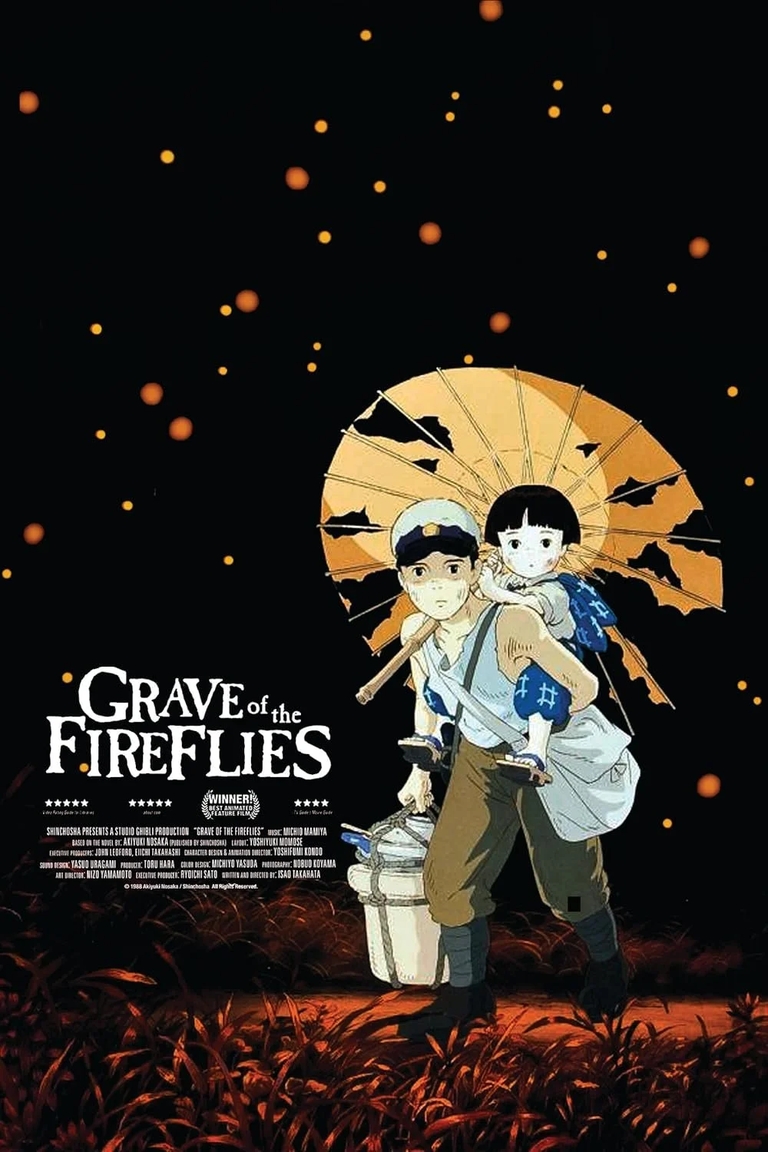
The symbolism hits you hard because it's so direct. The fireflies represent souls. When Setsuko catches them and puts them in a jar, they light up her face. By morning they're dead. She buries them in a grave and asks why they have to die so soon. She's four years old and she's talking about her own death without knowing it. The fireflies also represent the Japanese civilians, burning bright and brief, trapped in a jar they can't escape.
The fruit drop tin is the emotional anchor of the film. It starts as a treat from before the war, a symbol of childhood innocence and sweetness. Then it becomes a rattle toy for Setsuko. Then Seita uses it to carry water to cool her fever. Finally it holds her cremated remains. The object transforms from joy to a funeral urn in ninety minutes. When Seita dies holding that tin, and the janitor tosses it away, it's the ultimate dismissal of their lives. Just garbage to clear away before morning commuters arrive.
PTSD and Psychological Breakdown
Seita shows clear signs of trauma that anime usually gets wrong. He flashbacks to the bombing whenever he sees normal aircraft. He dissociates from reality after Setsuko dies, wandering through streets where he can't tell if people are real or ghosts. The movie uses a red color wash during these moments to show his mental state breaking down.
Setsuko's psychology is even more disturbing. She starts eating dirt and rocks because her brain is so starved it hallucinates food. She develops severe rashes from malnutrition that cover her back. She stops crying and becomes listless, which is a documented symptom of terminal starvation in children. The film depicts this with medical accuracy that makes it hard to watch. When she finally dies, it's quiet. She just stops breathing. That's how it happens with malnutrition. The body shuts down.
The animation style helps here. Takahata uses realistic backgrounds but simplifies the character designs so they look like real children, not anime heroes with big eyes and perfect hair. When Setsuko gets sick, she looks sick. Her face gets puffy. Her movements get slow. It looks like documentary footage rather than drama.
The Problem of Victimhood
Some critics hate this movie because they think it makes Japanese people look like innocent victims while ignoring the war crimes Japan committed in China and Korea. That's a fair complaint about some WWII films, but Grave of the Fireflies is actually careful here. It never shows American soldiers as monsters. The planes are just machines. The pilots are invisible. The enemy isn't the US. The enemy is the situation.
However, the film does exist within Japan's tricky relationship with its own history. Many Japanese people remember 1945 as the year they suffered, not the year they lost a war of aggression. The movie doesn't address Nanjing or comfort women because it's stuck in the perspective of a fourteen-year-old boy who only knows his own hunger. But that narrow focus is also its strength. It's not trying to explain the whole Pacific War. It's trying to explain how two kids fell through the cracks of a society that had gone mad. The film implies the Japanese people were victims of their own government, but it doesn't excuse the broader historical context.
Why Animation Works Better Than Live Action
People sometimes dismiss this because it's a cartoon. That's stupid. Animation allowed Takahata to control every frame of the fire and the light. Live action would have required child actors performing traumatic scenes, which would be exploitative. The drawn medium creates distance while maintaining emotional impact. You can watch Setsuko die without feeling like you're watching a real child suffer, but the message still lands.
The color palette shifts are also something live action couldn't do as effectively. The movie starts with desaturated browns and grays, flashes back to bright colors for the pre-bombing scenes, then slowly drains the color out as Setsuko gets sicker. By the end, everything looks like old sepia photographs. This visual technique controls your mood without you noticing. The red skies during bombing runs aren't realistic, but they feel right. They feel like memory.
The Ending and Historical Forgetting
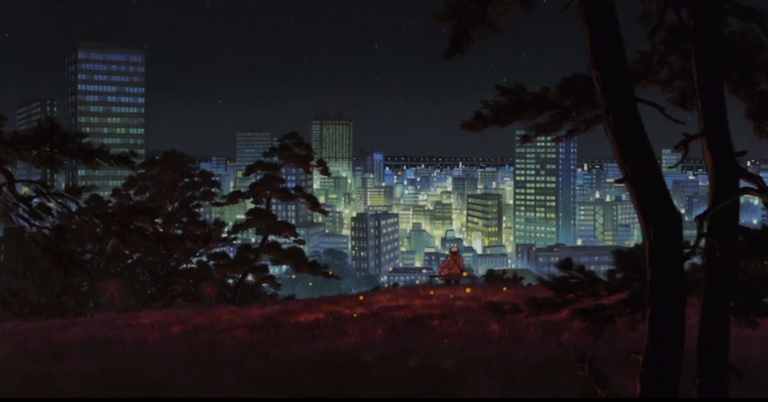
The final scene shows the ghosts of Seita and Setsuko sitting on a hill overlooking modern Kobe. They're eating fruit drops and watching a city that has completely forgotten them. The buildings are new, the trains run on time, and nobody remembers the kids who died in the shelters. This isn't just a sad ending. It's a warning.
Takahata is telling us that societies move on from tragedy by burying it. The modern viewer is complicit in this forgetting. We watch the film, cry, and then go back to our lives while real children are currently starving in Yemen, Syria, and Gaza under similar conditions of war and indifference. The film asks if we've learned anything or if we're just watching another generation of fireflies die in a jar.
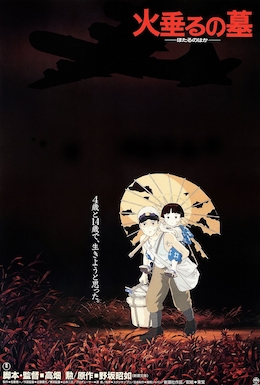
Grave of the fireflies historical context and thematic analysis shows that this film is a minefield of guilt, pride, and social failure. It's not comfortable to watch and it shouldn't be. Seita isn't a hero. He's a scared kid who made bad choices because he didn't have any good ones available. Setsuko isn't just a cute victim. She's a real child who suffers physiological damage that the film depicts with medical accuracy.
The movie survives because it refuses to give you easy answers. Was it the war that killed them? The aunt? Seita's pride? Yes. All of it. The firebombing of Kobe created the conditions, but Japanese social structures in 1945 provided no safety net for orphans. When you watch those fireflies die in the jar, you're watching the light go out of a society that forgot how to care for its own. That's the real horror here. Not the bombs. The indifference that came after.