
Grave of the Fireflies offers a deeper look beyond anti war messaging that most viewers completely miss on first watch. You probably think you've got this film figured out. American bombers drop fire on Kobe, two kids starve to death, war is hell, roll credits. That's the surface level reading that gets plastered on every sad movie list and it's wrong. Isao Takahata never set out to make a simple anti war film and if you stop there you're missing the actual tragedy.
The director himself rejected that label completely. He said the movie isn't about the horrors of war but about the failure of Japanese society to protect its children. That's a huge difference. One frame makes the Americans the bad guys while the other points the finger directly at the aunt, the neighbors, the doctors, and Seita himself. The war is just the backdrop. The real killer is pride and the collapse of community.
What Takahata Actually Said About His Own Film
Takahata gave interviews where he explicitly stated this isn't an anti war movie. He pointed to Seita's character flaws as the primary driver of the tragedy. The film is about what happens when a society loses its empathy and a child tries to survive on his own terms. You can find this in various film analysis pieces that quote him directly.
He saw the story as an examination of isolation. Seita chooses to leave his aunt's house. He chooses to steal rather than work. He chooses to wait for his father's return instead of adapting to new reality. These are personal failures magnified by war but not caused by it. The bombs killed their mother. Everything else was human choice. If you look at Japanese wartime memory studies, you see this fits a pattern of films that examine social breakdown rather than military conflict. Takahata wanted to show how civilian life rotted from within. He grew up during this era. He knew what hunger looked like. He wasn't interested in making a political statement about American aggression. He wanted to talk about how Japanese people failed each other when it mattered most.
Seita's Pride Killed His Sister
Seita is not a hero. He's a fourteen year old kid doing his best but his best is wrapped up in this weird romantic ideal of being the protective older brother who doesn't need anyone's help. He's got that navy officer father mentality drilled into him from birth. Stand tall, don't show weakness, take care of your own, never apologize, never beg. But he's a child. He can't work legally in the wartime economy. He can't get proper rations without an adult sponsor. Instead of swallowing his pride and making peace with his aunt he drags Setsuko into a cave to play house like they're having some fun camping trip while the world burns around them.
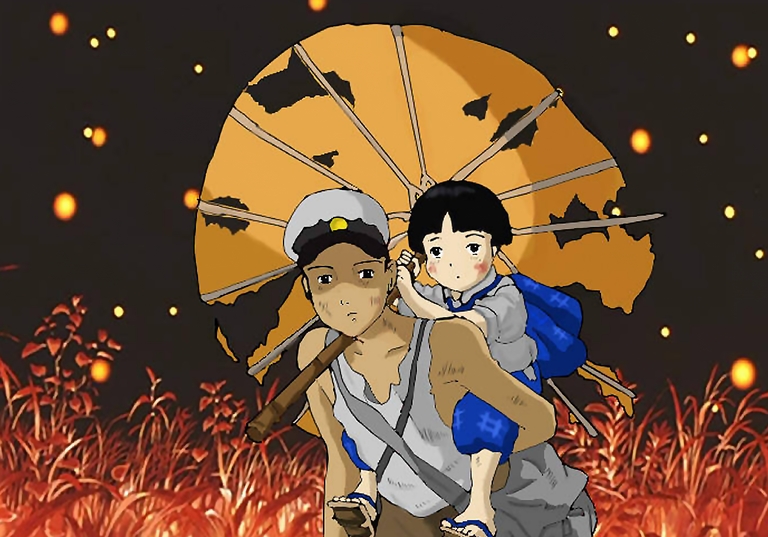
You see this clearly in the rice scene. Their aunt suggests selling their mother's kimonos for rice and Seita hesitates because those clothes represent the last physical connection to their mother and he can't bear to let them go even though they're useless as fabric if his sister starves. But they need food. Later when he finally gets money from the bank he buys a charcoal brazier and fancy white rice and meat instead of steady staples like barley or sweet potatoes that would last longer. He wants to see his sister smile rather than ensuring they survive the week. It's heartbreaking but it's also stupid and naive. His pride won't let him admit defeat even when Setsuko is literally eating dirt and hallucinating that rocks are rice balls.
The bank scene is the worst moment. He has their father's savings sitting in an account. He could have gone back to the aunt with resources in hand. He could have bought his way into the community and paid for their keep. Instead he waits until it's too late. He waits until Setsuko is skin and bones. By the time he tries to buy food the stores are empty and the doctors won't help. His ego killed her. That's the brutal truth this film hides in plain sight and it's what makes it so much more painful than a simple war story.
The Aunt Is Not Cartoon Evil
People love to hate the aunt. She's the evil stepmother figure who makes them sleep on the floor and gives them smaller portions while her own kids get full meals. But look closer at what the film actually shows us. She's not cartoon evil. She's a widow in a war zone trying to feed her own kids and two extra mouths who aren't contributing anything to the household economy. Seita refuses to work in the fields with the other neighbors. He won't join the fire brigade or the community defense units. He sits around playing with his sister and catching fireflies while everyone else is scraping to survive and burying their own dead.
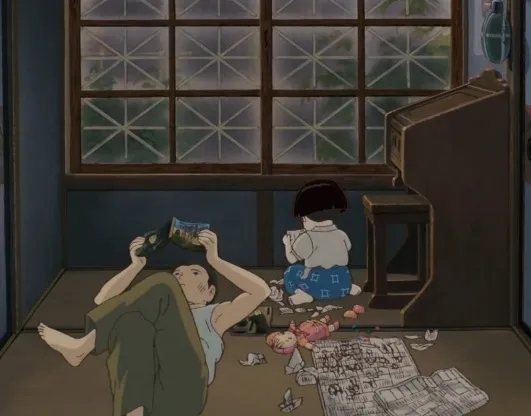
In that context her cruelty makes perfect sense even if it makes you sick to your stomach. It's not right but it's painfully human. She's the product of a society that demanded total loyalty and sacrifice and self denial until there was nothing left to give. The film shows how war doesn't just kill with bombs and fire. It strips away empathy layer by layer until a woman can throw her own relatives out into the street to starve because she sees them as dead weight. She's a mirror for what Japan became during those final years of the war. Harsh, survivalist, cold, calculating every calorie. You can see this discussed in Reddit threads where people debate whether she's the real villain or just another victim of the system. The truth is she's both.
Symbolism That Cuts Deep
The fireflies aren't just pretty lights floating around for aesthetic value. They're military ships burning in the harbor after the bombing. They're the souls of the dead floating away. They're childhood innocence that dies too fast and too bright. When Setsuko catches them in her little hands and puts them in the box they light up her face with this gorgeous golden glow but they die by morning because you can't trap light and you can't trap life. That's the whole movie right there. Beautiful things don't last in this world especially when that world is falling apart.
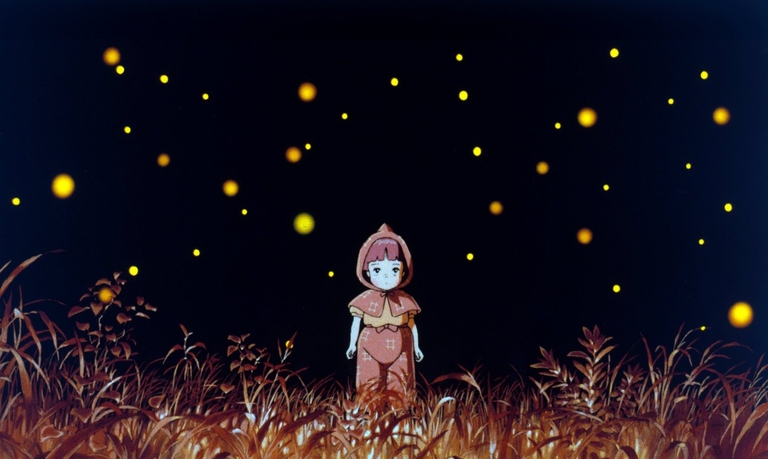
Then there's the fruit drop tin. Seita keeps his sister's ashes in it at the end. That red tin represents the last bit of sweetness and normalcy in their lives. When Setsuko tries to eat marbles and rocks thinking they're candy it's because her brain is breaking from hunger and dehydration. The tin becomes a coffin. It's messed up and beautiful at the same time. The firefly imagery connects to empathy and trauma themes that run through the entire picture. Every time you see that soft glow you know death is coming.
The Food And Water Kill Them Too
Every meal in this film is loaded with meaning. The watermelon they share on the beach is the last moment of pure joy before the starvation sets in. The drops of water from the tin can represent life slipping away through their fingers. The muddy water they drink from the stream gives Setsuko diarrhea which kills her because she's too weak to survive the fluid loss. The white rice Seita buys with the last of the money is too rich for her starving system and she can't keep it down. He accidentally poisons her with kindness and luxury because he doesn't understand the biology of malnutrition.
There's a scene where Setsuko is sucking on a pebble to trick her stomach into thinking she's eating. That's real. That happened. The film doesn't look away from the physical reality of starvation. The way her belly bloats while her limbs shrink. The way her hair falls out. The way she stops crying because she doesn't have the energy. It's all documented medical reality presented without flinching.
Historical Reality And The Victimhood Problem
This isn't fiction pulled from nowhere. Akiyuki Nosaka lived this exact nightmare. His sister died exactly like Setsuko did from malnutrition and worms. He wrote the story as an apology to her corpse because he survived and she didn't. The 1945 Kobe firebombing killed thousands in one night and left hundreds of thousands homeless. The US Army Air Forces burned the city to the ground with incendiary bombs designed to create firestorms. Seita and Setsuko are based on real kids who got lost in the shuffle of history and bureaucracy.
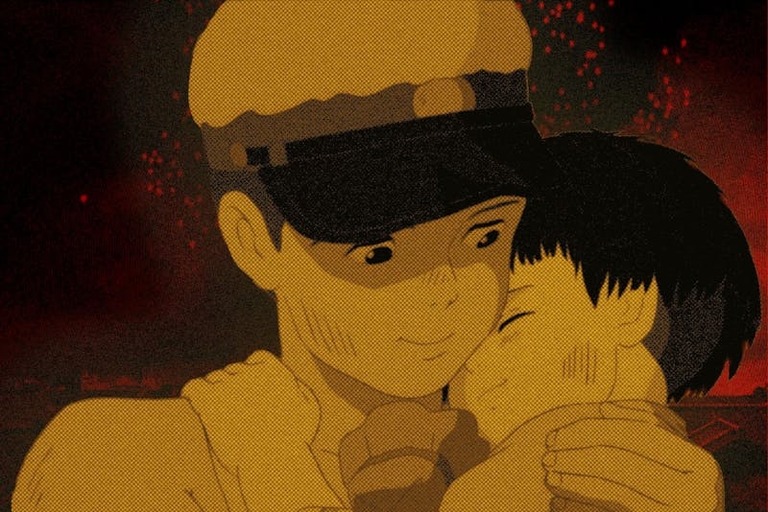
But the film doesn't show the Japanese war crimes that led to this situation. It doesn't mention Nanking or Pearl Harbor or the occupation of Korea. That's where the controversy comes in and it's valid. Is this film erasing history by focusing only on pretty children suffering? Some critics think so. They compare it to German films that only show Dresden burning without mentioning Auschwitz. It's a fair critique. The movie focuses entirely on Japanese victimhood and that makes some people uncomfortable because it feels like propaganda even if it's based on true events. You can read a deeper analysis of how this plays into national memory. Whether Takahata intended it or not, the film became part of Japan's victim consciousness.
Why Animation Makes It Worse
People still think animation is for kids and that's exactly why this film hits so hard it breaks your ribs. The rounded soft features of the characters clash violently with the skeletal bodies they become by the end. The beautiful backgrounds of fire and destruction create this weird uncomfortable gap between what you're seeing and what you're feeling. Live action would be too real. You'd look away from the screen. You'd close your eyes during the cremation scene. Animation lets you stare directly at the horror without blinking because your brain registers it as art even when your stomach is turning.
Takahata understood this power. He used the medium to force empathy through beauty. You can't dismiss these kids as actors playing a role. They're drawings but they feel more real than most live action performances because you fill in the gaps with your own emotions. The silence in the film helps too. No orchestral score telling you how to feel. Just the sound of flies buzzing and children coughing and the wind moving through grass.
Comparing It To Barefoot Gen
Everyone compares this to Barefoot Gen because they're the two big WWII anime films. That film shows the Hiroshima bombing with graphic mutations and political anger directed at the government. Grave of the Fireflies is quieter and more insidious. It's about the slow death after the explosion. Gen is about survival and rebuilding and fighting against the system. Fireflies is about giving up and accepting defeat. Seita doesn't try to rebuild society. He doesn't even try to save himself. He just waits to die after Setsuko goes because he has no purpose without her.
The styles differ massively too. Gen has a clear villain in the militarist government and the emperor system. Fireflies has no villain you can point to, just a system that failed and people who gave up. That's scarier to watch. You can't punch a system. You can't bomb it away. It just grinds you down until you're carrying your sister's ashes in a candy tin and no one even looks at you on the train.
PTSD And Mental Breakdown
Seita shows clear signs of PTSD and denial throughout the film. He never properly processes his mother's death. He hides it from Setsuko and he hides it from himself. He keeps telling her they're going to be fine because father will come save them. This delusion becomes a death sentence. A deeper analysis points out that Seita's flashbacks and dissociation are textbook trauma responses. He's not just hungry, he's broken inside. He dissociates from reality and lives in a fantasy where he's the provider and everything will be okay. By the time he accepts how bad things are, it's too late to fix anything.
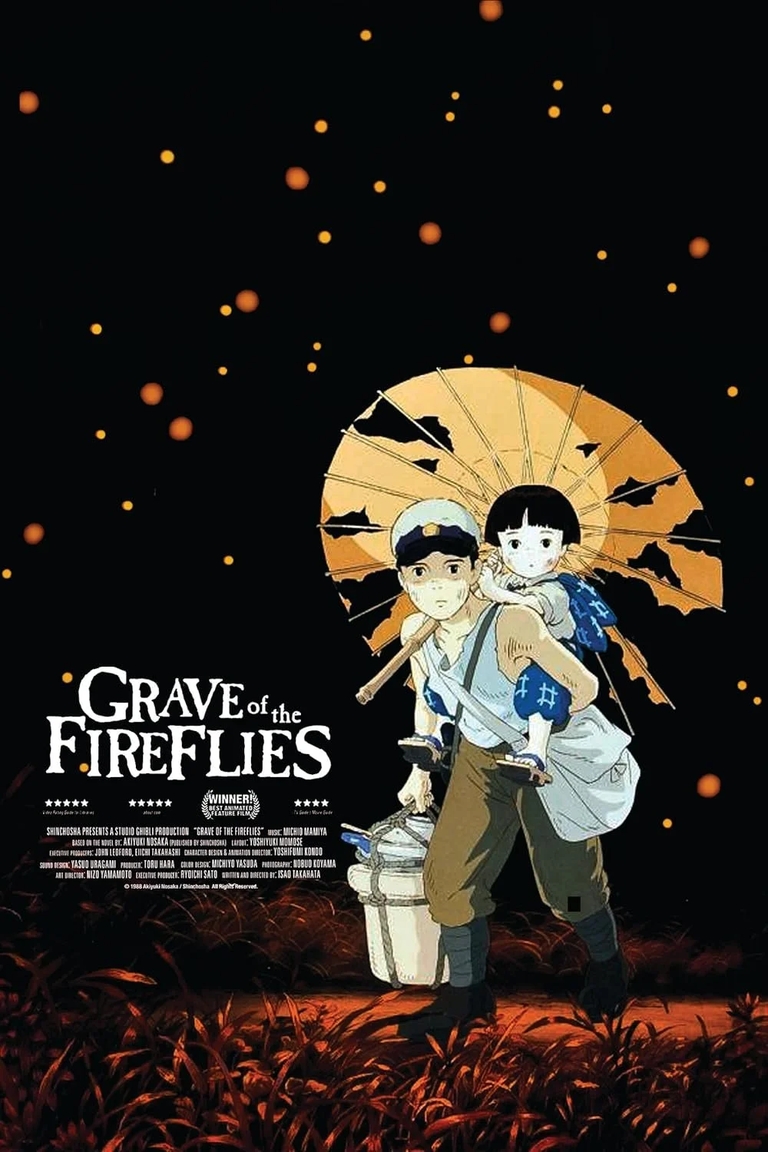
This mental unraveling is slow and painful to watch. He stops planning ahead. He stops thinking about tomorrow. He just exists in the moment playing with Setsuko because facing the future means facing that they're going to die. It's a coping mechanism that kills them both.
The Question That Stays With You
Grave of the Fireflies a deeper look beyond anti war interpretation shows us that the tragedy isn't just the bombs falling from planes. It's the isolation that comes after. It's the way Seita couldn't accept help because his pride was too big. It's the way the community turned its back on two orphans because everyone was too busy saving themselves. The fireflies die because they're fragile and temporary. Setsuko dies because the social fabric tore apart and no one bothered to stitch it back up.
You can watch this film and cry about the cruelty of war. That's fine and easy. But the harder thing is to watch it and see yourself in Seita's stubbornness or the aunt's desperation. The film asks if we would do better when tested. Would we take in two starving kids during a crisis and share our last rice? Or would we close our doors and pretend we don't hear them crying? That's the question that sticks with you for days after watching. Not whether war is bad. We know war is bad. The question is whether we're good enough to stop it from turning us into monsters who let children die alone in caves.