
Heavenly Delusion plot mysteries and world building explained usually starts with the obvious stuff about Maru and Kiruko walking through ruined Japan. But that's missing the point entirely. The show is running a con on you from minute one about what kind of story this even is. You think you're watching a standard post apocalyptic road trip with some creepy kids in a facility on the side. Wrong. The facility scenes and the wasteland scenes aren't happening in the order you think they are, and the connection between them is way messier than a simple inside versus outside setup.
The whole thing is built on unreliable information. Characters tell you the world ended because of an asteroid, or maybe aliens, or maybe a terrorist attack with special weapons. They're all wrong, or maybe they're all right in the worst possible way. The series refuses to hold your hand, dropping visual clues in background details and offhand comments that only make sense once you've already seen the twist. It's the kind of show where you need to pay attention to what brand of coffee someone is drinking because that coffee brand doesn't exist yet, or maybe it stopped existing fifteen years ago, and that's the whole point.
Director Hirotaka Mori and the team at Production I.G didn't just adapt the manga, they weaponized the medium. The anime uses color and lighting to mess with your sense of time, making the facility look too clean and the outside look too destroyed. You're supposed to feel that something is off, even if you can't put your finger on it yet. That discomfort is intentional. The show is training you to be paranoid about every piece of exposition because odds are it's coming from someone who's lying, confused, or working with incomplete data. The result is a story that feels lived in and broken in all the right ways, where the history of the world is conveyed through visual storytelling rather than direct exposition.
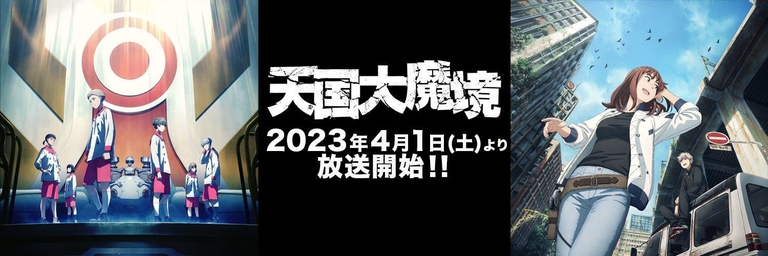
Heavenly Delusion Plot Mysteries And World Building Explained Usually Ignores The Timeline
Juichi is a liar. That much is obvious from his fake brand tattoo and his ridiculous stories about walled cities run by women who brand men like cattle. But here's the annoying part: his three theories about how the world ended are probably the most accurate information we get, even though he's making most of it up as he goes. He talks about an asteroid hitting before the disaster, or maybe an alien invasion where the Hiruko are actually extraterrestrials, or possibly a terrorist attack using some kind of special weapon. The editing cuts between his rambling and the Takahara Academy boardroom meetings, which is the show's way of telling you these theories overlap in ways we don't fully see yet.
The asteroid theory gets support from the environment. The landscape looks like it suffered from impact winter, with weird weather patterns and vegetation growing in wrong places. Craters appear in background shots that don't look natural. But then you have Asura in the facility, this kid who looks like a grey alien and has powers that break physics. He moves objects with his mind and knows things he shouldn't know. And the Hiruko are these chimeric monsters that look like someone mashed together human DNA with deep sea creatures and nightmares. The biological weirdness suggests genetic engineering or alien biology, not just a rock hitting the planet.
Then there's the weapon theory. The Man Eaters respond to certain frequencies and seem almost programmable. They have weak points that are too convenient, like they were designed to be killed by specific methods. The facility has tech that looks like it came from a sci fi future, not a disaster fifteen years ago. The timeline doesn't add up unless you start considering that the disaster happened earlier than everyone thinks, or that the facility exists outside normal time somehow. This is where the misdirection in the worldbuilding really pays off. The show gives you pieces that fit multiple puzzles at once, and you don't know which picture is the right one until halfway through the season.
The connection between these theories might be that an asteroid carried alien life, which was then weaponized by humans, creating the Hiruko and the disaster simultaneously. Juichi shows photos of a bird like figure that looks exactly like Asura, suggesting the kids in the facility aren't human at all, or are hybrids of human and whatever hitched a ride on that rock. The show never confirms any of this directly, which drives some viewers crazy, but that ambiguity is the point. You're living in the same confusion as the characters, piecing together fragments of a truth no one wants to speak out loud.
The Immortal Order believes the Hiruko are divine punishment, which fits the religious angle of the Noah Project name. They worship the monsters, which suggests they've seen enough to know the Hiruko are the new gods of this world, or at least the new apex predators. Liviuman takes the opposite approach, trying to rebuild technology and society, scavenging old world weapons to fight the new threats. Both groups are wrong about the nature of the threat, treating symptoms instead of the disease. They're fighting over scraps while the facility grows the next generation of predators in a sterile box.
The Facility Timeline Is Completely Broken
People watch the Takahara Academy scenes and assume they're happening at the same time as Maru and Kiruko's travel. That is a trap. The kids in the facility are living in a controlled environment that might be years behind or ahead of the outside world. Tokio looks exactly like Maru, and the show plays this off as coincidence or maybe cloning, but the visual language suggests something worse. These kids are being raised for a purpose that connects to the outside world in a loop, not a line.
Mimihime predicts that two saviors will come, one who looks like Tokio. That is Maru. But how does she know? Because she's seen it before, or because time works differently inside the walls. The Director keeps talking about the Outside of the Outside, which sounds like pseudo philosophical nonsense until you realize he means there's a layer of reality beyond the wasteland that the kids don't know about. The facility might be a seed bank for humanity, or it might be a farm where they grow replacement humans for a world that died long ago.
The children are developing weird abilities. Tokio's pregnancy at the end of episode nine is biologically impossible given the timeline we think we know, which means either the Director is accelerating growth, or the calendar inside Heaven is completely fabricated. The AI Mina controls everything the kids see, from the windows to the sky outside, so their concept of how much time has passed is worthless. They could be thirty years old and think they're twelve. The show never confirms the date inside the walls, which is a choice that most viewers miss on first watch.
The food they eat, the lessons they learn, everything is designed to keep them docile until they're needed. When Tokio asks about the world outside, the teachers give vague answers about contamination and danger. But the real danger is that these kids are the contamination, or at least they carry it in their genes. The facility isn't protecting them from the apocalypse. It's finishing the apocalypse by creating the next dominant species to replace regular humans.
Shiro and Asura represent different approaches to the experiment. Shiro is athletic and strong, possibly a warrior caste, while Asura is psychic, possibly a controller or overseer caste. The children aren't just random kids, they're specialized tools for different aspects of the Noah Project. When they talk about taking a test to reach the outside, they're talking about a culling process where only the useful ones survive to colonize the world.
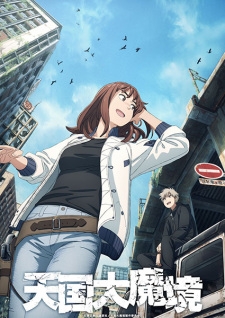
Kiruko's Body Horror Explains Everything
Kiruko isn't a woman. Well, she is, but she's also Haruki, her dead brother, whose brain got transplanted into his sister's body after the real Kiruko died. This isn't just edgy gender bending for shock value, though some people online complain about the weird sexual tension scenes and call them gratuitous. The body horror here serves the mystery. Kiruko carries a gun she doesn't know how to use properly because Haruki was the fighter, not her. She has muscle memory conflicts and dysphoria that manifest in ways that clue you in to the brain swap before the reveal happens officially.
The scene where Kiruko tries to use the bathroom and has a breakdown isn't played for laughs. It's a genuine exploration of dysphoria that most media handles badly. The show treats her suffering with respect while maintaining the sci fi premise. Haruki's memories bleeding through create action sequences where Kiruko moves like a trained soldier for a split second, then reverts to being clumsy, which tips off observant viewers before the official reveal.
The relationship between Maru and Kiruko works because Maru doesn't care what gender Kiruko is. He's attracted to the person inside, which drives certain fans crazy because they want a standard romance or no romance at all. But the show is exploring what identity means when your brain and body don't match, and it does this while also having Kiruko fight man eating monsters with a gun that shoots special bullets. It's messy and human in a way that most anime avoid because they're scared of controversy.
The brain transplant technology suggests the facility has medical capabilities far beyond what the wasteland survivors have access to. Robin, who turns out to be Dr. Inazaki, recognizes Kiruko immediately because he performed the surgery. This connects the outside world to the facility directly. The doctors who worked in Heaven are now scattered across the wasteland doing horrible experiments or running from their past. That means the walls aren't as sealed as the Director claims, and the technology is leaking out into the broken world.
Kiruko's confusion about her own identity mirrors the viewer's confusion about the timeline. She doesn't know when she is, in a sense, because her memories are a mix of Haruki's past and her current reality. The show uses her perspective to teach you how to watch the series. If you're confused about what is happening, good. That's how Kiruko feels every day. The plot mysteries and world building rely on this disorientation to hide the truth in plain sight.
Maru's Power And The True Nature Of The Hiruko
Maru can kill Hiruko with his bare hands. He touches them and they explode or dissolve or something in between. This power is biological, not magical, and it works because Maru is basically a perfected Hiruko himself. The monsters are failed humans, mutations caused by whatever weapon or disaster wrecked the world. Maru is the success story, a human who can control the infection or mutation or whatever it is.
The way Maru's power works, destroying the core of the Hiruko, suggests he's essentially a walking antibody. The facility designed him or his type to clean up the mistakes, the stray mutations that got loose before the Project was ready. That's why he feels compelled to help people, it's literally his programming, but he's developed a personality beyond that programming, which makes him dangerous to the Director's plans.
Tokio has similar traits. The kids in the facility are being bred or engineered to become like Maru, or Maru was an early escapee from the facility. The resemblance is too strong to ignore. When Maru and Kiruko finally reach the area near Takahara, the Hiruko start acting weird around Maru, almost worshipful. They recognize him as one of their own, or as their replacement. Some of them even speak or show intelligence, suggesting they aren't mindless beasts but transformed people who remember being human.
The fights in this show are brutal. Production I.G didn't hold back on the gore, with bodies getting torn apart and eaten in ways that make other post apocalyptic shows look tame. But the violence has a point. It shows you what survival looks like when the ecosystem has turned against humans. The Hiruko aren't just zombies, they're the next step in evolution, or a side effect of trying to force evolution through technology that got loose.
Maru's innocence is the contrast to all this horror. He kills efficiently but maintains a childlike wonder about the world. He's searching for Heaven because he wants to belong somewhere, not because he wants to rule or destroy. That purity makes him the perfect weapon against the Hiruko, who represent the corruption of that innocence. Every time he destroys one, he's destroying a possible future version of himself.
The Visual Language Of Deception
The anime uses color grading to mess with your head. Outside scenes are washed out, yellow and brown and grey, all concrete rot and rust. Inside the facility everything is blue white and sterile, like a hospital that's too clean. But pay attention to the shadows. The facility has shadows that move wrong, or lights that flicker in patterns that suggest the electricity is failing or being manipulated.
Background details tell the real story. In episode one, there's a calendar that shows a date that doesn't match what characters say about how long ago the disaster was. Brands and logos appear that shouldn't exist in a post collapse society, suggesting the destruction is more recent than fifteen years, or that the facility is preserving pre collapse culture in a bubble. The visual storytelling does the heavy lifting while characters talk about irrelevant nonsense.
The architecture is wrong too. The buildings in the wasteland show signs of having been abandoned for different lengths of time. Some look like they've been rotting for decades, others look like people left yesterday. This supports the theory that the disaster wasn't one event but a series of cascading failures, or that time flows at different speeds in different zones. The show respects your intelligence enough to let you notice these inconsistencies without shoving them in your face with exposition dumps.
Even the food packaging in the background tells a story. Kiruko and Maru find supplies with labels that suggest manufacturing dates that don't line up with the history they've been told. Someone is lying about how long ago the world ended, or the facility is stockpiling goods from a future that hasn't happened yet. The clues are everywhere if you stop looking at the characters and start looking at the trash on the ground.
Episode eight won awards for its directing specifically because of how it handled the revelation about Kiruko's past. The camera work uses reflections and shadows to show both personalities in one body. When she looks in a mirror, the lighting changes to show Haruki's perspective versus Kiruko's. This is the kind of detail you only catch on rewatch, but it proves the team knew exactly what they were doing from the start.
Robin And The Medical Horror At The Core
Dr. Inazaki, who calls himself Robin in the outside world, is the worst person in the show. Worse than the Hiruko, worse than the cannibals in the Immortal Order. He recognizes Kiruko and immediately tries to assault her, which reveals that he knows exactly whose brain is in that body. He's a predator who used his medical knowledge to abuse children in the facility and continues to do so in the wasteland.
This character breaks the standard anime villain mold. He isn't trying to destroy the world or rule it. He's just a sick person with power who keeps hurting people because he can. His existence proves that the facility was never a safe haven, it was always a place of experimentation and abuse. The kids weren't being saved, they were being harvested for their genetic material or their organs.
When Maru finally confronts him, it isn't a heroic moment of justice. It's messy and traumatic and Kiruko has to step in to stop Maru from becoming a murderer. The show refuses to give you the satisfaction of a clean kill. Robin deserves to die, but killing him would damage Maru irreparably, so they leave him alive or injured and move on. That choice says more about the moral landscape of this world than any speech about hope or survival.
The branding that Juichi fakes is real on the children in the facility. They are marked as property, not people. This detail connects the walled city myth to the reality of Takahara Academy. The women in Juichi's story might be a distorted memory of the nurses and doctors, the "matriarchs" who controlled the breeding program. Every lie contains a fragment of truth that points back to the facility.
The Immortal Order and Liviuman factions show how society has fractured outside the walls, but Robin shows how the rot started inside. He represents the medical establishment that created the Hiruko and the disaster in the first place. Every scar on Kiruko's body, every trauma she carries, can be traced back to him and his colleagues. The wasteland is dangerous because of monsters, but the facility was dangerous because of men.
The Noah Project Changes Everything
At the end of the season, Aoshima announces the Noah Project. This is the facility's endgame, a plan to send the children out into the world to repopulate or terraform or replace humanity. The name is Biblical, suggesting a flood scenario where only the chosen few survive. The kids are the ark, and the outside world is the water waiting to be claimed.
But here's the kicker. The project implies that the facility knew the disaster was coming, or caused it, and has been waiting for the outside to become habitable again before releasing their crop of superhumans. The children aren't refugees, they are colonists. The wasteland survivors like Juichi and the others are just leftover people from the old world who are in the way of the new order.
This recontextualizes everything. The Hiruko aren't accidents, they are failed test runs for the bioengineering that created the facility children. The Man Eaters are what happens when the process goes wrong outside the controlled environment. Maru might be an early escapee from the Noah Project, or a prototype that went missing years ago, which explains why he has the powers but not the indoctrination.
The cyclical nature of the story becomes clear here. The facility creates new humans, releases them into the world, and the world destroys them or changes them into Hiruko. Then the facility tries again with a new batch. Time might be looping, or the facility might be one of many such places around the world, all running the same experiment until they get it right. The "Heaven" that Maru and Kiruko are looking for isn't a place of peace. It's a factory where the next generation of monsters is being built.
The "test" the children take is likely a simulation or a real combat drop into the wasteland. The walls aren't just keeping danger out, they're keeping the children in until they're ready to be weapons. When the walls finally break at the end of the season, it isn't an invasion from outside, it's an escape from inside, or maybe a release.
Why This Works Better As An Anime
The manga is solid, but the anime improves on it by cutting the fat and emphasizing the visual contradictions. Production I.G uses lighting to make the facility feel like a hospital and the outside feel like a graveyard. The color palette shifts tell you which timeline is dominant in a scene, even when the show doesn't explicitly say so. The adaptation choices respect the source material while making the mystery more accessible through pure visual language.
Kensuke Ushio's soundtrack deserves mention here because it creates dread in the facility scenes that the manga can't replicate with silence alone. The music suggests that something is always watching, always calculating, which fits the AI controlled nature of Takahara Academy. Meanwhile the wasteland scenes have sparse audio, just wind and rust, making you feel the isolation that Maru and Kiruko experience.
The pacing in the anime is deliberate, revealing just enough to keep you hooked without over confusing you. The directors understood that this story lives or dies on its ability to make you feel smart for figuring things out. When you notice the calendar discrepancy or the brand name on the coffee, you feel like you solved something, even though the show planted that clue specifically for you to find. That engagement is harder to achieve in the manga format where you can flip back and forth easily.
Heavenly Delusion plot mysteries and world building explained comes down to this: the show respects your intelligence enough to let you get confused. It doesn't explain the timeline discrepancy in big letters, it shows you through coffee cups and calendars and the way characters age differently. The dual storylines aren't just a gimmick to keep things interesting, they're the central mechanic of the mystery.
The connection between the facility and the wasteland is biological, temporal, and philosophical. These kids are being grown like crops to inherit a world that's been cleansed of the old humans. The monsters outside are the failed attempts, and Maru is the success that got away. When you rewatch the show knowing this, every interaction between Maru and Kiruko takes on new weight because you realize they're products of the same system, just on different sides of the wall.
Production I.G nailed the atmosphere, making the mystery feel tactile and dirty and real. If you want a show that treats you like an adult who can handle ambiguous answers and body horror mixed with genuine emotional moments, this is it. Just don't trust anything anyone says about when or where you are. The only thing you can trust is what you see, and even then, look twice.