
Most people watching Howl's Moving Castle think the Witch of the Waste cursed Sophie into old age as punishment for talking to Howl. That's not what happens. The curse isn't a spell you break with a counter-charm or a kiss from a prince. It's a mirror. Sophie shifts between crone and maiden based entirely on her confidence level, not some external magic rule. Miyazaki made a film where the magic system runs on self-esteem instead of incantations, and that's why this Studio Ghibli movie hits harder than standard fantasy fare.
I keep seeing reviews online complaining about the "inconsistent" curse or asking why Sophie looks young when she's sleeping but ancient when she's cleaning. They're missing the point entirely. Her appearance tracks her emotional state in real time. When she's timid and believing she's worthless, she's ninety years old. When she's angry or feeling worthy, she's her actual age of eighteen. This isn't sloppy writing. It's the whole point of the movie.
Howl's Moving Castle analysis often gets distracted by the pretty visuals or the anti-war subplot, which yeah, those matter, but the engine driving everything is Sophie learning to stop apologizing for existing. The war raging outside? It's background noise compared to the internal battle Sophie fights every time she looks in a mirror.
The Curse Mirrors Self-Perception Not Magic Rules
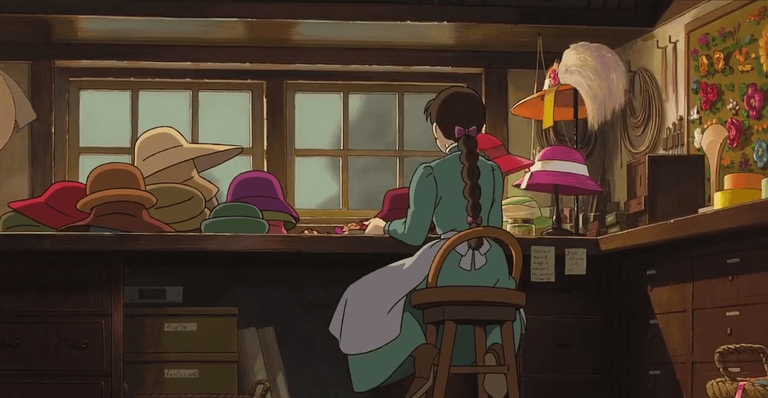
Sophie's transformation happens because she believes she deserves it. When the Witch of the Waste attacks her in the hat shop, Sophie is already acting like an old woman. She stays home while her sisters go out. She wears boring gray clothes. She tells herself she's plain and unlovable. The curse just makes the outside match what she already thinks about the inside.
Look at the scenes where she changes back. She gets young when she stands up to Howl about his vanity. She gets young when she sleeps because she isn't consciously hating herself. She gets young when she defends the castle from soldiers. Every time she asserts herself, the years peel off. When she shrinks back into insecurity, the wrinkles come back.
Some folks online point out that this means the curse was never really about the Witch's power at all. The Witch just triggered something Sophie was already doing to herself. By the end, Sophie doesn't break the curse with some magic word. She breaks it by accepting that she's worth loving, gray hair and all. That's why her hair stays white at the end. She's not fully young because she's not trying to be something she's not anymore. She's something new.
The scene where soldiers harass her in the alley shows this perfectly. Before Howl intervenes, Sophie freezes up. She can't speak. She looks down at the ground. She's already small and gray even before the curse hits. Later, when she's old Sophie and the Witch is being difficult on the stairs, she handles it with humor and strength. She's more alive at ninety than she was at eighteen because she's stopped caring about being polite and pretty.
Howl's Heart and Why He Can't Function Like a Person
Howl gave his heart to a falling star when he was a kid. That's Calcifer. The fire demon isn't just a pet or a power source. He's literally Howl's emotional core running around loose in the fireplace. This explains why Howl is such a mess. He's a powerful wizard who can turn into a bird monster but he can't handle his hair turning the wrong color without having a breakdown.
The analysis from Celluloid gets into how fire works in this movie. Fire builds when controlled but destroys when it runs wild. Howl without his heart is all destructive capability with no restraint. He fights in the war by destroying battleships from both sides, but each transformation makes him less human. He's literally losing himself to stop other people from losing themselves, which is the definition of unsustainable.
Sophie has to put his heart back because she's the only one who sees him clearly. She doesn't care about his pretty face or his magic tricks. She cares that he's kind to Markl and that he tries to protect the people he loves even when he's scared. That's why she can handle the heart when the Witch can't. The Witch wants to consume and possess. Sophie wants to nurture and return.
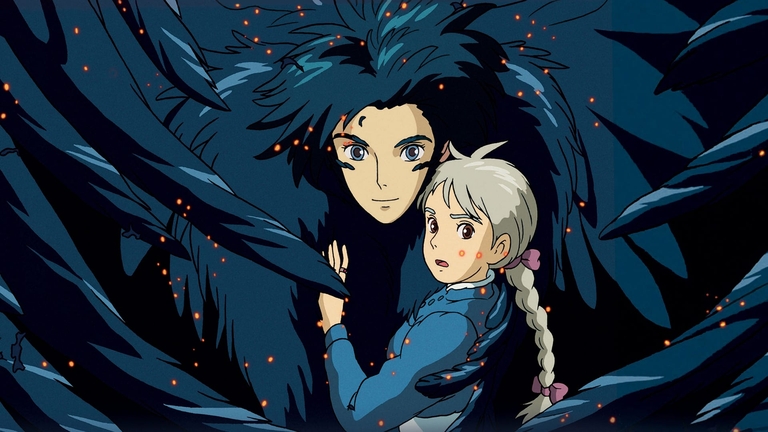
The hair dye scene shows his fragility best. He uses his appearance as armor. When the dye goes wrong and his hair turns black, he melts down completely. He wails that he's not beautiful anymore and he's going to die. It sounds ridiculous and it is, but it's also real. He thinks if he isn't pretty, he has no value. Sophie doesn't fix his hair. She tells him he looks fine and that she likes it. She accepts the mess, which is exactly what he needs.
The Anti-War Stuff Is About Iraq Whether You Like It Or Not
Miyazaki made this movie in 2004. He was angry about the Iraq War and it shows. The kingdom of Ingary is fighting a war with a neighboring kingdom over a missing prince that nobody actually cares about. Sound familiar? The king is a buffoon being manipulated by Suliman, the real power behind the throne. She drafts wizards into military service and turns them into monsters if they refuse.
Howl refuses to fight for either side. He says the war is stupid and he's right. But he still gets dragged in because the government doesn't let you opt out. Sources note that Miyazaki was explicitly protesting the 2003 American invasion, using the film as a fairy tale criticism of military industrial complexes that chew up young people and spit out weapons.
The bombers in the movie don't look like fantasy creatures. They look like something out of World War II or modern warfare. The destruction of the cities isn't sanitized. You see burning buildings and refugees. This isn't background detail. It's the reason Howl is falling apart. He knows he can't stop the war by joining it, but he also can't stand by while people die. That's the trap.
Suliman represents the system that demands fitting in. She invites Howl to join the war effort nicely at first, then tries to trap him when he refuses. She turns wizards into monsters, literally stripping them of their humanity for refusing to kill. The movie shows that even the "bad guys" on the other side are just people following orders. There are no villains in this war, just victims and bureaucrats.
What Miyazaki Changed From the Book
Diana Wynne Jones wrote the original novel and it's good, but it's different. In the book, Suliman is a man, not a woman. Howl is actually Welsh, from our world, not from Ingary. The war stuff barely exists. Miyazaki took the bones of the story and grafted his own fears onto them.
The Witch of the Waste is more of a joke villain in the book. She doesn't join the found family. Miyazaki made her stay because he doesn't believe in throwing people away. Even when she loses her magic and becomes a burden, she has value. That's a very Miyazaki touch. He did the same thing with No-Face in Spirited Away.
The ending in the book is more simple. There's no time travel. Sophie breaks the contract by guessing the connection between Howl and Calcifer correctly. Miyazaki added the falling through time sequence because he wanted to show that love isn't just about fixing the present. It's about accepting someone's whole history, including the scared kid they used to be.
Cleaning the Castle Cleans the Soul
When Sophie first enters the castle, it's filthy. Calcifer is choking on ashes. Howl's room is covered in dust and magical debris. The bathroom is a health hazard. Sophie doesn't hesitate. She grabs a broom and starts working.
This isn't home labor being presented as boring work. It's care made visible. Every room she cleans opens up space for something new. When she clears the windows, light comes in. When she clears the chimney, Calcifer burns brighter. She's literally clearing out the built-up grime of Howl's depression and isolation.
The scene where she throws out the old potions and organized Howl's bathroom leads directly to the hair dye incident. She moved his stuff. She disturbed his carefully ordered chaos. That's why he has the meltdown. But it's necessary. You can't heal in a sealed environment. You have to air things out, even if it causes a temporary crisis.
The Castle Itself Is a Messy Brain
The moving castle looks like a junk pile glued together with magic because that's what it is. It's Howl's mental state made physical. Rooms appear and disappear based on need. The door opens to four different places depending on which color you turn the dial. It's chaotic, cluttered, and barely functional, just like Howl's emotional regulation.
When Sophie moves in and starts cleaning, she's not just dusting shelves. She's organizing Howl's psyche. She makes space for Markl to be a kid instead of an apprentice. She makes room for Calcifer to feel safe. She even makes room for the Witch of the Waste after Suliman strips her powers, turning a former enemy into a weird grandma figure.
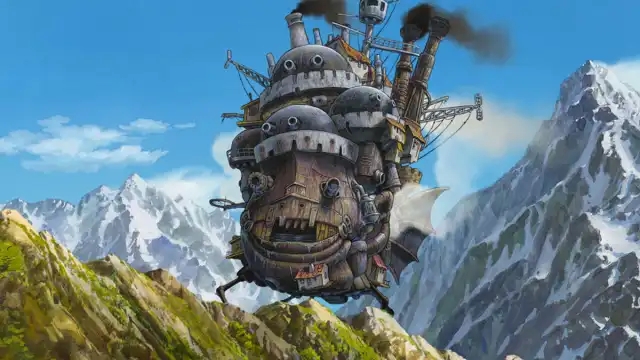
The Geeks + Gamers review mentions how the castle changes form throughout the movie, mirroring the characters' growth. When Sophie accidentally moves it to her childhood home, the castle breaks apart and has to be rebuilt. That's the healing moment. You can't just keep running. You have to stop and build something stable.
The castle also represents Japan itself according to some readings. It's an island nation trying to move forward while carrying the weight of the past. The different doors lead to different versions of reality, showing Howl's desire to escape from commitment and place. He can be in the city, the mountains, or the waste land without ever choosing where he belongs.
The Found Family Nobody Asked For
Markl acts like a miniature adult when Sophie first meets him. He's wearing robes and casting spells and pretending he's got everything handled. He's maybe ten years old. Sophie sees through it immediately and starts feeding him real meals and letting him be a kid. That's the pattern for the whole castle. They collect strays and broken people and make them whole.
The Witch of the Waste starts as the villain. She cursed Sophie out of jealousy over Howl. But then Suliman takes her magic and she becomes a helpless old woman who needs to be carried up stairs and kept away from the fire. Sophie doesn't throw her out. Sophie protects her. She sees that the Witch is just another woman who bought into the lie that youth and beauty equal worth.
Even Heen, Suliman's spy dog, gets adopted. He starts off as a tool of the government, tracking Howl for the king. By the end, he's sleeping in front of the fire with everyone else. The castle absorbs people who don't fit into society's boxes. Howl's a coward, Sophie's "ugly," Markl's a kid without parents, Calcifer's a demon, and the Witch is powerless. Together they work better than the kingdom's army.
The eating scenes matter here. Miyazaki always uses food to show connection. When they share bacon and eggs for breakfast, they're building bonds. When Sophie cooks for the group after the castle collapses, she's keeping the family alive literally and figuratively. You can't fight wars or break curses on an empty stomach.
Why the Ending Confuses People
Yeah, the ending gets messy. Sophie falls through time and sees young Howl catch Calcifer. Then she yells at the Witch to give back the heart. Then everyone is floating. Then Turnip Head turns into a prince. Then the war stops because the prince goes home. It's a lot.
But here's what actually happens. The curse on Sophie and the contract on Calcifer are linked because they're both about self-sacrifice taken too far. Howl gave away his heart to gain power. Sophie gave away her youth to avoid life. Both transactions were bad deals. When Sophie puts the heart back, she's refusing to let Howl destroy himself for her. She's choosing to accept the messiness of adulthood and connection rather than hiding.
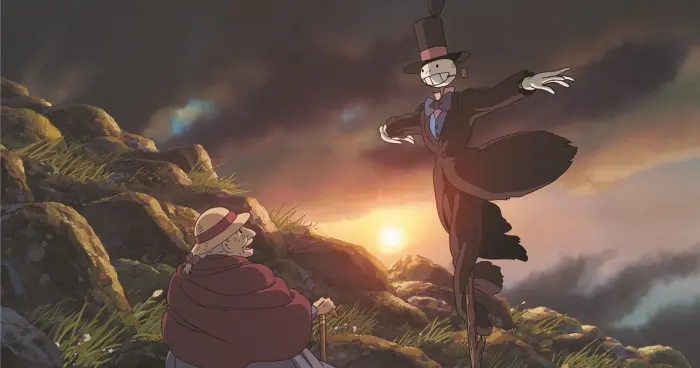
The time travel bit shows that Sophie and Howl were always connected. He saw her in the past when she visited him in the "present" of the movie. It's a closed loop. She didn't just stumble into the castle by accident. She was always going to be the one to save him because she already had.
Turnip Head being the prince explains why the war can end so suddenly. The whole conflict was based on looking for him. Once he's found and he goes home to his kingdom, the excuse for fighting disappears. Suliman sees that Howl has his heart back and Sophie has broken her curse, so she stops the hostilities. Not because she's nice, but because she recognizes that Howl is no longer a weapon she can use.
The Animation Still Holds Up Against CGI
People sometimes sleep on how this movie looks because it came out twenty years ago. That's a mistake. The hand-drawn animation in Howl's Moving Castle beats most modern CGI because it moves like water. The castle walking on those mechanical chicken legs has weight. You can feel the steam and the rust.
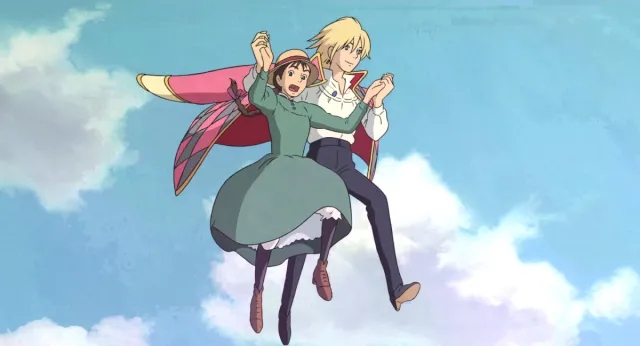
Collider's breakdown talks about how every frame looks like a painting. The backgrounds aren't just placeholders. They're art. When Howl takes Sophie flying over the town, the colors shift from muted grays to bright blues and golds, matching Sophie's emotional state. You don't need dialogue to know how she's feeling. The color palette tells you.
Joe Hisaishi's score does the same thing. "Merry Go Round of Life" isn't just a pretty song. It's the sound of Sophie realizing the world is bigger than her hat shop. The music swells when she steps out of her comfort zone and gets quiet when she's retreating into herself. The melody comes back at the end when they're flying on the rebuilt castle, showing that the fear has been replaced with joy.
The details in the city streets, the way the smoke moves, the fabric of Sophie's dresses, none of this would look better in computer animation. The human touch is visible in every frame. You can see the brush strokes in the clouds. That imperfection makes it feel real in a way that perfect CGI can't touch.
Conclusion
Howl's Moving Castle analysis usually focuses on the romance or the anti-war message, but the real engine is Sophie learning to take up space. She starts the movie believing she's ugly and worthless, so she looks old. She ends the movie knowing she's strong and capable, so she looks like herself, mostly. The white hair stays as a reminder that she earned this.
The movie isn't about finding a prince or breaking a spell. It's about stopping the self-attack. Howl learns this too. He stops trying to be the perfect pretty wizard and accepts that he's a coward sometimes, and that's okay. When both of them stop performing and start being real, the curses break because the curses were just their own self-hatred made visible.
That's why this film still matters. It says you don't have to be young or powerful or brave to be worthy of love. You just have to show up and keep cleaning up the mess, one room at a time.