
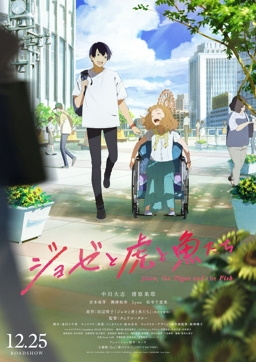
Josee the Tiger and the Fish gets marketed as a disability movie. That is technically true but also completely wrong. Yes Josee uses a wheelchair. Yes that shapes her daily life. But if you watch this film thinking its about overcoming physical limitations you are going to miss what actually makes it good. The real story here is about fear. Specifically the fear of leaving your house the fear of being seen and the fear that you are too broken to deserve good things.
The 2020 anime directed by Kotaro Tamura and produced by Studio Bones takes Seiko Tanabes short story and turns it into something that hits harder than it has any right to. Tsuneo is a college student working part time jobs to save up for a diving program in Mexico. He meets Josee when her wheelchair goes flying down a hill in Osaka and he catches her. This setup sounds like it is going to be one of those inspirational movies where the able bodied guy teaches the disabled girl to be happy. It is not. Josee starts off mean. Like genuinely unpleasant. She throws things at Tsuneo she insults him she accuses him of being a pervert when he is just trying to help. Her grandmother Chizu hires Tsuneo to be her caretaker and the first half of the movie is basically Tsuneo putting up with abuse while Josee sits in her room drawing and reading.
Here is the thing though. Josee is not mean because she is disabled. She is mean because she is terrified. The wheelchair is not her prison. Her own anxiety is.
The Wheelchair Isnt the Real Problem
If you look at the plot mechanics Josee being paraplegic is almost incidental to the conflict. She can wheel herself around fine. She has a accessible house. Her grandmother takes care of her basic needs. The physical limitations are there but they are not what stops her from living her life. What stops her is agoraphobia and social anxiety so severe that she has renamed herself Josee after a character in a book because her real name Kumiko feels too vulnerable.
I saw some data that said the movie conveys that individuals can overcome significant obstacles and that is true but the obstacles are mostly internal. There is this scene at a train station that I think about a lot. Josee is trying to get somewhere on her own for the first time. A guy bumps into her and is rude about it. She immediately assumes he is targeting her because of the wheelchair. She feels small and angry and wants to go home. Then she sees the same guy being rude to someone else. She realizes it was not personal. He was just a jerk. Then a guard helps her onto the train with a ramp and she sits in the wheelchair section and looks around. The world did not end. Nobody stared. She was fine.
That scene is the whole movie in miniature. Josee spends so much time assuming the world is hostile that she never gives it a chance to be neutral. Her grandmother protected her from everything for years which sounds loving but actually crippled her emotionally. Chizu dies halfway through the film and suddenly Josee has to work an office job and interact with people and it is brutal. She is not struggling because she cannot walk. She is struggling because she does not know how to talk to coworkers without biting their heads off.
Tsuneo Isnt Just a Caregiver
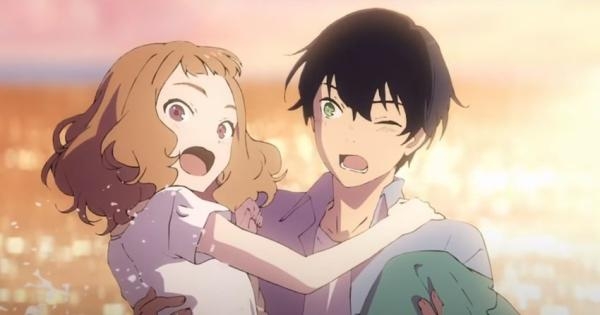
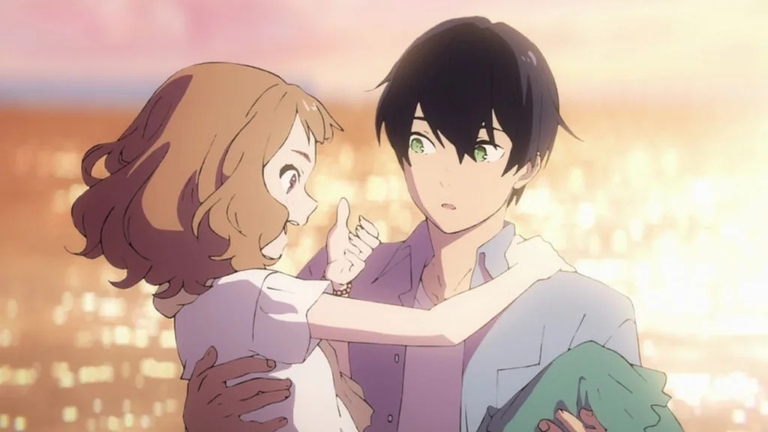
Tsuneo gets a lot of flack in reviews for being too perfect. The Beneath the Tangles review calls him handsome and admirable and yeah that is fair. But he is also kind of a mess in his own way. He has this dream about studying marine life in Mexico and he is working like three jobs to make it happen. When he meets Josee he sees her as just another job at first. Then he sees her as a project. Then he sees her as a girlfriend. The movie takes its time showing how his feelings get complicated.
The interesting part is that Tsuneo needs Josee too. Not in a codependent way exactly though there is definitely some of that early on. But Josee challenges him. She reads his mood when he is pretending everything is fine. She draws him pictures. She writes him a story called The Mermaid and the Radiant Wings which is obviously about them. The mermaid lives in a dark ocean and the fish has wings but cannot fly. It is corny but it works because Tsuneo realizes he has been coasting. He thought he was being nice by helping Josee but he was also using her as an excuse to not fully commit to his own dreams.
There is this weird subplot where Mai a coworker of Josees has a crush on Tsuneo. It feels like it belongs in a different movie but it serves a purpose. Mai tells Josee that she deserves Tsuneo and should help him. That is the turning point. Josee stops being a taker and starts being a partner. She pushes him to do his physical therapy after the car accident. She makes him angry enough to want to walk again. That is growth. Real messy human growth.
That Tiger Metaphor Actually Means Something
The title is weird right. Josee the Tiger and the Fish. It comes from a story Josees grandmother told her about a tiger kept in a cage at the zoo. The tiger is safe but it is not living. Josee identifies with the tiger because she is also caged but safe. Tsuneo is the fish because he is always moving always swimming toward something.
The zoo scenes in this movie hit different. The first time they go Josee watches the tiger pacing. She thinks she understands it. By the end of the film she goes back alone. The tiger is still there but Josee is different. She has been outside. She has been hurt. She has also been happy. The metaphor is not subtle but it is effective. The tiger does not represent her disability. It represents her fear.
Some people miss this. They think the movie is saying disabled people are trapped like tigers. That is not it at all. The movie is saying anyone can be trapped by their own assumptions. Josee assumed she needed protection. She assumed the world would reject her. She assumed she could not be an artist or have a boyfriend or ride a train alone. The tiger is the part of her that was afraid to find out if those assumptions were true.
The Soundtrack Carries the Weight
I need to talk about the music because Evan Call did something special here. He scored this thing like it was a live action drama not an anime. There is a lot of guitar and piano and ambient stuff. None of that big orchestral anime bombast. The track Take Me Far Away has this Irish folk vibe that plays when Tsuneo is talking about Mexico. It sounds like longing.
The best piece is The Mermaid and the Shiny Wing which runs during the climactic story reading scene. Call said he wrote it in one day because he was so excited about the script. You can tell. It builds and builds but never gets cheesy. It sounds like hope but hesitant hope. Like someone opening a door slowly in case there is something scary behind it.
The opening theme by Ai Ichikawa and the ending Ao no Waltz by Eve are solid too. Eve has this voice that sounds like he is smiling and crying at the same time. Perfect for this movie. The music never tells you how to feel. It just hangs there like humidity.
Why the Ending Pisses Some People Off
Okay so here is where I get into spoilers. Tsuneo gets hit by a car. It is random and unfair and he breaks his leg badly. He is in the hospital for months. He misses his chance to go to Mexico. He gives up. Josee visits him and reads him her story and he gets motivated again. He does his rehab. He learns to walk. Then he decides not to go to Mexico after all. He stays with Josee. Then the post credits scene shows he goes to Mexico a year later and comes back to her.
Some viewers hate this. They wanted him to choose the dream or the girl immediately. They think the ending is wishy washy. I think they are missing the point. Tsuneo needed to learn that his dream was not going to disappear if he slowed down. Josee needed to learn that she could survive alone. The time apart while he was in the hospital forced both of them to become independent. When he comes back they are choosing each other not out of desperation but from a place of strength.
The Wikipedia page for the film) mentions that this differs from some versions of the story. Apparently the 2003 live action movie had a darker ending. I have not seen it but I can imagine. This anime is optimistic but not naive. It knows that love does not fix everything. Josee still cannot walk. Tsuneo still has debt and a healed leg that probably aches when it rains. But they are together and they are both working on their art. That is enough. That is actually better than some perfect fairy tale ending because it feels earned.
Comparing It to A Silent Voice Is Lazy
Every review of this movie mentions A Silent Voice. I get why. Both are anime films about disability. Both are emotional. Both deal with guilt and redemption. But the comparison does not hold up if you look closer. A Silent Voice is about bullying and forgiveness and suicide prevention. It is heavy and traumatic and deals with permanent consequences for cruelty. Josee is lighter. It is a romance first and a disability story second.
Shoko in A Silent Voice is deaf. That is central to her character and the plot. Josee being paraplegic is important but it is not the engine of the story. You could theoretically tell a similar story about someone with severe anxiety who is not disabled. The wheelchair adds layers of difficulty and social stigma but the core conflict is Josee learning to be a person. A Silent Voice is about Shoya learning to be a human being after being a monster. Different goals. Different tones.
If you go into Josee expecting A Silent Voice you will be confused by the rom com beats. You will be annoyed by Josee being bratty. You will miss the point. Watch it as a movie about two broken people fixing each other while fixing themselves. That is what it is.
The Animation Style Choices
Studio Bones did the animation here and they made some weird choices that work. The character designs are by loundraw who has this distinct style where everyone looks like they are made of glass. Thin lines. Soft colors. Josee has these big eyes that look scared even when she is yelling at Tsuneo.
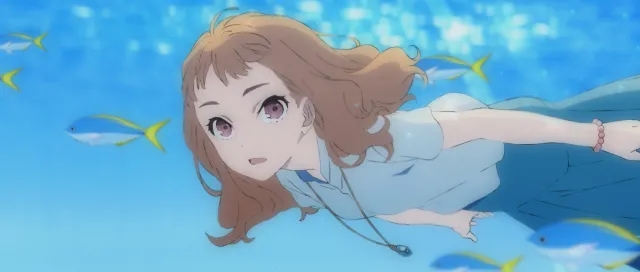
There are scenes with falling leaves and watercolor textures that look like they were painted while the paint was still wet. The underwater sequences are gorgeous. Tsuneo is obsessed with diving and the ocean looks alien and beautiful every time we see it. The fandom wiki notes) that the narrative centers on dreams constrained by circumstances and the visuals reflect that. Everything looks slightly dreamy. Slightly unreal. Like you are seeing the world through Josees imagination before she goes outside.
The wheelchair itself is animated with care. It moves like a real wheelchair. It gets stuck in sand at the beach. It rolls downhill too fast. It makes noise on pavement. These details matter because they ground the fantasy in reality.
The Real Theme Is Perspective
I keep coming back to this but Common Sense Media got it right when they talked about perspective. The movie asks how our view of the world shapes our reality. Josee sees hostility everywhere so she finds it. Tsuneo sees potential everywhere so he finds that. When they meet they mess up each others perspectives in good ways.
Josee teaches Tsuneo that some obstacles are real and cannot be swum through. Tsuneo teaches Josee that most obstacles are just in her head. By the end they have both adjusted. Josee takes the train alone. Tsuneo asks for help. They meet in the middle.
The film also deals with the caretaker dynamic in a way that feels honest. Tsuneo is not a saint. He gets tired of Josees attitude. He has moments where he wonders if she is worth the hassle. That is real. Caretaking is hard work and the movie does not pretend otherwise. But it also shows why he stays. Not because he feels sorry for her. Because she is interesting. Because her art is good. Because when she finally smiles it feels like winning something.
Why This Movie Stuck With Me
I watched Josee the Tiger and the Fish expecting a tearjerker about a sad disabled girl. I got a romantic comedy about a mean artist and a patient diver who annoy each other into becoming better. It is funnier than it has any right to be. The scene where Josee tries to cook and nearly burns the house down. The scene where Tsuneos friends meet her and do not know how to act. The scene at the library where Josee bosses around children. It has warmth.
But it also has that specific sadness that comes from wanting things you think you cannot have. Josee wants to be an illustrator but she thinks her art is too weird. Tsuneo wants to study abroad but he thinks he is too poor and too tied down. They are both wrong about themselves. The movie is about proving those inner voices wrong.
If you have not seen it yet do not go in expecting A Silent Voice. Do not go in expecting Your Name. Go in expecting something smaller and messier. A movie that knows people are difficult and love is work and growth hurts. The wheelchair is just the setting. The fear is the story. And the courage to open the door anyway is the point.
This analysis covers the fear and growth themes better than most reviews I have read. It gets into the codependency issues and why the ending works as a statement about healthy independence. Worth reading after you watch the film.
The movie is streaming on Crunchyroll last I checked. It is ninety nine minutes long which is perfect. Any longer and it would have dragged. Any shorter and we would not have felt the slow thaw of Josees defenses. Give it a shot. Just remember that the tiger is not the disability. The tiger is the fear. And the fish is not the boyfriend. The fish is the courage to swim somewhere new.