
People watch K Project for the pretty colors and end up completely lost about who can do what and why there are giant swords hanging over Tokyo. K Project anime powers and kings explained properly starts with understanding that the whole system is basically a ticking time bomb powered by a magic rock from World War II Germany. The show looks like a fashion magazine came to life and started a gang war, but underneath all that style there is a rigid mechanical system of power distribution that the anime never bothers to explain in one place. You get bits and pieces dropped across thirteen episodes while characters are busy looking cool, so most viewers finish the first season thinking the Colorless King is just a guy who likes switching bodies and the Silver King is just some immortal dude who floats. There is way more to it than that, and it is annoying that you have to dig through side materials and sequel movies to get the full picture of how the Dresden Slate works and why these seven guys are stuck with swords that could nuke cities.
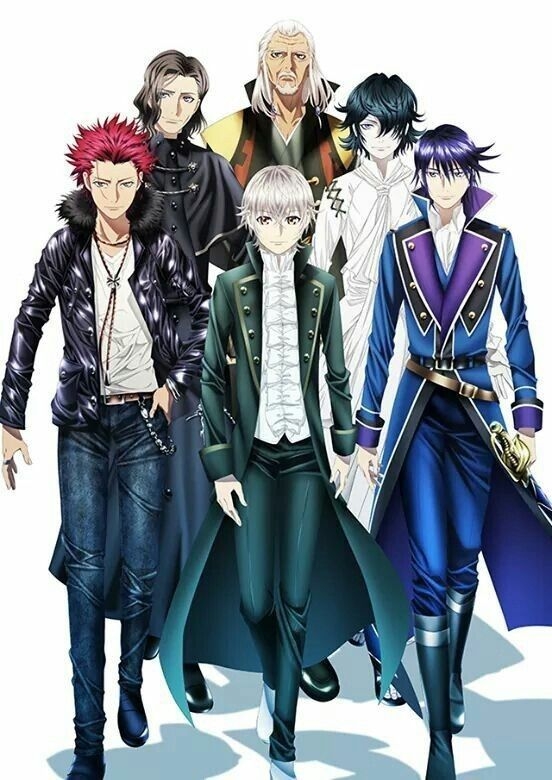
The entire power structure revolves around seven individuals called Kings who draw power from the Dresden Slate. Each King has a specific color that determines what kind of abilities they can grant to themselves and their followers. These aren't just cosmetic differences like their gang uniforms, the colors represent completely different physical laws that each King can break. If you are trying to keep track of who can fly, who can burn things, and who can walk through walls, you need to know which color does what and why the Silver King is basically running the show while pretending to be a high schooler. The whole setup is less like a superhero team and more like seven different brands of walking natural disasters who agreed to a very shaky truce.

The Dresden Slate and Weismann Levels
Everything traces back to this stone tablet that Adolph K. Weismann found during the war. It is sitting in a vault under Tokyo the entire time, humming away and pumping out psychic energy to seven specific people who resonate with it. The Slate does not care about morality or who deserves power, it just picks seven vessels and dumps massive amounts of energy into them through a connection that manifests as those big honking swords in the sky. The Fandom wiki breaks down how Aura is the specific term for the power that generates electricity and other effects, but the Slate is the battery making it all possible.
The Dresden Slate is the source for the entire supernatural ecosystem in the show. When a King draws power, they are tapping into this thing, and the more they use their abilities, the more strain they put on their connection. This strain gets measured as a Weismann level, which is basically a countdown timer to disaster. When a King gets emotional or uses too much juice, their Weismann level rises, and their Sword of Damocles starts to decay. If it hits maximum, the sword drops and wipes out a city. The Slate does not discriminate between the colors, it provides the raw power and the King's specific color determines how that power gets expressed as abilities. Without the Slate, every King is just a regular person, which becomes important later when someone tries to smash it to end the whole system.
The Seven Kings and Their Colors
There are seven slots and seven colors, and each one comes with a specific suite of powers and a specific burden. The numbers matter here because the lower the number, the older and more stable the King usually is, though that is not a hard rule. A Reddit breakdown details how each color has distinct capabilities that function like different power categories.
Silver and Gold
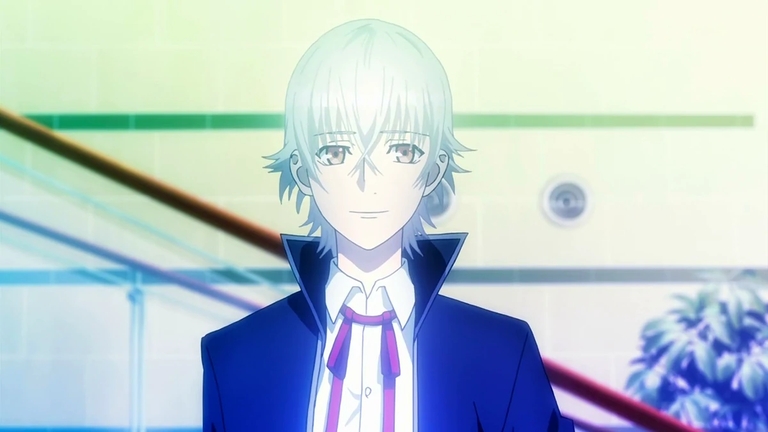
The First King is Silver, currently Adolph K. Weismann, who possesses true immortality. He cannot die, he does not age, and he can manipulate gravity to the point where he flies around and makes other people fly by syncing his Aura with them. His power is called Eternity, and it is the most broken ability in the series because while other Kings can die and have their swords fall, the Silver King just keeps existing unless the Slate itself gets destroyed. He can also grant immortality to his clansmen by making them resonate with his Aura, which is why Kuroh Yatogami and Neko stick around him and do not age normally. The Silver King is different from the others because his power comes from direct research and contact with the Slate decades ago, making him the prototype that the other six colors were derived from.
The Second King is Gold, Daikaku Kokujoji, who runs the country from behind the scenes. His power enhances individual talents to their maximum potential, so his clansmen are basically the best in the world at whatever they do. The Gold King himself can pull astronomical objects out of his Aura and drop them on people like attacks, which looks like summoning planets and stars to crush his enemies. He is responsible for Japan's advanced technology and economic dominance because he has been guiding development for decades using his ability to perfect human potential. While he is not as flashy in combat as the Red or Green Kings, his influence is everywhere in the infrastructure of the city, and his clansmen hold positions of power in government and business.
Red and Blue
The Third King is Red, and this is where things get fiery. The Red King's Aura manifests as flames that can incinerate nearly anything on contact. Mikoto Suoh, the Red King during the main series, is scary because his power is pure destructive force with very little finesse. His Sword of Damocles is always teetering on the edge of falling because he is reckless and angry all the time over the death of his friend Tatara Totsuka. When he uses his full power, things melt and explode, and his clansmen in HOMRA get enhanced strength and fire resistance but not necessarily fire powers themselves unless he specifically grants deeper connections. After Mikoto dies, Anna Kushina takes over as the Red King, proving that the color passes to a successor when the previous holder dies, though she inherits the same unstable sword problem.
The Fourth King is Blue, Reisi Munakata, who leads Scepter 4 like a military unit. Blue Aura is defensive and tactical, allowing users to strike rapidly, create barriers, and channel energy into weapons. Munakata can also repair physical objects with his power, fixing broken swords and damaged structures, though the full extent of that ability is never really shown in combat. The Blue King is supposed to maintain order and counterbalance the Red King's chaos, which is why these two are always fighting. Their clansmen get speed and precision enhancements along with the ability to project blue energy blades and form defensive shields. The Blue Clan operates like a police force or military, with strict hierarchy and discipline that contrasts sharply with the Red Clan's gang-like structure.
Green and Gray
The Fifth King is Green, Nagare Hisui, and his power is electricity taken to a ridiculous extreme. Green Aura lets users generate and discharge electricity, but esteemed users can literally defy physics by phasing through solid objects and walking on vertical surfaces or ceilings. The Green King stores up massive amounts of power to enter what is essentially a blitz mode where he transforms into electricity and moves at impossible speeds, making him nearly untouchable in combat. His whole philosophy is about giving power to the weak, so he wants to release the Dresden Slate's power to everyone in the world to level the playing field. He survived a fatal injury years ago because the Green King's power kept him alive, meaning he is dependent on the Slate to keep his heart beating.
The Sixth King is Gray, Tenkei Iwafune, who has what is called absolute defense. Gray Aura creates fog or mist that disrupts enemy perception and protects the user from harm, making it nearly impossible to land a hit on him. He survived the Kagutsu Crater incident which killed the previous Gray King and most of that clan, and he carries the heavy trauma of failing to protect them. He allies with the Green King because he wants a world where kings are unnecessary so nobody has to experience the loss he went through. His fog can block attacks from even the strongest Kings, and he acts as a guardian and mentor figure to Nagare Hisui, though he knows their plan is ultimately destructive.
The Colorless Problem
The Seventh King is Colorless, and this is the wildcard slot that causes most of the plot confusion. Unlike the others who have consistent power sets, the Colorless King's abilities change depending on who holds the title. One Colorless King, Ichigen Miwa, had clairvoyance and could see various possible futures. Another became a body snatcher who could possess people and control them, jumping from host to host and driving them crazy in the process. Kuroh Yatogami, a former Colorless clansman, can manipulate space and imbue his sword with Aura to make it cut through anything. Yukari Mishakuji can use both Colorless and Green Auras after switching clans, making him a dual threat. The Colorless King is the trickster of the bunch, and their power is unpredictable, which makes them dangerous to the established order because you cannot prepare for what they will do.
Swords of Damocles and Why They Are Terrifying
Every King has a giant sword floating above their head that only other psychics can usually see. This is the Sword of Damocles, and it is not just for show or a cool visual effect. It represents the King's authority and their connection to the Dresden Slate, but it is also a kill switch wired directly to their emotional state. When a King uses too much power or becomes unstable, their Weismann level rises, and the sword starts to crumble and decay. If it falls completely, it triggers a Damocles Down, which is a city-leveling explosion that kills the King and everyone nearby in a massive radius.
The only way to stop a Damocles Down is to kill the King before the sword hits the ground. That is why Reisi Munakata had to kill Mikoto Suoh, not because he wanted to, but because Mikoto's sword was about to drop and vaporize half of Tokyo after he went on a rampage. It is a messed up system where the most powerful people are walking nuclear bombs with hair triggers, and the other Kings have to act as checks and balances to prevent mutual destruction. The swords are the physical manifestation of the burden of power, literally hanging over their heads ready to crush them if they slip up. A blog post details how each King carries a specific burden related to their position, from the Silver King's immortality to the Green King's weakness.
Clansmen, Aura Transfer, and Strains
Here is where people get confused about the hierarchy. A King is directly connected to the Dresden Slate and can grant powers to others through a resonance of Aura. Their clansmen receive a diluted version of the King's Aura, which enhances their physical abilities and lets them use specific techniques based on the color, but they are nowhere near as strong as the King. Clansmen can leave one clan and join another, though usually the old Aura vanishes and gets replaced by the new one when they swear loyalty to a new King.
Saruhiko Fushimi is weird because he kept his Red Aura after joining the Blue Clan, and later acquired Green Aura too, making him one of the only people with triple Auras. This is not supposed to happen, and it annoys everyone. Kuroh Yatogami can manifest both Colorless and Silver Auras because he was the Colorless King's vassal but follows the Silver King. Then there are Strains, like Neko. Strains have powers but they are not connected to the Slate or any King. They are random mutations, psychic accidents that can do things like sensory interference or shapeshifting. They do not have Swords of Damocles and they do not get power from a King, which makes them wild cards in the political structure. Kings can recruit Strains into their clans, but the Strain's original power remains distinct from the clan's Aura color.
Why the System Is Broken
Being a King is basically a curse with benefits. You get superpowers and a gang of loyal followers, but you are stuck with a sword that could kill thousands if you have a bad day, and you are only immortal if you are the Silver King. Otherwise you are aging and eventually your sword will fall unless you die first. The Gold King spent decades isolating himself to manage the Slate responsibly. The Red King died because he could not control his rage. The Green King died when the Slate got destroyed because his power was the only thing keeping his damaged heart beating.
The whole story ends with Yashiro Isana, who is actually Weismann in a borrowed body, destroying the Dresden Slate by dropping his own Sword of Damocles on it. This removes all powers from the world, returning Kings and clansmen to normal humans. It is the only way to break the cycle of violence and prevent future Damocles Downs. Yashiro survives because he is the Silver King and his immortality is inherent to his color, not just the Slate connection, though he has to return to his original body afterward. The destruction of the Slate proves that the power system was never sustainable, just a temporary glitch in history that caused more suffering than progress.
K Project anime powers and kings explained this way shows a system that is less about cool fights and more about the weight of responsibility. Every ability comes with a literal sword hanging overhead ready to drop. The colors determine your fighting style but the Slate determines your lifespan and your threat level to society. It is a rigid, dangerous hierarchy where the strongest people are the biggest liabilities, and the only escape is destroying the source of power entirely. The show is pretty to look at, but the mechanics underneath are brutal and unforgiving, which makes the ending where they break the system feel earned rather than tragic.