
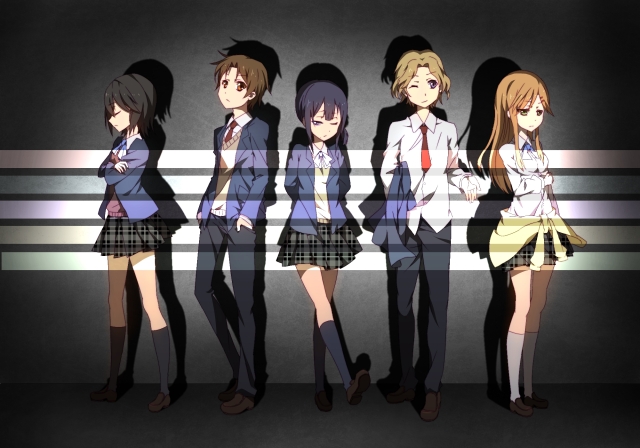
Kokoro Connect anime themes of connection and identity hit harder than most supernatural dramas because the show doesn't care about the magic. Heartseed, that weird entity possessing their teacher, isn't the point. The body swapping and age regression are just tools to crack these five kids open like eggs and watch what spills out. You think you're watching a high school club comedy with a fantasy twist, then suddenly you're staring at Iori Nagase having a full breakdown about whether she even exists as a real person or just a collection of masks she wears for other people. That's the nasty trick this anime pulls. It uses impossible situations to force the most possible, most painful kind of honesty.
These aren't heroes saving the world. They're the Cultural Research Club stuck in a room together while some cosmic troll violates their privacy for entertainment. Every supernatural phenomenon strips away another layer of protection until they're standing there naked, emotionally speaking, forced to admit they don't know who they are or how to connect with anyone without lying. The show gets dirty with it. When Taichi wakes up in Yui's body, he doesn't just learn what it's like to be a girl. He learns what it's like to be Yui specifically, carrying her fear of men like a tumor in his chest. When Inaba loses control and transmits her emotions to everyone, she can't hide her jealousy or her panic anymore. The connection these characters form isn't warm and fuzzy. It's a survival mechanism forged in the crucible of having absolutely zero boundaries left.
Why Heartseed Is the Worst Therapist Ever
Heartseed doesn't explain himself because he doesn't have to. He possesses Gotou, their useless homeroom teacher, and tells them he's doing this for his own amusement. That's it. No grand plan, no magical war, just a bored entity who wants to watch teenagers suffer and grow. Some fans hate this, calling it lazy writing, but they're missing the point. Heartseed isn't a villain you defeat. He's a force of nature, like a hurricane that rearranges your furniture and breaks your windows but accidentally reveals the mold growing behind your walls. He forces body swaps first. Then he makes them act on their impulses. Then he regresses them to childhood. Each phenomenon is calculated to destroy their ability to maintain the polite fiction of Japanese social interaction. The show leans into the cultural context of honne and tatemae, your true feelings versus your public face. Heartseed hates the tatemae. He wants the messy, ugly honne spilled all over the clubroom floor.
When he tells them in episode five that he's hurting them to help them grow, it's not a redemption moment. It's a confession that he's a sadist with a weird moral compass. The hurt me bad analysis of this episode explains how Heartseed operates on the principle that pain opens people up. He believes that damaging experiences facilitate growth, which is a messed up philosophy but one that the show proves partially correct through the narrative. The scary part is that he succeeds. The pain he inflicts does force connection. Taichi and Iori bond over shared trauma. Inaba learns to trust people with her vulnerability. Yui confronts her past. It works. That doesn't make Heartseed good. It makes him effective, which is way more disturbing than if he were just evil. He never gets punished either. He just gets bored and leaves, which annoys viewers who want justice but fits the show's theme that connection happens through suffering, not because some villain gets beaten.
Body Swapping Destroys the Boundaries Between Self and Other
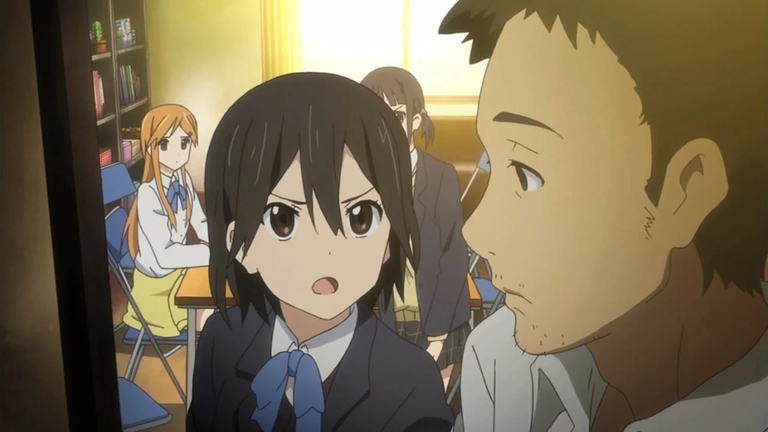
The first arc hits different because it's not played for laughs like most body swap stories. Yeah, there's the awkward moment where Taichi realizes he's in a girl's body and the some fascinating humans wiki describes him accidentally grabbing Iori's chest while trying to figure out the bathroom situation. But the comedy dies fast when you realize these kids can't hide anything anymore. They have to write detailed manuals about their lives so the person inhabiting their body doesn't ruin their reputation. They have to trust that their friends won't look at their naked bodies or read their diaries or say something stupid to their crush. It's a violation that never stops.
Taichi learns Yui's androphobia isn't a cute quirk. It's a crippling fear that makes her shake when men get close, and he feels it in his bones when he's in her body. He doesn't just observe her trauma. He inhabits it. That's the difference between sympathy and forced empathy. The body swapping makes sympathy impossible because you literally become the other person. You feel their heart race, their stomach clench, their hands go numb. You walk home in their shoes and see their family dynamics from the inside. There's no distance anymore. No safe space to observe from. You're trapped in their skin and you can't get out until Heartseed decides you've learned enough.
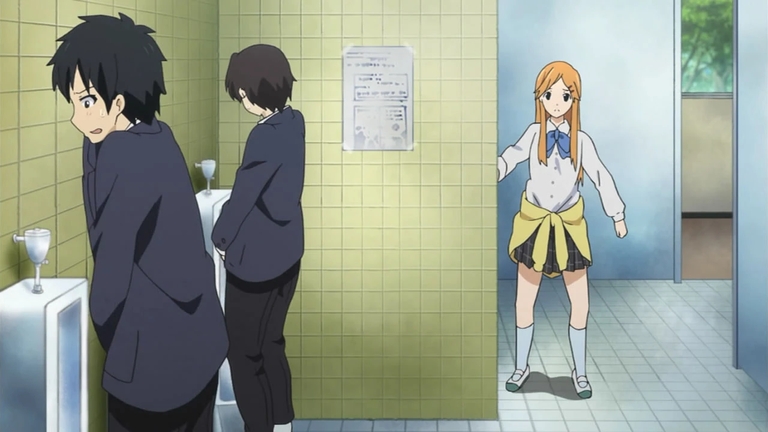
Inaba loses her mind over it because she's a control freak. She keeps lists and schedules and emotional walls thick enough to stop a train. Having her consciousness thrown into Aoki's body, or worse, having him in hers, violates every boundary she built. She can't control how he moves her hands or what he sees with her eyes. The show uses this to ask a weird question. If your body is different, are you still you? Iori panics about this in the train station scene, worrying that if they keep swapping, their personalities will blur and disappear. It's not sci-fi paranoia. It's a real fear about identity dissolution that the mental health standpoint analysis connects to actual dissociative experiences. When your physical form changes, your sense of self starts to fragment, and that's terrifying.
Iori Nagase and the Fear of Having No True Self
Iori's arc breaks the show wide open. She seems like the cheerful, adaptable girl who gets along with everyone. The perfect heroine. Then Heartseed starts the emotional transmission phenomenon and she shatters. Turns out she's been performing her entire life. Her mom married multiple times, dragged her around, forced her to be whatever the new dad wanted. Cheerful daughter, serious student, cool girl. She never developed a core. She's just a mirror reflecting what people want to see. This isn't subtle symbolism. She literally doesn't know who she is when she's alone.
The mental health standpoint analysis I read online nails this. Iori represents the pathological people-pleaser who has fused her identity with others so completely that she experiences genuine terror at the thought of being abandoned or hated. When she starts broadcasting her suicidal thoughts to the whole club accidentally, it's not for attention. It's because her internal monologue is actually that dark and she can't stop it from leaking out anymore. Her crisis peaks when she asks whether dying would even matter if no one is around to perform for. That's heavy stuff for a show that starts with a body swap comedy premise.
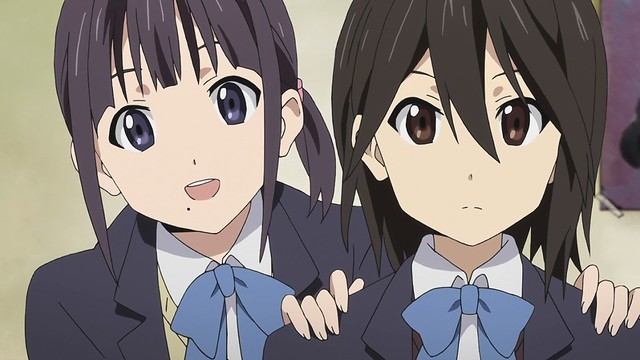
The anime doesn't resolve her neatly either. She doesn't find her "true self" in a flash of light. She just decides to keep looking for it while accepting that she might be broken for a while. That's messy and real and more honest than most anime dare to be. The glass half-empty review points out that Iori's struggle with identity is the show's most compelling conflict because it doesn't offer easy answers. She has to learn that connection doesn't require her to be perfect or to perform. She can just exist, and that's enough, but getting to that point requires her to hit rock bottom first.
Himeko Inaba Learns That Control Is a Lie
Inaba is the brains of the operation. She organizes the club, keeps records, analyzes the supernatural rules. She's also terrified. Her need to control every variable comes from a place of deep insecurity. She thinks if she plans enough, she won't get hurt. Heartseed targets this specifically because it's annoying and he enjoys breaking people, but also because Inaba's control issues are preventing real connection. She won't let anyone see her sweat, so she can't form real bonds.
When the phenomenon forces her to act on her impulses, she almost destroys the club. She kisses Taichi while in Iori's body, causing a massive rift. She can't take it back. She can't control the story. The hurt me bad article talks about how Heartseed believes pain opens people up, and Inaba is the proof. She spends the whole series building walls, and Heartseed keeps lobbing grenades over them until she realizes the walls were keeping her trapped, not safe. Her breakdown is physical. She shakes, she screams, she confesses her jealousy and her fear of abandonment. It's ugly crying, not pretty anime tears.
The show respects her enough to let her be unlikable during this. She's mean and possessive and scared. That's what happens when you force someone to drop the act. You don't get a refined sad girl. You get a human being having a panic attack. Her arc is about learning that vulnerability isn't weakness. When she finally admits she needs the others, that she can't handle it alone, that's when she starts to heal. But it's not a comfortable process. It's embarrassing and messy and she hates every second of it, which makes it feel authentic.
Taichi Yaegashi and the White Knight Problem
Taichi is weird because he's the protagonist but also the most frustrating. He's got this self-sacrifice complex where he thinks he has to fix everyone. He wants to be the hero who saves Iori from her depression or saves Yui from her trauma. It's not altruistic even though it looks like it. It's about his ego. He needs to be needed. The body swapping exposes this. When he's in Yui's body experiencing her fear, he realizes he can't punch her trauma away. When he's trying to help Iori, he keeps making it worse by projecting his own ideas of who she should be onto her.
The glass half-empty review points out that Taichi's relationships are built on him playing savior, and that's not real connection. It's a transaction. He grows when he learns to just be present instead of fixing. That's hard for him. The show makes it look painful, like he's learning to walk without a crutch. His romance with Inaba works better than with Iori because Inaba doesn't want a savior. She wants a partner who sees her mess and stays anyway. Taichi has to learn to stop performing his own role, the helpful hero, and just exist with people. It's a slow process and he backslides constantly, which is annoying to watch but realistic for a teenage boy who has built his entire personality around being useful.
Yui and Aoki Carry Trauma Differently
Yui Kiriyama looks like the tough girl. She knows martial arts, she speaks her mind, she's aggressive. Then you find out she quit competition because a man assaulted her when she was little. Her androphobia isn't a joke. It's PTSD that makes her freeze up when men get close. The body swapping forces her to explain this to the group, but more importantly, it forces her to realize she's not weak for having trauma. When she has to fight while in someone else's body, or watch someone else fight in hers, she confronts the fact that her fear doesn't make her worthless. She starts teaching self-defense again by the end, not because she's cured, but because she's tired of letting her past define her limits.
Aoki is the comic relief, the guy who seems shallow and only cares about cute girls. He's obsessed with a girl from his past who looked like Yui. That seems creepy at first, but the show reveals he's just stuck. He hasn't grown since middle school because he never dealt with his first love moving away. He's using nostalgia as a shield against real intimacy. These two connect because they're both hiding behind past versions of themselves. Yui is hiding behind the tough girl persona because the real her was vulnerable and got hurt. Aoki is hiding behind his memories because the present is scary. Their romance isn't fireworks. It's two hurt people deciding to try anyway. That's quieter but more solid than the dramatic love triangle stuff. They understand that healing isn't linear and they don't rush each other.
Age Regression Forces You to Confront Your Ghosts
The third phenomenon is the cruelest. Heartseed regresses them to random ages, mostly childhood. They lose their high school memories and revert to who they were at ten, or twelve, or seven. This is where the identity theme gets literal. If you don't remember being a teenager, are you still you? The show says yes, but you're a different version, and that version is still part of the whole. Iori becomes a sweet, normal kid who loves her mom. That's heartbreaking because present-day Iori has a fraught relationship with her mother. She sees what she lost. Inaba becomes a clingy, scared child who just wants her family to stop fighting. Taichi becomes a normal boy without his hero complex.
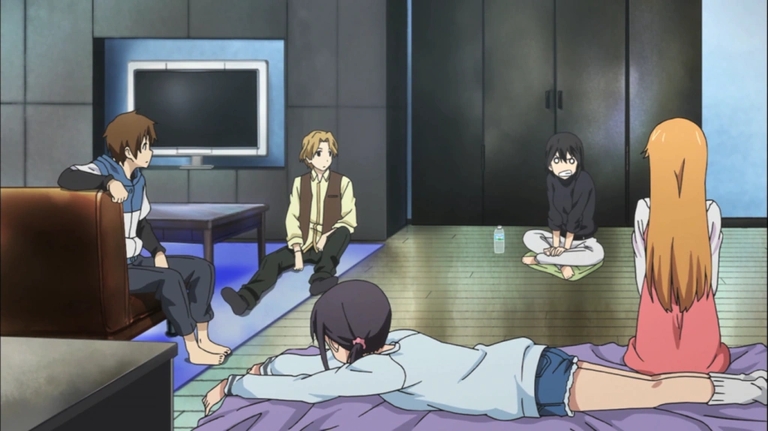
They see their traumas being formed in real time. This arc drags for some people because it's slow. But it needs to be slow. You can't rush someone through their childhood wounds. The club has to parent each other, literally, while dealing with the fact that their friend might suddenly be a toddler who doesn't recognize them. It's weird and uncomfortable and exactly what the show needed to do to prove that connection means accepting every version of a person, even the broken child they used to be. The age regression shows that identity isn't just who you are now. It's the accumulation of every age you've ever been, and you can't understand yourself without looking back at the kid you were.
Emotional Transmission Kills Privacy for Good
The second phenomenon, where they transmit emotions and thoughts to each other randomly, is the ultimate invasion. You can't hide your jealousy. You can't hide your crush. You can't hide your depression. It's all broadcast to four other people who are stuck in the room with you. This destroys the club's tentative peace. Inaba's jealousy of Iori and Taichi becomes public knowledge. Iori's suicidal ideation becomes a group text message she can't delete. The show gets really uncomfortable here because it asks whether privacy is necessary for connection. The answer seems to be no. Real connection requires radical honesty, even when that honesty is ugly.
Critics say this is unrealistic because teenagers would never recover from this level of exposure. But that's the point. The supernatural elements are exaggerations of what real intimacy requires. To really know someone, you have to see their shame, their anger, their pettiness. Heartseed just removes the option to hide it. The MAL reviews mention that some viewers found this melodramatic, but that's because they wanted a clean story about friendship. This anime is about the mess. The emotional transmission arc is the peak of the show's theme that connection requires the death of the persona. You can't be close to someone if you're managing their perception of you. You have to let them see the raw feed, and that's terrifying.
Why the Romance Is the Weakest Part
The love triangle between Taichi, Iori, and Inaba feels forced sometimes. Not because the feelings aren't real, but because the show prioritizes the psychological drama over the romance. When Taichi chooses Inaba in the OVA, it makes sense for his character growth, but the chemistry was always secondary to the trauma. Iori and Taichi work better as friends who survived something together than as lovers. They understand each other's damage, but that doesn't mean they should date. They trigger each other's issues too much. Inaba challenges Taichi to be better, to drop the hero act, which is why they fit.
But the show spends so much time on the body swap mechanics and the mental health themes that the romantic payoff feels rushed. Some fans hate that the OVA resolves the love triangle quickly. I think it works because by that point, the characters have been through so much that dating seems almost trivial. They've seen each other's souls. Picking a girlfriend is just paperwork after that. The romance isn't the point of Kokoro Connect. It's a side effect of the connection they form. The show is more interested in whether they can be honest with each other than who ends up kissing whom.
The Ending Leaves You Uncomfortable
Kokoro Connect doesn't end with a bow. Heartseed never gets punished. He just gets bored and leaves. The phenomena stop, but the damage remains. Iori still doesn't know who she is. Inaba still has anxiety. Yui still flinches at strange men. The connection they formed is real, but it's not a cure. That's the truth the show tells. Connection doesn't fix you. It just means you don't have to be broken alone. The final scenes show them in the clubroom, back to normal activities, but there's tension there. They know too much about each other. They can't go back to being casual friends. They're family now, with all the baggage that implies.
The MAL reviews complain about the unresolved plot threads, but life doesn't resolve neatly either. You don't get answers for why bad things happen to you. You just get people who stick around while you deal with it. That's what Kokoro Connect anime themes of connection and identity ultimately offer. Not healing, not closure, just the promise that someone will sit with you in the dark. The uncomfortable ending is honest. If Heartseed had been defeated and everyone was cured, it would have betrayed the entire point of the show. Some wounds don't close. You just learn to carry them with help.
Kokoro Connect anime themes of connection and identity work because they refuse to offer easy answers. The supernatural elements aren't solutions. They're problems that force the characters to stop lying. By the end, these five kids know each other better than most married couples, and it's not always comfortable. They know each other's shameful thoughts, their childhood fears, their ugly jealousies. What they build isn't a perfect friendship. It's a functional one based on radical acceptance. They don't fix each other. They just decide to stay.
That's more valuable than any magic power or happy ending. The show understands that identity isn't something you find in a moment of clarity. It's something you construct through connection, piece by piece, while other people watch and judge and somehow still decide to stick around. Heartseed was right about one thing. Pain does open you up. It cracks your ribs and lets people see your heart. It's terrifying and it hurts and there's no guarantee they won't stomp on it. But the alternative is being Iori, performing for an empty room, not knowing if you're real. Kokoro Connect picks the pain every time. It picks messy, scary, real connection over comfortable isolation. That choice makes it one of the more honest anime about what it actually costs to let people know you.