
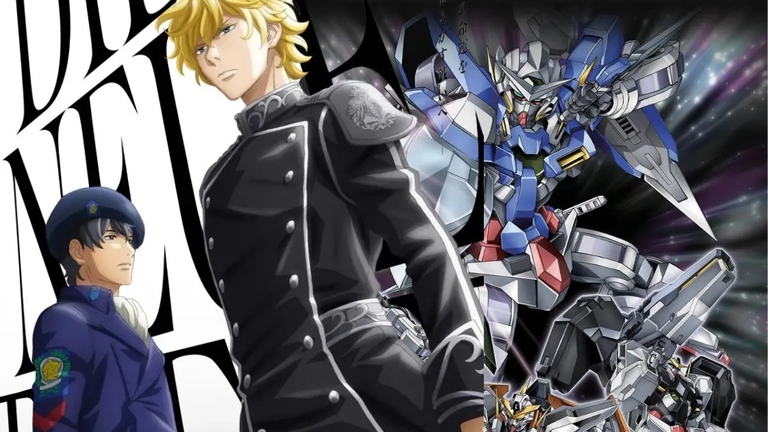
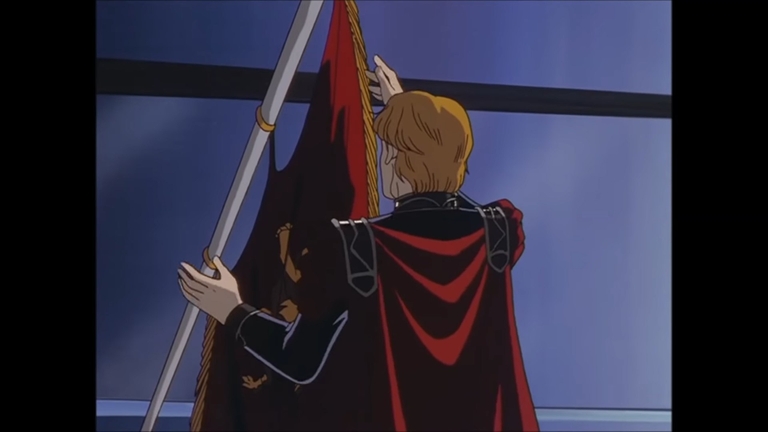
People ask what is the most political anime like the answer requires debate. It doesn't. Legend of the Galactic Heroes sits alone at the top and everything else fights for second place. This isn't about which show has the biggest explosions or the most attractive character designs. We're talking about cabinet reshuffles, election fraud, supply chain politics, and the slow grind of governance during an interstellar war that spans decades.
The show follows two military geniuses stuck on opposite sides of a conflict between the autocratic Galactic Empire and the democratic Free Planets Alliance. One guy believes order requires centralized authority even if it means nobles hoarding wealth. The other believes democracy matters even when it's inefficient and corrupt. They spend more time debating philosophy in smoke-filled rooms than firing lasers, and that's exactly why it wins.
Why Legend of the Galactic Heroes Sets the Standard
This series is basically a civics textbook that happens to have spaceships. You've got elections where the military tries to rig results while citizens starve because someone politicized the grain supply. You've got noble families in the Empire conducting assassinations to secure positions near the throne. You've got journalists deciding whether to publish the truth or protect the state because stability matters more than transparency when enemies are at the gate.
Apparently, some fans track the legislative maneuvers in this show better than they follow real-world parliamentary procedures. The anime doesn't hold your hand with exposition dumps either. Characters reference historical precedents, cite legal codes, and move political pieces around the board while you're still processing the last betrayal. It's 110 episodes of people scheming in offices and occasionally fighting massive space battles, and somehow the office scenes hit harder than the fleet combat.
The Free Planets Alliance holds democratic elections that look messy and chaotic because they are. The show doesn't pretend democracy is inherently virtuous. It shows you populist politicians manipulating the poor, military leaders staging coups when they think civilians have failed, and the free press slowly getting bought by corporate interests. Meanwhile, the Empire deals with succession crises where princes poison each other and reformers try to strip power from landed aristocrats who've held titles for centuries. The series presents both systems as flawed but functional in different ways, refusing to let the audience off easy with a clear hero side.
The Gundam Franchise and War Economics
If Legend of the Galactic Heroes is the king, then Mobile Suit Gundam built the castle. The Universal Century timeline specifically deals with colonial exploitation, resource wars, and what happens when weapons manufacturing becomes your primary economic driver. Char Aznable isn't just a villain with a cool mask. He's a political figure who manipulates public sentiment, funds revolutionary cells, and understands that optics matter more than battlefield victories in the long run.
Mobile Suit Gundam: Iron-Blooded Orphans hits different because it focuses on child soldiers forming a private security company to negotiate labor rights for Martian colonists. That's not subtext. That's the actual plot. The show spends episodes in boardrooms discussing trade disputes, parliamentary procedure, and treaty law while giant robots wait outside like impatient guard dogs. Mobile Suit Gundam 00 tackles energy cartels and private military interventions in failed states. The Witch from Mercury throws corporate shareholder meetings and arranged marriages into the mix because in that future, war is just another business strategy and school is training for middle management in the killing industry.
The original 1979 series established that war isn't about heroes and villains. It's about earth running out of resources and space colonies wanting autonomy. The politics are messy because independence movements often involve terrorism, and occupying forces always think they're maintaining order. These themes carry through Zeta Gundam, which shows what happens when the military-industrial complex infiltrates civilian government, and Unicorn, which deals with classified war crimes and how history gets rewritten by the winners. Each entry asks whether peace is possible when weapons manufacturing drives your GDP.
Modern Political Heavy Hitters
Attack on Titan transformed from a straightforward monster-hunting survival story into a geopolitical nightmare about racial supremacy, historical revisionism, and the impossibility of breaking cycles of violence. Season three features an actual coup d'état where the military arrests the fake king and his advisors, followed immediately by scenes of press censorship and government propaganda campaigns. It's uncomfortable and doesn't offer easy answers, which annoyed fans who just wanted to see swords swinging at giants.
The show gets darker when it reveals the monsters are victims of state programming and the real enemy is entrenched nationalist ideology. Characters discover their entire history was fabricated to justify military expansion. The later seasons deal with internment camps, racial discrimination, and whether liberation justifies terrorism. It's messy politics that refuses to pick a side, showing you why oppressed people radicalize and why that radicalization usually creates new oppressors. The protagonist doesn't save the world. He becomes a monster to break the cycle, which fails anyway.
Code Geass takes a different approach with its revolutionary playbook. Lelouch uses mind control powers to lead an insurgency against an empire that conquered Japan and renamed it Area 11, treating the population as second-class citizens. The show dives into occupation policies, resistance movements, and the optics of revolution. Lelouch stages media events and understands that controlling the narrative matters as much as controlling territory. It's basically a chess match where half the pieces are public opinion polls and the other half are actual soldiers. The series specifically examines how charismatic leaders can become tyrants even while fighting tyranny.
Satire and Dystopian Systems
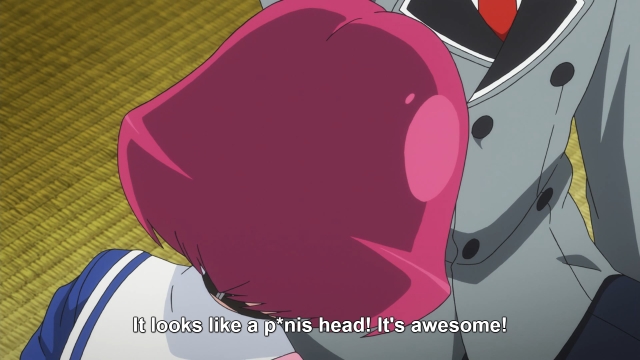
Not every political anime needs space battles or giant walls. Shimoneta looks like a dumb sex comedy on the surface but it's actually a sharp critique of censorship and government moral policing. The story takes place in a Japan where dirty jokes are illegal and citizens wear trackers to monitor their behavior constantly. The government replaced sex education with propaganda about purity while maintaining control through surveillance and fear.
I saw some data that said this show explores the line between activism and terrorism better than most serious dramas. The main group SOX uses civil disobedience and public pranks to resist censorship, while the opposition group Gathered Fabric takes hostages and uses violence for selfish gratification. The anime draws a clear line between principled resistance and destructive chaos, showing how politicians exploit crises to grab emergency powers. It also demonstrates how ideologues often become the thing they hate, personified by the student council president who starts as a purity enforcer and ends up as a stalker corrupted by repression.
Psycho-Pass operates in a similar surveillance state where the Sibyl System determines criminal potential before any crime occurs. The show asks whether outsourcing justice to an algorithm constitutes governance or tyranny. It explores how such systems create new classes of people, the latent criminals who are marked for life regardless of their actions, and how law enforcement becomes an instrument of social control rather than protection. The inspectors realize they're not stopping crime. They're maintaining a system that defines deviance arbitrarily.
Espionage and Institutional Violence
Jin-Roh: The Wolf Brigade examines paramilitary police forces and state violence without glorifying either side. The film follows a member of a special counterinsurgency unit who starts questioning the endless cycle of suppressing rebellion only to create more rebels. There's a scene where characters discuss creative destruction while standing in wreckage from a construction boom, which sums up the entire political philosophy of the film. It suggests that terrorism and counterterrorism feed each other, and the state often creates the monsters it claims to fight through its own brutality.
Ghost in the Shell: Stand Alone Complex deals with cyber-terrorism, refugee policy, and election interference in a post-digital world. Section 9 spends more time navigating jurisdictional disputes between government agencies than they do shooting bad guys. The show asks hard questions about identity records, sovereignty limits, and who gets to decide what constitutes a threat to public safety. It portrays a world where information warfare has replaced conventional conflict, and controlling data matters more than controlling territory. The laughing man case specifically deals with corporate cover-ups of medical crimes and how truth gets buried under classification.
Patlabor 2 specifically focuses on manufactured political crises and the gaps between civilian oversight and military readiness. The film explores how public perception gets managed during emergencies and who benefits when populations remain in states of fear. It treats terrorism not as an existential threat but as a tool used by various state and non-state actors to achieve specific policy goals. The movie suggests that peace itself becomes a weapon when used to justify authoritarian measures.
Historical and Fantasy Politics
Kingdom adapts the Warring States period of China and treats military strategy as an extension of political will. The show covers conscription laws, supply line management, taxation for war funding, and how leadership transitions determine whether a state survives or collapses into civil war. It shows young kings learning that winning battles means nothing if you can't feed your people afterward. The politics of alliance-building between the seven states drives the plot more than individual sword fights, though it has plenty of those too.
The Twelve Kingdoms follows a Japanese girl who gets transported to a fantasy world and becomes the ruler of a kingdom. Instead of focusing on romance or magic battles, it shows her learning administrative law, handling famine response, dealing with corrupt magistrates, and understanding that monarchs are bound by natural laws and bureaucratic realities. It's basically a crash course in governance theory with mythical beasts in the background. The show spends episodes on census taking, tax reform, and the proper way to appoint officials based on merit rather than birth.
Yona of the Dawn starts with a princess losing everything when her cousin murders her father and usurps the throne. While fleeing with her bodyguard, she discovers her father's peaceful kingdom was actually a failed state that ignored its citizens' suffering. Her journey involves learning why weapons exist, how to build a coalition that can actually govern rather than just win battles, and understanding that restorative justice requires structural change, not just revenge. She realizes her father's pacifism was a luxury that depended on ignoring the poor.
Vinland Saga begins as a Viking revenge story but evolves into a commentary on the economics of conquest and the possibility of true peace. It asks what happens after you win, when you have to administer territory and tax populations. The protagonist eventually realizes that creating a society without violence requires abandoning the very mindset that allowed him to survive his childhood. The later arcs deal with land rights, settlement charters, and the tension between agricultural stability and raiding culture.
What Separates Real Political Anime from Window Dressing
Here's where people get confused. Having a villain who is a king doesn't make an anime political. Politics requires systems, consequences, and the machinery of power operating independently of individual heroes. Legend of the Galactic Heroes shows you the budget meetings. It shows you how a free press gets corrupted by ratings and corporate ownership. It shows you why good people support terrible systems because they fear the alternative more.
An anime might mention the government or have some vague laws about special powers, but that doesn't make it political. It becomes political when it examines how those laws get enforced, who benefits from them, and what happens when institutions fail. Psycho-Pass questions whether a society that eliminates all crime through total surveillance is worth living in. Attack on Titan forces you to confront how historical grievances get weaponized by politicians to justify new wars. The politics have to be structural rather than personal.
The difference lies in whether the show treats power as a substance that flows through institutions or just as a prop for the protagonist to overcome. In real political anime, the system persists after the hero leaves. The wars continue because of economic incentives, not because one bad guy needs punching. The elections matter because they determine resource allocation, not just who gets a fancy chair. When an anime shows you the paperwork and the committee hearings, you know it's serious about politics.
Why This Matters Now
Japanese politicians have acknowledged anime's role in soft power and cultural diplomacy. The medium explores revolution and rebellion with a complexity that many Western shows avoid entirely. One Piece presents its protagonist as a terrorist in the eyes of the world government, with each story arc serving as a statement about freedom versus control, colonialism versus sovereignty, and the morality of challenging unjust laws. The world government isn't evil because they wear black hats. They're evil because they maintain power through historical erasure and class oppression.
These stories resonate because they don't offer simple solutions that make viewers feel comfortable. Legend of the Galactic Heroes ends without telling you whether democracy or autocracy produces better outcomes. It just shows you the cost of both systems in human lives and institutional decay. Attack on Titan forces you to sit with the possibility that breaking cycles of violence might be impossible. Code Geass asks whether the ends justify the means and leaves the answer ambiguous enough that fans still argue about it years later.
Political anime works because it treats viewers like adults who can handle moral ambiguity. It shows you that good intentions often pave roads to hell, that revolutions usually eat their own children, and that maintaining freedom requires constant vigilance against both external threats and internal decay. It understands that the most dangerous weapons aren't mecha or magic swords, but laws, propaganda, and the slow erosion of civil liberties that happens while people aren't paying attention. The best entries don't let you cheer for the hero without questioning what they're building.
Legend of the Galactic Heroes remains the standard because it never flinches from showing how boring and terrifying governance actually is. It depicts the long meetings, the petty bureaucratic rivalries, and the moment when idealists realize they've become the establishment they once fought. That's what makes it the most political anime ever created. It doesn't just use politics as a backdrop for action. It treats the acquisition and maintenance of power as the entire point of the story, with all the ugly compromises that entails.