
Life Lessons with Uramichi Oniisan anime review threads keep calling this show a dark comedy and they're technically right but they're also missing the point completely. This isn't a comedy. It's a documentary with better lighting.
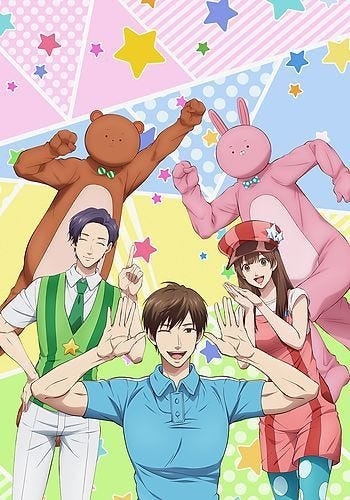
Uramichi Omota is thirty-one years old and he wants to die. Not in an active way, more like he's just tired and the floor looks comfortable enough to stay on forever. He hosts a children's gymnastics program called Together with Maman where he teaches kids to do handstands while internally calculating how many more years until retirement kills him or he kills it. The show looks cute. The opening song ABC Taisou bops hard enough to fool you into thinking this is wholesome family entertainment. It isn't. The lyrics are about psychological damage and the music video features Uramichi smiling while clearly dead inside.
If you're looking for a plot you won't find one. This is sketch comedy arranged like a sitcom where nothing changes because that's the horror of real jobs. Uramichi goes to work, puts on a blue polo shirt, smiles until his face hurts, then goes home to drink cheap booze and do muscle training at 2 AM because he can't sleep. Rinse and repeat for thirteen episodes. Some people call this repetitive. Those people have never worked retail or sat in a cubicle for eight hours rearranging spreadsheets that nobody will read.
The animation comes from Studio Blanc who had maybe ten dollars and a dream. The character models are simple and they reuse shots constantly. But this works because the show is about a cheap kids program that's held together with duct tape and lies. If it looked too polished you wouldn't believe these people were suffering.
The Voice Cast Carries the Weight
The only reason this works is because the voice actors understand the assignment on a spiritual level. Hiroshi Kamiya plays Uramichi with this exhausted monotone that somehow carries five different emotions at once. He's annoyed, depressed, angry, and weirdly protective of the children all in one breath. You can hear the bags under his eyes. Mamoru Miyano plays Iketeru Daga, this pretty boy who laughs at fart jokes and can't read analog clocks, and somehow makes him the most sympathetic character in the room. His laugh is iconic and stupid and perfect. Nana Mizuki voices Utano Tadano, a former idol who job hopped into singing for kids and regrets everything about her six year relationship. She brings this desperate energy to every line like she's one bad day away from screaming into the void.
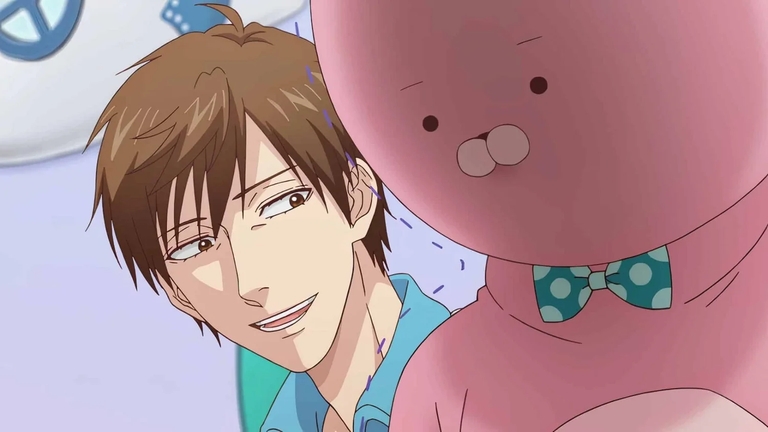
Tomokazu Sugita and Yuuichi Nakamura play the mascot characters Tobikichi and Mitsuo, two college juniors who followed Uramichi into this hellscape and now wear bear and rabbit suits while questioning their life choices. They deliver their lines through these mascot heads but you can hear the despair. Kenjiro Tsuda shows up as Hanbee Kikaku and Daisuke Ono has a role too. This cast is stacked with people who could be carrying much bigger shows but instead they're here making jokes about rent and back pain.
These aren't just voices. They're lifelines. The script gives them cynical rants about marriage and the absolute scam that is adult life, and they deliver it like they're reading from their own diaries. There's a reason people call this anime criminally underrated even though the animation itself is just okay. You don't watch this for the sakuga. You watch it to hear Hiroshi Kamiya say "I hate this job" in five different inflections.
Why Repetition Is the Point
Yeah, the jokes repeat. Uramichi threatens violence against his coworkers, Iketeru laughs at something inappropriate, Utano brings up her boyfriend problems, and the kids ask innocent questions that cut too deep. Then someone does a reaction face and we move to the next skit. If you're waiting for character development you'll be waiting forever because that's not how this works.
But here's the thing. That's what jobs are. You do the same stupid tasks every day for slightly less money than you need while your boss makes impossible demands and your coworkers annoy you. The show captures that cycle perfectly. Uramichi isn't growing because people in dead end jobs don't grow, they survive. The humor lands because it's predictable. You know he's going to snap at the rabbit mascot. You know he's going to tell some five year old that life is pain and dreams die. The comfort is in the familiarity, like a warm blanket made of cigarette smoke and unpaid overtime.
Some reviews call this a flaw and I get it. If you want a story where people learn and change, look elsewhere. But if you want to feel seen in your misery, this is it. The repetition mirrors the grind. Every episode is a new day at the office with the same problems. Budget cuts, unreasonable directors, hyperactive children, and the crushing realization that this is your life now.
The Horror Nobody Talks About
People call this a comedy but there's a solid argument that this is horror. Uramichi is trapped. He's a former gymnast with real talent who peaked in college and now he's doing jackknifes for toddlers while his director screams about budget cuts. The show Within the show has songs with lyrics about death and capitalism that the children sing along to because they don't know better. There's an episode where they film Christmas content in the middle of summer and everyone is sweating through their costumes while pretending it's winter. That's not funny. That's dystopian. That's hell.
The kids on the show are sometimes aware something is wrong. They'll ask Uramichi why he looks sad or why he doesn't like his job and he can't answer because the camera is rolling. He has to swallow his real feelings and say something about dreams coming true while his eyes look dead. If you've ever had to smile at a customer while your brain is screaming, you know this feeling. The show validates that exhaustion without fixing it. There are no solutions here. Just the acknowledgment that yes, work breaks people and that's normal.
The final episode especially leans into this interpretation. Without spoiling anything, it leaves you with this uneasy feeling that Uramichi will never escape. He's Sisyphus but instead of a boulder he's pushing a smile that doesn't fit his face. The horror is in the stasis. The realization that next week will be the same as this week until he dies or retires, whichever comes first.

The Masking and the Performance
Every character wears a mask. Sometimes literally like the mascot guys, but mostly figuratively. Uramichi puts on his cheerful oniisan voice while dying inside. Utano pretends to be the perfect idol while her relationship crumbles. The director pretends he knows what he's doing while running the show into the ground with decisions made by committee. This isn't subtle symbolism. It's the whole text.
The show is about the performance of happiness that capitalism demands. You have to pretend you love your job because complaining is unprofessional. You have to pretend you're grateful for opportunities that are just more work for the same pay. Uramichi breaks the fourth wall sometimes to tell the audience directly that adulthood is a trap and the only way out is to keep smiling until your face cracks. It's brutal honesty wrapped in a kids show package which makes it hit harder.
There's this character Hanbee Kikaku who works in merchandising and has breakdowns that look like horror manga panels. He plans and sells the toys and he's constantly on the verge of collapse. He represents the crew behind the camera, the people making the magic happen while getting none of the credit. The show doesn't forget that everyone is struggling, not just the stars. The assistant directors, the makeup artists, the web staff, they're all barely holding it together.
The Kids Are Alright
The children on the show are simultaneously the source of Uramichi's only joy and his biggest stress. He genuinely loves them. He never blames them for his unhappiness. When a kid asks him if he's okay, he lies and says yes because he doesn't want to disappoint them. That's the core tragedy. The only pure thing in his life is these children and he has to lie to them to protect them from the truth that their favorite gymnast is falling apart.
The kids are perceptive in that way children often are. They see through the cracks in his performance. They notice when his smile doesn't reach his eyes. They ask questions like "Why do adults look sad?" and Uramichi has to deflect because the answer is "Because we sold our dreams for health insurance and rent money." The show captures that weird dynamic where kids are both naive and incredibly sharp. They know something is wrong even if they don't know what capitalism is yet.
Why You Shouldn't Watch This If You're Depressed
I need to say this clearly. If you're in a bad place mentally, don't watch this. It will make it worse. The show has no answers. It doesn't get better for Uramichi. The final episode leans hard into the horror interpretation and leaves you feeling hollow. It's funny, sure, but it's the kind of funny that hurts your chest and makes you stare at the wall for a while.
The anime is honest about stagnation and economic anxiety in a way that most media isn't. It doesn't promise that hard work pays off. It shows that hard work just leads to more hard work until you die. For some people that's comforting because it validates their experience. For others it's just confirming their worst fears. Know which one you are before you hit play. If you're already thinking about quitting your job or you cried in the bathroom at work last week, maybe watch something with actual hope instead.
The Music Is a Trap
The opening theme ABC Taisou performed by Mamoru Miyano and Nana Mizuki is genuinely catchy. It's designed to sound like a kids exercise song from the seventies. But if you listen to the lyrics it's about the alphabet leading you to despair. The ending song is slower and has this weird K-pop vibe but the lyrics are about being tired. The background music switches between upbeat xylophone nonsense and depressing piano riffs depending on whether Uramichi is on camera or off.
The songs within the show are worse. They have titles like "Arm Through the Neck Hole" and lyrics about how dreams are lies. The kids sing these happily while the adults die a little more inside. It's a perfect audio representation of the show's themes. Everything sounds happy but if you pay attention it's screaming.
Life Lessons with Uramichi Oniisan anime review scores don't matter for this one. It's sitting at around 7.7 on MAL which is criminal but whatever. Numbers can't measure how much this show understands about being thirty and tired. They can't quantify the relief of seeing your own burnout reflected back at you by a cartoon man in a blue polo shirt.
There's no happy ending waiting. Uramichi doesn't quit his job to follow his dreams. He doesn't get a girlfriend or win the lottery. He just keeps going because that's what adults do. We wake up, put on the mask, entertain the children whether they're literal kids or just our bosses acting like children, and then we go home to stare at the ceiling until we have to do it again.
If that sounds like your life, this anime will feel like someone read your group chat messages and animated them. If that sounds depressing, skip it. But if you want to know what modern work culture looks like when you strip away the inspirational LinkedIn posts and the hustle culture hashtags, watch this. Just don't blame me when you can't laugh because you're too busy relating and you start checking your own smile in the mirror to see if your eyes look dead too.