
Link Click anime review threads are finally getting the traction they deserve now that Season 2 wrapped up, but most people still don't get why this Chinese series hit so hard when it first dropped on Crunchyroll. This isn't some cheap knockoff trying to copy Japanese trends. Studio LAN built a time-travel system with teeth where every rule matters and breaking them costs real blood. You follow Cheng Xiaoshi and Lu Guang running this failing photo studio while they drown in debt to their landlord Qiao Ling, except their business model involves jumping into photographs to fix clients' past regrets. Xiaoshi possesses the photographer's body and feels every emotion they felt at that moment while Lu Guang guides him from outside using his ability to see twelve hours ahead in that specific timeline. It sounds like a cool power fantasy until you realize the show treats time travel like a loaded gun with a hair trigger.
Most viewers come in expecting another Steins;Gate clone or maybe some episodic case-of-the-week comfort food, but Link Click sets up these emotional one-off stories just to yank the rug out and reveal everything connects to this horrible central mystery. The animation quality shocks people who think donghua means stiff CGI models sliding around. The character acting here, especially Xiaoshi's facial expressions when he's possessing someone mid-breakdown, hits harder than half the seasonal anime releases I've sat through. People keep asking if the show gets good or if they should stick with the slow start, and honestly, if you're not hooked by episode three's ending then this probably isn't for you because that's when the knife first twists.
How the Time Photo Studio Really Operates
The setup sounds like a scam from a Craigslist ad. Cheng Xiaoshi owes money to Qiao Ling because he's terrible with finances, so they turn the ground floor of their building into this weird service where clients bring photos and the boys charge them to investigate the past. But the mechanics are specific and brutal. Xiaoshi physically jumps into the photo and possesses whoever took it, inheriting their memories, their muscle memory, their emotional state at that exact moment. If the photographer was having a panic attack, Xiaoshi feels that suffocating pressure. If they were in love, he gets that warm dopamine hit. It's not just watching the past, it's living it with all the sensory baggage attached.
Lu Guang stands outside holding the physical photo and can see twelve hours into the future of that timeline, which lets him guide Xiaoshi through phone calls or notes to make sure they gather the intel without changing anything. The rule is strict. They observe only. They fix regrets by finding information, not by altering events. Of course, Xiaoshi is a reckless idiot with a hero complex, so he keeps breaking this rule to save people, and every time he does, the timeline shifts and creates disasters that ripple forward. The show doesn't let him off the hook either. When he saves Emma from her terrible boss in that early arc, he doesn't just get a happy ending. He gets a body count. The story treats causality like physics. Every action has an equal and opposite reaction, and sometimes that reaction is a knife in the dark or a car accident that shouldn't have happened.
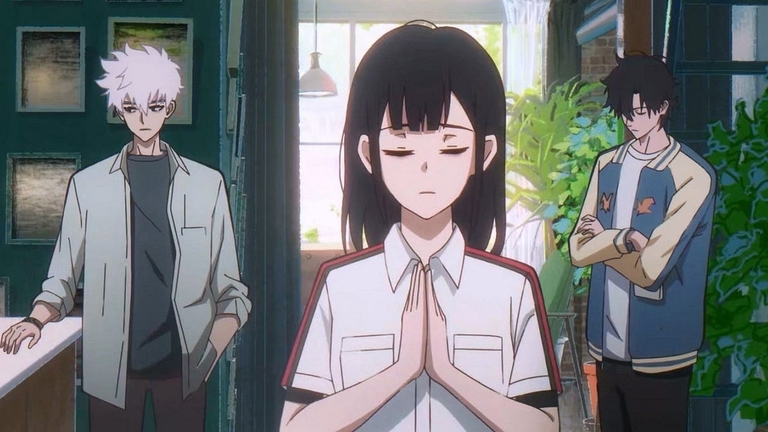
The business side of it grounds the whole thing in reality. They aren't rich heroes. They're broke twenty-somethings who argue about rent and eat instant noodles. Qiao Ling handles the marketing and client intake, often without knowing the full supernatural details, which creates this weird office comedy dynamic that contrasts hard with the life-or-death stakes of the time jumps. I saw some data that said the show compares favorably to most anime releases, and it makes sense because this mix of mundane financial stress with cosmic time powers feels fresh.
Cheng Xiaoshi and Lu Guang Are a Messy Partnership
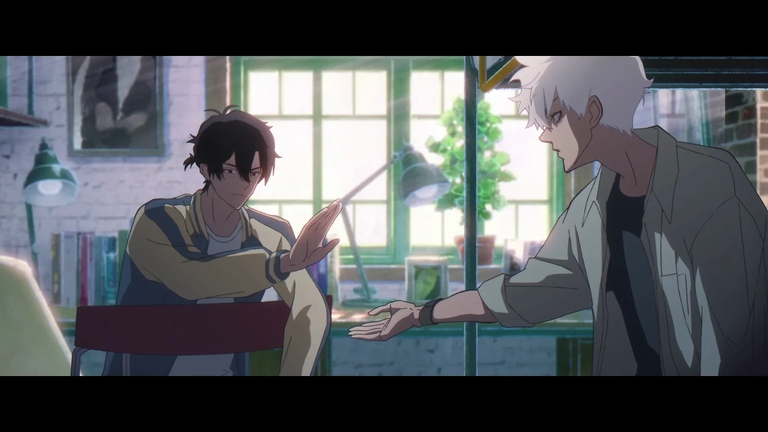
These two aren't friends because they have so much in common. They're stuck together because their abilities complement each other in this really specific way that makes the business work, and their clashing personalities create this friction that drives the plot forward. Xiaoshi is all heart, no plan. He feels everything too deeply, which makes him great at understanding clients but terrible at maintaining professional distance. When he possesses someone, he comes back carrying their trauma like luggage he can't unpack. Lu Guang is the opposite. He's cold, calculated, obsessed with the rules because he understands the math of time travel better than anyone. He sees the twelve-hour window and knows exactly how one changed word can destroy a life five years down the line.
Their relationship isn't just banter and teamwork. It's a constant argument about whether it's better to save one person now or protect a thousand people later. Qiao Ling sits in the middle as the landlady and business manager who doesn't fully understand the supernatural mechanics but knows they're hiding something huge. She brings this grounded, sarcastic energy that keeps the show from drowning in its own seriousness. The three of them feel like real people who happened to get cursed with this ability rather than chosen heroes. They bicker about rent. They eat takeout at 2 AM. They make bad decisions when they're tired. It makes the horror hit harder because you care about these idiots.
The Twelve Hour Rule Creates Real Stakes
Most time-travel shows give you unlimited do-overs or let the hero stay in the past for days. Link Click locks you into twelve hours max, and the clock starts ticking the moment you enter the photo. This constraint forces the writers to keep everything tight. There's no time for filler conversations or scenic walks. Every minute counts, and Lu Guang is literally counting them while watching the future shift and change based on Xiaoshi's choices. The tension comes from watching the timeline branch in real time. If Xiaoshi sends a text message five minutes late, Lu Guang sees the future rewrite itself and has to scream into the phone to fix it before the window closes.
The show also establishes that you can't just keep jumping into the same photo. Once you've been in there, the connection is spent, or the timeline becomes too unstable for a second entry. This prevents the classic time-travel problem where the hero tries a hundred times to get the perfect outcome. Here, you get one shot. One mistake costs everything. When Xiaoshi breaks the rules to save Emma and accidentally causes her death instead, he can't just reload the save file. He has to live with the fact that his interference killed her. The show doesn't pull punches with this stuff. Death sticks. Trauma sticks. The past is a locked room, and they're just picking the lock with lockpicks made of matchsticks.
Apparently, the series explores these consequences really effectively through the characters' experiences, showing rather than telling how dangerous their job is.
Why Season One Feels Like Bait and Switch
The first two episodes present themselves as standalone stories. Client comes in, sad backstory gets revealed, Xiaoshi and Lu Guang solve the mystery, everyone learns a lesson about letting go of the past. It feels like Violet Evergarden with a time-travel gimmick, and some people check out thinking it's just going to be episodic emotional manipulation. Then episode three happens, and the show reveals that every case connects to this larger conspiracy involving a villain who knows about their abilities. The standalone format was a Trojan horse. The writers used those early episodes to establish the rules and make you care about the world, then they pull the floor out and show you the house is on fire.
The Emma arc spans multiple episodes and ends on a cliffhanger that breaks the established formula. Suddenly it's not about healing old wounds. It's about survival. It's about a killer who can also manipulate time or at least understands the mechanics well enough to counter them. Season two gets even more serialized, dropping the case-of-the-week structure almost entirely to focus on the main plot. Some fans missed the episodic feel, but I think the shift was necessary. The story outgrew the photo studio. The characters couldn't pretend they were just running a business anymore when their actions had destabilized the entire timeline.
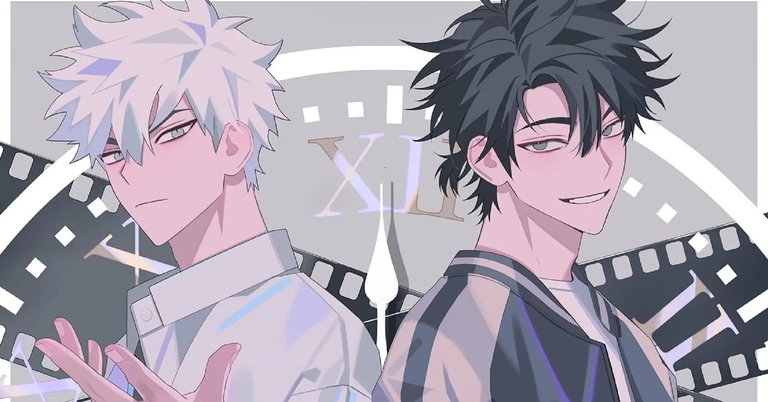
According to The Review Geek, the series builds these interconnected stories from episode 3 onwards, with cases spanning 3-4 episodes and culminating in brutal cliffhangers.
The Music Will Break You
Let's talk about that ending theme because "Overthink" by Fan Ka isn't just a song, it's a warning. The lyrics hit different once you realize they're from Xiaoshi's perspective, spiraling about whether he can save anyone or if he's just making things worse. The opening "Dive Back in Time" by Bai Sha Jaws has this retro funk vibe that gets stuck in your head, but it's the finger dance animation during the OP that broke the internet for a minute. Everyone was trying to learn that tutting sequence on TikTok. But the real musical gut punch comes during the cliffhangers when they cut to black and that ending theme starts playing. It hits like a brick.
The background score uses this lo-fi hip hop aesthetic during the investigation scenes that makes you feel like you're studying for a test you know you're going to fail. It lulls you into a false comfort, and then the strings come in during the emotional reveals and suddenly you're crying about a side character's dead dog or a missed phone call from ten years ago. The sound design in general deserves credit. When Xiaoshi possesses someone, there's this subtle audio filter that makes his voice sound like it's coming through an old phone line, distant and crackling. It's a small touch, but it sells the supernatural aspect better than any visual effect could.
Where the Animation Stands
Calling Link Click just another donghua does it a disservice. Studio LAN put serious money into the character animation. The way Xiaoshi's expressions shift when he's possessing different people, the micro-expressions on Lu Guang's face when he sees a bad future timeline, the lighting in the photo studio with all those vintage cameras and dusty sunbeams. It looks like a high-end anime production, and in some ways it exceeds what you'd expect from a seasonal Japanese release. The backgrounds have this painted quality that feels like watercolor concept art come to life.
There are inconsistencies. Sometimes the background characters look flat or the CG crowds stick out. But when it matters, during the emotional close-ups or the action sequences where time is literally breaking apart around them, the animation is fluid and purposeful. The color palette shifts depending on whose perspective we're seeing. Xiaoshi's possessions have this warm, nostalgic filter like an old Polaroid, while the present day is colder, bluer, more clinical. It's smart visual storytelling that doesn't need exposition to explain the mechanics. OtakuKart's review notes that the art style, inspired by manhwas, features bold lines and precise character designs that set it apart.
The Episode Order Confusion
New viewers always get messed up by the episode numbering. There's an episode 5.5 called "Marrying by Contesting" that was marketed as a special but really fits between episodes 2 and 3 chronologically. If you watch it where it's placed in the streaming order, you get confused by references in episode 6 that you haven't seen yet. The chibi shorts "The Daily Life in Lightime" are cute but completely skip them if you're trying to binge the main story. They don't add anything and break the tension.
The show also benefits from being watched in one sitting rather than weekly. The cliffhangers are cruel. Waiting a week between episodes when they end on literal life-or-death moments was torture for the simulcast crowd. If you have the option, block out a weekend and mainline the first season. Your emotional state will be wrecked, but at least you won't have to suffer through the wait times. Anime-Planet users recommend watching that special between episodes 2 and 3 for the best experience, despite how the streaming services label it.
Final Thoughts on This Link Click Anime Review
So is Link Click worth the hype? Yeah, absolutely. This link click anime review comes down to whether you want a story that respects your intelligence and your emotions in equal measure. It doesn't talk down to you with exposition dumps, and it doesn't let the characters off easy when they mess up. The time-travel mechanics are internally consistent in a way that most sci-fi anime can't manage, and the emotional beats land because the show takes time to make you care about the people involved, not just the mystery.
If you're tired of isekai power trips or high school romcoms that go nowhere, this is your show. It's dark without being edgy, clever without being pretentious, and heartbreaking without feeling manipulative. Season two raises the stakes even higher, though it gets a bit messier with the plot threads. But season one is a perfect, self-contained tragedy that will make you think twice about every photo you've ever taken. Just remember to watch episode 5.5 in the right spot, keep tissues handy, and maybe don't start it at midnight unless you plan on calling in sick the next day. The photos are waiting.