
Lovely Complex anime review requests always get the same warning from me before I hand over the twenty four episodes. This show looks old because it is old, it drags hard in the middle, and the male lead will make you want to throw your remote at the screen at least three times per episode. But if you can sit through the frustration, you will find one of the most honest portrayals of high school romance ever animated, messy feelings and all. Risa Koizumi stands at one hundred seventy two centimeters and thinks this makes her completely undateable while Atsushi Otani at one hundred fifty six centimeters compensates for his stature with a massive ego and a sharp tongue. Together their classmates brand them the All Hanshin Kyojin after a comedy duo because they bicker constantly and their height gap looks ridiculous standing side by side.
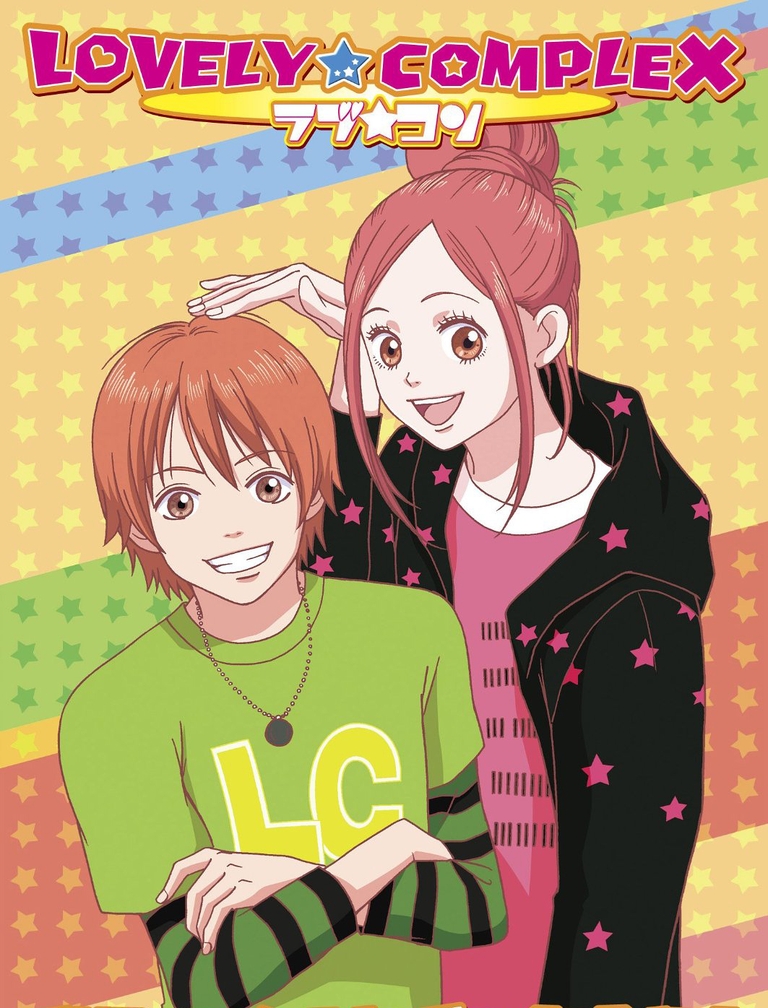
The premise sounds like a one note joke stretched across two cours but the execution digs deeper than the visual gag. Both characters suffer genuine complexes about their bodies. Risa slouches through hallways trying to shrink herself while Otani explodes at anyone who mentions his size. The show does not treat this as cute quirk material. It hurts them both in ways that feel authentically teenage and cruel. Their friends mock them constantly and teachers make jokes that land with real sting. This is not a sanitized high school where everyone is nice. This is a place where kids get brutally honest about physical differences and the show captures that specific brand of adolescent cruelty without flinching.
The Height Gap Is Not Just Visual Comedy
Every review of Lovely Complex mentions the obvious physical contrast because the show itself never lets you forget it. Risa towers over most boys in her class while Otani looks up at everyone including freshmen. But the series uses this setup to explore actual insecurities rather than just generating slapstick moments. Risa believes no boy will ever want her because she is too tall and Otani assumes girls see him as a little brother or a mascot rather than a man. These are not abstract worries. They inform every interaction they have with potential romantic partners and with each other.
The nickname All Hanshin Kyojin sticks to them like glue and their classmates treat them like a package deal. This creates a cage where they are expected to perform comedy for everyone else while their real feelings get buried under the bit. When Risa develops real feelings for Otani she cannot express them without everyone treating it like another punchline. The height difference becomes a barrier to intimacy because they are both terrified of confirming what everyone jokes about, that they are mismatched and weird. The show handles this with surprising gravity for a rom com. You feel Risa's panic when she realizes she likes him because she knows exactly how it looks to everyone else.
Why Otani Being Dense Creates Real Problems
Here is where Lovely Complex loses some viewers and I cannot blame them. Otani is not just oblivious. He is aggressively clueless and often mean about it. Risa confesses directly to his face multiple times and he laughs it off or calls her an idiot or assumes she is joking. This cycle repeats for episodes on end. Confess, reject, cry, reset. It gets tedious. Some viewers rightfully point out that his behavior reads as emotional abuse. He calls her names, dismisses her feelings constantly, and expects her to stick around anyway.

But there is a defense for this that the show itself does not make well enough. Otani sees Risa as his best friend and comedy partner first. He has boxed her into the All Hanshin Kyojin identity so completely that he cannot process her as a romantic option without dismantling his entire self image. This is realistic teenage boy psychology even if it is annoying to watch. Boys at that age are genuinely that dense about feelings. The problem is the anime stretches this out for too many episodes. What works as a realistic slow burn in a twelve episode series becomes an exercise in frustration over twenty four. By episode fifteen you will be screaming at the screen for him to get a clue. The quintessential shoujo elements are all here but the pacing undermines the emotional payoff for too long.
Risa Carries The Whole Show On Her Back
If you stick with Lovely Complex you do it for Risa Koizumi. She is the beating heart of the series and one of the most authentic teenage girls ever written for anime. She is loud, she cries constantly, she overreacts to everything, and she never changes herself to fit Otani's ideal. She does not become quieter or more feminine or less emotional. She pursues him with the same energy she applies to everything else and it is refreshing to see a girl in a rom com who does not perform a personality makeover to win the guy.
Akemi Okamura voices Risa with perfect pitch, capturing her Kansai accent and her emotional volatility. When Risa is happy she explodes with joy. When she is sad she sobs loudly and messily. There is no pretty crying here. Her face contorts into exaggerated chibi expressions that Toei Animation uses to sell the comedy but the emotions underneath stay real. She suffers genuine humiliation when Otani rejects her publicly. She struggles with self esteem about her height in ways that do not get magically fixed by love. She has female friends who support her but also get frustrated with her constant pining. The realistic portrayal of first love centers entirely on her experience of it as something painful and confusing rather than magical.
The Kansai Dialect And Voice Acting Authenticity
One detail that separates Lovely Complex from other high school rom coms is the near universal use of Kansai dialect by the cast. Most anime default to standard Tokyo Japanese but this show grounds itself in Osaka speech patterns that give the banter a specific rhythm and edge. The insults hit harder. The comedy feels sharper. The emotional confessions sound more raw because the dialect carries cultural associations with blunt honesty and humor.
Akira Nagata voices Otani with the rougher edges of Kansai ben which makes his character sound more aggressive than he might otherwise. This adds a layer to his insults that makes them sound like genuine teen boy roughhousing rather than scripted meanness. The voice acting performances across the board use this regional flavor to create a sense that these kids actually grew up together in the same neighborhood. It is a choice that adds texture without drawing attention to itself unless you are listening for it.
Animation That Shows Its Age And Budget
Toei Animation produced this in 2007 but it looks like it could have come out in 1997. The character designs are simple with thick lines and limited shading. Backgrounds are basic school hallways and classrooms with minimal detail. The animation gets choppy during anything that is not a key emotional moment. You will notice reused footage during flashbacks and still frames during conversations.
But the budget saving works for the style. When the animation gets fluid it matters. Romantic climaxes get extra frames. The chibi deformations for comedy are distinct and memorable. Risa's hair changes style episode to episode which adds a realistic touch that most anime skip. The distinct visual style uses exaggerated expressions that sell the humor even when the movement is stiff. It is not pretty but it is functional and occasionally charming in its ugliness.
Pacing Problems And Repetitive Plot Loops
The middle episodes of Lovely Complex are a slog. The story falls into a predictable loop where Risa confesses, Otani rejects her, she cries to her friends, she decides to try again, and the cycle repeats. This happens at least four times with minor variations. Side characters get introduced as potential love rivals then disappear after a few episodes without resolution. The manga handled these transitions with more care but the anime rushes through years of high school life to fit the story into twenty four episodes.
This creates a whiplash effect where important emotional beats get glossed over while repetitive confession scenes eat up screen time. The supporting cast suffers most from this compression. Nobu and Nakao are fun friends but they get no arcs of their own. Haruka shows up as a rival then vanishes. The pacing issues become most apparent around episode twelve through eighteen where it feels like the story is spinning its wheels waiting for Otani to catch up to where the audience already is emotionally.

The Messy Reality Of First Love
Despite all these technical flaws Lovely Complex endures because it captures something true about falling in love for the first time. It is not elegant. It is awkward and painful and involves a lot of misunderstanding. Risa and Otani have nothing in common except their height issues and their shared love of a terrible rapper named Umibozu. They annoy each other constantly. They say the wrong things at the wrong times. They get jealous over stupid misunderstandings.
This is how high school romance actually works. You do not meet your soulmate who completes you perfectly. You develop a crush on someone you see every day who drives you crazy half the time. The show portrays the insecurity of wondering if someone likes you back with painful accuracy. Risa overthinks every text. She reads too much into casual comments. She tries to make him jealous and it backfires. These are not plot contrivances. These are real things teenagers do when navigating feelings they do not understand yet.
The anime also portrays female friendship with more care than most. Nobu does not just exist to give advice. She gets angry at Risa for being obsessive. She calls her out when she is being stupid. The girls fight and make up in ways that feel genuine rather than serving the plot. This grounding in reality makes the romantic payoff at the end feel earned rather than inevitable. When Otani finally admits his feelings it hits hard because you have watched Risa suffer through so much rejection to get there.
Lovely Complex anime review scores vary wildly depending on how much frustration a viewer can tolerate. If you need your rom com leads to communicate clearly and treat each other with constant kindness this show will infuriate you. Otani is mean. Risa is dramatic. The story repeats itself. The animation is dated. But if you want to see a romantic comedy that remembers how terrifying and messy it is to tell someone you like them for the first time this is the show to watch. It is imperfect and occasionally annoying and that is exactly what makes it feel true.