
Made in Abyss anime review and themes usually get categorized wrong by people who only watch the first episode. They see the round faces and bright colors and assume this is a kids' adventure story about spelunking. It's not. By the time you finish the first season you're watching children suffer from explosive decompression while bleeding from their eyes, and that's before the real horror starts. This show is psychological terror wearing a Ghibli costume, and the costume is intentional bait to make the violence hit harder.
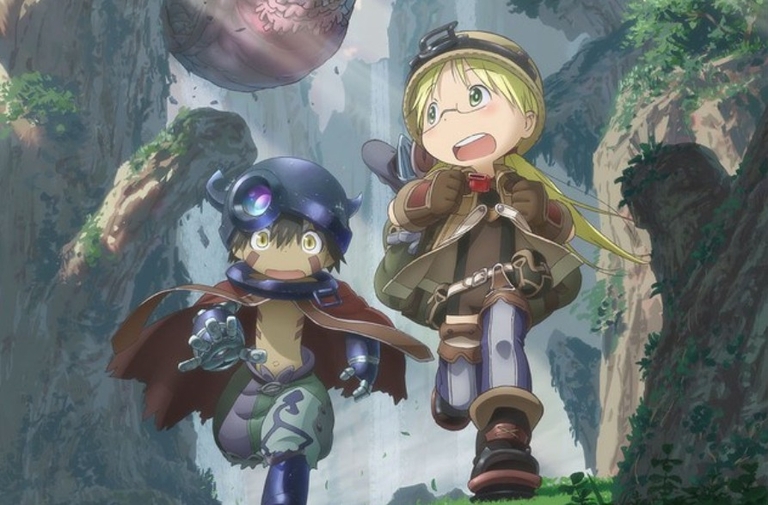
People assume animation styles carry genre promises. Big eyes and soft lines mean safety. Made in Abyss breaks that contract immediately. Riko looks like she belongs in a Saturday morning cartoon about friendship, but she's actually a twelve-year-old orphan descending into a death pit to find her mom while her body slowly breaks apart from pressure changes. The show doesn't care about your comfort. It cares about showing exactly what happens when curiosity overrides survival instinct.
The Curse of the Abyss Is Body Horror Done Right
The mechanics aren't magic spells or curses in the fantasy sense. They're biological reactions to pressure differentials. When cave raiders climb back up from the lower layers, their bodies respond based on depth. First layer gives you nausea and dizziness. Second layer causes hallucinations and bleeding from orifices. Third layer induces vertigo and sensory overload. By the time you hit the fourth and fifth layers, the pressure difference causes your body to distort, stretch, and rupture unless you're built like Ozen or you're already dead like the Hollows.
This isn't theoretical background lore. The show puts Riko through this in graphic detail during the fourth layer arc. She doesn't just feel sick. Her skin turns purple and red. She vomits blood. Her joints swell up while she's crawling through tunnels trying to escape monsters. The animators at Kinema Citrus didn't shy away from showing what extreme decompression sickness looks like when you mix it with fantasy elements. Apparently some viewers thought the cute art style meant they were safe from watching a child nearly die from her insides exploding. They weren't.
The Curse creates a one-way door. You can go down easy. Coming up kills you. This changes how the story functions because there's no retreat. Every step lower is a commitment you can't take back. Reg can lower them with his wire arms but he can't carry Riko back up without killing her. The tension isn't just about monsters jumping out. It's about the physics of the world itself being hostile to human survival. The Abyss doesn't want you to leave. It wants to digest you.
Kevin Penkin's Soundtrack Carries the Atmosphere
You could mute the dialogue and still know exactly how screwed the characters are thanks to the music. Kevin Penkin scored this thing with a mix of orchestral arrangements and electronic distortion that sounds like it's being pulled through water. The track "Hanezeve Caradhina" plays during the surface scenes but carries this weight that makes Orth feel like a city built on top of a graveyard.
When things get bad down in the third layer and below, the music shifts to these industrial grinding noises mixed with strings that scrape against each other. It doesn't sound like typical anime background noise. It sounds like the earth itself is chewing. I saw some data that said the soundtrack was recorded in Vienna with a full orchestra, which explains why it doesn't sound like stock music loops. It sounds expensive and dangerous. The music tells you before the visuals do that the characters have crossed a line they can't uncross.
What Made in Abyss Anime Review and Themes Get Right About Descent
Most stories about going down into dark places treat it like a physical challenge. Made in Abyss treats it like a corruption of the soul. The deeper you go, the less human you become. Not just because of the Curse deforming your body, but because the things you have to do to survive change you. Nanachi lives in the fourth layer because they can't go back up and wouldn't fit in human society anymore. They're stuck between floors in a house that's burning from the bottom up, and they accept it because the surface has nothing for them now.
The theme of descending isn't just about spelunking. It's about giving up pieces of yourself to keep moving forward. Riko starts as this enthusiastic kid with a pickaxe and a dream. By the time she's watching Reg burn Mitty to death with his Incinerator, she's someone who understands that mercy sometimes means killing. That's a heavy thing to put in a show that looks like it should be selling plushies at a toy store. The descent breaks her innocence in ways that can't be fixed with a pep talk.
The visual language supports this obsession with going down. Camera angles look down constantly. When characters aren't falling, they're climbing down ropes or sliding into darkness. The only time anyone goes up is when they're carrying dead weight. Even the sunlight works backwards in this place. The deeper you go, the more artificial the light becomes until you're in the sixth layer where nothing is natural anymore. The light itself becomes a warning sign instead of safety.
Why the Cute Character Designs Are Deceptive
Riko has big round eyes and messy red hair. She looks like she belongs in a Sunday morning cartoon about friendship and snacks. Reg is a robot boy with metal hands that look like toy parts. They should be on lunchboxes. Instead, you're watching them perform field surgery on each other while hiding from porcupine monsters that shoot poison needles through steel.
This contrast isn't accidental. The manga author Akihito Tsukushi specifically draws characters that look soft and vulnerable because they are soft and vulnerable. When the Orb Piercer impales Riko through the stomach, the injury looks worse because she's drawn like a child. Not a battle-hardened shonen protagonist. A child. The art style makes the violence hit harder because your brain recognizes that these aren't warriors. They're kids playing in a nuclear waste site who don't know any better.
Some people call this "whiplash" between the art and the story. That's the wrong word. Whiplash implies an accident. This is calculated. The show wants you to feel protective, then helpless, then horrified in sequence. It works because you let your guard down during the quiet moments in Orth, thinking it's going to be a cozy adventure about exploring. Then the teeth come out, and you remember that predators don't care how innocent you look.
Reg and Riko Work Because They're Broken Differently
Reg is a robot with amnesia who has metal arms and a laser cannon that can cut through stone. He should be the protector. He is, physically. But emotionally, he's fragile. He breaks down crying when he can't remember his past. He freezes up when Riko gets hurt because he thinks it's his fault. He's powerful but mentally unstable, which makes him dangerous to rely on.
Riko is the opposite. She's physically weak. She can't fight monsters. She gets tired easily and has bad depth perception. But emotionally, she's solid steel. When Reg is panicking, she's calm. When he's ready to give up, she finds another way through. She knows cave raiding techniques and biology and how to cook monster meat so it doesn't poison you. Her brain compensates for his emotional fragility, and his body compensates for her physical limitations.
This balance is why they survive. Not because they're the strongest. Because they fill in each other's gaps. Most anime pairs have one smart character and one strong character. Here, you have one strong-but-fragile robot and one weak-but-unbreakable human, and they only work as a unit. Separate them, and they die quickly.
Ozen and Bondrewd Represent Different Evils
Ozen the Immovable is scary because she's strong and old and doesn't care about social niceties. She lives in the second layer's Seeker Camp, and she's the first White Whistle the kids meet. She tests them by beating Reg half to death and locking them in a chest to see if they'll suffocate. But she's not evil. She's harsh because she knows what waits below. She prepares them by breaking their illusions early. She shows Riko the preserved corpse that might be her mother, just to see if Riko will crack. It's cruel, but it's effective.
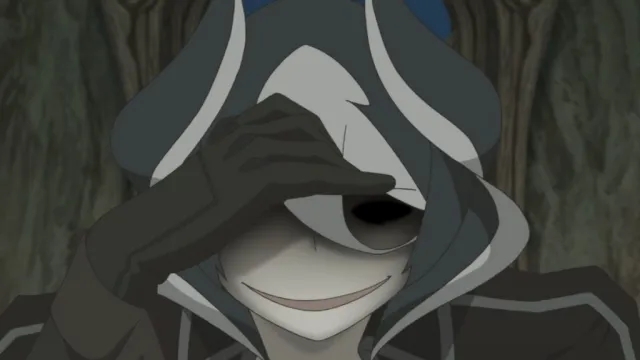
Bondrewd is different. Bondrewd is the kind of monster who smiles while dissecting children. He runs experiments in the fifth layer trying to figure out how to beat the Curse by turning orphans into Hollows. These are people who can't die but can't live right either, just masses of flesh that scream forever. Nanachi was one of his test subjects. Mitty was too, but she got the worse end of the deal, becoming an undying blob of pain that can't even kill itself.
The show uses these two to show different responses to the Abyss. Ozen adapted by becoming cold and distant. Bondrewd adapted by deciding ethics don't apply underground. Both are correct in their own way because the Abyss doesn't care about human morality. It just wants to see how far you'll go before you break completely.
The Physical Cost of Curiosity
Riko's mom, Lyza the Annihilator, left her at the orphanage to go deeper. That's the setup. But the show isn't about finding mom and getting a hug. It's about realizing that the Abyss takes parents away and replaces them with trauma. When Riko finds Lyza's notes and whistle, she doesn't find comfort. She finds a map to more danger.
Every answer costs something physical. By the end of season one, Riko is missing body parts and has watched a friend mercy-kill another friend. That's the price of discovery here. The show treats knowledge as a transaction where you pay in flesh. Want to know what's at the bottom? Lose a hand. Want to know why Reg exists? Watch someone die. The curiosity that drives the plot is treated like an addiction that ruins the body.
Season 2 Loses the Magic
I need to address the elephant in the room. Season one is a masterpiece of pacing. Season two, called The Golden City of the Scorching Sun, falls into a different trap. According to discussions I found online, the second season relies too heavily on flashbacks to explain the village of Ilblu and the character Faputa. Instead of showing the kids moving through dangerous territory like in season one, you get long conversations about backstory while standing still.
Faputa herself is divisive. She's supposed to be tragic and vengeful, but she comes off as annoying to some viewers. Her motivation makes sense on paper, but the execution drags. The sense of constant forward motion that defined the first thirteen episodes gets replaced by lore dumps and circular dialogue. It's not bad television, but it's not the same show that had people holding their breath during the poison cave scenes.
The movie Dawn of the Deep Soul that covers the Bondrewd arc actually works better than the second season because it keeps the momentum. If you watch season one and feel let down by season two, you're not alone. The magic of discovery gets replaced by exposition, and that hurts the specific type of horror that made the original run special.
The World Building Holds Up Under Scrutiny
Orth feels like a real city because it has an economy built around the Abyss. Cave raiders aren't just adventurers. They're miners and salvagers and grave robbers. The whistles denote rank but also insurance payouts because most people who go down don't come back up. The city has infrastructure for handling the dead. It has orphanages specifically for children of lost raiders. It has a culture that worships the hole in the ground because it gives them relics to sell.
The ecosystem of the Abyss itself makes sense in a twisted way. The creatures get weirder and more dangerous as you descend because they're adapted to the Curse. The light down there isn't natural sunlight but something the Abyss generates. The plants are carnivorous because there's no other way to get nutrients that deep. Every layer has a distinct climate, from the inverted forest to the poison swamps to the sea of corpses.
This isn't window dressing. The environment actively tries to kill the characters. When Riko gets poisoned by the Orb Piercer, it's because she didn't know the specific weakness of that creature. When they nearly freeze in the third layer, it's because they didn't pack for altitude changes. The world has rules, and they don't bend for the protagonists. The show respects your intelligence enough to let the characters fail when they make mistakes.
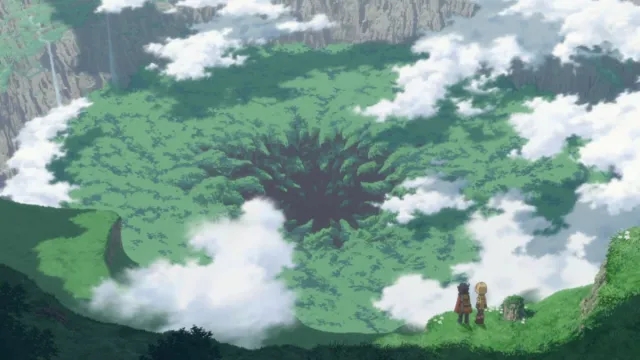
Made in Abyss anime review and themes discussions often focus on the shock value but miss the structural brilliance. It's a show about curiosity as a fatal flaw. Riko wants to see her mother and answer questions, but every answer costs something physical. By the time the credits roll on season one, she's someone else entirely. The girl who started at the top is gone, replaced by someone who knows the weight of mercy and the cost of descent.
If you're looking for a dark fantasy adventure anime that respects your intelligence while traumatizing you slightly, this is it. Don't let the round eyes fool you. This is horror dressed up in bright colors, and the costume fits too well. Start with season one. Watch the Dawn of the Deep Soul movie. Maybe skip season two unless you really need closure. Just prepare yourself for the fact that descending is easy. It's the going back up that kills you.