
Everyone obsesses over the fluid animation and the crazy fight scenes, but that's missing the entire point of what makes this season special. Mob Psycho 100 II anime analysis often gets distracted by Studio Bones showing off with paint-on-glass techniques and experimental sakuga, when the real magic happens in quiet moments where a kid just talks to his friends. The first season established that Shigeo Kageyama could explode buildings when he gets angry. The second season asks why he bothers holding back at all, and the answer changes everything about how we view overpowered protagonists.
Season one was about Mob controlling his emotions so he wouldn't hurt people. Season two is about him realizing that control isn't the same as living. He spends the whole opening run trying to win a student council election and failing miserably. He runs a 5k race for a girl who barely notices him. These aren't side plots to fill time between exorcisms. They're the entire reason the show works. The series argues that psychic powers are basically irrelevant to being a good person, and it proves this by making the psychic battles less important than the conversation that happens after them.
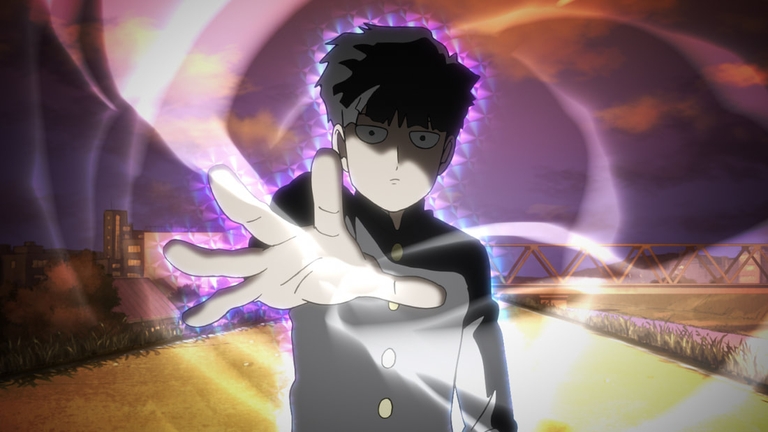
Mob Psycho 100 II anime analysis starts with the lie of superiority
The show tricks you into thinking it's about leveling up. You see Mob hit 100% and assume he's unlocking his true potential, like some shonen hero discovering a new transformation. That's dead wrong. The percentage meter isn't a power-up tracker. It's a countdown to emotional breakdown. Every time Mob hits 100%, he's failing, not succeeding. He's losing control because he can't express himself normally.
This season pushes him past that threshold into the ???% state, and it's terrifying because it shows what happens when Mob stops caring about connection entirely. He becomes a force of nature that destroys everything around him, including his own relationships. The animation gets sketchy and distorted during these moments, like the art itself is rejecting what's happening. Some fans broke down the Jungian psychology behind this, pointing out how Mob's shadow self takes over when he refuses to acknowledge his own feelings.
What's wild is that Mob doesn't get stronger in the traditional sense. He doesn't train to increase his psychic output. Instead, he learns to rely on the Body Improvement Club guys who can't even see spirits. He lets Reigen scam him because he values the relationship more than being right. He forgives the girl who literally stabs him because he understands she's lashing out from her own pain. The power stays the same, but the context around it changes completely.
Reigen hits rock bottom and becomes human
The best episodes aren't the ones with city-wide destruction. They're episodes six and seven, where Reigen's lies finally catch up to him. He goes from being a local conman to a national celebrity, then crashes hard when the internet turns on him. Mob walks away from their relationship, not because he hates Reigen, but because he finally has enough self-respect to set boundaries.
This breaks Reigen completely. He realizes he's been treating Mob like a tool, a walking weapon he can point at ghosts while he takes the credit and the cash. One review called this the most heartwarming arc, and that's accurate because it doesn't let Reigen off the hook. He has to sit in his own failure. The press conference scene where Mob shows up to save him isn't about psychic powers saving the day. It's about Mob choosing to value the connection they have despite knowing Reigen is a fraud.
Their separation makes both characters stronger. Mob learns he can make decisions without his mentor's approval. Reigen learns that being a good person matters more than being seen as a great psychic. When they reunite, it feels earned because they've both grown separately.
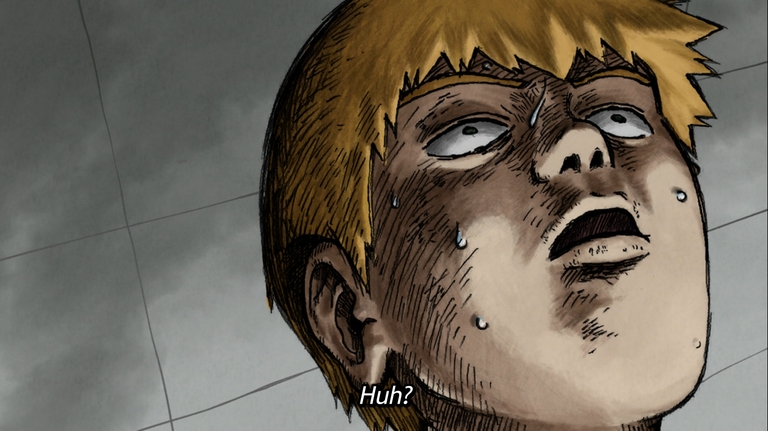
The animation serves the feelings
Studio Bones could have just made everything look pretty and called it a day. Instead, they use different art styles to show emotional states. The Mogami arc looks like a watercolor nightmare when Mob gets trapped in the alternate reality. The lines get rough and sketchy during the ???% sequences. The famous teleportation fight between Teru and Shimazaki uses smeared frames and disorienting angles to make the viewer feel as lost as the characters.
Bahi JD's animation work on that teleportation sequence stands out because it isn't just flashy. It communicates confusion. You can't track where Shimazaki is going to appear next, which mirrors how Teru feels trying to fight someone who can blink in and out of existence. The animation isn't showing off. It's telling you exactly what the characters are experiencing.
Even the color palette shifts matter. Warm oranges and yellows fill the screen during the slice of life segments with the Body Improvement Club. Cold blues and purples dominate when CLAW shows up. The show doesn't need characters to announce how they feel because the background art already told you.

The villains are mirrors, not obstacles
CLAW seems like a standard evil organization trying to take over the world, but they're really just collections of what Mob could become if he isolated himself. Mogami, the evil spirit from the yellowed photos, shows Mob a reality where he never met Reigen or made friends. It's a world where Mob uses his powers to hurt people because he has no reason not to.
Then there's Serizawa, the shut-in esper who carries an umbrella everywhere. He's exactly what Mob would be without the Body Improvement Club or his brother Ritsu. He has infinite power but zero confidence because he never learned to connect with people. When Mob beats him, he does it by talking, not by blasting him with psychic energy. He offers friendship to a guy who only knew exploitation.
Toichiro Suzuki, the big bad with the god complex, believes that power makes him right. He thinks might equals moral superiority. Mob defeats him not by being stronger, Suzuki is objectively more powerful, but by being kinder. Mob convinces him that power without people to share it with is empty. That's not a battle you can animate with explosions, so the show uses facial expressions and dialogue instead.
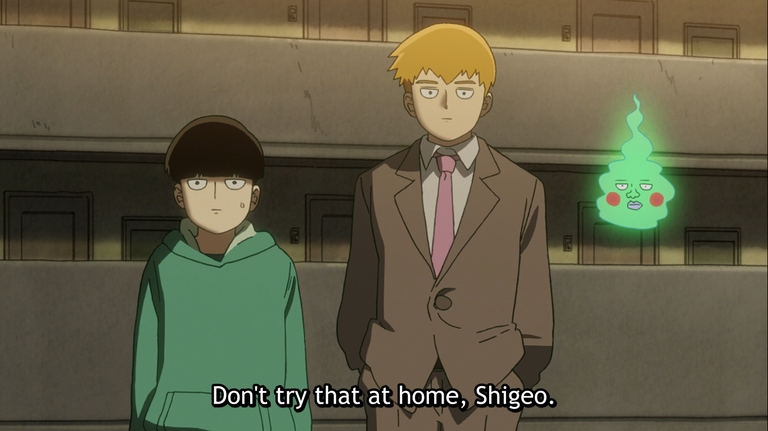
Why the boring parts matter most
There's a whole episode about Mob trying to get muscles for a girl who doesn't care about him. Another episode focuses entirely on Reigen getting called out by a journalist. These scenes have zero psychic combat, and they're the most important parts of the entire series.
One blogger pointed out that the central theme "your life is your own" runs through every frame. Mob has all the traits of a chosen one protagonist. He's the strongest psychic alive, he has a loyal friend group, and there's even a cult that worships him. But the show keeps rejecting that narrative. Mob's destiny isn't predetermined by his power level. He chooses to be ordinary. He chooses to work out with guys who are stronger than him physically but weaker psychically. He chooses to forgive rather than dominate.
The finale involves city-wide destruction and floating buildings, but the emotional climax happens when Mob simply tells Suzuki that he'll visit him in prison. That promise of continued connection matters more than any punch. The show argues that greatness isn't measured by how much you can destroy, but by how gently you can treat people who are trying to hurt you.
The sequel problem solved
Most second seasons just turn up the volume. More fights, bigger stakes, louder music. Mob Psycho 100 II instead turns inward. It uses the established world to ask harder questions about responsibility and exploitation. Some critics felt it was just an expansion rather than an evolution, but that's missing how fundamentally Mob's worldview shifts between season one and season two.
In the first season, Mob views his powers as a curse he has to control. By the end of season two, he views them as just another part of himself that doesn't define his worth. He stops trying to be special and starts trying to be decent. The animation gets more experimental, the fights get flashier, and the scale gets bigger, but the story stays focused on a kid learning to express his feelings without exploding.
That's rare. Most shows about overpowered characters get bored and keep escalating until the power levels become meaningless. This show looks at power levels and says they're meaningless from the start. What matters is whether you can look someone in the eye and tell them how you really feel.
Mob Psycho 100 II anime analysis ultimately reveals a simple truth that other supernatural shows forget. Psychic abilities don't make Mob special. His willingness to see the good in frauds like Reigen, his patience with bullies, his loyalty to friends who can't help him fight, that's what makes him worth watching. The season ends with Mob surrounded by people who know the real him, not the psychic god, and that's enough.