
Most people think Ufotable just sliced the movie into seven chunks and called it Season 2. That's not what happened. The demon slayer mugen train: movie vs. tv arc differences go way deeper than runtime. They rebuilt this thing from the ground up with new animation, an entire prequel episode, and scenes that change how you see Rengoku's character. If you watched the movie in theaters and skipped the TV arc thinking you've seen it all, you missed critical context that makes the Flame Hashira's death hit even harder.
The TV version isn't a downgrade. It's a director's cut with extra heart. Yeah, the pacing gets weird with weekly episode recaps that feel annoying if you're binge-watching, but the trade-off is worth it. You get Rengoku's backstory, his family drama, and quieter moments that the movie had to cut for time. Neither version is perfect but pretending they're the same story told the same way is just wrong.
The Prequel Episode That Changes Everything
Episode one of the TV arc is completely anime-original content that isn't in the movie at all. The film opens with Tanjiro at the cemetery visiting graves, then cuts to the train. The TV version starts with Rengoku eating at a noodle stand, slamming down food with this wild intensity that immediately establishes his character quirk. You see him board the Mugen Train after investigating missing person reports, and you meet Fuku and her grandmother running a bento stand at the station.
This isn't filler content. Fuku matters because she shows up later in the arc, and her grandmother gives Rengoku the bento box that becomes a recurring symbol. You also get the Slasher demon fight, a low-level threat Rengoku handles before the main event. It shows his technique, his confidence, and his weird politeness in the middle of battle. More importantly, you see his father Shinjuro and younger brother Senjuro through flashbacks and dialogue. The movie mentions his family in passing during the dream sequence, but the TV episode dedicates real time to showing why Rengoku is so driven to be a Hashira despite his rough home life.
Without this episode, Rengoku is just the cool guy with flame hair who dies tragically. With it, he's a fully realized person with a messed up family history and a chip on his shoulder. The episode builds his bond with Tanjiro before they even meet, showing how Rengoku views his duty to protect the weak. If you skip straight to the movie, you lose all of this setup. Anime Corner has a solid breakdown of exactly what scenes appear where.
How They Rebuilt the Pacing
The movie runs about 117 minutes without credits, a continuous sprint from the first dream to Akaza's retreat. The TV arc spreads this across seven episodes with opening themes, ending credits, and those annoying "previously on" segments that eat up two minutes each week. If you're watching back-to-back on a streaming service, these recaps feel repetitive and slow.
But the episodic structure changes how you absorb the emotional beats. In the theater, you're locked in, riding the wave of Yuki Kajiura's score without breathing room. The TV version lets you sit with Tanjiro's grief after he wakes from his family dream. Episode three spends extra time showing his younger siblings in the illusion, making the moment where he realizes it's fake more painful. The movie had to cut some of this for time, jumping between dreams faster.
They also reordered scenes. In the movie, Tanjiro's "pure core" flashback, the one where the kid trying to kill him starts crying, happens later in the sequence. The TV version puts this at the start of episode four, changing the rhythm of how Tanjiro wakes up. It's a small shift but it makes his awakening feel more deliberate rather than sudden. The train takeover sequence where Enmu fuses with the locomotive gets extended treatment in episode five, with more shots of the interior transforming and passengers reacting to the horror. The Reddit community noticed these pacing changes immediately when it aired weekly.
The Dream Sequences Hit Different
Ufotable didn't just copy-paste the dream animation. They added new cuts and extended existing ones for the TV broadcast. Zenitsu's dream where he's chasing the intruder through the train corridor lasts longer in episode four, with more frames of him looking confused and scared. Inosuke's ridiculous dream about being a cave king gets fully animated in the TV version whereas the movie glosses over it faster.
Tanjiro's dream is the big difference though. The movie version shows him with his family, realizes something's wrong, and cuts to him trying to wake up. The TV arc in episode three lingers on the breakfast scene, the warmth of his mother's voice, and the subtle wrongness of his father being alive. You see the other kids who are supposed to kill the demon slayers more clearly, including the backstory of the kid assigned to Tanjiro who ends up crying instead. These aren't just padding. They make the temptation of the dreams feel real. You understand why the characters don't want to wake up.
Openings Endings and Eyecatch Interruptions
The TV arc includes LiSA's "Akeboshi" as the opening and "Shirogane" as the ending, plus eyecatch cards featuring chibi versions of the characters. The movie doesn't have these breaks for obvious reasons. "Akeboshi" is a slower, more melancholic track compared to the hype openings of Season 1, which fits the arc's tone but interrupts the flow if you're watching episodes back to back.
The eyecatches appear at the commercial break points, showing Rengoku or Tanjiro in static poses. They're cute but they kill the tension if you're binge-watching. The movie flows from the dream sequences straight into the Enmu reveal without stopping. The TV version has to fade to black, show the eyecatch, then fade back in. Some fans find this annoying, others like the moment to breathe. The ending theme "Shirogane" plays over different visuals in each episode, sometimes showing Rengoku's journey, sometimes showing the train, which adds visual variety the movie can't match.
New Scenes You Missed in the Theater
Beyond the prequel, there are subtle additions throughout. Episode two includes a brief scene where the conductor checks tickets while lights flicker and passengers vanish in the background, hinting at Enmu's blood demon art before the reveal. The movie jumps straight into the sleeping phase.
When Enmu explains his ticket system and how the intruders work, the TV version includes extra flashback shots of passengers boarding and the train interior that establish the setting better. Episode six, which covers the Akaza fight, starts with a recap of Tanjiro getting stabbed that emphasizes the wound more than the movie did. The post-credits scene in that episode shows Inosuke and Tanjiro screaming Rengoku's name while he's standing before Akaza, which hits different than the movie's transition.
Episode seven is basically the final twenty minutes of the movie but with the Hashira meeting scene moved to the end. In the movie, this scene was cut entirely or referenced briefly, but the TV arc brings back the cemetery scene with Kagaya Ubuyashiki and the other Hashira reacting to Rengoku's death. It serves as a bridge to the Entertainment District arc while reminding you that Rengoku's death has ripple effects across the entire organization. A detailed analysis on these changes shows exactly which minutes were added.
The Akaza Fight Timing
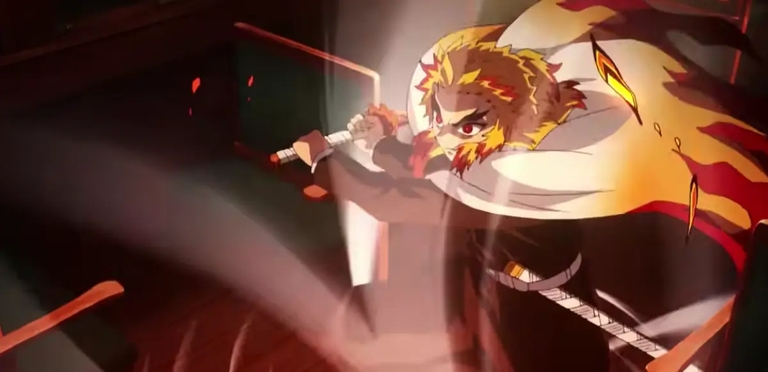
The battle against Upper Moon Three is the climax of both versions, but the TV dedicates nearly a full episode to it while the movie rushes through in about fifteen minutes. The animation is frame-for-frame identical, ufotable didn't reanimate the fight, but the pacing changes everything. In the movie, it feels like a sudden ambush and a quick tragedy. In the TV arc, you feel every punch, every flame technique, every moment of Rengoku struggling to keep up with the demon's regeneration.
The episodic format allows for commercial break-style pauses that let you process the brutality. When Akaza punches through Rengoku's solar plexus, the TV version lets that moment hang with a black screen and credits, then picks up the aftermath in the next episode. This sounds like it would kill the momentum, but it actually makes the injury feel more permanent. You sit with the dread for a week, or in binge-watching, you at least get a moment to breathe before the death scene. You can see how the formats differ in their approach to this specific fight.
Sound and Visual Polish
The movie has better color grading, period. It was made for theaters with HDR in mind, so the flames look hotter and the night scenes look darker. The TV arc is brightened slightly for home viewing, which loses some of the cinematic mood. The sound mix is also different. The movie uses more directional audio for the train moving, creaking metal, and spatial positioning during fights.
However, the TV arc has new music. Yuki Kajiura and Go Shiina composed additional tracks for the episodes that weren't in the theatrical release. Some scenes have different background music that changes the tone. Tanjiro's awakening in episode four has a more somber piano track in the TV version compared to the orchestral swell in the movie. Neither is better, but they're different experiences.
Mugen Train Movie vs TV Arc Differences and Which to Watch
Here's the deal. If you've never seen Mugen Train before, watch the first episode of the TV arc then switch to the movie. You get the essential Rengoku backstory from episode one, which the movie lacks, then you get the tight pacing and cinematic impact of the film for the main event. Watching all seven episodes is fine too, especially if you want maximum context, but be ready for repetitive recaps if you binge.
If you already saw the movie, watch episode one of the TV arc at minimum. Don't skip it. It changes how you view the whole arc. The other episodes are worth watching if you're a completionist or if you want to see the extended dream sequences, but the movie covers the essentials. The demon slayer mugen train: movie vs. tv arc differences come down to this: the TV version is slower, sometimes annoyingly so, but it's richer in character detail. The movie is a masterpiece of animation pacing but sacrifices depth for momentum.
The Final Word
Ufotable treated the TV arc like a second pass at the material, not a lazy cash grab. They added scenes that fix pacing issues from the manga, gave Rengoku the sendoff he deserved with proper setup, and used the extra runtime to make the dreams more haunting. The Mugen Train movie vs TV arc debate doesn't have a right answer, but it has a wrong one, and that's thinking they're identical.
Don't let anyone tell you the TV version is just a chopped up movie. That prequel episode alone proves they put real work into making it distinct. Watch both if you're a fan, but if you only have time for one, grab episode one of the TV arc then watch the movie. You'll get the complete picture without the weekly recap fatigue. The movie is a bullet train, fast and relentless. The TV arc is a sleeper car, slower but you see more of the landscape. Both get you to the same devastating destination.