
My Happy Marriage anime romance analysis usually starts with the wrong assumption. People want to slap the slow burn label on it because that's what we call every romance that doesn't have characters kissing by episode three.
It's not slow. It's split. You've got Miyo Saimori processing years of abuse on one track, and you've got Kiyoka Kudo learning that not everyone is trying to poison him on another. They happen to meet in the middle around episode five when he sees her in that cherry blossom kimono and loses his composure, but calling this a traditional romance arc misses how the show actually structures its emotional beats. The love story doesn't build gradually from zero. It starts at fifty percent because the arranged marriage forces proximity, then stalls out while Miyo fixes her brain chemistry.
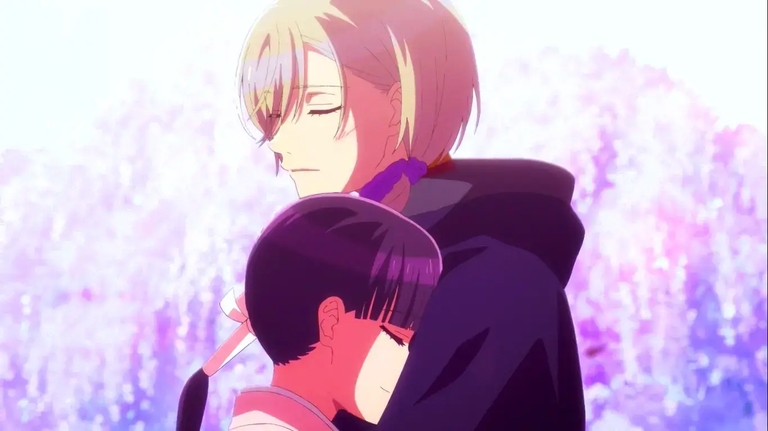
You've probably seen people compare it to Cinderella, which is fair enough because the setup hits all the same beats. Evil stepmother Kanoko, useless father Shinichi, forced labor, sudden engagement to a guy with status who supposedly has a terrible personality. But where the fairy tale ends with the rescue, My Happy Marriage starts there and admits that getting out of the house doesn't fix the damage. Miyo doesn't wake up confident because she moved houses. She wakes up waiting for the other shoe to drop because that's what abuse does to your nervous system. Kiyoka doesn't fix her with kindness. He just creates a space where she can fix herself without additional injuries.
My Happy Marriage Anime Romance Analysis and the Pacing Problem
I keep seeing reviews call this a slow burn romance and it's starting to annoy me. A slow burn requires both parties to be gradually increasing their romantic interest while external circumstances keep them apart. That's not what happens here. Miyo is ready to commit by episode two because she's desperate for any stability. Kiyoka is suspicious but intrigued by episode three. The delay isn't sexual tension or romantic pining. It's Miyo's trauma recovery preventing her from accepting that the good thing is real.
According to some discussions I found, the series splits hard between personal growth and traditional romance elements. The first half focuses almost entirely on Miyo learning to eat three meals a day without apologizing for the inconvenience. The second half throws in Dream-Sight powers and Grotesqueries because apparently we need a body count in our shoujo now. The romance doesn't evolve so much as it waits for Miyo's self-worth to catch up to Kiyoka's affection.
Kiyoka himself doesn't undergo some massive transformation. He's introduced as cold and distant because his previous fiancées ran away after three days, which honestly sounds like a them problem. He doesn't warm up to Miyo because she changes his personality. He warms up because she doesn't run away. She stays. She cooks breakfast. She looks at him with these huge eyes that expect nothing, and he realizes he doesn't have to perform cruelty to maintain authority. That's it. That's the character development. He stops performing masculinity long enough to admit he's shy.
The Arranged Marriage Setup Without the Stockholm Syndrome
Most arranged marriage stories in anime follow a specific pattern where the girl hates the guy, the guy is domineering, and through proximity she realizes he's actually protective. This show skips the hatred phase because Miyo has nowhere else to go. She walks into Kiyoka's house expecting to be beaten or thrown out, and when he just asks her opinion on flowers she's so confused she nearly shuts down.
This dynamic works because Kiyoka never leverages his power over her. He doesn't threaten to send her back to the Saimori house when she messes up. He doesn't demand affection in exchange for safety. He just... provides safety. It's such a low bar but in this genre it feels revolutionary. The CBR list of moments that make this the best love story keeps citing the kimono shopping scene, but the real moment is when he burns down her childhood home in episode six. That's not romantic in the traditional sense. It's symbolic destruction of her trauma source, which is way more useful than a declaration of love.
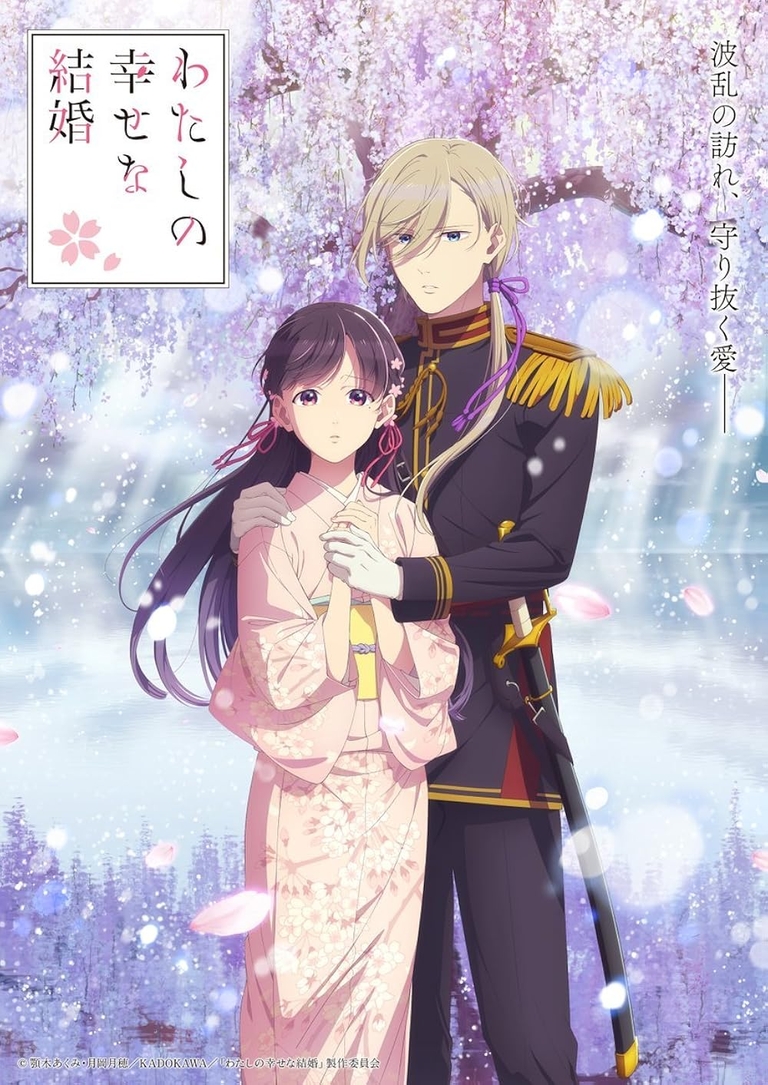
The manga adaptation handles this slightly differently, streamlining details for a modern shojo aesthetic that emphasizes subtle facial expressions. But both versions struggle with the same issue. They tell us Miyo is healing instead of showing it through actions. We get internal monologues about her feelings instead of watching her make choices that reflect growth. It's a solid story that occasionally forgets visual storytelling exists.
Visual Language and Where It Fails
Kinema Citrus animated this thing beautifully. The Meiji-Taisho era blend looks gorgeous, all those muted colors and period-accurate kimono patterns. When Miyo wears the yellow kimono in episode three, the color shift from her drab servant clothes tells you everything about her changing status without dialogue. That's the good stuff.
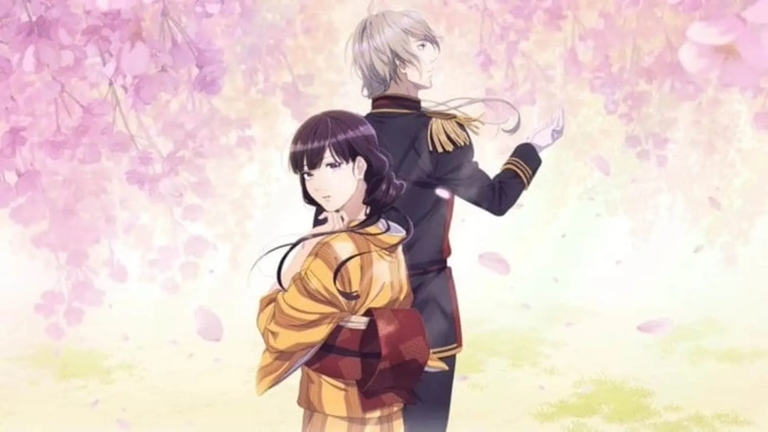
But then you hit episode four and five, and the show starts narrating every emotional beat. Miyo tells us she's feeling nervous. She tells us she's happy. She tells us she doesn't deserve kindness. We know. We can see it in her hands shaking when she holds the teacup. The animators did the work but the writers don't trust them. Some reviews point out this over-reliance on internal monologue as the adaptation's biggest weakness, and I agree. It's like they're afraid of silence.
The supernatural elements don't help. Miyo has this Dream-Sight ability tied to her Usuba bloodline, and suddenly we've got political intrigue about noble families and Grotesqueries attacking the city. The animation during the fight scenes is clean, fluid movement that shows Kiyoka's military background effectively. But it feels like a different show intruding on the romance. The medium article about shoujo evolution claims this redefines the genre by blending magical realism, but honestly it feels like two different genres having a turf war.
Season 2 and the Mother-in-Law From Hell
If season one was about escaping abuse, season two is about realizing you can't outrun family expectations. Fuyu Kudou shows up as Kiyoka's mother and immediately starts criticizing Miyo for not being noble enough, not being magical enough, not being good enough. This isn't just a mean mother-in-law trope. It's a direct continuation of the abuse cycle Miyo thought she left.
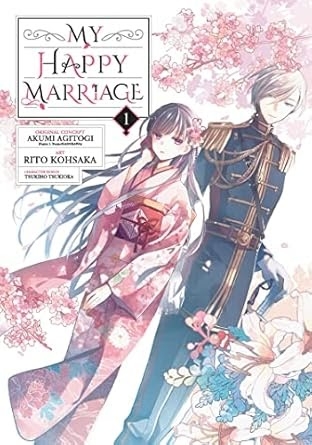
What's interesting is how Kiyoka handles it. He doesn't ask Miyo to endure it for family harmony. He doesn't stay silent to avoid conflict. He actively defends her against his mother's cruelty, which is apparently controversial in their social class. The gazettely review of season two talks about this as challenging traditional masculinity, and that's accurate. He's not being a white knight swooping in to save the damsel. He's setting boundaries with his own family to protect his partner, which is adult relationship behavior you rarely see in anime romance.
Fuyu's character design tells the story. She wears these rigid, Victorian-style outfits that look like armor compared to Miyo's softer kimonos. The visual contrast between stagnant tradition and fragile new growth hits you over the head, but it works. Miyo's wardrobe slowly incorporates brighter colors as she gains confidence, moving from the washed-out grays of the Saimori house to the pinks and yellows of the Kudo estate.
Why the Romance Works Despite the Mess
So if the pacing is weird, the supernatural plot feels tacked on, and the show narrates too much, why does this hit so hard? Because it's honest about recovery. Miyo doesn't get better immediately. She has setbacks. When she meets her stepsister Kaya in episode six, she reverts to the hunched posture and downcast eyes. Trauma doesn't resolve in a linear fashion and the show respects that.
The arranged marriage premise works because it removes the question of whether they like each other and replaces it with whether they can trust each other. Kiyoka has to trust that Miyo isn't a spy or a gold digger. Miyo has to trust that Kiyoka won't hit her when she burns the toast. The stakes are life and death for her, mildly annoying for him, and that imbalance creates genuine tension.
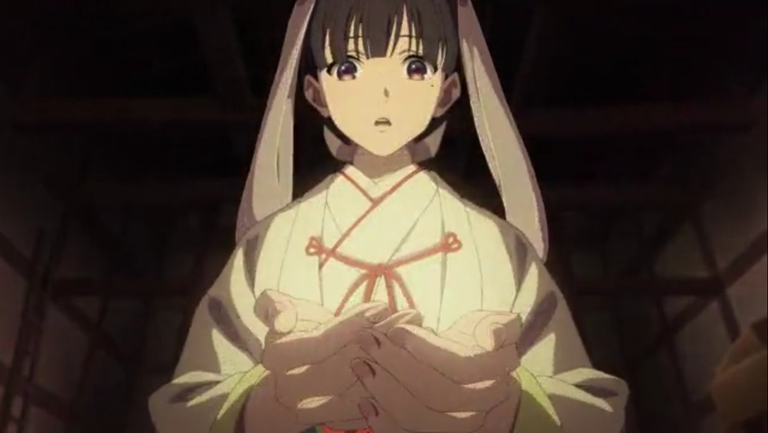
Yurie, the maid, serves as the bridge between them. She provides maternal affection that Miyo hasn't experienced since her mother died, which allows Miyo to practice receiving kindness before she has to handle Kiyoka's more intense attention. It's smart writing. Hazuki, Kiyoka's sister, does similar work by treating Miyo as family immediately, showing her what healthy female relationships look like.
The romance isn't about grand gestures. It's about Kiyoka noticing that Miyo flinches when he moves too fast, so he stops moving fast. It's about Miyo learning that she can want things without being greedy. When she finally declares in episode six that she chose him and he chose her, it's not a confession of love. It's a declaration of agency. She's claiming her right to happiness.
Final Thoughts on My Happy Marriage Anime Romance Analysis
Calling this a Cinderella story is technically accurate but misses the point. Cinderella ends when the prince shows up. My Happy Marriage argues that's when the hard work starts. The romance isn't the reward for suffering. It's the catalyst that exposes how much suffering has occurred.
My Happy Marriage anime romance analysis needs to stop focusing on whether the burn is slow and start looking at how the show separates romantic development from psychological healing. They happen simultaneously but they're not dependent on each other. Miyo doesn't heal because Kiyoka loves her. She heals because she finally has the safety to process her trauma. Kiyoka doesn't become softer because Miyo is cute. He becomes softer because he finally has someone who sees him as a person instead of a status symbol.
The supernatural politics and Grotesquerie fights feel like padding because they are. The real conflict is internal. Season two doubles down on this by making the antagonist a family member rather than a monster. It suggests that the scariest thing in this world isn't magical creatures but the people who are supposed to love you.
If you're watching for a traditional romance with misunderstandings and jealousy arcs, you'll be disappointed. This is a recovery story that happens to have a romance in it. The love story is sweet and the animation is gorgeous, but the meat of it is watching Miyo learn that she's allowed to exist without apologizing. That's not a slow burn. That's emergency surgery on a crushed spirit, and it works better than it has any right to.