
Nanbaka anime series review threads always start with the sparkles. You can't avoid them. The show throws glitter and rainbow hair at you until you either close the tab or give in to the stupidity. I'm here to tell you that giving in is worth it even though this thing is a total mess that doesn't know if it wants to make you laugh or punch you in the gut with tragic backstories. Studio Satelight adapted this web manga and somehow created a Frankenstein monster of a show that shifts between gag comedy and serious shonen action so hard it gives you whiplash. Most shows that try this fall flat on their face. Nanbaka doesn't. It lands on its feet most of the time and when it doesn't you forgive it because the characters are that charming.
The setup sounds like a joke. Four inmates in the world's most secure prison keep breaking out of their cell for fun even though they could leave whenever they want. They get caught every time because the guards are superhuman monsters and the prison is built like a video game death trap. That's the whole first three episodes. You think you're signing up for a slice of life comedy about prison life but then the New Year's tournament hits and suddenly people are throwing genuine fireballs and trying to murder the protagonist. The show never warns you it's going to get serious. It just does it and expects you to keep up.
I'm going to break down why this tone confused sparkly disaster works better than it has any right to. We'll look at the four idiots in Cell 13, the visual overload that defines the aesthetic, and why the English dub deserves more credit than it gets. Fair warning though this thing ends on a cliffhanger after season two and there's no season three coming so if unresolved plot threads annoy you maybe stop after the first twelve episodes. For everyone else let's talk about why this weird rainbow prison show stuck with people.
Nanbaka Anime Series Review The Premise Explained
Nanba Prison isn't a normal correctional facility and the show knows it. It's located on a remote island and it's supposedly impossible to escape from unless you're one of the four guys in Cell 13 who treat breaking out like a daily hobby. The building is filled with death traps that would kill normal people but these inmates just walk them off like they're nothing. Hajime Sugoroku the supervisor of Building 13 spends half his time dragging these idiots back to their cell and the other half wondering why they won't just stay put when they've got it pretty good.
The prison runs on logic that doesn't make sense in real life and that's the point. The guards have superhuman strength and weird gimmicks. The warden Momoko Hyakushiki is obsessed with strength and has a crush on Hajime that she tries to hide while being terrifying to everyone else. Then you've got the supervisors from other buildings who are all named after the Momotaro folktale. Kiji is the pheasant, Kenshirou is the dog, and Samon is the monkey. Their uniforms have animal motifs and their personalities match the animals they're named after. It's weird anime logic that you just accept because the show presents it with so much confidence.
The comedy comes from the fact that these prisoners could probably leave if they really tried but they don't want to. They've got good food, anime to watch, and festivals to attend. The prison is basically their home and the escape attempts are just how they kill time. This setup lets the show do whatever it wants. One episode is about cooking competitions and the next is about a tournament where people are trying to kill each other. The inconsistency is annoying sometimes but it's also what keeps you watching because you never know if you're getting a comedy episode or a fight to the death. The prison itself operates on video game logic where each building has a different theme and security level. Building 13 is supposedly the most secure but it feels like a dormitory half the time. The death traps include giant boulders, laser grids, and pits of spikes that would kill anyone who isn't the main character. Hajime catches the escapees by literally throwing them through walls or choke slamming them back into their cell. It's played for laughs but the implication that this prison could kill them at any moment is always there underneath the humor.
Cell 13's Four Inmates Are the Whole Reason This Works
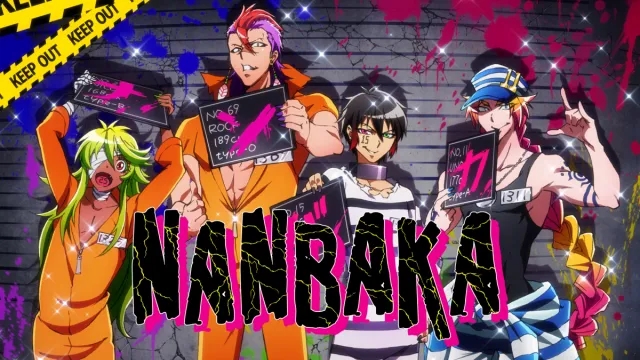
If these guys weren't lovable the show would collapse in five minutes. They're all one note jokes on paper but the voice acting and character interactions make them feel like real friends who've been stuck together too long. Each one has a different color scheme and personality quirk that somehow never gets old even when they're doing the same bit for the tenth time.
Jyugo Is More Than Just Shackles
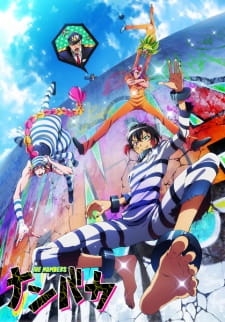
Jyugo is the main character and he's got the most generic protagonist look with his red and black hair and heterochromia. He can pick any lock which makes him the escape artist of the group. The show hooks you with the mystery of his shackles that he can't remove and his search for the man who put them on him. At first he seems like a lazy guy who just wants to nap but then the serious arcs hit and you find out he's got this whole tragic backstory about being experimented on and feeling empty inside. The shift is jarring. One minute he's making jokes about breaking out and the next he's having an existential crisis about whether his life has meaning. It's messy writing but it works because his voice actor sells both sides of the character.
Uno Is the Gambler With Intuition
Uno has pink hair and wears a white and blue striped uniform that makes him look like a candy cane. He's the ladies man of the group always talking about girls and using his intuition to gamble. He's technically the smartest one when it comes to reading people and situations even though he acts like an idiot most of the time. His backstory involves being forced into show business as a child which is played for laughs but has some dark undertones about exploitation. He balances out Jyugo's emo moments by just being a cheerful idiot who wants to have fun.
Rock Loves Food More Than Freedom
Rock is the big orange haired guy who looks like he should be the bully but he's actually a sweetheart who loves cooking and eating more than anything else. He's incredibly strong and gets into fights constantly but it's usually because someone insulted the food or he got hungry. His character design is great because he's got muscles and a gentle face and he wears the standard orange prison jumpsuit. He's the heart of the group in a lot of ways because he keeps everyone grounded with his simple desires. Just feed this man and he's happy.
Nico Is an Otaku Walking Pharmacy
Nico has green hair and carries around anime figurines and manga. He's allergic to every drug known to man which is ironic because he's constantly getting sick or high by accident. His body reacts weirdly to medication and he's got this whole tragic backstory about being used as a test subject for pharmaceuticals. Despite that he's the most childlike and innocent member of the group. He just wants to watch his shows and hang out with his friends. The way the other three protect him says everything about their bond. They might act like they hate each other but they all look out for Nico.
When the Show Forgets to Be Funny
Here's where Nanbaka gets weird. You'll be watching a gag episode about the guys trying to steal snacks from the kitchen and then suddenly someone is trying to murder Jyugo with fireballs. The New Year's tournament arc is where the tone shift first hits hard. It starts as a silly competition between prison buildings with ridiculous challenges but by the final match you've got a character named Liang who is genuinely trying to kill Jyugo because of his own tragic backstory about being sold by his martial arts master.
The show tries to balance these serious moments with comedy and it doesn't always work. You'll have a character talking about their trauma and then the camera cuts to a chibi reaction face. It's tonally messy and some people bounce off the show hard because of it. I get it. If you want a pure comedy this isn't it. If you want a serious shonen this isn't it either. It's stuck in the middle trying to be both. I saw some folks on Reddit calling it mediocre because of this but they're missing the point. The whiplash is the feature not the bug.
But there's something compelling about how the show refuses to commit to just being funny. Jyugo's search for meaning beyond his shackles, the experiments done on Nico, the exploitation in Uno's past, these aren't jokes. The show treats them seriously when it wants to and that makes the comedy land harder because you know these characters have real pain underneath the sparkles. Liang's backstory about his martial arts master selling him for money is heartbreaking. He was betrayed by the person he trusted most and it turned him into someone who thinks violence is the only answer. Then there's Upa who can manipulate qi and has his own tragic past involving his family. These aren't throwaway lines either. The show spends time showing how these experiences shaped them into who they are. When they finally start opening up to Jyugo and the others it feels earned. The problem is these heavy moments are sometimes interrupted by Rock asking about dinner or Nico making an anime reference. The show can't decide if it wants to be Fullmetal Alchemist or Gintama and it ends up being this weird hybrid.
That Visual Style Is Doing So Much Work
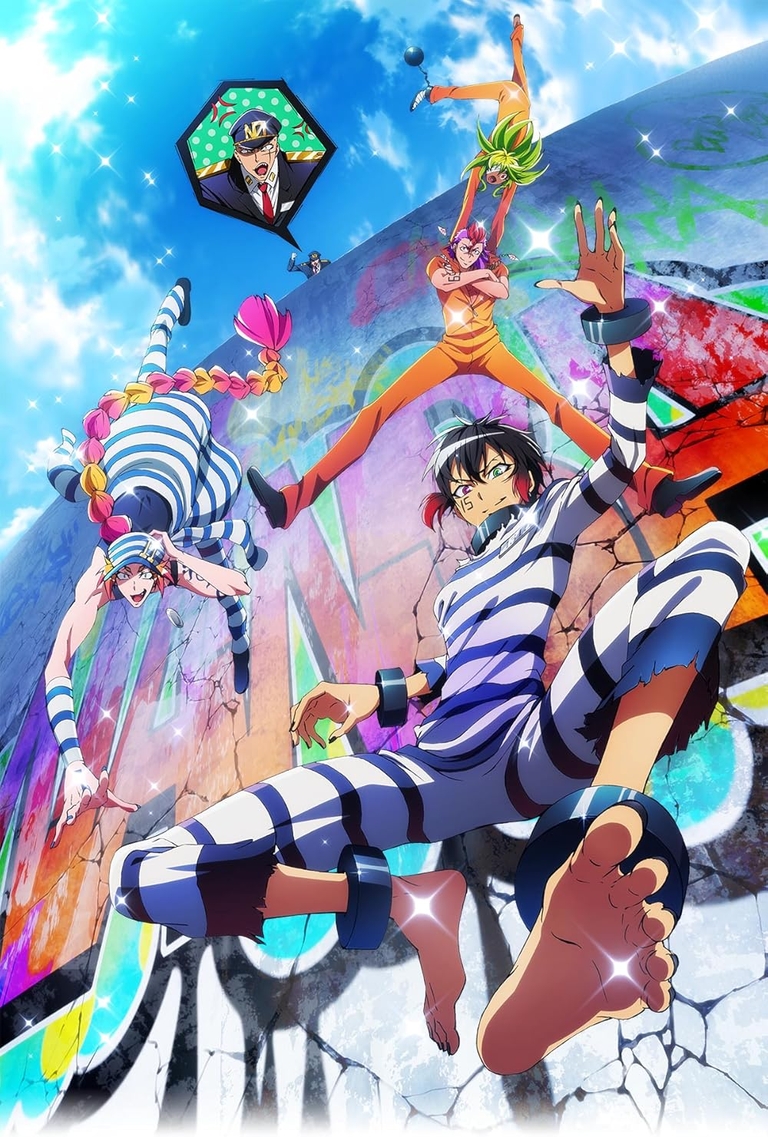
You can't talk about this show without mentioning how it looks. Every character has rainbow colored hair and sparkles follow them around like they're in a magical girl anime. The prison uniforms are bright and colorful instead of drab gray. Building 13 looks like a fun place to live not a punishment. This visual choice isn't just aesthetic, it tells you exactly what kind of show this is. It's loud, it's proud, and it doesn't care about realism.
The character designs are over the top in the best way. Jyugo's red tipped hair and mismatched eyes make him instantly recognizable. Uno's two tone braid is ridiculous but memorable. Even the guards have distinct looks with Hajime's stern face and dark hair contrasting against the warden's pink everything. The colors match personalities. Rock is orange and warm. Nico is green and sickly looking. Uno is pink and flashy. Jyugo is red and black because he's edgy.
The bright colors serve a purpose beyond looking pretty. They contrast with the dark themes that show up later. When Jyugo is having a breakdown about his existential emptiness he's still surrounded by sparkles and rainbows. It creates this weird dissonance that makes the sad moments hit harder because they look so out of place in this colorful world. The manga was apparently less sparkly but the anime leans into the glitter hard. Every time a character is happy or excited the screen fills with light effects. It's overwhelming at first but you get used to it and eventually it feels weird when the show tones down the visuals for serious scenes. The animation quality drops sometimes during the serious fight scenes which is annoying because that's when you want it to look good. But the comedy scenes are always full of life with exaggerated expressions and chibi forms. The opening song Rin Rin Hi Hi is perfect for the show because it's energetic and catchy just like the visuals. Even the ending theme has the characters as chibis trying to escape. The show commits to its aesthetic fully and that consistency helps hold the messy plot together.
The English Dub Is Weirdly Better Than It Should Be
I usually don't care about dubs but Nanbaka's English version is fantastic. The voice actors get the comedic timing down perfectly and they manage to sell the serious moments too. Jyugo's VA switches between lazy and intense seamlessly. Uno's voice captures that sleazy but charming gambler vibe. Rock sounds like a big tough guy who wouldn't hurt a fly. Nico's voice is appropriately high pitched and excitable.
The script adapts the jokes well too. Some of the Japanese wordplay doesn't translate but the localization team found equivalent English jokes that land just as hard. The banter between Cell 13 sounds natural like real friends talking trash to each other. Even the side characters like Yamato the deputy supervisor who can't read maps get great performances. If you're on the fence about watching this consider doing it dubbed. It adds to the experience rather than taking away from it. The MAL reviews mention the dub quality too and they're right to praise it.
Season Two Gets Darker Whether You Like It or Not
If you watched the first season and thought it was just a comedy, season two will slap you in the face. The show leans hard into the serious plot involving Samon Gokuu and his brother Enki who is this terrifying antagonist built up as a major threat. The comedy doesn't go away completely but it takes a backseat to prison riots, corrupt officials, and psychological drama.
Some fans hated this shift. They wanted the silly prison comedy to continue and felt betrayed when characters started dying or getting seriously injured. Others loved it because it proved the show had stakes. I land somewhere in the middle. The serious arcs are compelling but they highlight how the show never planned out its tone from the start. It feels like the author realized they had something special with these characters and decided to give them real conflict but didn't know how to integrate it with the existing comedy.
The animation quality in season two is more inconsistent than the first. You can tell they were working with less budget or time. But the story moves at a faster clip and the character development for Samon and the other Building 5 guys is solid. Just be prepared for the fact that season two ends on a massive cliffhanger with Enki's plot unresolved and no third season announced. You'll have to read the manga if you want to know how it ends. This is covered well in this breakdown of the series.
The Unfinished Ending Will Annoy You
Let's be real about the ending. It doesn't exist. Season two wraps up with the characters preparing for a huge fight against Enki and then it just stops. No conclusion, no wrap up, just a to be continued that never continued. The manga goes further but even that ended somewhat abruptly. If you need closure in your stories this show will frustrate you to no end.
That said the journey is still worth taking. The character moments you get along the way are satisfying even if the plot doesn't resolve. The friendships formed between the inmates and even between inmates and guards feel earned. You'll finish the anime and immediately want to know what happens next which is better than finishing and feeling nothing. Just go in knowing you'll have to switch to the manga or live with not knowing how the final battle goes.
Nanbaka anime series review discussions always come back to whether the tonal chaos is a bug or a feature. I think it's a feature even when it doesn't work. The show has guts. It tries to make you care about characters who look like clowns and then it breaks your heart with their backstories. It throws serious life or death battles into a setting that should be lighthearted. It commits to its aesthetic so hard that you can't look away even when the animation gets cheap.
Is it perfect? No. The pacing drags in the middle of season one. The ending doesn't exist. Some of the jokes fall flat and the serious moments can feel unearned when they come out of nowhere. But it's memorable. In a sea of generic high school anime or isekai power fantasies Nanbaka stands out as something that tried to be different. It mixed genres like a bartender who doesn't know what they're doing but somehow made a drink that tastes good anyway.
If you want a show that will make you laugh then punch you in the gut then make you laugh again while wondering what the hell you just watched give it a shot. Start with the dub if you can. Don't expect a conclusion. Just enjoy the ride with these four idiots and their sparkly prison life. You might find yourself oddly attached to them by the end just like I did.