
Okabe Rintarou's journey in Steins;Gate 0 starts with him giving up completely. He doesn't pick himself up and dust off after failing to save Kurisu. He doesn't pull himself together for his friends. He throws the lab coat in the trash, starts wearing black like he's attending his own funeral, and tries to forget time travel ever existed. This isn't the Hououin Kyouma you remember from the first series. This guy is broken in ways that don't fix themselves with a pep talk.
The anime and visual novel don't hide this either. They show you a man suffering from actual PTSD, not the Hollywood kind where he just needs to punch something. He's in therapy, he's on medication, and he flinches when anyone mentions the past. People call him selfish for ignoring World War III. They say he's putting his friends in danger by refusing to use the time machine. But they're missing the point entirely. This version of Okabe isn't choosing to be difficult. He's choosing to survive.
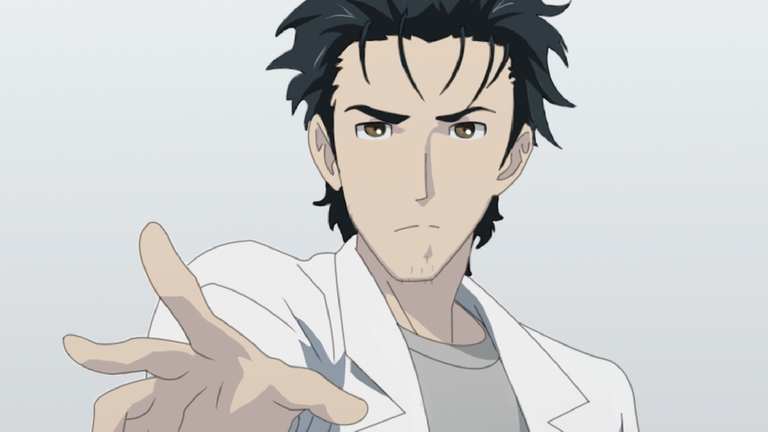
The Reality of Okabe Rintarou's Journey in Steins;Gate 0
Why He Ditched the Lab Coat
The white lab coat wasn't just a costume. It was armor. When Okabe called himself Hououin Kyouma, he was building a shell around a kid who couldn't handle normal life without pretending he was the hero of some grand conspiracy. That persona worked fine when the biggest threat was SERN and he could fix everything by leaping back a few days. It didn't work when he accidentally stabbed the woman he loved and watched her bleed out on a concrete floor.
So he ditched it. The lab coat went into storage and the black clothes came out. This wasn't a fashion choice. It was a visual representation of someone who stopped pretending he was the main character of a cool story. He became the "Sad Scientist," a label fans use because it fits better than the old one. He stopped shouting about the Organization. He stopped laughing like a maniac. He just went to class, came home, and tried not to think about how many times he'd watched Mayuri die in other timelines.
Living with Amadeus Kurisu
Then Maho Hiyajo shows up with Amadeus. This is where the story gets cruel in a way that only Steins;Gate manages to pull off. They built an AI using Kurisu's memories and they want Okabe to talk to it. From a plot perspective, this is supposed to help him process grief. From a psychological perspective, it's like handing a recovering alcoholic a bottle of whiskey and saying it's just for research.
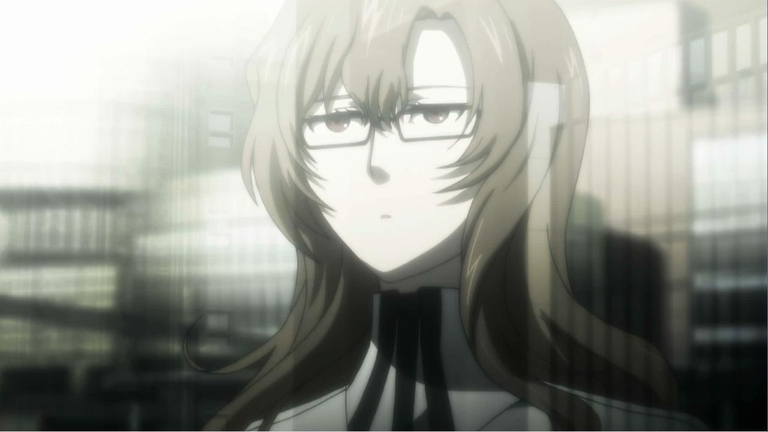
Okabe knows it's not really her. He knows it's just data and algorithms mimicking her speech patterns. But his brain doesn't care about the technical details when he's hearing her voice again. The interactions with Amadeus Kurisu are some of the most uncomfortable scenes in the series because they show a man trying to move on while being forced to interact with a ghost that can talk back. He's not healing. He's reopening the wound every time he picks up that phone.
Maho doesn't help matters because she's dealing with her own inferiority complex about Kurisu. She's short, she's angry, and she sees Okabe as a connection to the girl she could never beat. Their friendship is built on shared grief and mutual annoyance. It's messy and complicated and doesn't follow the usual anime friendship arcs where they just support each other. Sometimes they make things worse for each other. That's what makes it real.
The 3000 Time Leaps Nobody Talks About
Here's the detail that gets lost in anime discussions because it sounds too extreme. In one of the routes, Okabe gets forced into the future, specifically 2036. The world has gone to hell. WWIII is happening. Everything is on fire. He doesn't accept this. He fights back the only way he knows how. He time leaps. Over and over and over again.
We're talking about 3000 time leaps. Three thousand. Each one sends him back a few days or weeks, and he has to live through the apocalypse again trying to find a way to fix it. By the time he gets back to 2011, he's lived through decades of war and suffering that nobody else remembers. His brain is carrying thousands of deaths, thousands of failures, thousands of nights watching the world end. No wonder he's broken in the present timeline. The version of Okabe we see in Steins;Gate 0 isn't just dealing with one death. He's carrying the weight of entire timelines where everyone dies badly.
This is why the "selfish" argument falls apart when you look at the source material. Some fans argue he's selfish for not immediately jumping to save the world, but they're ignoring that this man has already tried thousands of times in other iterations. He knows exactly how badly he can fail because he's lived it.
Recording the Video D-Mail
The whole point of Steins;Gate 0 is that this timeline is necessary for the original's happy ending to exist. Okabe in 2025 (or 2036 depending on the route) realizes something crucial. He can't save Kurisu himself. He's too broken, too compromised, too caught in the convergence of this worldline. But he can send a message. He can record a video D-Mail that explains exactly how to trick the world.
This is Operation Skuld. It's not a plan he comes up with in a moment of inspiration. It's the culmination of years of suffering and experimentation. He has to figure out the exact sequence of events that will allow his past self to fake Kurisu's death without actually killing her. He has to account for the Metal Upa, the stab wound, the time machine, and his own Reading Steiner ability. One mistake and the message doesn't work.
Siliconera's analysis points out that this development only works because we see him at his lowest first. If he hadn't been broken, he wouldn't have had the perspective to understand how to break the rules. He had to become the Sad Scientist to figure out how to save everyone.
The 18000 BC Rescue Mission
After he sends the video message to his 2010 self, there's still work to do. Mayuri and Suzuha took the time machine back to try to convince him to try again. They get stuck in 18000 BC because of fuel limitations and paradox prevention. The machine won't let them return to a time where they already exist, and they don't have enough fuel to make it back to 2025 safely.
So Okabe does the only thing he can do. He takes the prototype time machine (the C-193) and travels to 18000 BC to save them. He knows this is probably a one-way trip. He knows that even if he succeeds, he might not make it back to 2025 alive. He goes anyway.
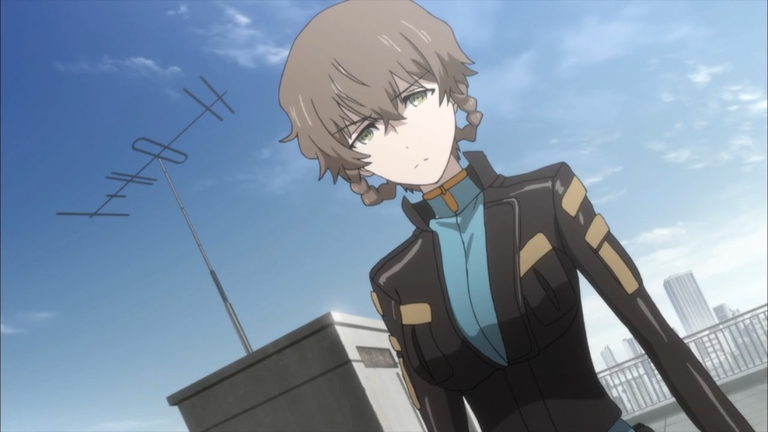
This is where the "selfish" label really dies. He goes to the Stone Age to rescue his friends knowing full well that their worldline is going to get erased anyway once his past self succeeds in Operation Skuld. He doesn't save them because it serves the future. He saves them because he promised he would. Because leaving them there to die alone in the past would make him worse than the Organization he used to pretend to fight.
Selfish or Just Surviving?
Let's address the elephant in the room. There are forum threads where people get genuinely angry at this Okabe. They say he's putting Mayuri and Suzuha in danger by not taking action earlier. They say he's ignoring the impending WWIII because he's too busy feeling sorry for himself. They wanted him to strap on the lab coat and fix everything in episode one.
That's not how trauma works. That's not how PTSD works. When Okabe accidentally killed Kurisu with his own hands, he broke something fundamental. The guy who could laugh off Mayuri's deaths in the Alpha worldline because he could fix them with a time leap couldn't fix this. Kurisu stayed dead. His hands were literally stained with her blood. You don't shake that off because your friends want you to be useful again.
His refusal to use the time machine isn't cowardice. It's the only sane response to watching the world fall apart every time he tries to help. Every intervention makes it worse. Every D-Mail creates a new nightmare. He tried being the hero and it killed the girl he loved. Why would he rush to try again?
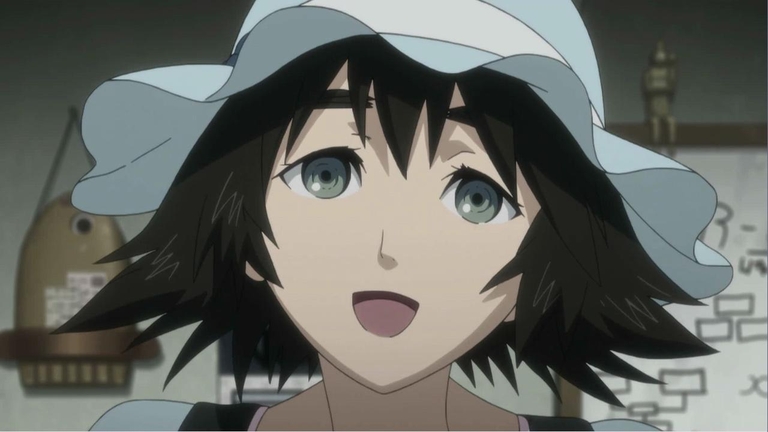
Mayuri understands this even if Suzuha doesn't. That's why she doesn't push him the way Suzuha does. She sees the empty eyes and the forced smiles and she knows that the Okabe who used to protect her is barely holding together. She'd rather have a living, broken friend than a dead hero.
How He Tricked the World
The mechanics of Operation Skuld are worth breaking down because they show how Okabe's broken state actually helped him think clearly. In the original Steins;Gate, he failed because he tried to change the past directly. He showed up, tried to stop Nakabachi, and ended up killing Kurisu himself. That created the Beta worldline where she dies and WWIII happens.
The solution he figures out in Steins;Gate 0 is elegant in its simplicity. Don't change the past. Deceive it. Make it look like Kurisu died without actually killing her. Use a fake blood pack, a taser, and perfect timing. The worldline needs to observe a dead Kurisu, but it doesn't actually need her to be dead.
This only works because Okabe spent years studying the Attractor Fields and convergence points. He knows exactly how much he can bend the rules before they break. The Mad Scientist couldn't have figured this out because he was too busy trying to be the hero. The Sad Scientist figured it out because he had nothing left to lose except the chance to pass the answer to his past self.
The Return from 18000 BC
After saving Mayuri and Suzuha from the prehistoric wasteland, Okabe returns to 2025 (or travels forward to 2036 depending on interpretation). He's aged now, tired, and ready to face his convergence death in 2025. He knows he's going to die in this worldline. That's been established as a fixed point. But he accepts it because he knows his death here means his past self will live in the Steins Gate worldline.
The fandom wiki notes this version of Okabe as the one who "recorded the video D-Mail." That's his legacy. Not the time machine, not the lab, not the mad scientist persona. A video message that convinces his past self to try one more time.
Some interpretations suggest he survives and lives into 2036 to send Suzuha back properly equipped with the knowledge of the video D-Mail. Others suggest he dies in 2025 as converged. Either way, he doesn't get to see the Steins Gate worldline himself. He doesn't get to see Kurisu alive again. He buys that future for another version of himself and pays with his own existence.
Why This Story Matters
Steins;Gate 0 gets flack for being depressing. People say it's just misery porn or that it ruins the ending of the first series by showing how much suffering it actually took. Those people are wrong. The original ending of Steins;Gate only works because we know it was earned. If Okabe had just tried again immediately and succeeded, it would have felt cheap. The fact that he failed thousands of times, broke completely, rebuilt himself from nothing, and still found a way to send the answer back makes the final success mean something.

This isn't a side story or a what-if scenario. As some guides clarify, this is the story of the final messenger. This is the Okabe who had to exist so that the Steins Gate worldline could exist. Without his suffering, without his breakdown, without the Sad Scientist enduring hell to figure out the trick, the happy ending is impossible.
The character development here isn't about becoming stronger. It's about becoming different. Okabe doesn't level up or gain new powers. He loses everything and keeps going anyway. That's harder to watch than any time travel battle, and it's why this story sticks with you longer than the original's clever plot twists.
Okabe Rintarou's journey in Steins;Gate 0 ends without applause. He doesn't get the girl. He doesn't get the victory pose. He gets a frozen wasteland in 18000 BC and a hope that his other self will do better. And somehow, that's enough. That's the whole point. You don't save the world because you're the hero. You save it because someone has to, even if you don't get to see the ending.