
Outbreak Company anime plot and themes look like standard isekai harem junk on the surface. You've got your shut-in protagonist, your half-elf maid, your loli princess who acts tsundere, and a premise about teaching fantasy natives to love manga and dating sims. But if you stop at the fanservice and that annoying "DA DA DA" song that gets stuck in your head for days, you missed the point entirely. This show isn't just another fish-out-of-water comedy about a nerd living his dream. It's a vicious critique of how developed nations use pop culture to colonize less powerful countries, wrapped in a package that looks like it belongs in the discount bin at a convention.
The protagonist Shinichi Kanou gets recruited by a shady company called AmuTec after acing some ridiculous otaku entrance exam. They drug him, shove him through a portal, and dump him in the Holy Eldant Empire, a fantasy land with elves, dwarves, dragons, and a rigid caste system that treats non-humans like property. The Japanese government tells him he's there to spread "otaku culture" as a cultural attaché, which sounds like a dream job until you realize he's basically being used as a tool to create economic dependency and soften up the locals for resource extraction. The show spends eleven episodes looking like a goofy harem setup before pulling the rug out in the finale to reveal the whole operation was neocolonialism with a moe face.
What makes this work is that the show doesn't preach at you. It lets you enjoy the harem tropes, the beach episodes, the magic school shenanigans, and then hits you with the realization that you've been watching a propaganda operation unfold. Shinichi thinks he's helping these people by teaching them about manga and equality, but he's really setting up a system where the Eldant Empire needs Japan for cultural products, entertainment, and eventually political submission. It's messy, uncomfortable, and way smarter than it has any right to be for a show that features a werewolf girl going into heat and chasing the protagonist around a mansion.
What Really Goes Down In This Show
Shinichi starts as a classic shut-in who became a NEET after a girl rejected him for being too nerdy. His parents threaten to kick him out unless he gets a job, so he applies to this weird company looking for "otaku experts." He passes their tests about anime and visual novels, gets drugged at the interview, and wakes up in a fantasy castle with a half-elf maid named Myucel staring down at him. The Japanese government, through their agent Matoba, explains that Japan discovered this other world and wants to open trade relations. But instead of sending soldiers like in other isekai series, they're sending pop culture to win hearts and minds.
Shinichi's job is to set up a school and teach the local nobles about anime, manga, and video games. He gets a mansion, a personal guard from the JSDF named Minori who's secretly a massive fujoshi, and access to the royal family including Princess Petrarca, a sixteen-year-old ruler who looks twelve and acts like a classic tsundere. The first half of the series follows him importing goods, setting up classrooms, and dealing with the culture shock of teaching elves and dwarves who hate each other. There's a whole episode where he introduces soccer to settle disputes between students, using sports culture as another wedge to break down traditional barriers.
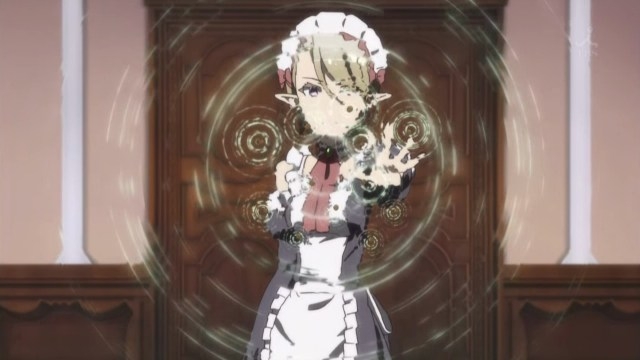
The plot doesn't kick into high gear until later when you realize nothing is as innocent as it looks. Myucel isn't just a cute maid, she's a half-elf who gets treated like dirt by pure-blooded elves and has internalized so much self-hatred that she hides her ears under her hair. Petrarca isn't just a tsundere love interest, she's a political leader struggling to maintain sovereignty while her country gets flooded with foreign media that changes how her people think. And Matoba, the seemingly helpful government liaison who smiles constantly with his eyes closed, is running a scheme to make Eldant dependent on Japanese exports so they can strip the place for resources later.
The Moe Missionary And Soft Power
Here's where the show gets politically weird in a way that most anime wouldn't dare. Matoba openly admits, at least to the viewer, that this is about cultural imperialism and development. Japan isn't sending aid or technology first, they're sending entertainment because entertainment creates desire. Once the Eldant nobles start craving the next volume of their favorite manga or the sequel to a dating sim, they need Japan. That dependency gives Japan leverage to demand mining rights, political favors, and economic control without firing a single shot.
Shinichi calls himself an "Otaku Missionary," which should tell you everything about the religious undertones here. He's not just selling products, he's converting people to a new way of thinking. The show explicitly draws parallels between what he's doing and historical missionary work that softened up indigenous populations for colonial powers. When Shinichi teaches his students that all races are equal, he's challenging Eldant's feudal hierarchy, but he's also replacing their cultural values with Japanese ones. The series asks whether that's liberation or just a different kind of conquest, especially since Japan's own history isn't exactly clean when it comes to equality.
The "Cool Japan" initiative gets satirized hard here. In real life, Japan's government pushes anime and manga as soft power tools to improve their international image and boost tourism. Outbreak Company takes that to its logical extreme by showing a government literally using anime to pave the way for economic exploitation. The concept of "capacity to aspire" comes into play, where Japan introduces a desirable new culture to a perceived primitive land, creating demands and aspirations that only Japan can fulfill. When the terrorists show up in the final episodes, they're not generic bad guys. They're traditionalists who see exactly what's happening, that their culture is being erased and replaced by imported Japanese media, and they're fighting back against what they correctly identify as an invasion.
Racism And Class In The Fantasy Setting
The Eldant Empire looks like a standard fantasy kingdom with castles and magic, but its social structure is rotten in ways that make Shinichi's mission complicated. Myucel gets abused by pure elf nobles who see her mixed heritage as pollution. The dwarves and elves hate each other with a passion that leads to actual violence in the school hallways. There's an entire underclass of beastmen and half-breeds who function as servants and child soldiers with no rights, and the show doesn't shy away from showing how this system grinds people down.
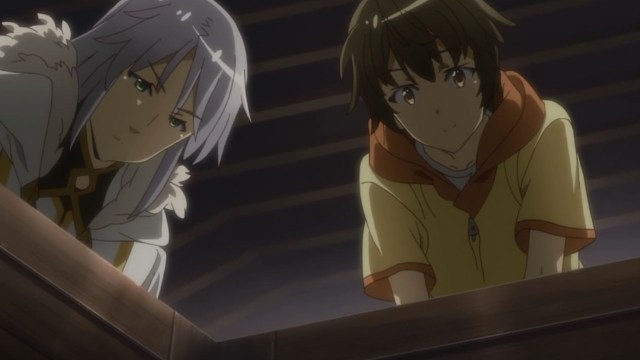
Shinichi accidentally challenges this system by treating Myucel like a person. He learns the Eldant language, he compliments her ears that she's been hiding her whole life, and he refuses to use the dehumanizing slave name the empire gave her. This makes him a revolutionary figure to the oppressed groups but a dangerous destabilizing element to the nobility. The show doesn't let him off easy though. His "enlightened" Japanese values might be better than slavery, but they're still foreign impositions. He's not fixing their society, he's replacing it with his own, and that creates a different kind of damage.
Petrarca embodies this tension perfectly. She has elf blood from a secret affair in the royal family, making her technically a half-breed too, though she hides it to maintain the throne. Her crush on Shinichi represents the empire's attraction to Japanese culture, but her jealousy toward Myucel shows the insecurity and resentment that comes with cultural submission. When she learns Japanese to compete with Myucel for Shinichi's attention, it's funny on the surface, but it's also a metaphor for colonized elites learning the conqueror's language to maintain status in a changing world. Her episode where she becomes a hikikomori and hides from her duties shows the pressure of trying to be both a traditional ruler and a modern consumer of foreign culture.
When The Comedy Drops The Ball
The show has a serious tone problem in its final two episodes. For ten episodes it's been mostly lighthearted harem comedy with occasional serious moments, then suddenly it's a political thriller with assassination attempts, government betrayals, and existential threats. Shinichi discovers that Matoba plans to kill him once he's outlived his usefulness, and that Japan has been preparing to annex Eldant all along. The terrorists who attack the school aren't wrong about the cultural invasion, even if their methods are violent, and the JSDF ambush at the end reveals that the military was always waiting in the wings while the culture softened up the targets.
This shift feels rushed because it is. The anime crams multiple light novel volumes into twelve episodes and the pacing suffers for it. One minute you're watching a beach episode with swimsuits, the next you're dealing with the geopolitical implications of media saturation. Some fans hate this whiplash, calling it inconsistent or poorly written. Others argue it's intentional, that the abrupt shift mirrors how real cultural imperialism works. It looks fun and harmless until suddenly you're living in an occupied territory and the tanks roll in, or in this case, until the JSDF shows up to "protect" their cultural assets with guns.
The resolution has Shinichi blackmailing the Japanese government into backing off by threatening to expose their plans to the Eldant public. He stays in the fantasy world as a true ambassador rather than a corporate shill, and he starts dating Myucel. It's a happy ending that feels a bit forced because the power imbalance between a modern industrialized nation and a feudal magic kingdom doesn't just go away because one guy makes a speech. But the show needed to end on a positive note, so Shinichi gets his elf girlfriend and the status quo is preserved, even if the critique of soft power lingers in your mind after the credits roll.
Why The Harem Tropes Serve The Message
You might think the romantic comedy elements undermine the serious political commentary, but they're actually essential to it. Shinichi's harem, consisting of Myucel, Petrarca, and the werewolf spy Elbia, represents different reactions to cultural colonization. Myucel is the assimilated native who fully adopts Japanese culture and language, seeing it as liberation from her oppressive society. Petrarca is the compromised ruler who knows she's losing control but can't resist the personal appeal of the foreign ambassador. Elbia starts as a spy from a rival kingdom but gets converted by the sheer force of moe, representing how pop culture can turn enemies into consumers.
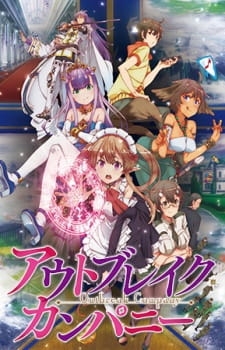
Minori, the JSDF officer, serves as the bridge between the military and cultural arms of the invasion. She's a fujoshi who ships Shinichi with Petrarca's cousin Galius, which is played for laughs, but it also shows how even the soldiers are immersed in the cultural products they're supposed to be protecting. She's not just a bodyguard, she's a participant in the cultural exchange that softens up the locals, and her ability to defeat armed terrorists with her bare hands shows that the military option was always available if the cultural approach failed.
The romance between Shinichi and Myucel is genuinely sweet but also deeply problematic if you think about it too hard. He's her employer, she's a former slave from a colonized population, and he's teaching her to love the culture of the country that's trying to exploit her homeland. The show acknowledges this by having Myucel's Japanese skills become a point of conflict among the pure elves and by showing how Shinichi's "kindness" is still paternalistic. He thinks he's saving her, but he's also making her dependent on him and his culture. That's the core tension of the whole series, wrapped up in a love story between a nerd and his elf maid.
Comparing Outbreak Company To Gate
Around the same time this aired, you had Gate: Thus the JSDF Fought There, another anime about Japan interacting with a fantasy world. The difference is instructive. Gate shows Japan using military force to dominate a fantasy land, sending tanks and helicopters to crush medieval armies. It's overt, violent, and honestly less interesting because it's just a power fantasy. Outbreak Company shows the same end goal, economic and political control of a weaker nation, but achieves it through anime and manga instead of bullets.
Both shows reveal a certain anxiety about Japan's place in the world and how it relates to other cultures, but Outbreak Company is more honest about the exploitation involved. Gate pretends that military intervention is humanitarian. Outbreak Company admits that cultural export is about creating markets and controlling resources. It's a more cynical show, but also a more accurate one about how soft power works in the real world. The fact that Outbreak Company wraps this in a harem comedy while Gate plays it straight as military propaganda tells you which one is actually thinking critically about imperialism.
The Visual Style And Soundtrack
Feel studio produced this in 2013, and it looks fine but not spectacular. The character designs are shiny, almost glowing, with that weird glossy skin texture that was popular in early 2010s anime. Hair has a plastic sheen to it that can get annoying after twelve episodes. The backgrounds are generic fantasy stuff, castles and forests that don't have much personality, which might be intentional since the show is arguing that this "exotic" world is being homogenized by Japanese influence.
The opening song "Univer Page" by Suzuko Mimori is catchy bubblegum pop that fits the fake-harem vibe perfectly. The ending theme is softer and more melancholy, hinting at the sadness underneath the comedy. But the real star is that insert song, the "DA DA DA" track that plays during comedic moments. It's stupid, it's repetitive, and it somehow works every time. The voice acting is solid, with Mai Fuchigami making Petrarca's tsundere rants actually sound like a stressed teenager rather than a cartoon character, and Suzuko Mimori bringing a quiet dignity to Myucel that prevents her from being just a moe blob.
Animation quality drops hard during action scenes, which are rare anyway. The show saves its budget for character reactions, the important stuff in a comedy. When Shinichi makes his poker face after saying something stupid, or when Myucel blushes and hides her ears, the animation conveys exactly what it needs to. The magic effects are basic, the dragon looks like a CG model from a PlayStation 2 game, but you don't watch this for the spectacle. You watch it for the moments when the comedy stops and the characters realize they're caught up in something bigger and more dangerous than a school festival.
The Uncomfortable Legacy
Outbreak Company came out in Fall 2013, right when the isekai boom was getting started but before it became oversaturated. It got decent reviews but didn't become a classic because it's too weird for harem fans and too horny for political anime critics. It sits in this awkward middle ground where it's smart enough to be interesting but trashy enough that serious viewers dismiss it. That's a shame, because it predicted a lot of conversations we're having now about cultural imperialism, soft power, and how streaming services export American or Japanese culture globally.
The show asks whether sharing anime is inherently good or just another form of economic control. Shinichi believes he's helping by spreading stories about equality and heroism, but he's also destroying local art forms. There's a minor character, Elbia, who was a landscape painter before she got addicted to drawing manga-style characters. That's played as a joke, but it's also tragic. Her traditional culture got replaced by imported pop culture, and she's happier now but also less connected to her own history. The series doesn't give easy answers about whether that's progress or loss.
If you go into Outbreak Company expecting a fun isekai with cute elf girls, you'll get that. If you pay attention to what it's saying about how Japan uses anime to project power overseas, you'll get something way more disturbing. That's the genius of it. It uses the very tropes it critiques to smuggle in a conversation about cultural violence. Just don't expect a clean resolution or a world that makes sense. Like real international politics, it's messy, self-contradictory, and full of people who think they're the good guys while they participate in systems that hurt others. Outbreak Company anime plot and themes stick with you because they refuse to let you have the simple fantasy you wanted, forcing you to look at the exploitation behind the entertainment.