
Paimon's role in Magi anime gets butchered by casual viewers who think she's Alibaba's Djinn. She's not. She's Hakuei Ren's partner, the conqueror of the 9th Dungeon, and if you paid attention during the Kouga Arc you'd know Alibaba has Amon, the fire guy, while Paimon controls wind and serves the Kou Empire's princess. This confusion pops up constantly on forums and it drives me nuts because these two Djinn couldn't be more different in terms of abilities, personality, and who they actually fight for.
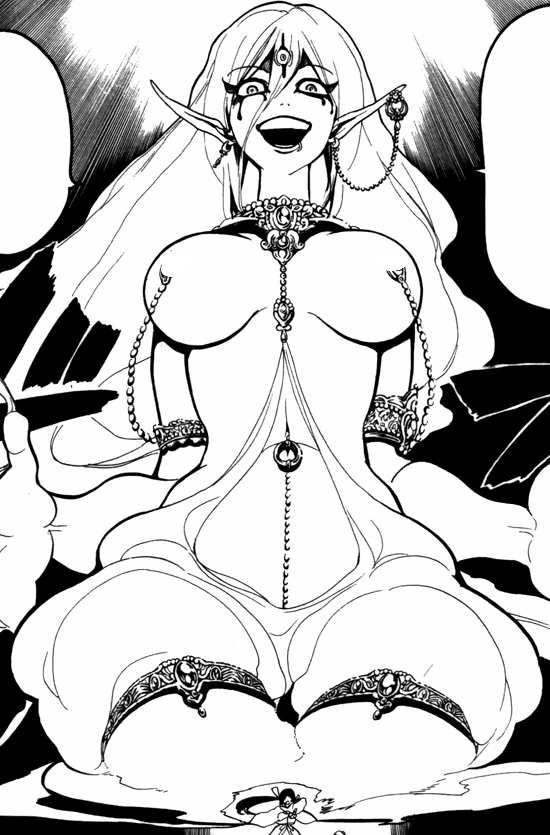
The mix-up probably happens because both characters show up early in the series and both involve dungeon conquering, but Paimon serves a completely different narrative function. She's a fecundity-type Djinn which means she can support massive household structures, we're talking over a hundred people getting power boosts through her vessel system, while Amon focuses more on direct combat enhancement for Alibaba. Understanding Paimon's actual role means understanding how the Kou Empire operates and why Hakuei Ren matters to the political landscape of the series.
Paimon's Actual Master and the Confusion
Hakuei Ren conquered the 9th Dungeon and earned Paimon's loyalty. That's the baseline fact. Alibaba Saluja conquered the 7th Dungeon and got Amon. I see people swap these two constantly and it makes zero sense because their Djinn equips look nothing alike, their magic types are opposites, and their personalities clash completely. Paimon manifests as this tall, flirtatious woman with long hair, pointed ears, a third eye, and she's got this whole aesthetic going with nipple piercings and revealing clothing that got censored in some broadcast versions, while Amon manifests as this muscular old warrior dude with a serious attitude.
The wind Djinn serves the Kouga Clan through Hakuei. When Hakuei first appears in the Kouga Arc, she shows up with Seishun Ri and explains to Aladdin what being a Magi actually means while Paimon hovers around making snarky comments. This scene establishes the hierarchy: Magi choose King Vessels, King Vessels conquer dungeons, Djinn grant power. Paimon acts as the intermediary explaining these rules to Aladdin while simultaneously flexing her power by showing off her massive household potential.
People get confused because both Alibaba and Hakuei are blonde, I guess? Or because they both wear white? Whatever the reason, it's annoying. Paimon's metal vessel is a flabellum, which is basically a fancy feather fan that Hakuei carries around, while Alibaba's is a sword. One creates tornadoes, the other creates fire explosions. If you're watching the anime and see wind manipulation, that's Paimon. If you see fire and heavy melee combat, that's Amon. It's not rocket science.
Wind Magic and Combat Capabilities
Paimon controls wind. Not just a gentle breeze, we're talking full-scale natural disasters. Her magic type allows Hakuei to generate tornadoes, manipulate air pressure, and create cutting blades of compressed wind that can slice through armies. In the anime, when she performs her Djinn Equip, she doesn't just get faster or stronger, she becomes a living storm system that can devastate battlefields from a distance.
The Djinn of Maniacal Love and Chaos title isn't just for show. Her wind attacks come with this unpredictable element that makes them hard to counter. Wind isn't solid, you can't block it with a shield easily, and Paimon's particular brand involves chaotic swirling patterns that disorient opponents before the real damage hits. Hakuei uses this to control the flow of battles, pushing enemy forces around or creating barriers of rotating air that shred anything trying to pass through.
When she goes into full Djinn Equip, Hakuei wears this armor that looks like feathers fused with metal, and she carries a trident that channels Paimon's wind into focused strikes. The anime shows this during the conflict with the Kouga Clan where Hakuei demonstrates that she's not just some political figurehead, she's a walking weapon of mass destruction who can level mountains if she wants to. Paimon's power scales with the user's magoi capacity, and Hakuei has plenty to spare being royalty with strong lineage.
The Household Vessel System Explained
Here's where Paimon's role gets really interesting and where she differs massively from Amon. She's a fecundity-type Djinn, which means her household can be enormous. While some Djinn can only support a few household members or maybe a dozen, Paimon facilitates power sharing with over a hundred people simultaneously. This is huge for the Kouga Clan because it means an entire tribe can get buffed by one Djinn.
Seishun Ri acts as the household vessel user we see most often, but the entire Kouga Clan gets benefits from Paimon's power. This creates a military structure where you have one King Vessel, Hakuei, and then an entire clan of enhanced warriors fighting under her banner. It's efficient and terrifying from a political standpoint because it means the Kou Empire can field entire units of superhuman soldiers rather than just relying on one powerful individual.
The way it works is that Paimon's rukh, her magical essence, gets distributed through the metal vessel and then into household vessels, which are usually weapons or items the clan members carry. When activated, these grant the users enhanced speed, strength, and limited wind manipulation. They're not as powerful as the King Vessel, obviously, but when you've got a hundred guys with superhuman abilities charging at you, the numbers matter. This system makes Paimon incredibly valuable for empire building and explains why the Kou Empire values dungeon conquerors so highly.
Appearance and Design Controversy
Paimon's design is unmistakable and caused problems in certain markets. She's depicted as this buxom, seductive woman with long flowing hair, pointed ears marking her as a Djinn, and that third eye in her forehead that signifies her spiritual nature. The anime keeps her appearance consistent with the manga, which includes nipple piercings and very revealing clothing that emphasizes her "maniacal love" aspect through sheer physical presence.
Taiwanese broadcasts censored her. They covered up the piercings and reduced the revealing nature of her outfit, while international streaming platforms like Crunchyroll and Netflix kept her uncensored. This difference sparked debate among fans about whether the design was necessary or just fanservice, but honestly, it fits her personality. She's flirtatious, she messes with people, she represents chaos and obsessive love, so the design communicates that immediately.
Her physical form when manifested in the real world, not just as a spirit, maintains these traits. She towers over most humans, carries herself with this confidence that borders on arrogance, and she talks to her master Hakuei with a familiarity that suggests a genuine bond rather than just a servant relationship. Compared to Ugo, who is this massive mysterious entity, or Amon who is stern and warrior-like, Paimon comes off as playful but dangerous, like a storm that might pass over or might destroy your house depending on her mood.

Djinn Equip and Extreme Magic Details
When Hakuei activates her Djinn Equip, the transformation sequence in the anime shows her body getting covered in this armor that resembles white and gold feathers, with her hair flowing upward as if caught in constant wind. She gains the ability to fly or at least hover, and her trident becomes the focal point for her most powerful attacks. The equip changes her personality slightly too, making her more aggressive and prone to decisive action.
The Extreme Magic, Pa'ir Al-Hazard, translates to something like "Thunder Roar Tornado" and it's exactly what it sounds like. Hakuei creates a massive tornado infused with lightning that obliterates everything in its path. In the lore, this represents the peak of Paimon's destructive capability, combining wind and electrical generation through friction to create a compound elemental attack. It takes a huge amount of magoi to use, so Hakuei doesn't spam it, but when it comes out, battles end.
The visual effect in the anime shows the sky darkening, clouds converging, and then this pillar of destruction descending on the target. It's distinct from Alibaba's Extreme Magic with Amon, which is more of a concentrated slash of fire and heat. Paimon's magic is area denial, crowd control, and environmental destruction. She's built for warfare on a large scale, which fits the Kou Empire's expansionist philosophy perfectly.
Connections to Alma Torran and Solomon
All the Djinn originally come from Alma Torran, and Paimon is no exception. She was part of King Solomon's household back in that ancient civilization, created from Rukh like all Djinn, and she maintained close relationships with other Djinn we see in the series, specifically Amon and Zagan. This history matters because it explains why certain Djinn interact the way they do when their vessels meet, and why there's this underlying tension or familiarity between them.
In the flashbacks to Alma Torran, we see that Paimon was created to embody specific aspects of the world's logic, in her case the chaotic nature of wind and the obsessive side of love. She wasn't human originally, she was always this spirit entity given form and purpose by Solomon's magic. Understanding this background helps explain why she chose Hakuei as her master, someone who represents the Kou Empire's aggressive expansion but also possesses a genuine desire to protect her people, which mirrors that maniacal love concept, love taken to an extreme degree.
The connection to Amon is particularly interesting because their current masters, Hakuei and Alibaba, end up on opposite sides of conflicts sometimes, yet the Djinn themselves were once allies in Solomon's court. This creates a tragic undertone to their battles, though the anime doesn't explore this as deeply as the manga does. Paimon remembers the old world, remembers the tragedy that befell Alma Torran, and carries that weight while serving new masters in the current age.
Role in the Kouga Arc Specifically
The Kouga Arc is where Paimon makes her first real impact in the anime. Aladdin is traveling with the Kouga Clan, Hakuei shows up to recruit them into the Kou Empire, and tensions flare because the clan doesn't want to submit to foreign rule. Paimon manifests during the confrontation to explain the nature of Djinn and Magi to Aladdin, basically giving an exposition dump that helps the viewer understand the magic system while also demonstrating her power.
She reveals that she can see the flow of Rukh, the fate of people, and she comments on Aladdin's potential as a Magi. This scene establishes her as knowledgeable, ancient, and slightly condescending toward humans who don't understand the greater cosmic picture. At the same time, she shows loyalty to Hakuei by backing her up when the clan gets aggressive, creating wind barriers and demonstrating that Hakuei isn't someone to be trifled with.
The arc ends with the Kouga Clan accepting Hakuei as their leader and becoming her household members, which means Paimon suddenly has a hundred new people channeling her power. This is a pivotal moment because it shows how Djinn can rapidly expand their influence and how the political landscape shifts when a dungeon conqueror successfully integrates a powerful clan into their household structure. Paimon's role here is both instructional for the audience and plot-critical for establishing the Kou Empire's military capabilities.
Comparing Paimon to Other Djinn in Magi
You've got Djinn like Ugo who are mysterious, almost godlike in their power and distance from humanity. Then you've got Zagan who is plant-based and kind of creepy with his whole life-draining aesthetic. Paimon sits in this middle ground where she's approachable, almost human in her personality, but still clearly alien in her morality and power scale. She won't destroy the world on a whim like some cosmic horror, but she will absolutely demolish an army if Hakuei asks nicely.
Amon is the closest comparison because they're both combat-focused Djinn attached to major characters, but Amon is all about heat, destruction, and honorable combat. Paimon is about speed, chaos, and overwhelming force. If Amon is a tank that fires cannons, Paimon is a fighter jet that drops bombs and creates tornadoes. They serve different tactical purposes, which reflects the different strategies of the Kou Empire versus the kingdoms Alibaba allies with.
Then there's the personality differences. Amon is serious, speaks formally, treats Alibaba like a student who needs discipline. Paimon is playful, flirts with everyone including her enemies, and treats Hakuei more like a partner than a subordinate. This tonal difference affects how their masters use them in battle. Alibaba has to prove himself to Amon constantly, while Hakuei and Paimon seem to have mutual respect from the start.

Political Significance in the Kou Empire
Paimon isn't just a weapon, she's a political tool. When Hakuei shows up with a Djinn in her service, it signals to other nations that the Kou Empire has dungeon conquerors and can project power beyond conventional military means. In the Magi world, Djinn are basically nuclear weapons combined with aircraft carriers. Having one makes you a superpower, having one like Paimon who can support a massive household makes you a superpower with an army of enhanced soldiers.
Hakuei's position as a princess plus her possession of Paimon makes her a key player in the succession struggles within the Kou Empire. Her brothers and other relatives have to take her seriously because she commands wind magic that can level cities and a clan of loyal warriors who can fight beyond normal human limits. Paimon enables Hakuei to act as both a political diplomat and a military threat, giving her leverage in negotiations that other royalty might not have.
The wind Djinn's presence also affects how other nations interact with the Kouga territory. Suddenly this remote clan isn't just some nomadic group, they're a strategic asset protected by dungeon magic. This shifts trade routes, military alliances, and the balance of power in the region. Paimon's role extends beyond just fighting, she's a deterrent and a symbol of imperial authority that changes the political calculus for everyone involved.
Censorship and International Versions
I mentioned the Taiwanese censorship earlier but it's worth diving into because it shows how different markets handle Paimon's design. The original Japanese broadcast and the international streaming versions keep her design intact, piercings and all, treating her as a mature character whose appearance reflects her chaotic nature. The censored versions try to make her more "family friendly" which misses the point entirely since she's literally called the Djinn of Maniacal Love.
This censorship usually involves adding clothing textures to cover skin, removing the piercings through digital editing, and sometimes changing the color palette to make her less overtly sexual. Fans generally hate this because it sanitizes her character and removes the visual storytelling that connects her to concepts of obsession and unrestrained emotion. The design is supposed to be slightly uncomfortable, it's supposed to signal that this entity doesn't follow human social norms.
When you're watching the anime, make sure you're seeing the uncensored version if you want the intended experience. The differences are obvious once you know to look for them, and they affect how you perceive her scenes, especially the ones where she's manifesting physically and interacting with characters directly. The censored version makes her look like a generic wind spirit while the original makes her look like a chaotic force of nature that happens to have a humanoid form.
Power Scaling and Battle Potential
How strong is Paimon really? In terms of raw destructive capability, she's upper-tier among the Djinn we see in the first season. Her wind manipulation allows for both precision strikes and area attacks, meaning she can handle single powerful opponents or entire armies with equal effectiveness. The tornado creation alone puts her at city-block destruction level minimum, and her Extreme Magic scales up from there.
Defensively, she can create wind barriers that deflect projectiles and physical attacks by creating layers of compressed air. This makes Hakuei hard to hit in combat, complementing the offensive capabilities with solid defense. Speed-wise, wind Djinn are naturally fast, allowing Hakuei to outmaneuver most ground-based opponents and control the spacing of battles.
The limitation is magoi consumption. Like all Djinn, Paimon needs magical energy to function, and extreme magic drains that energy fast. Hakuei can't maintain full Djinn equip indefinitely, and using the household vessels spreads her power thin if too many people draw on it at once. So while Paimon is powerful, she's not invincible, and prolonged battles or fighting multiple dungeon conquerors at once would strain her resources. Still, in a straight one-on-one fight, few characters in the early series can stand up to her.
Final Thoughts on Her Character Role
Paimon serves as an introduction to the concept of Djinn as political assets, not just magical companions. Through her, we learn that these beings have history, personality, and agency. She chooses to serve Hakuei, she chooses how to deploy her power, and she has opinions about the human conflicts she gets involved in. This sets the stage for later Djinn introductions where the relationships between master and Djinn become more complex and morally ambiguous.
Her role in magi anime is to bridge the gap between the small-scale adventuring of Aladdin and Alibaba and the large-scale political conflicts involving empires and dungeon conquerors. She represents the escalation of the series, showing that there are powers in the world far beyond what a lone Magi or a few thieves can handle alone. When Paimon appears, the stakes get higher because you know Hakuei isn't just some noble, she's a legitimate superhuman threat.
Understanding Paimon means understanding that the Magi universe operates on rules of power and patronage. Djinn choose their masters based on compatibility and worthiness, then grant them the ability to reshape the world. Paimon chose Hakuei because she saw in her the capacity for that maniacal, all-consuming love that defines her own nature, and together they represent a force that shapes the destiny of nations.