
Pseudo harem anime review threads usually devolve into arguments about whether harems are sexist or which girl is best girl. Let's skip that. Giji Harem, localized as Pseudo Harem, isn't about a guy collecting girls. It's about one girl, Rin Nanakura, using her theatre club skills to become an entire harem for the senior she likes. It sounds like a gimmick. It works better than most real harems because it cuts the fat and focuses on two people who already like each other finding excuses to hang out.
The show gets one thing right immediately. Eiji Kitahama, the male lead, is not stupid. He knows Rin is acting. He sees her switch from a tsundere who calls him an idiot to a flirty devil character in seconds and he plays along because he enjoys her company. That's the whole show. Two compatible people using roleplay as a language for feelings they're too scared to say straight out. No love triangles. No childhood friends showing up to cause drama. Just Rin performing and Eiji reacting and both of them slowly realizing they've already crossed the line from friends to something else.
Most rom-coms treat progression like a finite resource they need to ration across twelve episodes. Pseudo Harem doesn't care about that. The relationship moves. By episode four, these two have a level of intimacy that other anime couples don't reach until season three. Reddit users called it the most underrated rom-com of the year according to this thread, and they're right. It respects the viewer enough to skip artificial roadblocks.
What Makes a Pseudo Harem Different
Real harems are exhausting. Some guy gathers a collection of girls who fall for him because he was nice once or because the plot demands it. He never picks anyone. The status quo rules everything. Pseudo Harem throws that in the trash. Rin plays every role herself. Tsundere, yandere, kuudere, the childhood friend, the little sister type, the cool senpai. All of it. One person.
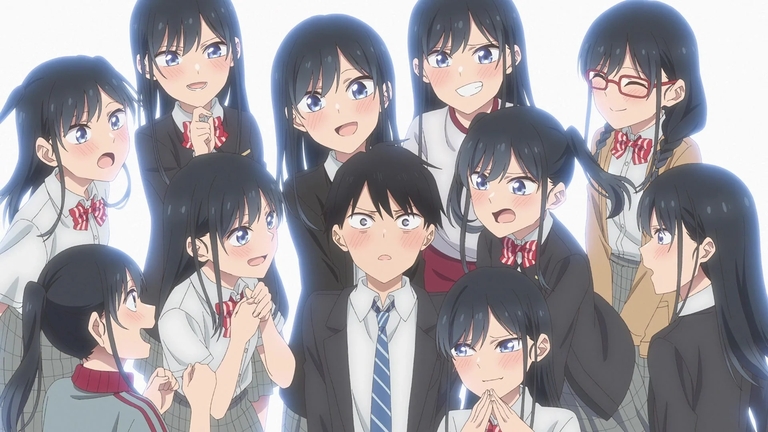
It starts as a joke. Eiji mentions wanting to feel popular, so Rin gives him the experience of having options without the commitment issues or the jealousy. She gets to practice acting. He gets attention from someone he cares about. Everyone wins. Except the viewer who wanted typical harem nonsense with girls fighting over a clueless protagonist. That viewer is going to be disappointed and that's a good thing. The show isn't about having options. It's about having one specific option who is willing to put in absurd amounts of effort to make you smile.
Rin Nanakura and Her Many Faces
Rin is a first-year drama club member with a crush on her second-year senpai Eiji. She's not a generic cute girl protagonist. She's a theatre kid with enough talent to shift her entire personality on command. The show uses this to explore how people perform for crushes. Rin puts on these masks because telling Eiji she likes him directly feels too risky. So she hides behind characters and watches his reactions.
The tsundere persona is funny because Eiji knows it's fake. He calls her out immediately. She gets flustered and switches to the cute mode. The cool senpai act makes him laugh because he can see her breaking character when he compliments her. Each personality reveals something real about her. The gap between the act and the real Rin is where the show finds its heart. When she drops the act and just blushes while holding a script, it hits harder because you saw her work so hard to maintain distance.
Eiji Kitahama Breaks the Dense MC Curse
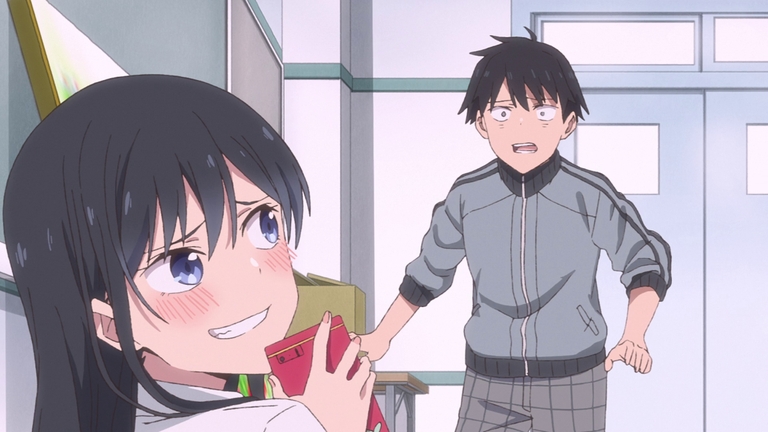
Eiji could have been another self-insert protagonist who stumbles into girls because the plot requires it. He isn't. He wants a harem in the abstract way teenage boys want things they don't really understand. But he cares about Rin specifically. He notices when she's tired. He remembers her favorite foods. He sees through her acts immediately but plays along because he likes her company and it makes her happy.
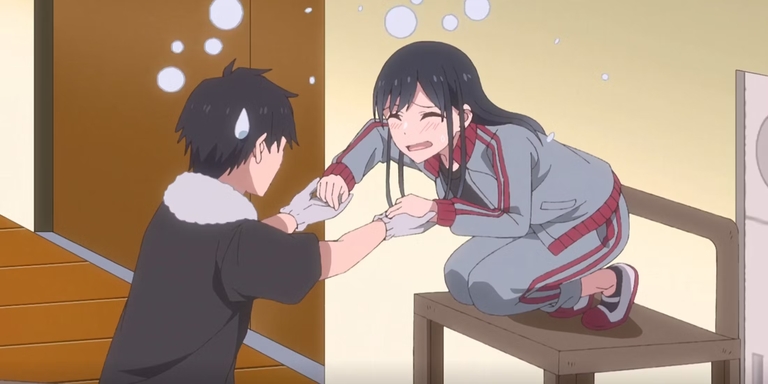
He's the rare rom-com lead with emotional intelligence. When Rin is crying in that tracksuit scene, he doesn't panic or make it weird or try to fix it with platitudes. He just helps. That's the bar now. It's low but most anime can't clear it. He treats her various personas like inside jokes between the two of them rather than separate people he needs to manage. That's crucial. He doesn't fall for the tsundere or the little sister character. He falls for Rin, the girl underneath who is brave enough to try on these masks but scared enough to need them.
The Theatre Club Setting Matters
They meet in the drama club. This isn't accidental. The show uses the club room and stage as spaces where Rin feels safe to experiment with personas. When she's on stage, she's someone else. When she's in the club room with Eiji, she's halfway between roles. The backstage area becomes their private space where the fourth wall drops.
The setting justifies the premise. Rin isn't just doing voices in a vacuum. She's rehearsing for plays, working on expressions, using method acting techniques to get into character. Eiji works backstage doing lighting and props. He watches her from the shadows, which becomes a metaphor for how he sees the real her while everyone else sees the performance. It's simple symbolism but it works.
Voice Acting That Carries the Whole Show
Saori Hayami plays Rin. If you watch anime, you know she's top tier. She voices every persona differently enough that you can tell them apart by ear but keeps the core Rin underneath so it never feels like different characters. The tsundere voice has an edge that cracks when she gets embarrassed. The cute voice softens into something genuine when she forgets she's acting. She switches between them mid-conversation without missing a beat, sometimes throwing in a fourth persona just to mess with Eiji.
Nobuhiko Okamoto as Eiji matches her energy perfectly. He's got this dry delivery that makes Eiji's reactions feel grounded and real. When he laughs at one of Rin's characters, it sounds like a real laugh, not an actor reading a line. Their chemistry carries scenes where nothing happens except two people talking about lunch or rehearsing lines. That's hard to do. The voice work makes the pseudo harem concept believable rather than annoying.
Pacing That Feels Weird But Works
The pacing is strange in a good way. Episodes feel like they fly by but the relationship develops slowly in real-time. The show covers months of their lives but each episode focuses on small moments. A rainy day at Eiji's house where she gets caught wearing a dog shirt. Rehearsing for a play. Walking home together.
It doesn't rush the confession. It earns it. By the time feelings get spoken out loud, you've seen enough small touches and shared glances that it feels inevitable rather than forced. That's better than the usual rom-com roulette where confessions come from nowhere to end the series or get interrupted by a phone call. Pseudo Harem lets moments breathe.
The Kyoto Trip Changes Everything
The Kyoto arc is where the show stops playing around with the premise. Rin and Eiji go on a school trip and end up sharing intimate moments while sightseeing. They see a play together that mirrors their own situation. They share a hotel room situation that doesn't get contrived or awkward. There's no misunderstanding about the room arrangement. They just enjoy each other's company and the boundaries shift naturally.
There's a moment where they make eye contact while sitting on a bed and nothing gets said. The music doesn't swell. There's no internal monologue explaining the feelings in detail. You just see two people realize they're in love through the way they look at each other. It's quiet and effective. More shows should try trusting the audience to read body language instead of explaining everything. This review breaks down how the direction handles these silent moments perfectly.

No Love Triangles No Problem
Pseudo Harem skips the love triangle entirely. No childhood friend shows up to complicate things. No transfer student steals attention. No cousin appears with a marriage promise. The conflict comes from Rin's own insecurity about whether Eiji likes the real her or just the characters she plays, and Eiji's hesitation to ruin their friendship by confessing too early.
That's relatable. That's real. The show trusts that watching two compatible people navigate feelings is interesting enough without adding artificial rivals or misunderstandings that could be solved with one conversation. It is interesting. Their inside jokes become your inside jokes. You root for them because they clearly make each other happy and communicate well when they aren't hiding behind theatre masks.
Comparing It to Other Rom-Coms
People compare this to Kaguya-sama because both involve mind games and theatre club settings. That's fair but limiting. Kaguya-sama is about two geniuses overthinking everything and trying to force the other to confess. Pseudo Harem is about two normal kids using theatre as an excuse to flirt without the pressure of real rejection. The stakes are lower. The warmth is higher.
It also avoids the toxicity some rom-coms fall into where characters manipulate each other or play cruel pranks. Rin and Eiji are kind. They check in on each other. Even when playing characters, they never cross lines that would hurt the other person. The worst thing that happens is mild embarrassment. That's refreshing in a genre that often mistakes cruelty for comedy.
The Music and Sound
The opening song "Blouse" by Gohobi sets the tone perfectly. It's upbeat but not annoying, romantic but not cheesy. The ending "Ad-lib" sung by Saori Hayami in character is clever because it switches musical styles like Rin switches personas. The soundtrack stays out of the way during dialogue scenes and pops up for comedic timing or emotional beats without drowning out the performances.
The sound design during Rin's persona switches uses subtle audio cues. A shift in reverb when she's doing the cool senpai voice. A higher pitch for the little sister act. These small touches sell the gimmick.
Why Fans Call It Underrated
It aired during a packed season. Everyone was watching Makeine and Alya Roshakova. Plus the title makes it sound like a generic harem which turns off people who hate that genre and confuses people who want real harem content with multiple girls.
The animation isn't flashy. Studio Nomad did solid work but it's not MAPPA or Kyoto Animation level spectacle. It looks good enough that the character expressions land. Rin's face changes completely when she switches personas. That's what matters. The show got buried under bigger releases and that's a shame because MAL reviews consistently rank it among the best rom-coms for its directness and lack of filler.
The Complete Story
The anime adapts the whole manga by Yu Saito. It ran on Twitter first then got serialized in Gessan. That's why the early chapters feel like vignettes. The anime connects them better in the second half. Having a complete adaptation is rare. You get the whole story. Beginning, middle, end. No waiting for season two that never comes. No original anime ending that ruins everything.
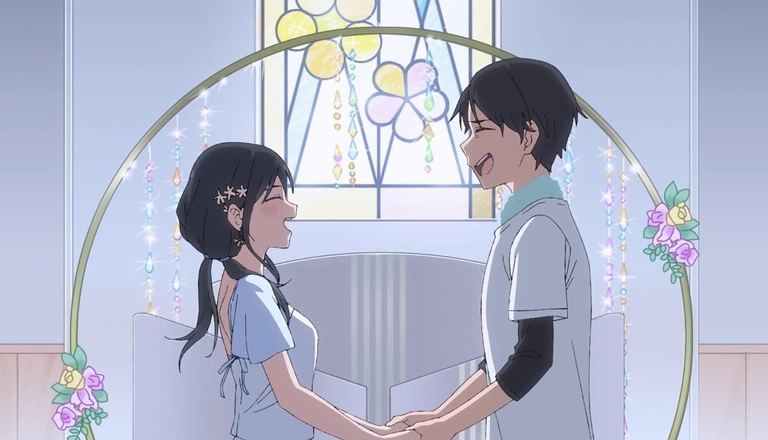
The confession happens. They date. You see them as a couple. That's the bare minimum for a romance story but anime so rarely delivers it. Pseudo Harem gives you the satisfaction of seeing the relationship start rather than ending right at the starting line. This detailed review notes how the post-confession episodes add value most rom-coms skip.
Final Thoughts on the Subgenre
Pseudo harem as a concept, one person playing multiple roles, works because it focuses the story. You don't need five different character designs and backstories. You get one complex character with many facets. Rin isn't split into multiple girls. She's whole and she contains multitudes. The show argues that's enough. One interesting person is more compelling than a crowd of stereotypes.
If you're tired of rom-coms where nothing happens for twelve episodes, watch this. If you want a male lead who isn't a brick wall and a female lead with real talent and agency, watch this. It's not perfect. Some episodes drag in the middle. The side characters are underdeveloped and mostly exist to comment on the main pair. But the central relationship is so solid and the ending so satisfying that the flaws don't matter much.
Rin and Eiji deserve the hype. Their story ends in a way that feels earned. In a genre full of shows that don't know how to finish or keep stalling for manga sales, that's the rarest thing of all. The pseudo harem setup starts as a gag but ends up being the perfect vehicle for showing how we all perform for people we want to impress, and how scary it is to drop the act and be real.