
Recovery of an MMO Junkie anime ending and characters wrap up a story about two adults finding each other through a video game, and it finishes with more grace than most shows that run for five times as long. Moriko Morioka is thirty years old, unemployed, and deeply invested in a fictional MMO called Fruits de Mer when she meets a girl named Lily who turns out to be a guy named Yuta, and their slow-burn romance carries the show through ten episodes and an OVA that complete the entire narrative arc.
The show gets mislabeled as otaku wish fulfillment, but it is really about burnout and recovery. Moriko quits her corporate job of eleven years after having a breakdown. She stops leaving her apartment. She wears sweats every day and uses a lint roller on her clothes compulsively when she gets nervous, which is always. When she makes Hayashi, her male avatar, she is not just making a character. She is making a version of herself that does not have to apologize for existing. Hayashi is a knight who can take hits and protect people. Moriko in real life feels like she cannot even protect her own sanity. The game lets her breathe.
But here is the thing about Moriko. She is not just some shut-in who needs a man to save her. She saves herself by degrees. The haircut scene in episode five matters because she goes to a salon and lets someone touch her hair. She cries because she forgot what it felt like to be cared for. That is the real character development. Not the romance. The remembering that she deserves to exist in the world.

Who Moriko Really Is Under the Sweats
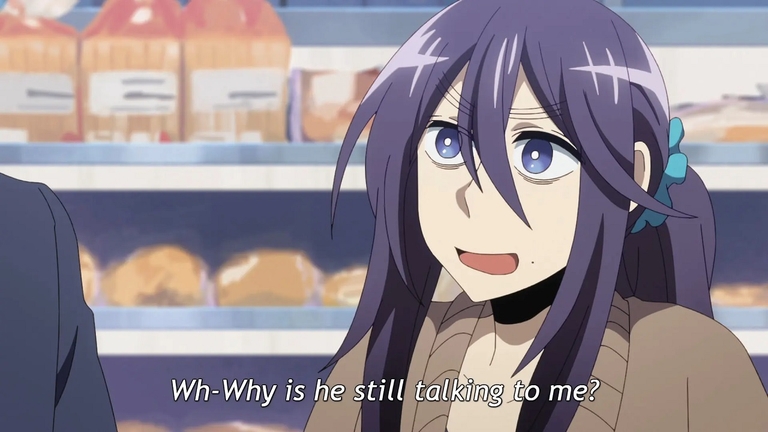
Moriko Morioka is not your typical cute anime girl who happens to play games. She is a mess in a very specific way that hits different if you have ever worked a job that sucked out your soul. She quits because she has a breakdown from overwork, which the show flashes back to in episode nine with her sobbing at her desk. She stops leaving her apartment. She stops caring about her appearance. She walks barefoot everywhere inside because shoes feel like too much pressure. When she has to wear sandals to meet Yuta in episode eight, she physically cannot do it. Her feet have forgotten how to be in public. That detail hurts because it is so specific to people who have isolated themselves.
She creates Hayashi as a male knight because she wants to be the cool guy for once instead of the tired office lady. In the game she can flirt with Lily without feeling like she is imposing. She can be the protector instead of the protected. She can explore a friendship where she does not have to worry about gender dynamics or workplace hierarchy. The game becomes her therapy, but it is not enough on its own. She still needs to eat. She still needs to shower. She still needs to remember that the person controlling Hayashi is worth keeping alive.
Yuta Sakurai and the Lily Problem
Yuta Sakurai plays Lily, this bubbly pink-haired conductor class character who heals and supports. In real life Yuta is this handsome guy who looks like he has his life together, but he is just as broken as Moriko. He was adopted, he is half-British with blonde hair, he got bullied as a kid for being different, and he uses the game to escape his own loneliness. He has a fancy job at a trading company but no real friends outside of work until he meets Moriko.
The irony is thick here. Moriko plays a guy to feel strong. Yuta plays a girl to feel useful and connected without the pressure of being the aggressive male salaryman. They are both crossplaying, which the show treats like no big deal because it is not. Half the guild does it. The show never makes a transphobic joke out of it or suggests it is weird. It is just a game. You play what you want to play.
Yuta figures out that Moriko is Hayashi before she figures out he is Lily. He sees her buying game cards at the convenience store. He recognizes her voice. He panics. He does not know how to tell her without making it weird, so he just does not say anything for like eight episodes. It is frustrating but real. Anyone who has had online friends they met in real life knows that hesitation. You do not want to break the magic. You do not want to lose the friendship if the real life version does not match up.
The Guild That Keeps Them Sane
@HomeParty is the guild Hayashi joins after Lily recruits him. It is full of other adults who have jobs and spouses and real lives but use the game to unwind. Kanbe is the leader, played by Kazuomi Fujimoto, this college kid who works at the convenience store Moriko frequents. He recognizes her immediately because she buys so many prepaid cards. He keeps her secret because he gets it. He is young but he is not judgmental.
Then there is Lilac, who is energetic and supportive. Nico, who is an expy of Chitoge from Nisekoi but nicer. Himeralda and Pokotaro, who are married in real life and play together. They have this whole domestic vibe in the game where they craft items together and bicker about loot. It shows that MMOs are not just for loners. They are for couples too. For friends. For people who need a third space that is not work or home.
Koiwai is Yuta's coworker and Moriko's former colleague. He plays this muscular female warrior named Harumi. He knew Moriko from work calls and had a crush on her professional competence. When he finds out she is Hayashi, he does not mock her. He protects her identity. He sets up the real life meetings. He pushes Yuta to stop being a coward. He represents the alternative love interest who chooses to be a wingman instead of a rival, which is rare and refreshing.
How the Episodes Build to That Ending
The first three episodes are setup. Moriko meets Lily in-game. Moriko meets Yuta outside when he literally knocks her over at the convenience store and takes her to the hospital. She does not know he is Lily. He does not know she is Hayashi. But they feel this connection that they cannot explain. It is the recognition of two damaged people seeing each other clearly.
Episodes four through seven are the slow burn. Koiwai enters the picture and asks Moriko out, which makes Yuta jealous but also forces him to confront his feelings. Moriko thinks Yuta is out of her league because she sees him as this perfect elite guy and sees herself as a garbage NEET. She spends episode four worrying that she is useless and apologizing for existing. Sakurai does the same thing. They are both so afraid of imposing on the other that they almost miss their chance.
Episode eight is the bomb drop. Moriko realizes Yuta is Lily. Yuta realizes she knows. They have this confrontation in the park. She runs away. She feels betrayed but also embarrassed because she told Lily things she never told anyone. She had a crush on Lily. She thought Lily was a girl. Now she has to deal with the fact that her online crush is this guy she likes in real life, and she does not know if that makes her weird or confused or what.
Episode nine flashes back to her breakdown at her old job, showing exactly why she quit and why she is so afraid of returning to that world. Episode ten is the resolution where they finally talk it out.
That Ending Versus the Manga Cancellation Mess
The Recovery of an MMO Junkie anime ending and characters conclusion happens in episode ten with the OVA capping it off. Moriko and Yuta finally sit down and talk without the masks. She admits she was scared of him seeing the real her. He admits he was scared that she would reject him if she knew he was Lily. They decide to keep playing the game together and see where the real life thing goes. They do not kiss on screen. They do not move in together. They just agree to have dinner again and hold hands while walking. That is it. That is the ending.
The manga got cancelled at chapter eighty-seven due to Rin Kokuyō's health issues. The author went on hiatus in 2015 and even after recovering in 2018, she chose not to continue the series. So the anime had to make a decision. It adapted up to that point and gave it a soft landing. The anime ending is more definitive than the manga's vague stopping point. The manga just stops mid-conversation. The anime gives you the sense that these two are going to be okay.
Some people call it inconclusive because there is no wedding or time skip. I call it realistic. Thirty-year-olds do not need fairy tale endings. They need stability. They need someone who gets it when they have a bad brain day. The show gives them that.
Why Koiwai Matters More Than Comic Relief
Homare Koiwai could have been the annoying third wheel who ruins everything. Instead, he is the reason anything happens at all. He knew Moriko from their old job and respected her work ethic. When he finds out she is Hayashi, he does not use the information against her. He protects her privacy. He sets up the real life meetings by inviting her to group outings. He pushes Yuta to stop being a coward and ask her out properly.
He also represents the alternative. He likes Moriko. He would date her. But he sees that she and Yuta fit together because they both have that same broken quality that understands silence and awkwardness. He steps back. He plays wingman. That is rare in romance anime. Usually the rival is a jerk who tries to sabotage the relationship. Koiwai is a genuinely good guy who wants his friends happy even if it means he does not get the girl.
The OVA is the Real Final Episode You Need
You have to watch the OVA. It is basically episode eleven. It takes place after the main ending and shows them as an established couple, still gaming, still awkward, but comfortable with each other. There is this whole sequence where they both fall asleep and dream about being transported to the game world together. It confirms that they are officially dating without making a big production about it. They are just two people holding hands while grinding levels.
The OVA also has this funny side story about the guild fighting a demon king where Koiwai is the villain. It is lighter than the main series but serves as a victory lap. Look, these characters made it. They are happy. The game is still fun. Real life is still hard but manageable now because they have each other.

What the Show Gets Right About MMO Culture
Fruits de Mer is not a real game, but it feels real. The loot boxes are annoying and rigged. The grind for crafting materials is tedious. The friendships are what keep you logging in every day. The show understands that MMOs are not just escapism for losers who cannot handle reality. They are social spaces for people who have trouble with traditional social spaces like bars or clubs or office parties.
Moriko does not quit the game when she gets better. She keeps playing. That is important. The show is not saying stop gaming and get a life. It is saying you can have both. You can have the online friends and the real life partner. You can be Hayashi and Moriko. You do not have to kill one identity to save the other. The game is part of her recovery, not the obstacle to it.
The Convenience Store and One Degree of Separation
People complain about the coincidences. Yuta works with Moriko's former coworker. The guild leader is the convenience store clerk she buys cards from every day. They run into each other constantly. But that is how MMO communities work in Tokyo. Everyone lives in the same few neighborhoods. Everyone goes to the same conbinis. The player base is small enough that you do run into people. It is not unrealistic. It is just compressed for storytelling purposes.
The convenience store called Cowson, which is obviously Lawson with the name changed, serves as the liminal space between their online and offline lives. It is where they transition from avatars to people. Moriko goes there to buy prepaid cards for the game. Yuta goes there for dinner after work. It is neutral ground.
Why This Is Not Just Another Gamer Anime
Recovery of an MMO Junkie gets lumped in with shows like Netoge no Yome wa Onnanoko or And You Thought There Is Never a Girl Online, but it is completely different from those. Those shows are about teenagers in high school. This is about adults with jobs and past trauma and rent to pay. The stakes are not world ending. The stakes are can I leave my apartment today and can I trust this person not to hurt me.
The animation by Signal.MD is soft and pastel. It is not flashy or full of sakuga. The character designs are rounded and comfortable looking. The music is piano-heavy and quiet. It fits the mood of someone trying to recover from burnout. It does not shout at you. It whispers.
Final Thoughts on Recovery of an MMO Junkie Anime Ending and Characters
Recovery of an MMO Junkie anime ending and characters deliver a complete story about healing that does not need a second season or a manga continuation. Moriko starts as a shut-in who cannot look people in the eye and ends as someone who can hold hands with Yuta while they walk home from the store. That is enough. That is everything the show promised.
The show respects that recovery is not linear. She has bad days. She stays in sometimes. But she has the guild now. She has Yuta. She has the possibility of going back to work when she is ready, not when society says she should be ready. She does not have to be Hayashi all the time anymore, but she can still log in when she wants to.
If you skipped this because you thought it was about gaming mechanics or some harem thing where the guy gets all the girls, you missed out. It is a love letter to everyone who has ever used the internet to remember how to be human. The manga died but the anime lives on as a complete package. Watch all ten episodes and the OVA. You will get it.
Check out where the anime ends in the manga if you are curious about the chapter adaptation details. The Wikipedia page has the basic production info, and TV Tropes breaks down every character tic if you want more minutiae. The Reddit discussion confirms what I am telling you about the ending being satisfying and complete.