
Steins Gate 0 anime plot and alternate timelines get mislabeled by marketing teams who want to sell it as season two. It isn't a sequel and it isn't a side story. This is the canonical account of what happened in the Beta world line when Okabe Rintarou failed to save Kurisu Makise and never got that pep talk from his future self telling him to try again. Without this specific timeline of suffering, the happy ending of the original Steins Gate literally could not exist.
Most people walk in expecting more mad scientist antics and get hit with a guy who takes antidepressants and flinches at the sound of microwave beeps. That's the point. This is the story of Okabe giving up, and why that failure was necessary to create the instructions that save everyone.
What Steins Gate 0 Actually Depicts
This isn't a what-if scenario or some alternate universe fanfiction like people think. This is the original history. This is the world line where Okabe accidentally stabbed Kurisu himself, watched her bleed out in the Radio Kaikan building, and returned to the lab so broken that he dismantled the PhoneWave and swore off time travel forever. He doesn't receive the video message from 2025 because he hasn't lived to 2025 yet. He doesn't get the courage to try again because Mayuri doesn't give him the push she gave him in the original episode 23. He's just done.
The series sits firmly in the Beta Attractor Field, which means World War III is inevitable. In this convergence, Kurisu dies in 2010 and her time travel thesis falls into the hands of competing governments. By 2036, the world is a wasteland of proxy wars fought with time machines. Suzuha comes back from that future expecting Okabe to help her fix it, but she finds a shell of a man who can't even look at blood without having flashbacks of holding Kurisu's body. He tells her no. He tells her time travel is cursed and he's not playing god anymore. She's devastated because she grew up hearing stories about the brave mad scientist who saved the future, and instead she found a coward in a black shirt who takes pills to sleep.
The Broken Man and Digital Ghosts
Okabe in this story isn't the Hououin Kyouma persona anymore. That identity is dead. He wears black instead of white, he cut his hair, and he walks around with the thousand-yard stare of someone who's seen too many friends die in too many timelines. The anime doesn't shy away from showing his PTSD. He has nightmares about the stab wound. He dissociates during normal conversations. He goes to therapy and takes medication and still can't function properly because he remembers every single death from the Alpha world lines plus the one he caused with his own hands in Beta.
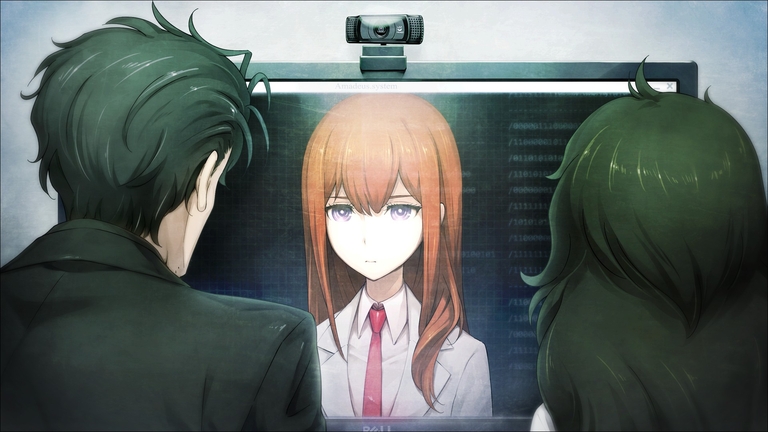
Then he meets Maho Hiyajo, a neuroscientist who worked with Kurisu at Victor Chondria University in America. She's tiny and defensive and has a massive inferiority complex because she was always the less gifted researcher standing in Kurisu's shadow. Maho is working on Amadeus, an AI system that stores human memories digitally. They've got Kurisu's memories backed up from two weeks before she died, so now Okabe can talk to a simulation of the woman he loves through his phone.
It's torture for him. He knows it isn't really her, just data mimicking her voice and personality, but he can't stop answering her calls because hearing her tease him about being a chuunibyou is the only thing keeping him from walking into traffic. Maho watches this dynamic with a mix of jealousy and pity because she loved Kurisu too, in her own way, and seeing Okabe cling to a ghost highlights how neither of them can move on.
The Timelines and Attractor Fields
You need to understand the mechanics here or the plot looks like nonsense. The Steins Gate universe runs on Attractor Fields, which are clusters of world lines that converge toward the same outcome no matter what small changes you make. Alpha Attractor Field converges toward SERN establishing a dystopia and Mayuri dying. Beta Attractor Field converges toward Kurisu dying and World War III breaking out. The Steins Gate world line is the one line that exists between them at 1.048596% divergence where neither disaster happens.
Steins Gate 0 explores the Beta field specifically. Okabe is stuck between 1.130205% and 1.129848% divergence, which means no matter what he does, Kurisu stays dead and the war approaches. The Russians and Americans are hunting for Kurisu's laptop because it contains the theory that enables time machines. Stratfor and DURPA are intelligence agencies running operations to secure this tech. Professor Leskinen, the seemingly goofy American who speaks broken Japanese, is actually running psychological operations on the cast to secure Amadeus data for military applications.
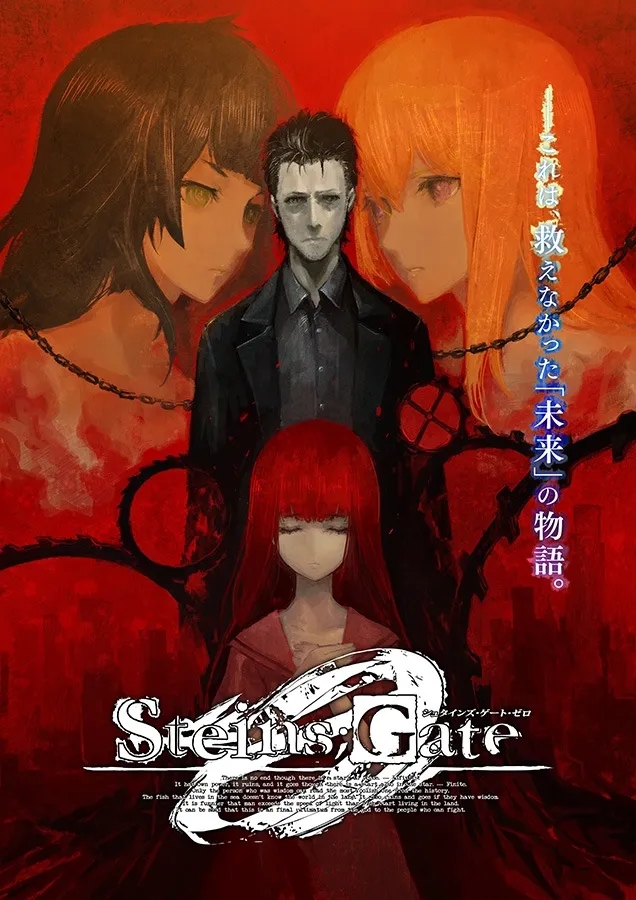
The anime shows Okabe trying to live a normal life while the world burns around him. He attends seminars and pretends he doesn't know that the cute girl with amnesia (Kagari) is actually a war orphan from 2036 who got brainwashed by Leskinen to be a sleeper agent. He ignores the fact that Daru is building a time machine in the lab below the store. He just wants to graduate and forget, which is exactly the wrong mindset when the timeline needs him to suffer so he can learn how to save everyone.
Operation Arc Light and the Sacrifice
The middle of the series gets messy with time travel mechanics but it pays off. Mayuri figures out that Okabe is dying inside even if he won't admit it. She knows he gave up on saving Kurisu because he thinks he has to choose between Kurisu and her, and he picked Mayuri's safety over Kurisu's life. Mayuri doesn't want to be the reason he gave up on love. So she teams up with Suzuha, takes the time machine (the C193), and travels back to August 2010 to slap some sense into Okabe and tell him to keep fighting.
This is Operation Arc-light, and it's the emotional core of the series. Future Mayuri meets past Okabe. She sees him wearing the lab coat and acting like Hououin Kyouma again, briefly, and it breaks her heart because she knows the man in front of her is going to suffer for fifteen more years before he finds peace. In some iterations of the timeline shown in the visual novel routes, this operation fails and Mayuri dies in the time machine crash in 18000 BC. The anime adapts the true ending where her sacrifice works, inspiring Okabe to realize he can't accept this world line.
There's also the subplot about the 3000 time leaps. In 2036, when the war is in full swing and Okabe is leading the resistance, he uses a time leap machine to jump back 3000 times over several decades to accumulate the knowledge and experience necessary to create Operation Skuld. He lives through hell repeatedly, aging mentally while his body stays young, just to get the data needed to send that one video message back to 2010. This is the explanation of the complex ending mechanics that confuse viewers.
How It All Connects to the Original
Here's where people get lost. The Steins Gate 0 anime ends with Okabe in 2025 recording the video message we see in episode 23 of the original series. That video, which tells 2010 Okabe how to fake Kurisu's death by using a taser and red paint, only exists because this Okabe lived through the Beta world line failures. He had to fail first to know exactly how to succeed. He had to lose everything to figure out the trick of deceiving the world.
The final episodes show Okabe putting the lab coat back on one last time. He becomes Hououin Kyouma again, but it's not an act anymore. It's a man who has accepted his role in the timeline. He takes the completed time machine (the C204) to 18000 BC to rescue Mayuri and Suzuha from the crashed C193, providing them with a spare battery so they can return to 2025. This creates a bootstrap paradox where their survival ensures they can go back to inspire him, which ensures he saves them, which ensures they can go back...
This closed loop is the only way to reach the Steins Gate world line. Without the events of Steins Gate 0, 2010 Okabe never receives the Nostalgia Drive video, never fakes Kurisu's death, and never shifts to the 1.048596% divergence. The original happy ending depends entirely on this depressing middle chapter existing. That's why calling it a sequel is wrong. It's a prerequisite.
The Visual Novel Routes vs The Anime
The Steins Gate 0 visual novel has multiple endings that branch based on whether you answer calls from Amadeus Kurisu or ignore them. There's the Promised Rinascimento ending where Maho gets her own time machine moment, the Vega and Altair ending that focuses on Kagari's fate, and several others that explore different facets of the conspiracy. The anime, produced by White Fox, consolidates these into a single coherent route that leads to the true ending.
Some fans complain that the anime feels rushed or confusing because it jumps between world lines in the final episodes without clear transitions. That's actually accurate to how Reading Steiner works. Okabe shifts between similar Beta world lines where tiny details change, like whether Amadeus existed or whether Daru sent a specific message back. These shifts are disorienting because Okabe keeps his memories while everyone else changes slightly. The Crunchyroll viewing guide explains that you need to pay attention to who remembers what.
The anime also changes some details from the game. Kagari's brainwashing plotline is streamlined. Leskinen's villainy is more obvious earlier. But the core beats remain. Okabe's psychological deterioration is the main attraction here, and the anime nails that. Mamoru Miyano's voice performance shifts from the theatrical booming of Hououin Kyouma to a flat, exhausted monotone that hurts to listen to because you know what he used to sound like.
Why This Story Matters
People ask if Steins Gate 0 is just misery porn. It isn't. It's the weight that gives the original ending meaning. When you watch the first series and see Okabe save Kurisu by faking her death, it feels like a clever trick. When you watch Steins Gate 0 and realize that trick required fifteen years of suffering, the death of friends, and a war that burned half the world to learn, it hits different. The victory in episode 24 of the original series stops being a clever solution and starts being the culmination of a man's entire life dedicated to fixing his mistakes.
Okabe's journey from broken man to savior is the most important character arc in the franchise. He isn't the chuunibyou mad scientist here. He's a guy with clinical depression who gets up every day and chooses to keep living in a world he thinks he ruined. That's more heroic than any time travel adventure.
The alternate timelines explored here aren't just background lore. They are the grind. They are the iterations Okabe had to live through to find the one path out. Steins Gate 0 anime plot and alternate timelines show us that happy endings aren't free. They are bought with the pain you don't see, the failures that happen off-screen, and the versions of heroes who gave everything so the final version could succeed.