
Sword of the Stranger anime movie analysis usually starts with the obvious. The fight scenes look good. Real good. But that's barely scratching the surface of why this 2007 Studio Bones production remains the gold standard for animated combat nearly two decades later. Most people remember the snow. The final duel. That blonde-haired giant swinging his blade while the mute ronin finally unsheathes his sword. What they don't talk about enough is how the movie earns that climax through sheer physical weight and character work that doesn't need three seasons of backstory to make you care.
This isn't a fantasy epic with power levels and energy beams. It's a brutal, grounded samurai flick set in the Sengoku period where getting cut means bleeding out in the dirt. Director Masahiro Ando wasn't trying to reinvent the wheel with the plot. You've seen this story before. A wandering warrior protects a kid from bad guys. But the execution separates it from every other anime that tried to copy its homework since. The film arrived during the transition from DVD to streaming, got buried by the sudden shutdown of Bandai Visual USA, and still managed to become the secret handshake among people who actually know what good animation looks like.
The Animation That Physically Hurts to Watch
Yutaka Nakamura spent a full year animating the action sequences in this film. One guy. Twelve months. That's the kind of dedication that shows up on screen when Nanashi blocks a strike and you can feel the impact in your teeth. The sword fights don't use speed lines or time dilation tricks. There's no slow-motion dramatic posing. Just pure, physical momentum and the rhythm of steel hitting steel.
The choreography follows actual kenjutsu principles. Characters get tired. Swords break. Armor matters. When Luo-Lang cuts through a soldier, the body doesn't fly across the room like a ragdoll. It drops. Heavy. The animation emphasizes the danger of sharp objects moving fast through human bodies. Every clash has follow-through. You can see the strain in the wrists and the shift of weight from foot to foot.
Nakamura's work on the final battle in the snow represents peak hand-drawn animation. No computer assistance smoothing out the frames. Just thousands of drawings where each sword swing carries the full arc of motion. The blades don't glow. They don't talk. They just cut. And when they lock together, you see the muscles tense in the close-ups. The way Nakamura draws impact frames changed how Bones approaches action. When a sword meets flesh, there's a specific frame where the blade sinks in and the body reacts with proper anatomical shock. You see the muscle compression and the jerk of the spine. Most anime skips this, going from swing to blood spray. Nakamura lingers on that moment of contact just long enough to make your stomach turn.
Sword of the Stranger Anime Movie Analysis The Weight of Real Steel
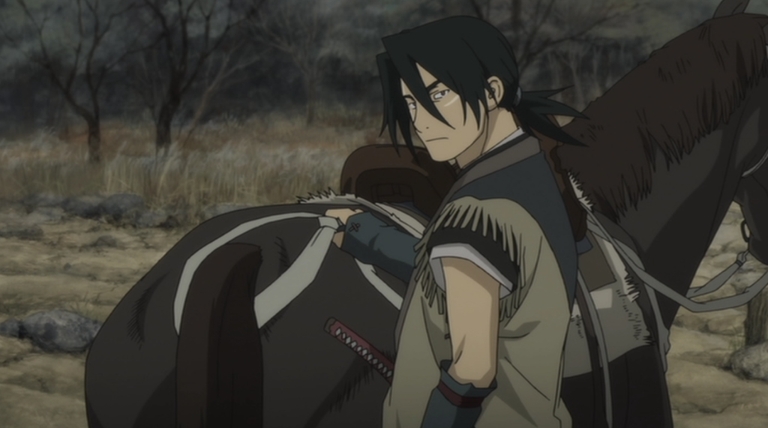
Most anime treats sword fighting like a dance. Sword of the Stranger treats it like a car accident waiting to happen. The weapons have mass. When Nanashi carries his sword without drawing it, you understand it's not just a prop. It's a burden. His vow never to unsheathe it comes from understanding exactly what happens when that blade leaves the scabbard. People die. Messy, pointless deaths.
The film shows different fighting styles through animation alone. The Ming warriors use techniques distinct from the Japanese samurai. Luo-Lang fights like a European knight adapted to Eastern blades, all power and direct strikes. Nanashi moves like a man who's survived too many battles, efficient and conservative. You don't need exposition explaining their training. You see it in how they stand and how they step.
The physical toll matters. Characters sweat. They breathe hard. When someone takes a wound, they slow down. There's no magic healing or second wind. The damage accumulates. By the time Nanashi reaches the final duel, he's already injured, already exhausted. That fatigue makes the victory feel earned rather than inevitable. The swordplay looks dangerous because the animators treated it like actual combat physics instead of stylized posing.
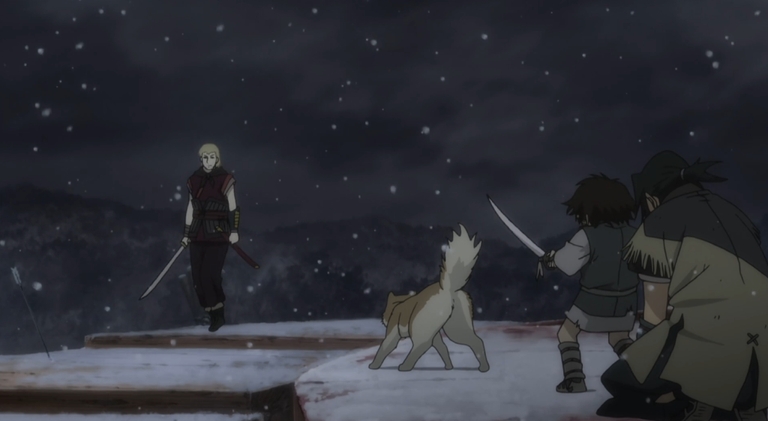
Two Men and a Dog in the Snow
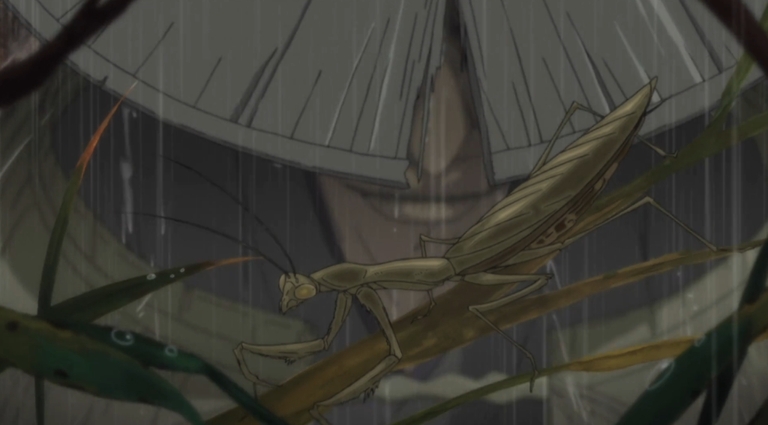
Kotaro is annoying. Let's get that out of the way. He's a stubborn kid who whines and runs off and causes problems. That's the point. He's not a magical chosen one with wisdom beyond his years. He's a scared orphan who's been running his whole life. When he meets Nanashi, the ronin doesn't magically become a father figure overnight. Their bond grows through shared silence and traveling through rain and snow.
The quiet moments between fights matter more than the exposition about the Ming Dynasty's immortality ritual. Watching Nanashi wordlessly share food with Kotaro or mend his clothes hits harder than any speech about honor. The dog Tobimaru serves as the bridge between them. The mutt trusts Nanashi before the kid does, and that trust slowly transfers over. Tobimaru isn't just cute filler either. The dog gets injured early, creating the immediate need for medical help that forces the plot forward. Later, the dog's loyalty pays off in ways that feel organic rather than contrived.
This dynamic carries the middle section when the plot slows down. You need to believe these two would risk their lives for each other before the final assault on the fortress. The movie earns that investment not through dramatic declarations but through small gestures. A pat on the head. A shared glance during a meal. It's simple stuff that works because the animators put care into the body language. When Kotaro finally calls Nanashi by name instead of just yelling at him, it lands because you've watched that trust build scene by scene.
The Villain Who Just Wants a Good Death
Luo-Lang isn't trying to conquer Japan or become immortal. He's bored. He's a European swordsman serving the Ming Emperor who has killed so many men that he's desperate for a fight that might actually kill him. That's it. No tragic backstory about his village burning down. No complex political ideology. Just a warrior who wants to die with his sword in his hand against a worthy opponent.
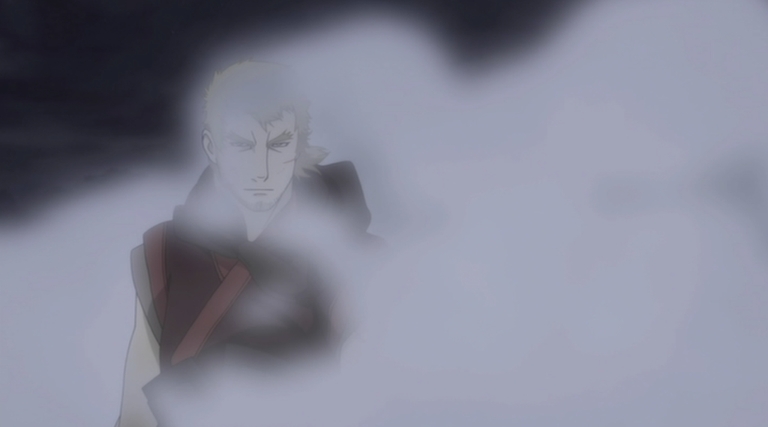
This makes him terrifying because his motivations are pure. He doesn't care about the kid's blood or the elixir. He cares about finding the one swordsman who can match him. When he finally faces Nanashi in the snow, it's not good versus evil. It's two professionals acknowledging that only one can leave the field. The respect between them feels earned because both have spent the film demonstrating their skills rather than talking about them.
The other villains serve their purposes well enough. The Ming advisor plots and schemes. The Japanese lords betray each other. But Luo-Lang looms over everything as the inevitable collision course. His presence raises the stakes because you know he won't hesitate. He won't monologue. He'll just cut. His character design helps too. He looks like he walked out of a different era, blonde hair and foreign armor marking him as an outsider who doesn't belong in this land but is too dangerous to remove.
When the Music Stops
Naoki Sato's soundtrack uses taiko drums and orchestral swells during the big moments, but the smartest choice happens during the final duel. The music drops out. Completely. You hear the wind. The snow hitting the ground. The scrape of blades and the heavy breathing of two exhausted men trying to kill each other.
That silence does more than any dramatic score could. It forces you to focus on the physical reality of the fight. Every step crunches in the snow. Every parry rings out sharp. When the music stops, the animation has to carry the full emotional weight. And it does. The clash becomes almost meditative. Two men trying to find the perfect angle to end the other's life while the world holds its breath.
The voice acting supports this minimalism. Tomoya Nagase plays Nanashi with a rough, tired voice that sounds nothing like the usual pretty-boy samurai. He sounds like a smoker who's been walking for weeks. It fits the character perfectly. You don't need internal monologues explaining his guilt. You hear it in every grunt and sigh. The casting was deliberate. Ando picked Nagase specifically because he didn't sound like a traditional hero, adding that layer of estrangement to the nameless wanderer.
The Background Art Is Disappearing
The watercolor backgrounds in this film represent a dying art form. Modern anime uses digital gradients and photo-bashed textures. Sword of the Stranger has hand-painted environments that look like they came from a museum scroll. The trees have individual brush strokes. The snow doesn't just fall, it accumulates on branches with proper weight.
When Nanashi walks through a forest, every leaf has texture. The temples look weathered by actual time, not just painted brown to look old. This environmental detail grounds the violence. You believe people live and die in this mud because the artists took the time to show you the mud. The colors shift with the weather, from the warm browns of autumn to the brutal white of the final snowy confrontation. That final whiteout isn't just pretty. It functions as a blank canvas that strips away all distractions until only the two swordsmen remain.
Why Being Predictable Isnt a Weakness
Yeah, the story is predictable. Kid needs protection. Bad guys want him for magic reasons. Ronin protects him. You know where this goes from minute ten. But complaining about that misses the point entirely. This isn't a mystery box show demanding theory crafting. It's a straightforward action film that executes its simple premise with such technical perfection that the predictability becomes comfort food.
The film doesn't waste time with twist reveals or double-crosses that come out of nowhere. The Ming want the kid for their ritual. The Japanese want to stop them or use the kid themselves. Nanashi wants to be left alone but can't ignore a child in danger. These clear motivations let the action breathe. You always know why people are fighting, so you can focus on how they fight.
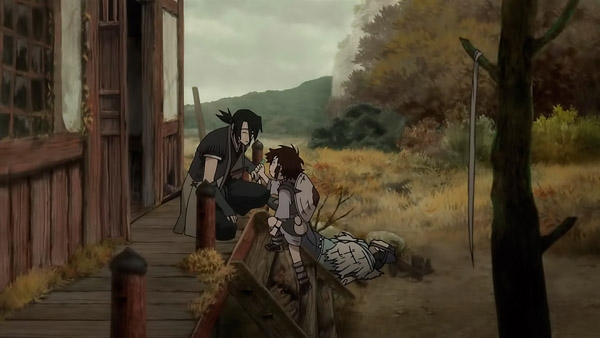
The historical setting helps ground everything. The Sengoku period was a mess of warlords and foreign influence. Adding the Ming Dynasty's immortality quest fits right into that chaos without needing to rewrite history. The film shows the dirt and poverty of the era. Characters look unwashed. Their clothes are worn. When it rains, they get wet and miserable. This isn't romanticized feudal Japan with cherry blossoms everywhere. It's mud and blood and snow.
The Opening Chase Sets the Tone
The first ten minutes waste nothing. Kotaro runs. The Ming chase. Tobimaru gets hurt. No exposition about who these people are or why the temple burned. You learn by watching. The monks fight back but die anyway. Kotaro makes hard choices about leaving people behind. By the time he meets Nanashi, you understand this kid has been surviving on instincts for years.
That efficiency carries through the whole film. Every scene either develops character or advances the threat. There's no filler episode where they visit a hot spring or get sidetracked by bandits who don't matter. Even the quiet moments serve the action by lowering your heart rate before the next spike. The pacing understands that you need to breathe between bursts of violence or the violence becomes meaningless noise.
The Release That Got Buried
The movie bombed in theaters. Not because it was bad, but because Bandai Visual USA shut down right when it hit American screens. Most fans didn't see it until the DVD release. Some fans discussed how they only discovered it years later through word of mouth. That limited exposure means it never got the mainstream recognition of other 2007 hits, which is criminal considering it outperforms most modern action anime in terms of raw animation quality.
You can draw a straight line from this film to the fight choreography in later Bones productions and even to shows like Demon Slayer, though none have matched the physical weight on display here. Modern anime relies too heavily on CG crowds and particle effects. A detailed breakdown shows exactly how the hand-drawn approach creates impact that digital tools still struggle to replicate. Director Masahiro Ando aimed for historical authenticity rather than romanticism, wanting to convey the world of the Middle Ages, the way of living and the way of dying.
Every time someone claims anime action peaked in the 90s or that modern digital tools are always better, point them to this film. The sword of the stranger anime movie analysis community keeps circling back to it because nothing else has topped that final duel. It's not just nostalgia. It's proof of what happens when you give talented artists time and budget to create something physical and real.
If you care about action animation, you need to see this movie. Not just as a historical curiosity, but as a masterclass in what the medium can do when talented artists are given time and resources. The story won't surprise you, but the way the swords feel might. It's brutal, beautiful, and over too fast, just like a real cut from a katana.
Sword of the Stranger doesn't need a sequel or a remake. It stands alone as a complete thought. A perfect 103-minute distillation of why we watch samurai films in the first place. Two men. Sharp steel. Snow falling. Everything else is just noise.