
The terror in resonance sphinx conspiracy isn't about blowing up Tokyo for fun. Nine and Twelve steal weapons-grade plutonium and set off explosives across the city but they never kill a single civilian, which should tell you right away this isn't standard terrorist behavior. They're called Sphinx, they wear masks, they leave cryptic riddles, and the news calls them monsters. But if you pay attention to the details instead of the panic, these two are whistleblowers with explosives, not mass murderers, and the anime makes this distinction clear from the first episode.
They were kids in a lab called the Athena Project. The Japanese government scooped up unwanted orphans and pumped them full of experimental drugs to manufacture genius weapons. Most of the children died from the side effects. Nine, Twelve, and a girl named Five were the only survivors when the facility burned down fifteen years ago, though that fire wasn't an accident, it was their escape plan gone wrong. The drugs gave them hyper-intelligence but also terminal brain deterioration. Five is already coughing up blood and losing her mind when she appears, and Nine doesn't have long either. The whole anime is them forcing the world to look at what was done to them before their bodies give out, and they don't care if they die as long as the truth comes out first.
Shibazaki figures this out eventually. He's the detective they keep taunting with Oedipus riddles, and he's the only cop smart enough to realize Sphinx wants to be caught, but only if the exposure happens simultaneously. They're not running from him, they're leading him toward the politicians who buried the project.
The Athena Project Created Living Weapons
The conspiracy starts years before the anime opens. A secret Japanese program funded partially by American intelligence agencies decided to manufacture child prodigies through chemical and psychological torture. They didn't teach these kids math and science, they injected them with substances that rewired their brains and subjected them to isolation and stress tests that killed most subjects. The children didn't have names, only numbers tattooed on them. Nine, Twelve, and Five were among dozens who entered the facility, and they might be the only ones who got out alive when Twelve set the fire that burned it down.
These drugs didn't just make them smart, they created physical dependencies and neurological damage that destroys the body. Five is working for the US government when she enters the story, but she's dying fast, suffering from seizures and memory loss. Nine hides his symptoms better but he's tracking his own deterioration carefully. This isn't backstory for sympathy points, it's the entire engine of the plot. They know they're dead men walking, so they decide to use their remaining time to destroy the system that manufactured them.
They steal a prototype nuclear bomb not to level Shibuya or the Diet building, but to create a high-altitude electromagnetic pulse. That specific choice tells you everything about their real goals. They want to shut down Tokyo's power grid, cause controlled chaos, and force every television station to broadcast the evidence Shibazaki uncovers. They rig buildings to explode but always set off fire alarms first, they hack traffic systems to clear the streets, and they specifically target infrastructure rather than people. When they have the chance to kill detectives or politicians, they let them live. This isn't incompetence, it's a strict ethical code that separates them from actual terrorists.
Riddles Meant for One Detective
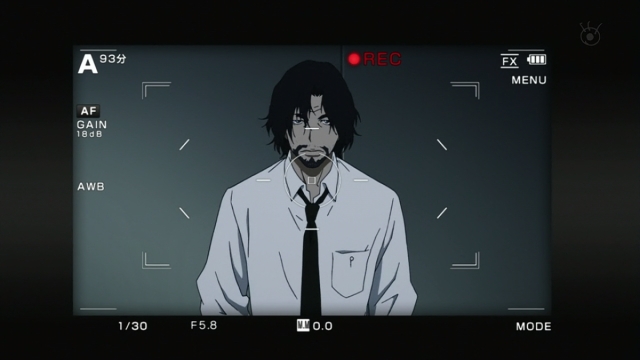
Sphinx doesn't communicate with the police through normal channels. They upload videos wearing theatrical masks and speak in riddles pulled directly from the Oedipus myth cycle. Most cops think it's pretentious terrorist theater designed to mock law enforcement, but the riddles are coded specifically for Kenjirou Shibazaki. They know his history, they know he was demoted to the archives division fifteen years ago for investigating a politician too aggressively, and they know he's the only one with the classical education and stubbornness to solve the puzzles.
The riddles reference the Sphinx from Greek mythology who asked travelers questions before letting them pass into Thebes. In the original myth, Oedipus answers the riddle correctly and destroys the monster, freeing the city. Nine and Twelve are casting themselves as the Sphinx, the monstrous guardian hiding the truth, and they're actively begging for an Oedipus to come defeat them. That's Shibazaki. They want him to "kill" them by exposing the conspiracy, which will simultaneously destroy the "father" figure, the Japanese government that created them and tried to burn them alive.
Shibazaki starts slow but he connects the dots between the bombings and the plutonium theft from six months prior. He realizes the boys aren't trying to kill him or his team, they're leaving a breadcrumb trail toward the Athena Project files that were buried by corrupt officials. When he solves the riddle about the train station bomb, Nine smiles. He finally has an opponent worth playing against.
How Five Complicates the Terror in Resonance Sphinx Conspiracy
Just when Shibazaki starts understanding Nine and Twelve's pattern, Five drops into Tokyo and wrecks the clear moral lines the anime established. She's the third survivor from the facility, but she didn't escape with the boys during the fire. She got extracted through different channels and ended up working for American intelligence as a deniable asset. Her official job is to recover the stolen nuclear material and eliminate Sphinx, but her personal mission is beating Nine in a game of wits before her brain finishes deteriorating.
Five starts impersonating Sphinx publicly. She carries out attacks using their name and imagery but she doesn't share their refusal to kill. She bombs Haneda Airport, manipulates air traffic control to put civilian lives at risk, takes hostages, and alters traffic lights to cause accidents. This contrast is crucial because it shows the difference between the real Sphinx and the government's version of terrorism. Nine and Twelve refuse to kill even when it would make their plans easier. Five kills casually and laughs about it.
Her presence also reveals the international scope of the cover-up. The US government funded the Athena Project alongside Japanese officials, and they want the evidence destroyed before it causes a diplomatic incident that embarrasses both countries. Five is bitter that Nine and Twelve left her behind in the facility fire, and she views Lisa, the boys' civilian accomplice, as a weakness to exploit. She kidnaps Lisa, straps a bomb vest to her, and forces Nine into a confrontation at a ferris wheel that ends with Five choosing to die in an explosion rather than lose to him.

Lisa Mishima and the Question of Complicity
Lisa is a high school girl with an abusive mother who gets caught up with Sphinx after Twelve pulls her from the first bombing site. She starts as a liability who can't do anything right, then becomes their driver and lookout, and eventually evolves into the emotional center of the trio. Critics online often call her useless, but she serves a specific purpose in the conspiracy. She represents the civilian who chooses to see the humanity in the terrorists rather than the label.
She isn't radicalized in the traditional sense. She doesn't hate the government, she doesn't care about the Athena Project, and she isn't seeking revenge. She just hates her life at home where her mother is mentally ill and abusive, and she recognizes that Nine and Twelve treat her with more kindness than her own family. When Five kidnaps her and straps explosives to her chest, Lisa doesn't beg for her life or betray the boys. She offers to die if it helps them expose the truth, showing she understands their mission better than the police do.
That moment changes Twelve's calculations completely. He goes to save her even though it's obviously a trap, which leads directly to the location of the real bomb being compromised and forces them to accelerate their timeline. Lisa's presence softens Twelve's nihilism and reminds him that he isn't just a weapon, which makes his eventual death hit harder.
The Political Machine Covering Everything Up
The real villains aren't the teenagers with bombs, they're the middle-aged politicians who signed off on human experimentation and buried the evidence. Shibazaki discovers that a powerful Diet member orchestrated the original cover-up of the Athena Project and has been protecting the officials responsible for decades. This same politician arranged for Shibazaki's demotion fifteen years ago when the detective got too close to investigating a secretary's suspicious suicide, which was actually a murder to hide the project's funding.
The conspiracy runs through the police department too. Kurahashi and other senior detectives know about Shibazaki's past and quietly help him bypass roadblocks because they know he was right the first time. The system protects itself by labeling the truth as terrorism and using Five to muddy the waters. When Sphinx uploads videos exposing the experiments, the government scrambles to cut the feeds and labels the content as fake news or the ramblings of madmen. They'd rather let Tokyo panic about nuclear terrorism than admit they tortured children to death in a basement lab.
Shibazaki eventually confronts the Diet member directly, laying out the evidence that connects the Athena Project to the current bombings. The politician laughs him off, confident that the system will protect him, and for a while he's right. The police are ordered to arrest Sphinx by any means necessary, and the US sends special forces to eliminate the boys before they can talk.
VON and the Final Exposure
The word "VON" appears at every crime scene in red paint. It means hope in Icelandic, a reference to an album by Sigur Rós that Nine loves, and it's also the title of the final episode. The boys detonate their stolen bomb in the stratosphere, creating an EMP that blacks out all of Japan's electronic infrastructure. In the darkness and confusion, Shibazaki holds a press conference and dumps every document proving the Athena Project existed, naming names and detailing the experiments while the cameras run on backup generators.
The explosion creates an artificial aurora borealis visible from the ground. It's beautiful and destructive, like the boys themselves, and it forces the entire country to look up from their phones and pay attention. The power outage prevents the government from censoring the broadcast, and the conspiracy is exposed globally within hours.
But the victory costs everything. US special forces assassinate Twelve immediately after the detonation, shooting him in the head while he sits with Lisa on a park bench. Nine manages to broadcast a final message before succumbing to his illness in an abandoned ferris wheel car, asking Shibazaki to remember that they lived and weren't just numbers. Five is already dead by suicide. The three weapons are all destroyed, but the truth is out and can't be put back in the box.
The Aftermath and What It Means
One year later, the Diet member and his accomplices are in prison facing trials. The terror in resonance sphinx conspiracy worked exactly as planned, even if Nine and Twelve didn't live to see the aftermath. Shibazaki visits their unmarked graves with Lisa, who explains the Icelandic meaning of VON to him, completing the circle of communication that started with the riddles.
People still argue whether Nine and Twelve were terrorists or heroes, but that binary misses the point entirely. They were victims who chose to become martyrs because it was the only way to force accountability on a system that considered them disposable. The anime isn't glorifying bombing campaigns or saying terrorism is justified if you have a sad backstory. It's showing that when governments create monsters in secret and throw away the evidence, those monsters might come back to burn the house down just to be seen and remembered.
The Sphinx didn't want to destroy Thebes. It wanted to be acknowledged before it died, and it took Shibazaki to finally answer the riddle correctly.