
Most sports anime completely miss the point of why we watch sports in the first place. They hand protagonists godlike abilities right out the gate and call it "talent," which kills the tension before the opening credits finish rolling. The best underdog sports anime series recommendations aren't about characters who were born special. They're about losers, rejects, and nobodies who get punched in the face by reality and decide to stand up anyway.
You've seen the type. The main character starts so weak they can't even serve a volleyball without tripping over their own feet, or they're getting stuffed into lockers by bullies before discovering boxing. That's where the good stuff lives. Not in the "genius who just needs to try harder" stories, but in the "guy who has no business being here but won't leave" narratives that make your chest hurt when they finally win one.
I've watched pretty much everything this genre has to offer from the 80s classics to whatever dropped last season. Most of it is forgettable power fantasy garbage where the outcome feels predetermined. But when underdog anime gets it right, it hits harder than almost any other medium because sports have clear rules and clear losers. You can't talk your way out of a 20-point deficit, you have to work.
What Makes Underdog Sports Anime Hit Different
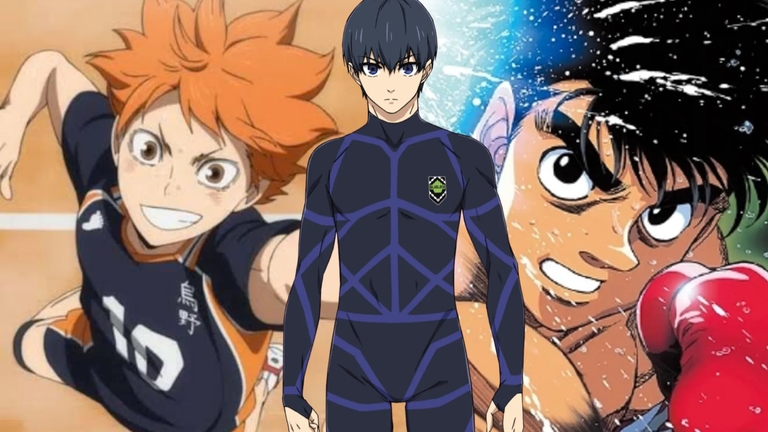
The difference between a solid underdog story and a boring one comes down to stakes that feel real. When Ippo Makunouchi steps into the ring in Hajime no Ippo, he's not some chosen one with a legendary bloodline. He's a kid who got beat up by bullies and started boxing to feel less pathetic. Every punch he throws comes from that place of insecurity and desperation that really makes you care if he wins or loses.
Haikyuu!! gets this too. Shoyo Hinata isn't magically compensating for his height with "jump power level 9000" or some nonsense. He's just a short guy who jumps a lot and gets blocked constantly because biology is real. When he finally spikes past a blocker who's a foot taller, it matters because the show spent twenty episodes showing him getting stuffed and humiliated first.
Real underdog anime doesn't pull punches with failure. The teams lose tournaments. The boxers get knocked out. The runners vomit on the side of the road because they're not really built for distance running yet. That suffering creates the payoff. If your protagonist is winning every match in episode one, you're not watching an underdog story, you're watching a power fantasy with a sports skin stretched over it.
The Heavy Hitters Everyone Mentions
You can't talk about this genre without bowing to Hajime no Ippo. It's been running since forever and for good reason. Ippo starts as a literal punching bag for bullies, all hunched shoulders and nervous stuttering, and transforms into a terrifying pressure fighter through nothing but repetitive training montages and getting his ass kicked in sparring sessions. The anime doesn't cheat by making him a natural genius. He's got heart and endurance and that's it. When he wins the Japanese featherweight title, it feels earned because you watched him lose blood and dignity for thirty episodes straight, taking on monsters like Mashiba with his brutal flicker jabs or Sendo with his raw smash power, each fight leaving Ippo hospitalized and learning.
Haikyuu!! sits right next to it on the podium. Karasuno High School is a washed-up program that used to be good back when dinosaurs roamed the earth, and now they're scraping by against schools with actual budgets and tall players. Hinata and Kageyama have to rebuild this dumpster fire of a team from the ground up, recruiting kids who'd rather be playing video games and convincing them to run suicides until they puke. The show understands that teamwork isn't just a buzzword, it's the only way short kids can beat giants, and when they finally take down Shiratorizawa's Ushijima after losing to him for years, you feel every blister and bruise that got them there.
Slam Dunk is the grandfather of modern underdog basketball stories. Sakuragi Hanamichi joins the team to impress a girl and ends up really caring about the sport, but he starts as a complete novice who can't even dribble properly. The series spends dozens of episodes on basic fundamentals while rival teams are throwing down impossible dunks. It respects the sport enough to show that raw athleticism means nothing if you don't understand spacing and defense, and watching Sakuragi learn to box out and set screens after wanting to be the star shooter is painfully honest about how hard basketball really is.
Hidden Gems and the Best Underdog Sports Anime Series Recommendations
Giant Killing is the real deal for soccer fans who can't stand Captain Tsubasa's physics-defying shots. It follows East Tokyo United, a professional club that's been circling the drain for years, and their new manager Tatsumi who has to take this collection of has-beens and never-weres and somehow beat teams with actual money and foreign superstars. What makes it special is that it spends as much time on the business side of sports as the games themselves. You see the PR department panicking about ticket sales and the chairman freaking out about relegation. The voice acting uses real native speakers for the international players, so when a Dutch striker talks, he sounds Dutch instead of like a Japanese guy reading phonetically. I saw some redditors talking about how this multifaceted storytelling amplifies the impact when the team finally wins.
Salaryman's Club is criminally slept on. It's about badminton, which already puts most viewers to sleep, but it's really about Mikoto Shiratori, a former child prodigy who choked so hard in a tournament that he quit the sport entirely and became a corporate drone. Now he's working at a beverage company that has a company badminton team full of other broken people. The show understands that sometimes the scariest opponent isn't across the net, it's the voice in your head telling you that you've already failed once so why bother trying again. This show gets mentioned alongside other underdog wins where characters reclaim glory after falling from grace.
Run with the Wind focuses on the Hakone Ekiden, a real college relay marathon that's a huge deal in Japan but nobody else knows about it. Haiji Kiyose assembles the most random group of misfits living in his dorm, most of whom can't run a mile without wheezing, and decides they're going to compete in one of the most prestigious races in the country. The genius move here is that most of these guys don't even like running at first. They're just doing it because Haiji is weirdly persuasive. Watching a chain-smoking literature student learn that his lungs can really do something other than process nicotine is weirdly inspiring, and the show makes you feel every blistered foot and cramped muscle as these office workers turn into actual athletes.
Yowamushi Pedal starts with Sakamichi Onoda, an otaku who rides his mommy bike sixty miles round trip to Akihabara to buy anime merchandise because he can't afford train fare. He's got legs of steel from all that cycling but zero technique, so when the bike racing club recruits him, he's a complete mess who doesn't even know how to shift gears properly. The show milks the "weak nerd gets strong" trope for everything it's worth, but it works because Onoda never stops being a dork who sings anime songs while climbing mountains, and his first race against Imaizumi is a perfect example of heart beating raw talent until he collapses from exhaustion.
Extreme Sports and Niche Competitions
Not all underdog stories happen on courts and fields. Air Gear takes inline skating and adds rocket boosters, creating a sport called "Air Treck" where kids fly through the city fighting gang battles in the sky. Itsuki "Ikki" Minami starts as a street punk who gets his ass kicked by a real Storm Rider team and has to build his own squad from scratch. It's completely absurd but the underdog structure remains solid because Ikki's team literally has no money and uses busted equipment while the elite teams have custom gear worth more than houses, forcing them to win through creativity and guts rather than technology.
SK8 The Infinity follows Reki, a high schooler obsessed with skateboarding who meets Langa, a transfer student from Canada who's really a pro snowboarder. They get dragged into "S," an underground skate race in Okinawa that's dangerous and illegal and full of psychopaths with custom boards. Reki isn't the chosen one here, he's just a guy who loves skating but has hit his skill ceiling, watching Langa surpass him immediately due to transferable skills from snowboarding. The jealousy and insecurity he feels while trying to catch up to his own friend feels painfully real, and when he finally builds his own board from scrap metal to compete against carbon fiber monstrosities, it embodies that DIY underdog spirit.
Prince of Stride: Alternative tries to make parkour relay racing a thing, and somehow it works. Honan Academy's stride club is a disaster when the story starts, missing members and suffering from internal drama. Nana Sakurai joins as the manager trying to hold everything together while the actual runners learn to trust each other enough to pull off dangerous parkour exchanges without breaking their necks. It's pure adrenaline anime that understands you need character stakes to make the jumping around matter, and watching them lose their first race because they haven't practiced the relay handoffs enough is a refreshingly honest take on how hard this fictional sport would actually be.
The Psychology of Losing Before You Win
The best underdog sports anime series recommendations always understand that losing has to hurt. Ace of Diamond puts Sawamura Eijun into Seidou High School, a baseball powerhouse filled with monsters who've been playing since they could walk. Sawamura thinks he's hot stuff coming from his rural middle school where he was the ace, but he quickly learns he's the worst pitcher on the team by a mile. The show makes him grind for what feels like forever, cleaning the field and throwing until his arm screams, before he even gets a chance to pitch in a real game. When he finally takes the mound, you're as nervous as he is because you've watched him fail so many times, walking batters and giving up home runs in practice until he develops that moving fastball that saves his career.
Kuroko's Basketball walks a fine line because the Generation of Miracles are basically superheroes, but Kuroko himself is the definition of an underdog. He's physically weak, has no presence, and can't shoot. His entire value comes from passing and misdirection, which sounds useless on paper. Watching him and Kagami try to take down his former teammates who have actual superpowers requires strategy and teamwork instead of brute force, which keeps it grounded enough to work, especially when Seirin loses to Aomine and has to completely rethink their approach to basketball.
Megalo Box updates Ashita no Joe for the cyberpunk age. Joe is a junkyard dog fighter taking on opponents with advanced mechanical gear while he fights "gearless" with raw technique. It's a classic David and Goliath setup where every hit Joe takes could be his last because he's literally fighting against metal fists. The aesthetic is gritty and the wins feel desperate rather than triumphant, which fits the underdog vibe perfectly, and his rivalry with Yuri forces him to confront that fighting without gear isn't just a gimmick, it's a death wish against the champion.
Why Power Fantasies Ruin the Genre
There's a plague of sports anime where the protagonist is secretly a genius or has some hidden bloodline that makes them special. Blue Lock gets mentioned as an underdog story sometimes but that's missing the point. Isagi starts as a nobody but the entire premise is that he's competing in a battle royale to become the best striker in Japan, and he quickly reveals himself to be a tactical genius who was just held back by his team. That's not an underdog, that's a diamond in the rough who gets polished immediately, unlocking new weapons every episode until he becomes exactly the kind of overpowered striker the show claims to be critiquing.
Eyeshield 21 straddles the line. Sena Kobayakawa has natural speed from years of running errands for bullies, which is a cheat code for American football. But the show balances it by making him a complete coward who has to learn courage, and by putting him against teams that are physically larger and more experienced. The Devil Bats are constantly outmatched in size and skill, winning through trick plays and desperation rather than raw talent. It works because even with Sena's speed, they lose games and have to claw their way up from the bottom of the rankings, getting beaten by the White Knights early on and having to rebuild their entire offensive line from scratch.
This article breaks down how the best shows earn their wins through legitimate strategy rather than asspull powerups, which is exactly what separates garbage tier sports anime from the classics. You can usually tell within three episodes if a sports anime is going to respect the underdog formula or if it's going to fall into power fantasy nonsense. If the main character is already dominating veterans in episode one, drop it. The good ones make you wait. They make you suffer through training arcs and crushing defeats until you forget what winning even looks like, so when it finally happens, you feel it in your gut.
The Real Ones Worth Your Time
If you want something completely different from the usual high school setting, Uma Musume: Pretty Derby adapts real Japanese racehorses into anime girls and somehow creates one of the most accurate portrayals of athletic injury and recovery ever animated. These horse girls deal with shattered legs, psychological blocks, and the terror of being replaced by younger talent. It's weird as hell but the sports mechanics are solid, and watching them cry over tendon injuries while historical race commentary plays in the background creates a bizarre emotional resonance that shouldn't work but absolutely does.
Hungry Heart: Wild Striker comes from the creator of Captain Tsubasa but drops the super moves for something way more grounded. Kyosuke Kano is the younger brother of a famous soccer star but he's got anger issues and a chip on his shoulder that keeps getting him kicked off teams. He starts playing for a garbage high school team full of delinquents and has to learn that talent means nothing if you're a jerk who can't pass, and the show isn't afraid to show him getting red carded for fighting or missing crucial shots because he's too busy trying to solo the entire opposing team.
Ping Pong the Animation looks ugly on purpose with its sketchy art style, following Peco and Smile as they deal with the fact that one has too much talent and doesn't try, while the other tries too hard but lacks the spark. It's less about winning championships and more about finding your identity through competition, which hits different from standard tournament arcs, especially when Peco gets fat and has to relearn everything from scratch while Smile has to learn that winning isn't everything if you hate yourself.
Stop watching sports anime where the main character is special. Stop watching shows where they unlock a new form or technique mid-match to save the day. The best underdog sports anime series recommendations are the ones where victory comes from showing up every day and getting slightly less terrible than you were yesterday. They're about teams that have no business being in the same building as their opponents somehow stealing wins through preparation and heart.
Hajime no Ippo will always be the king of this hill because it understands that boxing isn't about being the strongest, it's about being the one who can take the most punishment without falling down. Haikyuu!! gets the silver medal for proving that short guys can fly if they work hard enough. Everything else on this list fills specific niches, whether you want corporate badminton drama or horse girls crying about tendon injuries.
The genre only works when the creators remember that sports are inherently unfair. Some people are taller, richer, or more naturally gifted. Underdog stories aren't about overcoming that gap through destiny or magic, they're about closing it through work and pain and refusing to quit even when quitting makes perfect sense. That's why these shows hit when they do. They remind you that being the loser doesn't mean you have to stay one.