
The Detective Is Already Dead anime review threads are everywhere right now and most of them are angry. People watched the first episode and thought they'd found the next big thing, then spent eleven more episodes wondering what went wrong. This show tricks you. It opens with a double-length episode featuring gorgeous animation, a plane hijacking, and this white-haired detective girl who instantly becomes your favorite character. Then it jumps around in time, forgets how to write mysteries, and expects you to care about side characters who show up for three episodes before disappearing forever. If you're looking for a straightforward detective show, you'll hate this. If you want a messy action-rom-com with occasional brilliant moments, you might tolerate it.
The First Episode Trap
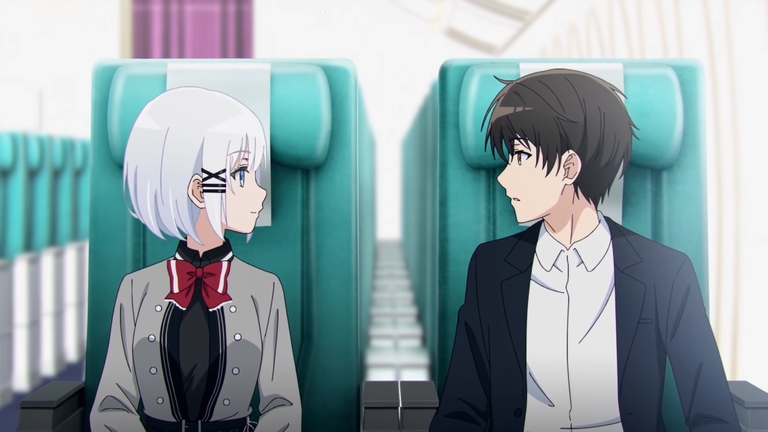
The first episode hits different. It covers roughly seventy percent of the first light novel volume and throws everything at the screen immediately. You get Kimihiko meeting Siesta on a hijacked plane, their bond forming in real-time, and some genuine sakuga during the fight scenes. Studio ENGI clearly poured budget into this opener because they knew it needed to hook people. The animation flows smoothly when Siesta kicks the hijacker, the lighting in the cabin looks cinematic, and the chemistry between the leads feels natural rather than forced. The suitcase MacGuffin, the specific way Siesta deduces the hijacker's identity through observation of his shoes and habits, the way Kimihiko's bad luck curse is established... all of this works. The episode feels like a movie.
But here's the problem. After that strong start, the adaptation jumps to volume two and tries to compress entire character arcs into twelve episodes. The pacing becomes a disaster. What felt like a tight, focused mystery-romance suddenly turns into a harem setup with girls who inherit Siesta's organs. Yes, really. One girl gets her heart, another her eye, and the show wants you to believe this creates meaningful connections to the dead protagonist. The structure falls apart because the anime adapts the weakest material first. Apparently the author admitted volume one was their shakiest work, yet the anime spent most of its runtime there before rushing through the better stuff. Episode two starts and you're suddenly in a high school with a new girl who has Siesta's heart, and the quality drops immediately. The transition is jarring enough to give you whiplash.
Siesta Carries The Entire Production
Let's be honest about why anyone watched past episode three. Siesta is that character. She has the white hair, the blue eyes, the detective coat, and enough confidence to carry every scene she's in. The anime knows this too, which is why it keeps flashing back to her even after she's supposedly dead. Her design hits every mark for the legendary detective archetype while adding enough anime flair to make her memorable. Her catchphrases, her habit of calling Kimihiko her assistant rather than her partner, the way she sleeps constantly because her name means nap... these character quirks feel organic rather than forced.

The scene where she breaks into his house and redecorates his entire room establishes their bond better than any exposition could. The show keeps calling her the Ace Detective but rarely shows her actually detecting. Instead she pulls solutions out of thin air while looking cool doing it. Some viewers call this bad writing, others call it charming. I call it frustrating because you can see the potential for a great character buried under light novel tropes. When she does deduce things, it's through methods that aren't shown to the audience beforehand, which breaks the mystery genre's basic rules. Still, her voice actor delivers lines with this playful arrogance that makes you forgive the plot holes. She's the reason the MAL scores stay as high as they are despite the criticism.
Why The Mystery Elements Fail
This thing is marketed as a mystery anime but it fails at the basics. Real detective fiction shows you the clues and lets you solve alongside the characters. Here, Siesta just knows things because the plot needs her to know them. The villains from SPES show up with bio-engineered powers that break the rules of the setting, then disappear without proper resolution. You'll watch Kimihiko get cornered by some enhanced human, then Siesta wins through means that aren't established until after the fight ends. The SPES organization wants to create artificial humans or something, but their motivations change every episode. One villain wants revenge, another wants world domination, a third just wants to fight Siesta. There's no coherence to their threat.
Reddit threads keep pointing out that the story structure assumes you've read the light novels. It introduces the Twelve Tuners concept, explains that Siesta was the Ace Tuner, then drops twelve different character titles like assassin and inventory without developing them. The anime tries to set up a complex world of superhumans fighting aliens, but it can't even establish consistent rules for how Kimihiko's bad luck works. Critics on MAL specifically mention the lack of engaging mysteries as the primary failure point. The bio-engineered monsters they create look cool but pose no real danger because Siesta always has a hidden weapon or technique that counters them specifically.
The Light Novel Source Problems
People keep asking if the light novels fix the anime's problems. They don't. They make them weirder. Volume three introduces android Siesta and pushes the story into sci-fi territory that abandons the grounded premise entirely. Volume four focuses on reviving Siesta through time travel or parallel dimensions or some nonsense that involves an Oracle Tuner who can see futures. Kimihiko travels to London with Natsunagi, who inherited Siesta's heart, to find evidence against Seed, the alien antagonist. The Twelve Tuners include an Ace Detective, an Assassin, an Inventory, an Information Broker, a Phantom Thief, and a Magician. The anime mentions these titles in passing but never explains what they do or how they relate to the alien threat.
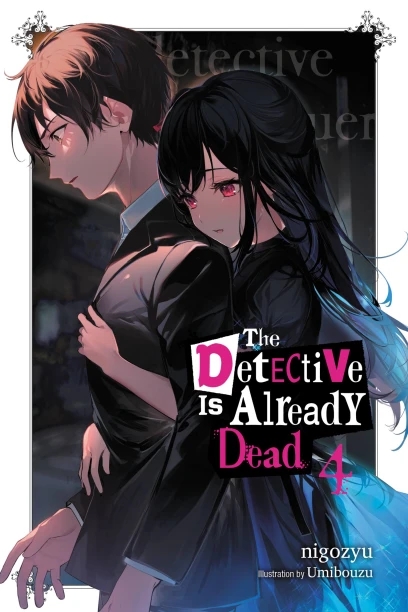
Apparently the author got carried away with worldbuilding and forgot the simple appeal of a detective and her sidekick solving cases. The anime only covered volumes one and two, which means a second season would adapt this increasingly convoluted material. Volume four apparently explains that Oracle can see multiple futures and helps Kimihiko find a timeline where Siesta lives, which breaks the stakes entirely. The review of volume four mentions how the series jumps the shark with these developments, though fans of the characters keep reading anyway. If you thought the first season was messy, wait until they explain how Siesta comes back to life through a heart transplant recipient's body.
When The Rom-Com Actually Works
For all its flaws, the show works when it stops pretending to be Sherlock Holmes and leans into the romantic comedy. Kimihiko playing the straight man to Siesta's weird demands creates solid moments. Their living situation, where she invades his house and wears his clothes, hits those domestic comedy beats that light novels do well. There's a scene at a school festival where she forces him into a cosplay situation that has nothing to do with the plot but everything to do with their relationship. The scene where Siesta forces Kimihiko to buy her a drink, the way she steals his bed and forces him to sleep on the floor, her jealousy when other girls look at him... these moments land because the voice actors sell the chemistry.
The three-year time gap where Kimihiko grows from a scared kid to someone hunting SPES alone shows genuine character growth. He stops being baggage and starts acting like someone who learned from the best. Some reviewers point out that his development in the present-day timeline saves the show from being completely worthless. Arata Nagai plays Kimihiko's exhaustion perfectly, while Saki Miyashita makes Siesta sound playful but dangerous. These moments make you wish the show committed to being a character study instead of juggling genres it can't handle.
The Animation Quality Rollercoaster
Studio ENGI gave us Uzaki-chan before this, so expectations were mixed. The first episode has legitimate high-frame animation during the plane fight, with fluid movement and great lighting. Then episode four hits and you can see the budget evaporating. Characters go off-model during dialogue scenes and action becomes still frames with speed lines. It's jarring how quickly the quality drops after the premiere. Episode three has a car chase that looks like it was animated by a different studio entirely. Episode six features a fight in a warehouse where the characters slide across the screen with minimal frames.
Compare this to the airplane fight where every punch has weight and impact. The inconsistency suggests production issues behind the scenes, possibly an inexperienced director handling the adaptation. The opening theme Koko de Ikiteru slaps though. Both the song and visuals are top tier, probably where most of the remaining budget went after episode one. The ending sequence also looks better than some entire episodes, which tells you everything about the production priorities. IMDB reviews mention the animation quality as the saving grace despite the story problems, though they note the inconsistency between episodes.
Side Characters Who Steal Organs
The supporting cast causes most of the tonal whiplash. Nagisa Natsunagi inherits Siesta's heart and acts as the new heroine, but she's written as a generic tsundere who can't compete with the original. Her characterization suffers because she's written as a tsundere who denies her feelings, but she also has Siesta's heart which supposedly makes her special. The show can't decide if she's her own person or just a vessel for Siesta's legacy. Yui Saikawa shows up as an idol who gets Siesta's eye, then contributes nothing to the plot except fan service moments. She exists purely for the idol fan demographic and contributes one action scene before becoming background decoration.
Charlotte Arisaka Anderson appears as Siesta's former partner, but her backstory gets rushed so fast you'll miss it if you blink. These characters represent the anime's biggest structural issue. It wants to be a harem where every girl has a piece of the dead protagonist inside them, which is creepy if you think about it for more than a second. The show asks you to invest in new characters while constantly reminding you that they're inferior copies of Siesta. It doesn't work. You end up waiting for flashbacks rather than caring about the present-day storyline.
Is The Second Season Worth Waiting For
They announced a second season after the Blu-ray sales did surprisingly well. It'll probably adapt volumes three through six, which means android Siesta, the London trip, and the resurrection plot. If you hated the first season's pacing issues, this sounds like nightmare fuel. The source material gets more convoluted as it goes, introducing time travel mechanics and alternate futures that contradict the established rules. The announcement came during a special event after the final episode aired. Fans were surprised because the reception seemed negative online, but Japanese Blu-ray sales and light novel boosts justified the continuation.
But if you liked Siesta enough to sit through anything, more content is coming. The novels have reached volume nine in Japan, so there's plenty of material. Just don't expect the mysteries to get better or the plot to make more sense. Expect more waifu bait, more organ inheritance drama, and more Siesta being perfect while everyone else flounders. If they adapt volumes three and four, expect London landmarks, more of Charlie's backstory, and the introduction of Bat as a training partner for the side characters. According to some fans, the second season might improve things if it adapts the stronger volumes, but that's a big if.
The Verdict On Whether You Should Watch
The Detective Is Already Dead anime review scores are all over the place because the show itself doesn't know what it wants to be. It isn't a good detective show. It's a decent romantic comedy buried under bad pacing. It's a character study of a dead girl that refuses to stay dead. If you watch it, go in expecting a mess. Enjoy Siesta's scenes, tolerate the harem elements, and don't try to solve the mysteries because the solutions don't exist until the writer needs them.
It's worth watching for episode one alone, but maybe stop there unless you really need to see where the train wreck ends. The animation has highs that justify the price of admission for sakuga enthusiasts, and Siesta remains a top-tier character design even when the writing fails her. Just don't expect coherence. Expect a show that started as one thing, became another thing, and ended as a third thing nobody asked for.