
People keep saying you need a study guide to understand The Garden of Sinners Chapter 1 Thanatos Overlooking View analysis. They're wrong and they probably watched it while checking their phone. This fifty minute movie drops you into September 1998 with zero hand holding, showing Shiki Ryougi eating strawberry ice cream in an empty apartment while schoolgirls throw themselves off an abandoned building. It doesn't care if you're confused. That's exactly how it should be.
Ufotable animated this back in 2007 and some viewers still think it's just a pretty opening act. It's not. This is the fifth story in the timeline but the first one Kinoko Nasu wrote, and it hits harder when you realize it's about watching people die from above while feeling nothing. The Fujou Building sits there like a rotting tooth in the city, and Kirie Fujou haunts it because she literally cannot leave her hospital bed. You get Shiki with her weird glowing eyes and her fake arm, Mikiya unconscious in a coma, and Touko smoking while talking about dolls and souls. If that sounds messy, good. It's supposed to feel like you're floating without direction until the knife comes out.
Most first time viewers complain about the pacing. They say nothing happens for twenty minutes except pretty backgrounds and vague talks. Those people missed the point. The whole movie is about looking down from so high that people look like ants. When you finally get why Kirie makes those girls jump, it clicks into place with a sick feeling. This isn't a mystery story. It's a study in being alone.
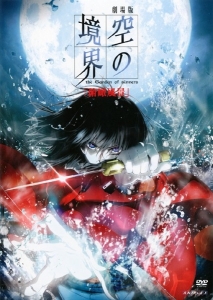
The Fujou Building Is A Character Not Just A Set Piece
Horror movies love abandoned buildings. They use them like props, pretty backdrops for jump scares. The Fujou Building is different. It's dying slowly, scheduled for demolition, filled with mold and stale water. The movie treats it like a living thing that's rotting from the inside out, which makes sense because Kirie Fujou is rotting in a hospital bed while her spirit walks the roof.
You see the building through Shiki's eyes when she enters. The walls are gray. The air feels heavy. Water drips from pipes that shouldn't work. It's not scary in the normal way. There's no monster jumping out. The fear comes from the emptiness, from realizing this place has been forgotten by everyone except the dead girl and the girls she's killing. According to the Type-Moon Wiki, this case takes place in Mifune City during the late nineties, and the building shows the economic bubble bursting, all that hope turned into decay.
Kirie picks this building because it's high enough to see everything but removed enough that nobody looks up. She floats above it since she can't fly. That's the difference Touko makes later. Flying means having a purpose. Floating means drifting without control. Kirie is stuck floating above this ruin, and she drags other girls into the same state until they fall. The building isn't just where this happens. It is what happens. It's the physical example of being stuck between life and death, floating in a broken body while your mind wanders somewhere cold.
When Shiki fights the ghosts on the roof, she's not just fighting spirits. She's fighting the building itself, the way it traps people in its pull. The art here uses 3D computer graphics that look old now, sure, but it works because everything feels slightly wrong, slightly fake. Like the building knows it's being animated and doesn't care. The water effects when it rains look thick and heavy, adding to the feeling that gravity is stronger here.
Why The Garden Of Sinners Chapter 1 Thanatos Overlooking View Analysis Usually Misses The Point
Most reviews of this movie get hung up on the confusion. They write long Reddit threads asking why Mikiya is in a coma, why Shiki cuts off her arm, what the deal is with the ice cream. They want everything explained right away. That's not how this works. The movie is intentionally out of order because memory works that way when you've been in a coma for two years, which is Shiki's whole situation.
Look at the setup. It opens with Shiki alone. Then it cuts to the suicides. Then back to Shiki eating ice cream with Mikiya like nothing is wrong. Then Mikiya is unconscious. The time jumps around because Shiki's grip on reality is slippery. She doesn't know what day it is half the time. She's recovering from having two personalities smashed into one body, and the movie shows that broken mental state.
People complain that Touko talks too much. They call her an explanation machine. But here's the thing: she explains things to Mikiya, not to us. She's talking about floating and flying and souls while smoking and fixing Shiki's arm. If you tune out during those talks, you miss that Touko is usually wrong or at least incomplete. She thinks she understands Kirie's motivation, but she doesn't feel it. Only Shiki understands it, and Shiki doesn't use words. She uses a knife.
The Wikipedia page confirms this is the fifth part in time order, but it was released first. That matters. Nasu wrote this after Tsukihime but before Fate, and he was still figuring out his style. The roughness shows. This isn't a polished product. It's a messy story about messy people told in a messy way, and pretending it should be straight forward ignores the whole point.
That Ice Cream Scene Matters More Than You Think
There's a scene where Mikiya brings Shiki strawberry Haagen-Dazs. She eats it slowly while staring at the wall. Some viewers skip past it to get to the ghost fighting. They're missing the character work. Shiki lives in a completely empty apartment. No TV, no books, no decoration. Just floor mats and silence. Mikiya brings the ice cream because he knows she won't feed herself right. She accepts it because she remembers, somewhere in her damaged brain, that she likes him.
The ice cream is red, the color of blood. That's not subtle. But it's also cold and sweet, which is the closest Shiki gets to feeling human. When she blushes at the end of the movie after Mikiya wakes up, it's because she's remembering that ice cream, that moment of normal before she had to cut off her arm and kill a ghost. It's the only time in the whole film where she looks comfortable, and it happens in the first five minutes. Everything after that is her losing that comfort.
Floating Versus Flying Is Not Just Philosophy Talk
Touko has a speech about the difference between falling, floating, and flying. It sounds like pretentious talk at first. It's not. It's the central mechanic of the entire plot. Kirie Fujou can send her spirit out. She leaves her body and wanders the sky. But she can't fly because she has no direction. She can only float, which means she's at the mercy of the wind and her own desperation.
The girls who jump off the building aren't just killing themselves. They're trying to fly. They think if they jump, they'll escape the pull of their lives. Kirie pushes them because she wants company in her floating hell. She finds girls who are already drifting, already disconnected from life, and she shows them the view from above. From up there, everything looks small and meaningless. The view makes suicide look logical.
Mikiya survives because he has a purpose. He has Shiki. That's why he doesn't fall when Kirie possesses him. He has weight, emotional gravity. The other girls were light enough to be blown away. This isn't complicated magic theory. It's basic character writing. When you have nothing holding you down, you float away. When you have something worth falling toward, you fly.
The Movie Forums review gets this wrong. They think the movie is saying suicide is selfish and weak. That's a bad reading. The movie is saying suicide happens when people lose their connection to the ground. It's not about strength. It's about whether you have something that keeps you from drifting.
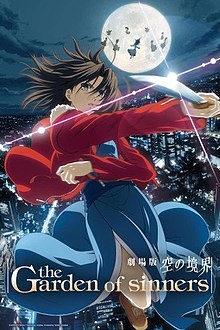
Kirie Fujou Is The Real Main Character Here
Shiki gets all the cool action. She cuts ghosts with her knife and looks badass in a kimono. But this is Kirie's story. She's the one with the arc. She starts as a lonely girl in a hospital bed, discovers she can send her spirit out, uses that power to get attention because she's dying and scared, and ends up killing herself because Shiki destroys her spirit form.
Her motivation is pure loneliness. She says it herself. She possessed those girls because she wanted someone to notice her. She didn't hate them. She wanted friends. That's heartbreaking. She's been in that bed so long that the only way she can interact with the world is by making other people join her in the sky. When Touko visits her in the hospital, Kirie admits she has nothing left. Her body is failing. Her spirit is broken. She walks to the roof and jumps because Shiki gave her back her body by destroying her soul, and she doesn't want it anymore.
The scene where she dies is quiet. No music. Just wind. She steps off the edge and that's it. The movie doesn't glorify it or condemn it. It just shows it. That's braver than most anime that deal with suicide. It doesn't offer easy answers or moral lessons. It just shows you a girl who couldn't fly, couldn't float safely, and decided falling was better than staying in that room.
Why Mikiya Survived When Others Didn't
Mikiya Kokutou falls into a coma because Kirie possesses him. She picks him specifically because he's different. He's kind to her when they meet on the stairs. She falls in love with him, or at least with the attention he gives her. But she can't kill him because he has too much connection to the living world. He has Shiki waiting for him. He has his sister Azaka. He has work to do.
This sets up the whole series dynamic. Mikiya is the anchor. He's the weight that keeps Shiki from floating away into her own violence. In this movie he's unconscious, but he's still the reason Shiki wins. She fights to get him back, not because she cares about the dead girls, but because Kirie took her friend. That's Shiki's version of love. It's violent and possessive, but it's real.
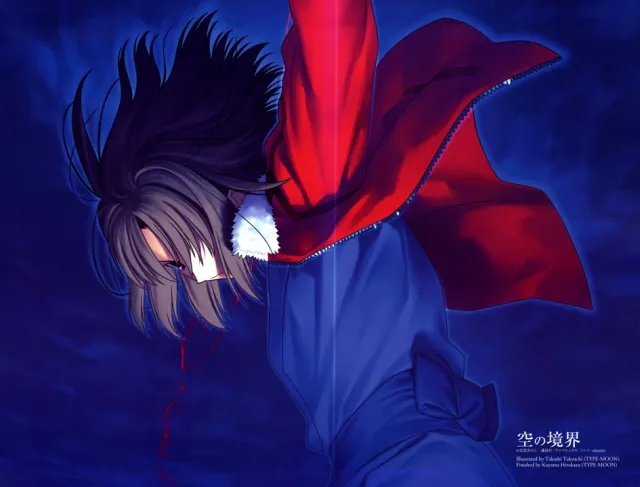
That Prosthetic Arm Scene Shows How Brutal Shiki Is
There's a moment where a ghost grabs Shiki's left arm. It's not her real arm anyway. She lost the original in the accident that put her in a coma. Touko made her a new one that runs on her soul, which is weird magic that the movie doesn't explain fully and doesn't need to. When the ghost grabs her, Shiki doesn't hesitate. She cuts the arm off with her knife.
The blood sprays everywhere. She doesn't scream. She just looks annoyed. Then she picks up the arm and walks back to the office so Touko can fix it. This tells you everything about her. She's practical to the point of being scary. She doesn't panic. She doesn't cry. She solves the problem by removing the bad part. It's extreme, but it works.
Later, when she fights the nine ghosts on the roof, she uses that same arm to hold her knife. Touko repaired it with better materials. It's a symbol for Shiki herself. She's broken, replaced with something fake, but she still functions. She still cuts. The arm isn't a weakness. It's proof she can survive having pieces removed.
The Music Does Half The Work
Yuki Kajiura wrote the score, and Kalafina sings the ending song "Oblivious." You can't separate the sound from the pictures in this movie. The choir voices that play when Shiki walks through the Fujou Building make your skin crawl. They're not singing words. They're just sounds, haunting voices that echo in the empty halls.
When the action starts, the music doesn't get faster. It gets slower. Heavy drums and chanting while Shiki cuts through ghosts. It feels like a funeral. Because that's what this is. Every fight scene is a funeral for someone who already died. The music doesn't cheer you up. It drags you down into the same fog that Kirie is lost in.
The ending song plays over shots of the city at night. The lyrics talk about forgetting, about empty minds. It's perfect because that's what happens to Kirie. She's forgotten by everyone except maybe Mikiya, who has a vague memory of her voice. The song makes the loneliness sound beautiful instead of sad, which is dangerous. It makes floating look tempting.
How The Novel Differs From The Film
The light novel version of this story, which you can find discussed on Kafka-Fuura's blog, is more vague and internal. The movie adds the ice cream scene and expands the fight sequences significantly. In the book, Shiki's fight with the ghosts is quick and quiet. The movie makes it a visual spectacle with water and blood everywhere.
The novel focuses more on the smell of the building, the feel of the air, the inner thoughts of Kirie. The movie focuses on the visual example of height. Both work, but the movie is more accessible because it gives you something to look at while the characters talk about heavy topics. The book is harder to read because it jumps between viewpoints without warning.
Touko's explanations are longer in the book. The movie cuts them down to the basics, which some fans complain about, but it keeps the pace moving. You don't need to know the exact mechanics of how Shiki's eyes work to understand that she can kill ghosts. The movie trusts you to figure it out.
The Color Red Shows Up Everywhere You Look
The movie uses color like a weapon. Red appears everywhere, not just in the blood. The strawberry ice cream. The sunset. The lights in the hospital. Shiki's kimono lining. It's the color of life, but also of death. Kirie wears white, the color of hospitals and emptiness. Shiki wears blue and white, cold colors, but she bleeds red.
This isn't accidental. The director uses red to mark moments of humanity. When Shiki eats the ice cream, the red connects her to the living world. When she cuts off her arm, the red spray reminds you she's alive despite her cold attitude. The building is gray and brown, dead colors, so the red stands out even more. Even the title card appears in red against black.
Why Starting With The Fifth Story Works
Yes, this is the fifth event in the timeline. Yes, you don't know who these people are yet. Yes, the movie assumes you understand Shiki's two personalities which aren't explained until Movie 2. That's fine. Starting here makes questions that make you pay attention. You see Shiki acting weird and violent, and you wonder why. You see Mikiya being overly kind to her, and you wonder what their history is. You see Touko's puppet bodies and you want to know how magic works.
If you started with Movie 2, you'd get the romance and the backstory first, and this would just be a weird side story. Starting here makes you work for the emotional payoff. You see the result of their relationship before you see how it formed. That's risky, but it pays off when you watch Movie 2 and realize how far Shiki has come from this cold killer who cuts off her own arm without blinking.
The Reddit analysis points out that Shiki isn't emotionless, she's just hiding. Watching this movie first means you see the mask before you see the face underneath. That makes the later movies hit harder.
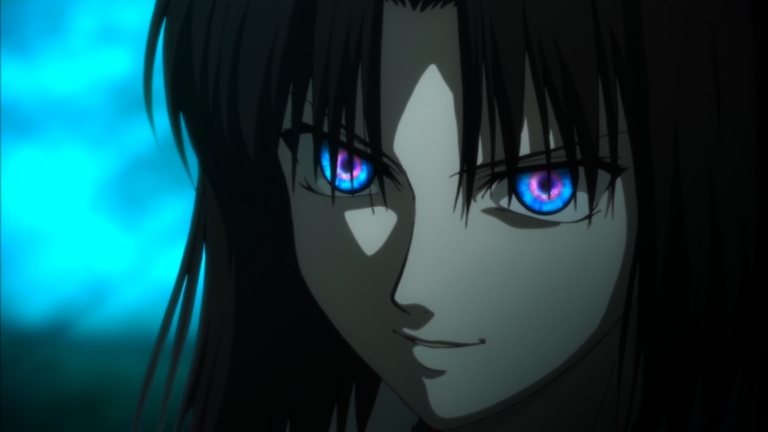
The Garden of Sinners Chapter 1 Thanatos Overlooking View analysis usually focuses on the pretty art and the confusing order. That's surface stuff. The real content is about isolation and how looking down changes everything. When you look down from high enough, people stop being people. They become dots. Kirie Fujou looked down so long she forgot what it felt like to be human. Shiki looks down and sees lines to cut. Only Mikiya looks up and sees individuals worth saving.
This movie isn't perfect. The computer graphics look rough by modern standards. The pacing drags in the middle. But it captures something true about depression and checking out. It shows how easy it is to float away from your life when nothing holds you down. And it shows that sometimes the only way to stop falling is to cut away the parts that are dragging you down, even if it hurts.
If you watched this once and felt lost, watch it again after you've seen the whole series. It changes. The confusion becomes clear. The emptiness becomes full. That's the trick of The Garden of Sinners Chapter 1. It overlooks everything, but it sees more than you think.