
Everyone thinks they are smart by watching things in chronological order. With Garden of Sinners movie order and timeline discussions, that is the fastest way to ruin the entire point of the series. The movies were released out of sequence on purpose. Studio Ufotable and Type-Moon shuffled the timeline specifically to make you feel as confused as Shiki Ryougi feels about her own identity. If you watch it chronologically the first time, you are doing it wrong. You will strip away every mystery and turn powerful reveals into boring exposition.
I have seen too many forum threads where some guy brags about making a chronological watchlist for his friends. Those friends got a worse experience. They saw character deaths before they met the characters. They understood Shiki's condition immediately instead of piecing it together through her eyes. The garden of sinners movie order and timeline is designed to disorient you initially. That confusion is a feature, not a bug. The series covers eight main movies, an OVA epilogue, and two extra films called Future Gospel. It spans from 1995 to 2010 in universe, but the release order jumps around like a broken timeline. You start in 1998, jump back to 1995, then to 1998 again, then back to 1996, and so on. This is not an accident. It is a carefully constructed puzzle where each piece only makes sense once you have the others.
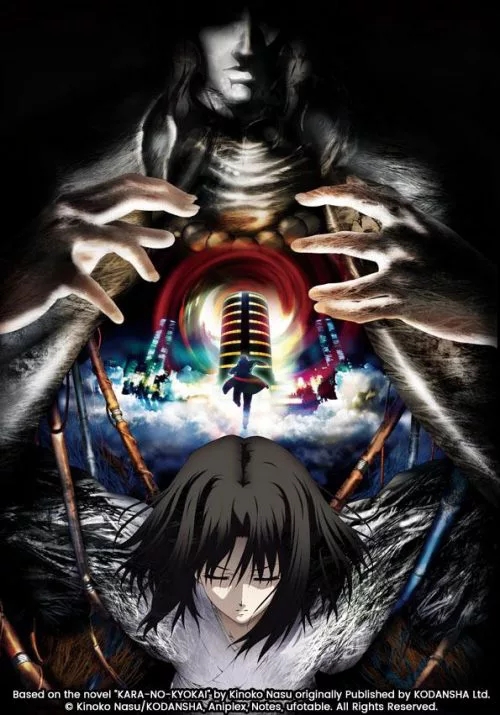
Why Release Order Beats Chronological Every Time
The release order is the only correct way for first timers. Type-Moon wrote these stories knowing exactly which information to hide and which to show. Movie 1 drops you into September 1998 with Shiki already having her powers, already working for Touko, and already weirdly close to Mikiya. You do not know how any of this happened. You do not know why she has a fake arm or why she sees lines on everything. That is exactly where you need to be.
If you start with Movie 2, which is chronologically first, you see Shiki as a normal high school girl in 1995. You see the murder investigation that kicks everything off. You see her relationship with Mikiya develop from zero. This destroys the mystery of Movie 1 completely. The whole point of Overlooking View is that you are watching two people who already have history, and you are trying to figure out what that history is while ghosts are throwing themselves off buildings. Watching chronologically turns the series into a straight line. It becomes a standard origin story. You lose the jarring shifts between Shiki's personalities because you see them develop in real time instead of encountering them as established facts that scare you. The emotional weight of Movie 5 hits harder when you do not already know every detail of Shiki's past. The release order builds questions and then answers them at the perfect moments. Apparently, watch order guides confirm this is the intended method by the creators.
The Complete Garden of Sinners Movie Order and Timeline Breakdown
Here is the correct sequence for your first watch. Do not deviate from this. Do not skip around. This is how the creators intended it.
Movie 1: Overlooking View (The Weird Starting Point)
This is chronologically the fourth story but it comes first for a reason. It is fifty minutes of pure atmosphere. Shiki is already hunting ghosts for Touko's agency. Mikiya is already in her life, though he spends half the movie in a coma. You get thrown into the deep end with the Mystic Eyes of Death Perception and the weird architecture of the Ogawa building. Nothing gets explained. You just watch Shiki kill things that are already dead. It hooks you because it makes you ask what is going on with this girl.
The movie follows a series of suicides where high school girls jump off a specific building. Shiki investigates while wearing that iconic red leather jacket. The action scenes are abstract and psychological. You see her cutting through ghosts with a knife even though they are intangible. The movie never stops to tell you why she can do this. It assumes you will stick around to find out. That assumption only works if you watch this first. The color palette is dark blue and black, with Yuki Kajiura's soundtrack making everything feel like a dream you cannot wake up from.
Movie 2: A Study in Murder Part 1 (The Actual Beginning)
Now we flash back to 1995. This is where Shiki and Mikiya meet in high school. You see the serial murders happening around the city. You see Shiki's male personality SHIKI and her weird family customs. This movie explains why Mikiya is so devoted to her later. It is a slow burn mystery that works because you already saw where these characters end up in Movie 1. You know they survive, but you do not know how they get through this mess. That tension makes the high school scenes hit harder.
In this timeline, Shiki does not wear the red jacket yet. She wears a traditional kimono and carries a wooden sword. She acts colder and more distant. Mikiya sees her standing over a corpse and becomes obsessed with proving her innocence even though all evidence points to her. The contrast between this vulnerable Shiki and the killing machine from Movie 1 creates dramatic irony that chronological viewing completely kills. You keep waiting for her to snap and become the person from the first movie, but the journey there is painful and slow.
Movie 3: Remaining Sense of Pain (The Dark One)
This jumps to July 1998. Fujino Asagami shows up and this movie gets brutal. It deals with assault and revenge in ways that make most anime look soft. Shiki is closer to the version you saw in Movie 1, but she still does not have her full power set yet. This is where you learn how she lost her arm and got the magical prosthetic. It is also where you see how dark this series is willing to get. The villain is sympathetic but terrifying.
Fujino has her own condition where she cannot feel pain, which makes her both dangerous and tragic. The movie shows her getting revenge on the men who hurt her, and it does not pull punches. The animation here is gruesome but beautiful. You see Shiki fighting without her full abilities because she is still recovering from the accident shown later in Movie 4. The timeline placement here is tricky because you need to know she is damaged but you do not yet know exactly what damaged her. The fight on the bridge is one of the most violent scenes Ufotable ever animated.
Movie 4: The Hollow Shrine (The Bridge)
This covers March 1996 to June 1998. It fills the gap between Movie 2 and the others. You see Shiki in the hospital after her accident. You see the death of her male personality and the birth of her third personality, the Void. This is crucial backstory that would have killed the mystery if it came first. Now that you are invested, learning how she got her eyes and her connection to the Root feels earned. It is the shortest movie but it packs the most lore.
The hospital scenes are claustrophobic and weird. You see Shiki trapped in her own mind while her body is in a coma. Touko shows up here to give her the artificial arm and explain the Mystic Eyes. If you watched this first, the reveal of the eyes would have no impact because you would not know what they do. Watching it fourth, you are desperate to understand how she got them, so the explanation feels satisfying rather than like an info dump. The Void personality speaks in a flat, creepy voice that hints at something beyond human understanding.
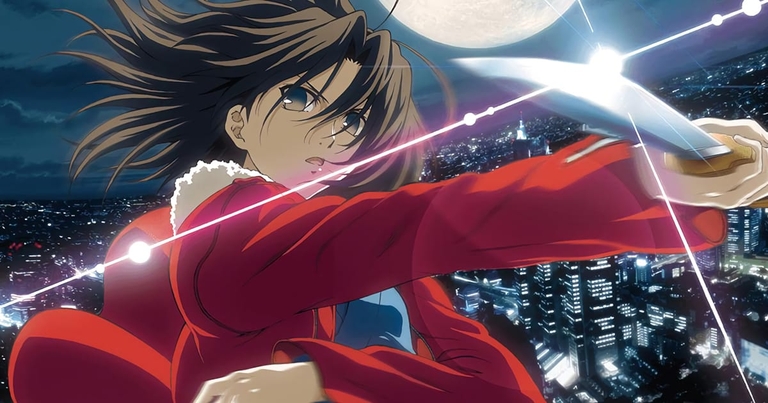
Movie 5: Paradox Spiral (The Long One)
At nearly two hours, this is the centerpiece. It happens in November 1998, after Movie 1. Tomoe Enjo shows up with a severed arm and runs into Shiki at her apartment complex. This movie connects every thread from the previous films. It explains the real villain behind the scenes, Soren Araya, and his weird building that loops time. The animation budget went crazy here. You get fights on spiral staircases and existential monologues about the nature of death.
Tomoe is a normal guy who wakes up one day to find his parents have been murdered by himself, except it is not really him. He escapes to the Ogawa building, which is the same building from Movie 1. The movie explores the concept of spirals and how people are trapped in repeating patterns of violence. If you watched in chronological order, the reveal of Araya's connection to everything would have no impact. You needed to meet Touko and Shiki first to understand why his experiments matter. You also needed to see the building in Movie 1 to understand why it is important. The scene where Shiki fights Araya in the elevator shaft is still one of the best animated action sequences ever made.
Movie 6: Oblivion Recording (The Side Quest)
This is the weird one. It follows Azaka, Mikiya's sister, at her boarding school in January 1999. Shiki shows up as her partner but acts different because she is suppressing her violent urges around the kid. There is a fairy stealing memories and some weird subplot about a teacher. It is the weakest entry for a lot of people. It feels like a distraction from the main plot. But it gives Azaka development and sets up some concepts for the finale.
Azaka has a crush on her brother, which is played for weird comedy that does not always land. But the movie explores memory and how we forget things to survive. The fairy that eats memories is a metaphor for trauma. Shiki is barely the main character here, which annoys some viewers, but seeing her through Azaka's eyes gives you a different perspective on how scary she can be. The movie ends with Azaka accepting her memories, good and bad, which mirrors what Shiki had to do in Movie 4. The magic system in this one is different, focusing on fairies and elementals rather than the direct combat of other films.
Movie 7: A Study in Murder Part 2 (The Payoff)
This wraps up the story from Movie 2 in February 1999. You finally learn who the real killer was in 1995 and why. Lio Shirazumi is revealed and he is one of the most disturbing villains in anime. This movie is two hours of psychological horror and knife fights. It pays off every slow moment from Part 1. If you spoiled yourself by watching chronologically, you would have known the killer's identity for six movies. That would have sucked. The release order saves this reveal for when it hurts the most.
Lio is a former friend of Mikiya who became obsessed with Shiki. He is also a victim of the same experiments that affected Fujino. The movie goes into body horror territory with his transformations. The final fight between him and Shiki is brutal because you have spent six movies getting to know her. You understand exactly what she is risking and exactly how much she has changed since 1995. The emotional weight of her winning comes from having seen her at her lowest in the other films. Mikiya gets his moment to prove his loyalty here too, walking through a burning building just to find her.
Epilogue and Future Gospel (The Aftermath)
After Movie 7, watch the Epilogue OVA. It is short and quiet. Shiki meets Mikiya in the snow and they talk about the third personality, the Void. It is slow and philosophical but it gives closure to their relationship arc. The Void explains the nature of the world and why Shiki is special. It ends with Mikiya refusing to die and choosing to stay with her, which is more romantic than any kiss scene could be. The animation here is soft and white, a complete contrast to the dark colors of the main series.
Then you can watch Future Gospel and its side stories in Extra Chorus. These happen in 1996 and 2010 respectively. They are not essential but they are solid. Future Gospel deals with a bomber who can see the future and a girl who predicts deaths. It expands the world without breaking the ending of the main series. The 2010 segment shows Shiki and Mikiya ten years later, which gives long term fans a look at how their relationship settled. The bomber story is tense and the ending is surprisingly hopeful.
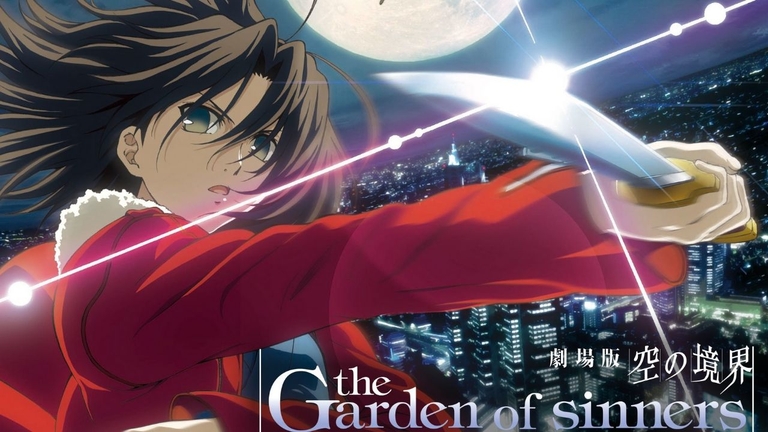
The Chronological Timeline for Rewatches
Once you have seen the release order, you can go back and watch chronologically to pick up details you missed. According to chronological lists, the timeline goes like this. Movie 2 happens first in 1995. Then Movie 4 covers 1996 to 1998. Then Movie 3 in July 1998. Then Movie 1 in September 1998. Then Extra Chorus if you want. Then Movie 5 in November 1998. Then Movie 6 in January 1999. Then Movie 7 in February 1999. Then the Epilogue. Then Future Gospel jumps to 2010.
Some people like to watch this way on their second run because it makes the character growth linear. You see Shiki go from confused teenager to confident killer to settled adult. It is a different flavor of the story. But it is only satisfying because you already know the twists. Doing this first is like reading the last chapter of a mystery novel before the first. Community discussions often mention that chronological works for rewatches but ruins the first experience.
Common Mistakes That Ruin the Experience
Do not watch Gate of Seventh Heaven first. It is a recap movie that edits the first six films into chronological order. It skips the emotional beats and spoils everything. It is only useful if you watched the series years ago and need a refresher before Movie 7.
Do not skip Movie 6 just because people call it filler. It is slow but it matters for Azaka's character and it has some of the prettiest animation.
Do not start with Future Gospel. It assumes you know everything about Shiki's powers and her relationship with Mikiya. You will be lost and confused.
Do not binge them all in one day. These movies are dense. They hit hard emotionally. Give yourself time to process between entries, especially after Movie 3 and Movie 5. Watching them back to back blurs the impact.
Where It Fits in the Type-Moon Universe
Garden of Sinners shares DNA with Fate/stay night and Tsukihime because Kinoko Nasu wrote all of them. Touko Aozaki shows up in other Type-Moon works. The concept of the Root and the Mystic Eyes appears across the franchise. But you do not need to watch anything else to understand this. It stands alone. It is actually the best entry point into Nasu's writing because it is complete. You get a full story with a beginning, middle, and end. No cliffhangers, no waiting for sequels.
The series is old now but it holds up. Ufotable's animation in Movie 5 still looks better than most anime coming out now. The soundtrack by Yuki Kajiura and Kalafina is iconic. If you watch it in the right order, you get one of the most solid supernatural mystery series ever made. If you watch it wrong, you get a confusing mess that feels out of order for no reason. Trust the release order. It is not random. It is calculated to give you the best emotional experience possible. The garden of sinners movie order and timeline only works if you let it work the way it was built.