The Seven Deadly Sins: Four Knights of the Apocalypse plot summary starts with a murder. Not a big holy war between gods and demons like the old show, but a family killing on a floating rock called God's Finger. Percival lives there with his grandpa Varghese, hunting weird birds and thinking his dad Ironside is off being a hero somewhere. Then Ironside shows up wearing Camelot armor and stabs Varghese through the chest while Percival watches. It's brutal, personal, and way more grounded than the power level nonsense that ruined the original series' final seasons.
This sequel takes place sixteen years after Meliodas and the Sins beat the Demon King and that weird cat thing Cath Palug. Britannia should be at peace, but King Arthur Pendragon has gone completely off the rails. He's not the friendly king from the first series anymore. Chaos has corrupted him, and now he wants to purge every non-human race from existence while building an Eternal Kingdom in a pocket dimension. The prophecy says four knights will destroy his world, so he's hunting them down. Percival is the first one, marked as the Knight of Death, and he doesn't even know how to use magic right when his grandpa dies.
Life on God's Finger and the Inciting Incident
Percival's existence before the bloodshed is weirdly peaceful for a shonen protagonist. He lives on a grassy spire floating above the clouds, hunting rocs and cooking them with his grandpa. Varghese teaches him sword basics but mostly they just hang out. The kid wants to drink alcohol because he thinks he's grown up, which Varghese shuts down immediately. It's a simple life that gets completely shattered when Ironside arrives not for a reunion, but to fulfill Arthur's orders to kill anyone who might be a prophesied knight.
The fight is messy and one-sided. Ironside uses some kind of dark magic that leaves X-shaped wounds on both Varghese and Percival. Varghese dies telling Percival to find his father and get answers, while Percival survives with scars that somehow mark his destiny. This isn't some chosen one ceremony with a magic sword in a stone. It's a kid crawling away from his grandfather's corpse with a talking fox named Sin who won't stop making cryptic comments about fate.
The Four Knights Prophecy Breakdown
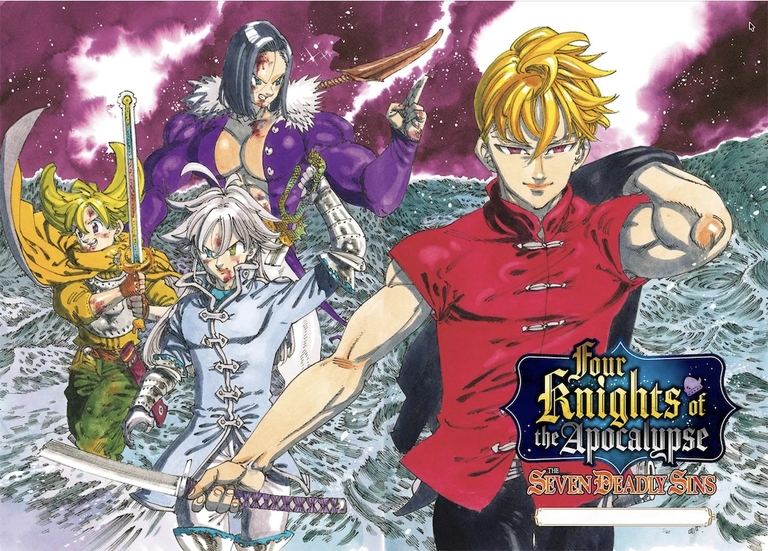
The prophecy itself is vague in that annoying way ancient predictions always are. Arthur received it before he went crazy, warning that four knights would bring destruction to his kingdom. Each knight corresponds to one of the Four Horsemen: Death, Famine, War, and Pestilence. Percival gets Death, which freaks him out because he's basically a cinnamon roll who wants to make friends with everyone he meets. The other three are Lancelot (Ban's son), Tristan (Meliodas and Elizabeth's kid), and Gawain (who has a whole identity twist that the fandom argued about for weeks).
Camelot takes this prophecy deadly serious. They've got teams of Holy Knights roaming Britannia murdering kids who might fit the descriptions. One has gold-colored magic, one has holiness and evil in his eyes, one changes appearance constantly, and one has green wing-like hair. The descriptions are abstract enough that Arthur's forces are basically killing indiscriminately, which tells you everything about how far the kingdom has fallen from the honorable place it used to be.
Percival's Weird Magic System
Percival's magic starts off goofy and gets genuinely interesting. At first, he creates these tiny clones of himself called Mini-Percivals that act independently. They can scout, fight, or just keep him company, which fits his lonely upbringing perfectly. But as he gets into real fights against Camelot's killers, it evolves into something called Hope magic. Instead of just making clones, he can manifest weapons and armor based on his emotional state and the hope he inspires in others.
This fixes the power creep that made the original Seven Deadly Sins unreadable by the end. You don't have power levels in the millions here. Percival gets stronger based on his bonds with his friends and his own emotional growth. When he fights Ironside again later in the season, he's not winning because his magic number is bigger. He's winning because he figured out how to use his abilities creatively while processing his trauma. It's actual character development driving the action, not just new transformation forms.
Meeting the Other Destined Knights
The first season spends twelve episodes on Percival's solo trip before the other knights show up in force. Lancelot appears earlier as a mysterious shapeshifter who can turn into a fox (not Sin, a different fox thing), and he's annoyingly overpowered in that older-brother-who's-better-at-everything way. He can read minds, transform into various beasts, and fights with a sword called Shirojika. His relationship with his father Ban is strained because Ban is immortal and Lancelot grew up watching his mom age while his dad stayed young.
Tristan Liones shows up later, and he's got issues. Being the son of Meliodas and Elizabeth means he's got both demon and goddess blood fighting inside him. Sometimes his eyes go weird and he starts talking about destroying things. He's supposed to be the Knight of Pestilence, which fits because his dual heritage literally makes him sick in the head sometimes. The anime doesn't shy away from how messed up it is that a teenager is carrying that kind of genetic trauma.
Gawain is the last to join, and the anime changes some things from the manga regarding their identity, but the core is the same. They've inherited Escanor's Sunshine ability, meaning they get super strong when the sun is out but weak at night. Gawain is also obsessed with being recognized as the greatest and has a massive ego that clashes with everyone else. Watching these four try to work together without killing each other is half the fun of the second half of season one.
King Arthur's Villain Turn Makes Sense
Arthur was a side character in the original series, the king of Camelot who showed up to be noble occasionally. Here, he's the main antagonist, corrupted by the power of Chaos that he absorbed to rebuild his kingdom. But it's not just "power made him evil." Arthur genuinely believes he's saving the world by creating a perfect kingdom in a separate dimension and destroying the original world. He thinks the coexistence between humans, demons, fairies, and giants is unnatural and doomed to fail.
His Holy Knights follow him with religious fervor. Ironside, Percival's father, truly believes he's saving the world by killing his own son. That kind of ideological commitment makes for better villains than the Demon King, who was just evil because he was the devil. Arthur's forces include weird chaos-powered monsters, brainwashed knights, and the Four Evils who serve as mini-bosses. The stakes feel personal because Percival isn't fighting to save the world from some abstract demon. He's fighting to stop his dad and his dad's boss from committing genocide.
The Season Structure and Pacing Problems
Season one is twenty-four episodes split into two distinct chunks. The first twelve are episodic and kinda slow. Percival meets Donny (a cowardly bard with wind magic), Nasiens (a weird kid who loves poison), and Anne (a beast girl who hits things with a big hammer). They travel around Britannia having adventures while Camelot sends low-level assassins after them. Some fans hated this pacing, but it's necessary setup. You need to care about these kids before the violence ramps up.
Episodes thirteen through twenty-four kick into high gear. The other knights appear, Arthur makes his move against Liones, and the body count rises. The season ends on a brutal cliffhanger where the four knights have finally united but Camelot has captured one of their allies and revealed the true scope of Arthur's dimension-warping abilities. If you're watching this weekly, the wait between cours was painful. Binge-watching it works better because the slow burn pays off when everything explodes in the back half.
Why This Sequel Fixes the Original's Power Creep
The original Seven Deadly Sins manga became a joke by the end. Characters had power levels in the millions, then billions, then whatever absurd number Nakaba Suzuki pulled out that week. Fights stopped being about strategy and became who had the bigger aura. Four Knights of the Apocalypse avoids this by introducing conceptual magic based on Chaos. It's not about raw power, it's about the nature of reality. Arthur doesn't win because he punches harder. He wins because he can rewrite the rules of existence within his domain.
Percival's Hope magic works on similar principles. He manifests possibilities and emotional connections rather than just energy blasts. When he fights Gareth, one of Arthur's knights, he's not overpowering him through training montage gains. He's outthinking him and using his Mini-Percivals in clever ways. The battles feel tactical again, like early Seven Deadly Sins before everyone became god-tier. Lancelot can read minds, so he wins by knowing what his opponent will do before they do it. Tristan uses his hybrid heritage creatively. Gawain just hits things really hard, but only during the day, so there's a timer on her strength.
The Animation Style Shift
Let's address the elephant in the room. Telecom Animation Film took over from A-1 Pictures, and the visual style changed dramatically. The first series had that glossy, sometimes ugly CGI for the sins' sacred treasures. This sequel uses more traditional 2D animation but with softer lines and less detailed backgrounds. Some scenes look gorgeous, especially the magic effects and the chaotic dimension stuff. Other times, characters go off-model during dialogue scenes and look like they melted slightly.
It's not unwatchable, but it's inconsistent. The action choreography is actually better than the original's final seasons because they're not relying on bad CGI models spinning around. Percival's fights have weight and impact. When Ironside cuts someone, you feel it. But the static talking heads can look rough, especially when compared to the movie-quality animation we got in the original's first season. Fans are split on whether this is a downgrade or just different. I'd say it's messier but has more soul than the sterile animation of the later original arcs.
Secondary Characters Who Don't Suck
Donny, Nasiens, and Anne could have been annoying sidekicks, but they each get real development. Donny starts as a coward who only cares about money and music, but he grows into someone who'll stand his ground when friends are threatened. His wind magic is utility-based rather than combat-heavy, which forces him to be creative. Nasiens has this weird obsession with testing poisons on himself and others, but it turns out they're half-fairy with connection to the forest spirits, adding layers to their weird behavior.
Anne is a beast-man (beast-woman?) who left her tribe to see the world. She fights with a massive hammer and has this infectious enthusiasm that contrasts with Percival's initial naivety. The group dynamic feels like the original Sins but younger and more volatile. They argue, split up, and make bad decisions. When they finally function as a team in the later episodes, it feels earned rather than forced.
Where the Plot is Headed
The anime covers roughly the first major manga arc, ending with the formation of the four knights and their decision to fight Arthur directly. Season two (which aired later) dives into the Demon Realm and introduces more of Arthur's elite guard. The manga is ongoing and has moved past the Annwfyn tournament arc into stuff involving Merlin's betrayal and the true nature of Chaos.
If you're watching this to see Meliodas and the old Sins kick butt, you'll get some of that, but they're supporting characters now. Meliodas runs the Boar Hat tavern and acts as a barrier keeper preventing Arthur's dimension from swallowing Britannia. Ban shows up to help Lancelot but recognizes his son is his own person now. King and Diane have a kid. Gowther is still weird. The old guard passes the torch without completely disappearing, which is the right way to handle legacy characters.
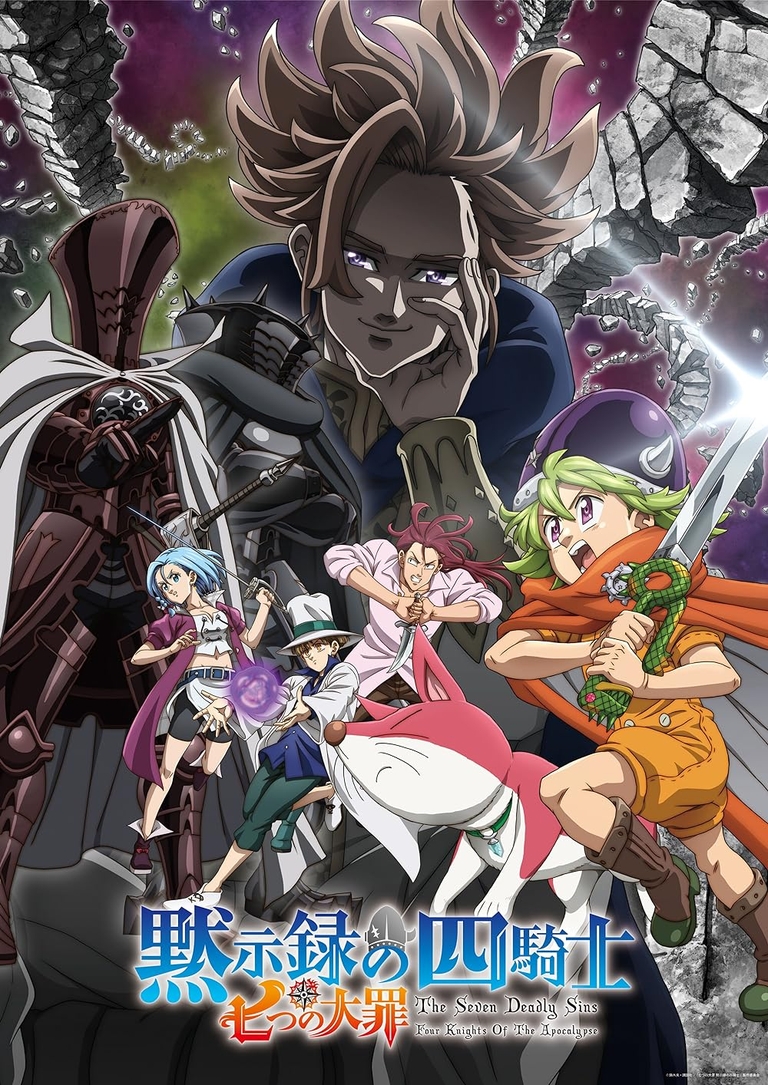
The Seven Deadly Sins: Four Knights of the Apocalypse plot summary sounds like standard sequel fare on paper, but it executes the generational shift better than most shonen follow-ups. Percival isn't Meliodas 2.0. He's his own character dealing with specific trauma about parental abandonment and inherited violence. The prophecy angle gives the series a clear endpoint rather than endless power escalation, and Arthur works as a villain because he represents authoritarian perfectionism crushing organic coexistence. If you dropped the original series during the nonsense with the Demon King and the Supreme Deity, this is worth coming back for. It remembers that character drama matters more than explosion size.