
The Stranger by the Shore explained properly isn't a fluffy beach romance about two guys falling in love while staring at sunsets. It's a raw look at how family rejection turns into self rejection and how hard it is to let someone love you when you think you're broken. Most viewers show up for the BL label and get hit with almost an hour of a guy who can't accept he's worthy of happiness. That's the real story here and if you miss that you miss everything.
Shun Hashimoto isn't just shy or awkward. He's carrying years of damage from parents who couldn't handle their son being gay and a hometown that made him feel like a freak. The film doesn't hand you this in a neat flashback with soft edges. It hits you in fragments. Shun flinches when Mio gets too close. He dreams about his father looking at him with disgust. He suggests Mio should find a girlfriend even while he's falling apart wanting Mio to stay. This isn't a will they won't they situation. This is a can he even let himself have this situation.
The movie is short. Too short really. At 58 minutes it tries to adapt a manga arc that needs room to breathe and sometimes it gasps for air. But what it gets right it gets really right. The way Shun's hands shake. The way he overthinks every touch. The way he pushes Mio away not because he doesn't care but because he cares too much and thinks he's poison. That's the stuff that sticks with you after the credits roll.
What Actually Happens (The Plot Without The Fluff)
Shun lives in Okinawa working as a novelist though he's mostly blocked and miserable. He spots Mio sitting alone on a beach bench every day looking like he's carrying the weight of the ocean. Mio is a high school student who just lost his mother and has no one. They start talking. Shun feeds him. They bond over loneliness. Then Mio has to leave for the mainland to live in an orphanage or with relatives, it's fuzzy, and he vanishes for three years.
When Mio comes back he's twenty and he's done hiding his feelings. He hits on Shun immediately and keeps hitting on him. Shun freaks out. He runs. He deflects. He says creepy things about how Mio should live a normal life which is code for straight life. Then Shun's childhood friend Sakurako shows up. She was supposed to marry Shun before he ran away from his wedding because he's gay. She's angry. She brings a knife. Mio gets hurt protecting Shun. Shun realizes he can't keep running. He decides to go back to Hokkaido to face his family and he asks Mio to come with him. Mio says yes. That's the movie.
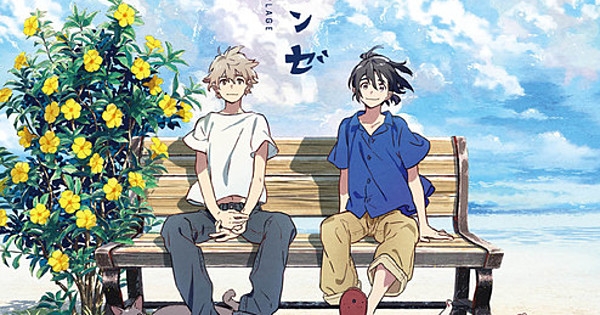
Shun's Damage Is The Main Character
Here's the thing about The Stranger by the Shore explained through its real lens. The romance is secondary. The primary arc is Shun learning that he isn't a monster for wanting another man. His internalized homophobia isn't subtle background noise. It's loud and ugly. When Mio confesses his love Shun doesn't blush and stammer. He looks like he's going to throw up. He literally tells Mio that being with him would ruin Mio's life. That's not romantic tension. That's trauma talking.
Shun was engaged to a woman he didn't love because he thought he could fix himself. On his wedding day he came out to everyone and ran away to Okinawa to hide. His parents rejected him. His father basically disowned him. So now when Mio offers him real affection Shun interprets it as a trap. He thinks if he lets Mio in he'll eventually hurt Mio the way he hurt Sakurako and his family. He thinks he's protecting Mio by being cruel.
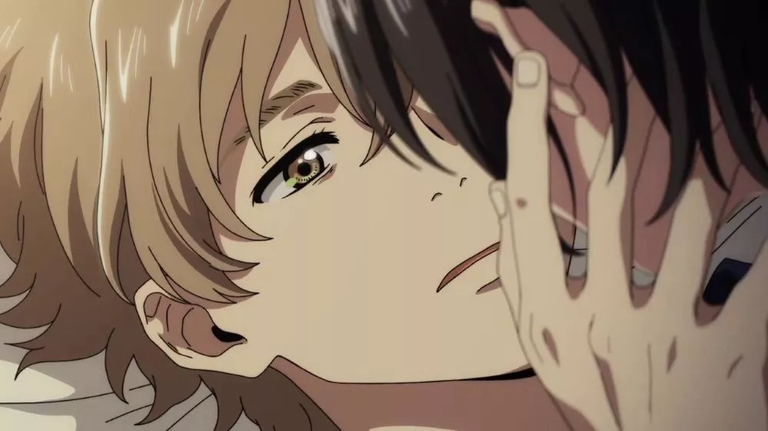
The film shows this in small brutal details. Shun can't sleep. He works himself to exhaustion because stopping means feeling. When he and Mio finally kiss Shun looks terrified after, not happy. He's waiting for the punishment. That's what growing up with rejection does to you. You start punishing yourself before anyone else can.
Mio Gets Robbed By The Runtime
Now let's talk about the biggest flaw. Mio Chibana is supposed to be the other half of this story but the movie cheats him. We meet him as a sad orphan teen who sits on beaches. Then we time skip three years and he's suddenly confident, flirty, and sure of his sexuality. What happened in those three years? The movie doesn't say. Apparently the manga fills this gap but the film just hopes you'll roll with it.
This makes Mio feel less like a person and more like a plot device to fix Shun. He has no doubts. No hesitation. He goes from zero to I'm in love with you and I'm going to kiss you now with no visible growth. It's weird. It feels like we missed an entire season of his life where he figured out he was gay or bi or whatever he is and decided to pursue Shun. The Anime News Network review nailed this problem when they said Mio's characterization has significant gaps.
What we do get of Mio is solid. His grief over his mother feels real. His irritation with Shun's self pity feels earned. But he's stuck playing the role of the perfect patient boyfriend when he should have been allowed to be messy too. The scene where he cooks for Shun and they eat together is good because it shows Mio taking care of someone for the first time since his mom died. That's his arc. Learning to love again after loss. But the movie doesn't give him enough room to breathe it.
The Beach And The Waves Mean Something
The setting isn't just pretty background. The ocean in The Stranger by the Shore explained through its symbolism is Shun's emotional state. Calm on the surface, violent underneath, and constantly washing things away. Mio sits by the shore because he's letting his grief wash over him. Shun watches from a distance because he's afraid of drowning.
There's this recurring visual of waves hitting the rocks. It happens when Shun is anxious. It happens when he's about to make a decision. The water is always moving but never going anywhere, which is exactly how Shun lives. Stuck in place but exhausted from the motion of pretending he's fine.
Also those two cats that hang around Shun's porch. They're obviously Shun and Mio. One is skittish and runs away. One is friendly and keeps coming back. It's not subtle but it works. The animals are more comfortable with each other than the humans are. That tracks.
Sakurako's Violence And Why It Matters
The weirdest part of the movie is Sakurako. She shows up halfway through acting like a horror movie villain. She brings a knife. She attacks Shun. Mio gets slashed trying to protect him. It's intense and it feels like it belongs in a different movie.
But here's why it works even though it's jarring. Sakurako represents the consequences Shun has been running from. She is the embodiment of the life he tried to live and the people he hurt. Her violence is the external version of Shun's internal self harm. She literally tries to cut him the way he cuts himself with his thoughts every day.
The scene is messy and rushed because the movie is almost over by this point. The Austin Chronicle noted that the dialogue can feel exaggerated to Western audiences and this moment definitely qualifies. But it's the catalyst that forces Shun to stop hiding. He can't pretend he's just a lone writer living a peaceful life anymore. The past has shown up with a weapon and he has to deal with it.
The Bedroom Scene Done Right
Let's talk about the sex because everyone does and for good reason. It's one of the few times in BL anime where the physical intimacy feels earned rather than fanservice. Shun and Mio don't just fall into bed. They talk. Shun admits he's scared. Mio admits he's scared too. They negotiate what they want. It's awkward and real and human.
The animation here is delicate without being censored into oblivion. You see Shun's hands shaking. You see him close his eyes and force himself to relax. That's not sexy in the traditional sense. That's vulnerable. It shows that for Shun this physical act is also a psychological one. He's letting himself be seen completely and he's terrified of the rejection that might follow.
This scene is why the movie matters despite its flaws. It treats gay intimacy as something complicated and healing rather than just titillating. Film Obsessive pointed out that the film prioritizes modesty and character growth over exploitation and they are right. It's a scene about trust more than lust.
![Promotional art for the anime film