
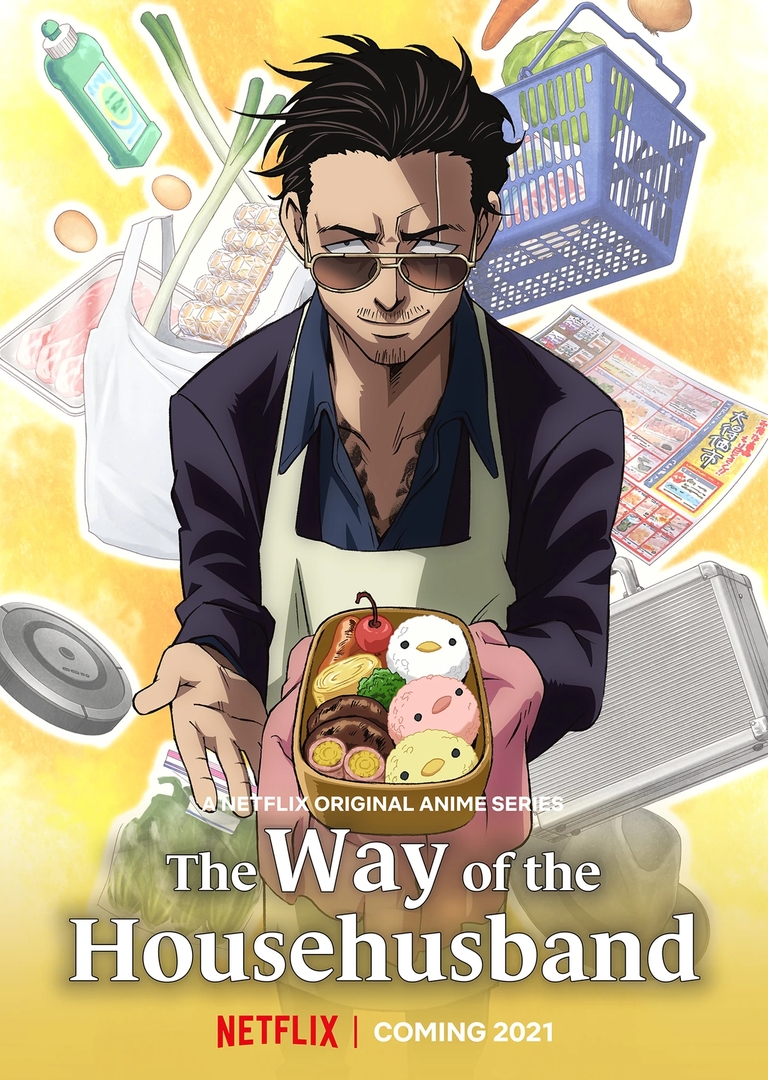
The Way of the Househusband anime slice of life comedy should have died on arrival. You've got J.C. Staff adapting a beloved manga about domestic chores using what looks like colored panels with mouth flaps. When the trailers dropped, anime Twitter called it a PowerPoint presentation. Reddit threads exploded with complaints about the animation quality, with users saying the 2000s had better looking shows and that the manga deserved better. They weren't wrong exactly. The production is cheap. But here's the thing nobody expected. The show works anyway. It works better than it has any right to.
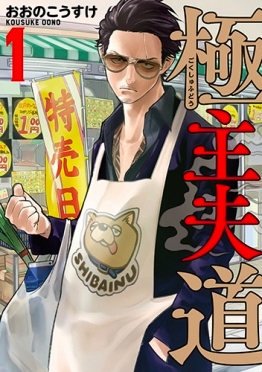
Most of the success comes down to commitment. The story follows Tatsu, a former yakuza boss known as the Immortal Dragon who retires from organized crime to become a full-time househusband. He doesn't change his personality. He still speaks in gangster slang, dresses like he's about to collect protection money, and stares at people like he's calculating how long they'd take to drown in concrete. He just directs all that intensity toward grocery shopping and fabric softener. The gap between his appearance and his actions creates the comedy, and the show understands that if the animation can't move, the performances have to sell the joke instead.
Why the motion comic style doesn't kill the jokes
Let's address the elephant in the room. The Way of the Househusband uses minimal traditional animation. We're talking static images with sound effects, limited mouth movement, and the occasional pan across a detailed background. It looks like a motion comic, which makes sense because that's basically what it is. When the first episodes hit Netflix, fans were ready to riot. They expected fluid fight scenes and got Tatsu sliding across the screen like a piece of paper on a desk.
But the anger cooled off fast for one simple reason. The timing is perfect. Slice of life comedy lives and dies on pacing, not frame rates. When Tatsu is analyzing the freshness of a cabbage in the produce aisle, the camera holds on his dead-eyed stare for five seconds. You hear the internal monologue about vegetable warfare. The silence stretches. Then he makes his move, grabbing the cabbage with the speed of a knife strike. If this were fully animated with flowing movements, the joke would lose its bite. The stillness makes him feel like a coiled spring, even when he's just holding a shopping basket.
The manga by Kousuke Oono relies heavily on panel composition and reaction shots. Characters misunderstand Tatsu's intentions, we see their terrified faces, then we cut to Tatsu holding a sponge like it's a weapon. The anime replicates this rhythm exactly. It doesn't try to be something it's not. According to the show's Wikipedia entry, the production team chose this style to preserve the manga's specific comedic timing. Whether that was a budget constraint masquerading as an artistic choice or a legitimate creative decision, the result is the same. You stop noticing the lack of movement because the voice acting and writing hit so hard.
Tatsu treats domestic life like a turf war
The central gag of The Way of the Househusband never gets old because Tatsu never breaks character. This is a man who probably killed people with his bare hands before breakfast in his previous life. Now he wakes up at 5 AM to clip coupons and prepare bento boxes, but he approaches these tasks with the same intensity he once reserved for interrogations. He irons shirts like he's pressing evidence. He scrubs toilets like he's destroying DNA traces. He follows recipes with the precision of a bomb disposal manual.
There's a specific scene where he's shopping for discounted meat and spots a rival from his old gang. Instead of throwing punches, they have a cook-off in the middle of the supermarket, competing to see who can select the better cut of beef. Tatsu wins because he knows the marbling patterns like he used to know gun models. The store manager watches in horror as two tattooed men scream about fat content, convinced they're planning a heist. This happens every episode. Tatsu enters a normal situation, applies yakuza logic to it, and terrifies civilians who don't realize he's just really committed to household appliances.
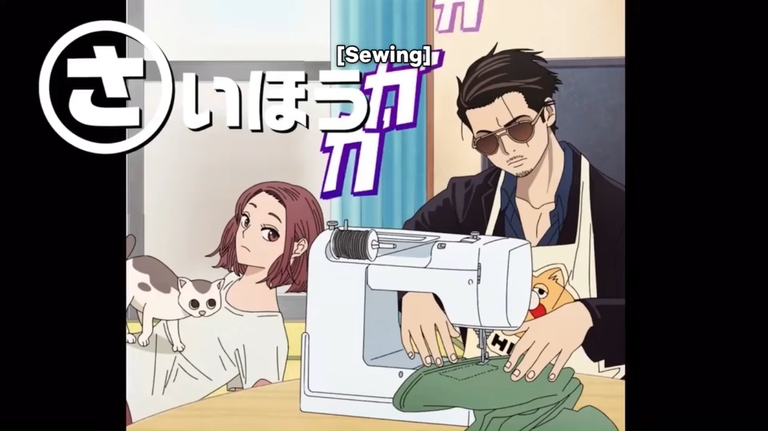
The humor works because Tatsu isn't playing house. He genuinely loves this life. When he sews a button onto Miku's blouse, he does it with a sewing machine he treats like a sniper rifle, but he also smiles with real satisfaction when the job is done. He's not mocking domestic work. He's elevating it to the level of religious devotion. That sincerity makes the comedy land harder than if he were just a clueless idiot fumbling through chores.
The gender flip that actually matters
Most slice of life anime put women in the kitchen. That's the default setting for the genre. You've got cute girls making cute food, girls cleaning, girls being domestic. The Way of the Househusband puts a six-foot-tall ex-gangster with full back tattoos in an apron instead, and pairs him with Miku, a career-driven woman who works as a designer and secretly collects anime figures. CBR noted that this makes it Netflix's most underrated slice of life entry, specifically because it handles this reversal without making a big spectacle about being progressive.
The show doesn't pat itself on the back for having a househusband. It just treats the dynamic as normal. Miku brings home the bacon, Tatsu fries it up perfectly, and they respect each other's contributions. When Tatsu feels insecure about not earning money, Miku shuts that down immediately. She likes having him home. He likes taking care of her. There's no will-they-won't-they drama, no misunderstanding about their roles. They're married adults who communicate, which is weirdly rare in anime.
Miku herself gets fleshed out beyond just being the wife. She's a secret otaku who hides her figure collection from colleagues. Tatsu doesn't just tolerate this hobby, he actively defends it. When they go to comiket together, he acts as her bodyguard, clearing a path through crowds with his intimidating presence while she shops for limited edition goods. He treats her interests with the same seriousness he gives to the yakuza code of honor. That mutual respect is the heart of the show. It argues that being a good partner means throwing yourself completely into the domestic load, regardless of which side of the breadwinning equation you fall on.
Kenjiro Tsuda's voice acting carries the production
If The Way of the Househusband had any other voice actor in the lead role, it would be unwatchable. Kenjiro Tsuda plays Tatsu with a gravelly, menacing growl that never wavers, not even when he's talking about detergent brands. He delivers lines about fabric softener with the same gravity he'd use for a death threat. That's the entire joke, and Tsuda commits so hard to the bit that you buy into the reality of the show immediately.
MyAnimeList reviews consistently point to Tsuda as the saving grace. When Tatsu gets excited about a sale on pork, Tsuda sounds like he's rallying troops for a gang war. When he apologizes to Miku for burning dinner, he sounds like he's accepting a death sentence with dignity. The man never breaks character, never winks at the audience, never lets the voice slip into parody. He plays Tatsu as a legitimate hard man who happens to love cooking, and that commitment makes the static animation irrelevant.
The supporting cast holds up their end too. Shizuka Itou brings this exhausted but genuine affection to Miku, like she knows her husband is weird but she's long since decided it's charming. Kazuyuki Okitsu plays Masa, Tatsu's former underling who still follows him around like a lost puppy, with just the right amount of earnest stupidity. But Tsuda is the anchor. Without his performance, you're just watching a slideshow. With it, you're watching a man have an existential crisis about the proper way to fold fitted sheets.
Why the short episode format saves everything
Episodes clock in at roughly fifteen minutes, sometimes less. For a show with limited animation, this is crucial. The anthology structure packs three or four mini-stories into each installment. Tatsu goes to the bank and gets mistaken for a robber. Tatsu battles a cockroach with a fly swatter like it's a katana. Tatsu makes a birthday cake with architectural precision. Then it ends. If these were full half-hour episodes, the visual limitations would start to grate. Your brain would check out after twenty minutes of static images.
But because the show switches gears every five minutes, you never get bored. The pacing mimics reading the manga, where chapters are short and punchy. You get the setup, the escalation, the intense resolution, and you move on. This makes binge-watching effortless. You can burn through an entire season in under two hours and quote it for months afterward. Netflix's release model actually helps here. Dropping all episodes at once means you don't have to wait a week for another fifteen minutes of motion comic. You blast through it in one night and the repetition of the joke doesn't have time to become annoying.
Season two learned from the backlash
The first season dropped in 2021 and people were vocal about wanting more movement. The second season, which hit in 2023, didn't magically become a sakuga masterpiece, but you could tell they had more resources or more confidence. Tatsu actually walks across rooms now instead of sliding. There are more animated sequences of him cooking. The camera moves more freely. It's still not traditionally animated by any stretch, but the improvements are noticeable.
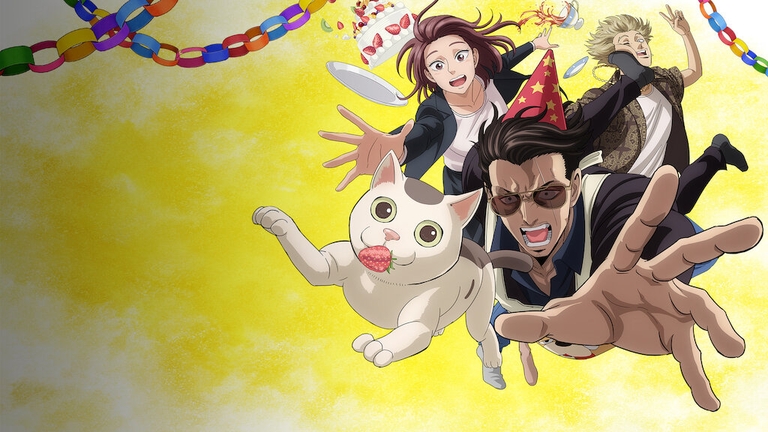
More importantly, the storytelling got tighter. The first season focused almost entirely on Tatsu's domestic adventures. The second season expands the cast and gives them more to do. We spend time with Torajiro, a rival boss who now runs a crepe truck and still competes with Tatsu through cooking instead of violence. We see Hibari, a former yakuza leader who works at the grocery store and gives Tatsu advice on sales. These aren't just one-off gags anymore. They build a community of retired criminals all trying to go straight, and that gives the world more texture.
The PTSD underneath the jokes
For all its silliness, The Way of the Househusband never lets you forget that Tatsu is traumatized. He can't turn off his survival instincts. When he hears a car backfire, he hits the deck and reaches for a weapon that isn't there. When he sees a group of men in suits, he assesses them as threats before realizing they're just businessmen. The show plays these moments for comedy, with Tatsu apologizing profusely for disarming a water gun wielding child, but there's genuine darkness underneath.
Tatsu is damaged goods. The yakuza life left him hyper-vigilant and unable to relax. Domestic work is literally therapy for him. Cleaning gives him control. Cooking requires focus that quiets his mind. When he tells former gang members that he's happier now, he means it with the intensity of a religious convert. The show touches lightly on this, never getting too heavy, but the subtext is there. He found peace in laundry detergent and grocery lists because those things don't require him to hurt anyone. That's why the comedy resonates. It comes from a place of real relief, not just absurdity.
Comparisons to other comedy anime
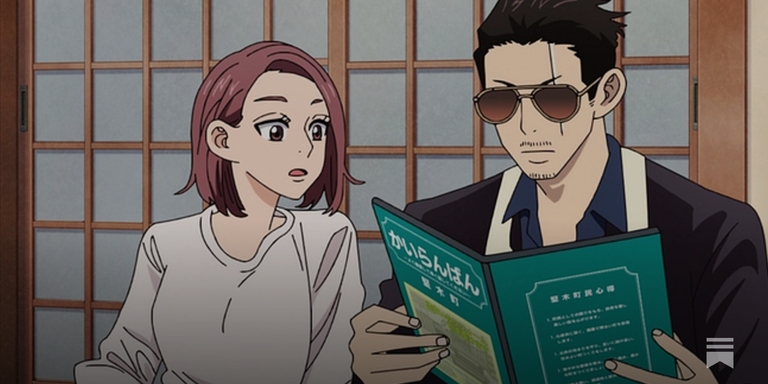
People inevitably compare this to The Disastrous Life of Saiki K. Both use short episode formats. Both rely on deadpan delivery. But Saiki moves fast. It throws ten jokes at you per minute with rapid fire animation. The Way of the Househusband lingers. It lets scenes breathe. Tatsu will stare at a stain for ten seconds without blinking, and that's the joke. The rhythm is slower, more deliberate, closer to classic manga timing than modern anime comedy.
It's also distinct from pure comfort shows like Laid-Back Camp or Non Non Biyori. Those shows have zero conflict. They're about relaxing. Househusband has conflict every thirty seconds. Tatsu is always fighting something, even if it's just a stubborn jar lid. The energy is higher, the stakes feel weirdly urgent despite being about nothing. You don't watch this to relax. You watch it to laugh at how seriously one man takes fabric care.
The soundtrack doesn't match and that's perfect
The music swings between jazz fusion and 80s rock guitar riffs that sound like they belong in a yakuza movie from thirty years ago. When Tatsu is ironing a shirt, you get intense drums and wailing guitars like he's preparing for a hit. When he's shopping, you get saxophone solos that belong in a noir film. It shouldn't work, but it does. The music treats his domestic tasks like action sequences, which is exactly what the visual storytelling is doing. The opening theme, "Shufu no michi," is a punk rock anthem about housework that sets the tone immediately. This show knows exactly what it is.
Why fans started defending the limited animation
After the initial backlash, something strange happened. Fans started arguing that fluid animation would actually ruin the show. They claimed that Tatsu's stillness is part of his character. That the manga aesthetic preserves Oono's detailed art style better than generic anime models would. That the awkward pauses are intentional comic timing.
There's some truth to this. Fully animated comedy often rushes the pacing to show off movement, and that can kill a joke that needs to breathe. Househusband forces you to sit with the awkwardness. When Tatsu intimidates a cashier just by asking about reward points, the hold on his face is what makes it funny. If he were waving his arms around, the tension would break. Is this copium? Maybe. But the show has maintained a solid 7.5 on MyAnimeList, which suggests plenty of people got over the visual limitations once they adjusted their expectations.
The live action problem
Netflix also produced a live-action adaptation with Hiroshi Tamaki as Tatsu. Most fans agree the anime is better, which is rare. Usually live action has the advantage of actual human faces. But Tamaki plays Tatsu too broad, too cartoonish. The anime, despite being a cartoon, feels more grounded because Tsuda plays it straight. The live action version winks at the camera. The anime stares through it. Having the inferior version available makes the animated series look better by comparison.
Final thoughts on this weird little show
The Way of the Househusband anime slice of life comedy is an anomaly. It has no right to be as good as it is. The production values are bottom tier. The episodes are barely long enough to qualify as content. The premise sounds like a one-note gag that should run out of steam after two episodes. But Tatsu's absolute commitment to his new life, combined with voice acting that could make a phone book sound menacing, creates something special.
It proves that you don't need a massive budget to make people care. You need a solid concept executed with total sincerity. Tatsu doesn't know how to half-ass anything. If he's going to scrub a toilet, he's going to do it like he's defusing a bomb. If he's going to love his wife, he's going to do it like she's the only territory worth protecting. That intensity turns mundane household tasks into high drama.
If you skipped this show because of the animation complaints, you missed out. Give it one episode. Twenty minutes. Let Kenjiro Tsuda growl at you about the proper way to store vegetables. Watch Tatsu intimidate a room full of housewives just by folding a napkin. You might find yourself weirdly invested in whether he gets those grass stains out of Miku's blouse. That's the strange power of this show. It makes you care deeply about laundry.
The animation might be static, but the heart is fully operational. In a genre oversaturated with high school settings and magic powers, watching a former crime lord navigate grocery store sales is a breath of fresh air. It doesn't need to move to make you feel something. It just needs to commit, and commit it does.