
Twin Star Exorcists plot summary and recap requests usually come from people who started the anime, got confused by the second half, and need to know what just happened. I don't blame you. This show starts as a solid shonen action series with a forced marriage premise, then collapses into filler hell so deep you'll wonder if you accidentally switched shows. Studio Pierrot took Yoshiaki Sukeno's manga and ran it through a woodchipper after episode twenty, producing fifty episodes where only about twenty-one matter.
The premise hooks you fast. Rokuro Enmado is a fourteen-year-old exorcist who quit the profession after the Hiinatsuki Tragedy, an event where his friends died and he lost his right arm to Kegare corruption. He meets Benio Adashino, a prodigy from the mainland who literally falls out of the sky into his arms. Tsuchimikado Arima, the head of all exorcists, declares them the Twin Star Exorcists, destined to marry and birth the Miko, a child prophesied to cleanse all impurities from existence. Rokuro hates this idea. Benio hates him too at first. They fight monsters in Magano, a twisted parallel dimension that looks like a red-tinted hellscape full of grotesque Kegare born from human negative emotions.
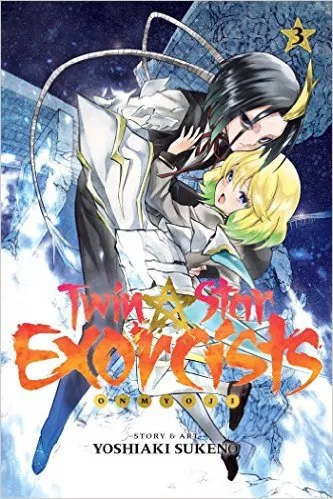
The early episodes establish the rules. Exorcists use talismans and enchanted gear to fight Kegare. The Twelve Guardians are the strongest fighters, each representing a zodiac sign with ridiculous power levels. Rokuro has a special arm made of Kegare matter that lets him punch harder than normal humans. Benio uses twin blades and moves with speed that breaks physics. Their chemistry works because they're both traumatized kids trying to avoid their feelings while killing monsters. It's standard shonen romance but executed with enough grit to feel fresh.
The Yuto Arc Is The Only Good Part
Episodes fifteen through twenty-one contain the only anime-original content worth watching, and even that is controversial. This arc reveals that Benio's twin brother Yuto didn't die years ago like she thought. He orchestrated the Hiinatsuki Tragedy, corrupted Rokuro's friends, and transformed himself into something between human and Basara, the highest tier of Kegare. Yuto shows up wearing white coats and smiling like a serial killer, which he basically is.
The fight choreography here hits different. Rokuro confronts Yuto multiple times, getting his ass kicked until he learns to sync with Benio through Resonance, a technique where their spiritual wavelengths match to create combined attacks. There's real stakes here. Benio loses her legs during one fight and gets them replaced by Kamui, a Basara who has weird motivations about fighting strong opponents. Mayura, Rokuro's childhood friend, gets corrupted by Kegare energy and nearly dies. Seigen, Rokuro's mentor and Mayura's father, nearly sacrifices himself to save everyone.
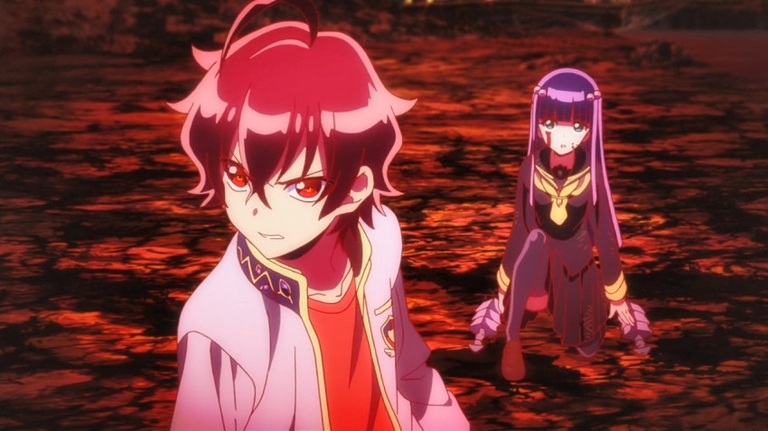
Yuto dies at the end of this arc, or at least appears to. The animation quality peaks here with fluid movement and dark atmospheric lighting in Magano. If you stop watching after episode twenty-one, you get a complete story with tragedy, revenge, and character growth. Rokuro accepts his destiny as an exorcist. Benio reconciles with her brother's evil. They share a moment that suggests real romance might develop. Then the show keeps going and ruins everything.
The Sae Arc And The Time Skip Disaster
Episode twenty-two jumps forward two years for no good reason. The manga didn't do this. The anime needed filler to avoid catching up to the source material, so they invented Sae, a toddler Basara who looks human and attaches herself to Rokuro and Benio. She's bland. She eats rice crackers and says cute things while the plot spins its wheels. The Basara villains from earlier arcs keep appearing, fighting, then escaping without consequence. The Twelve Guardians get focus episodes that add nothing to the main plot.
Rokuro and Benio's relationship stagnates here. They live together in a house provided by the Exorcist Union, but they revert to tsundere bickering instead of progressing toward the prophecy. The show introduces Dragon Gates, random portals letting Kegare into the human world, which forces the Twin Stars to travel around Japan in a possessed camper van sealing rifts. One episode features a washed-up baseball player possessed by a Kegare. It plays like a Scooby Doo episode with worse animation.
The power scaling breaks down completely during this stretch. Rokuro and Benio lose fights they should win because the writers need to stretch the episode count. Attack names get shouted followed by video-game-style cutaways that hide the fact that Pierrot stopped animating the hits properly. Characters stand still while talking during fights. Faces go off-model. The budget clearly evaporated.
The Final Arc Makes No Sense
Episodes thirty-seven through fifty attempt to wrap up an anime that diverged too far from its source material to recover. Kuranashi, a Basara with hypnotic powers, captures most of the Twelve Guardians using brainwashed exorcists. Yuto comes back to life through a double-cross that makes less sense the more you think about it. Then Abe no Seimei, the legendary exorcist from history, appears as the true final villain with a plan to turn all humanity into Kegare to prevent the birth of the Cataclysm King.
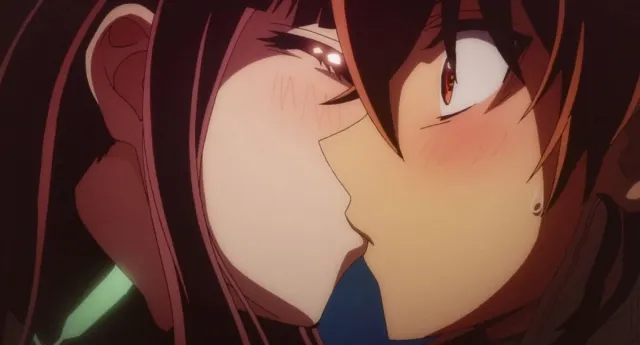
The show tries to say something about sin being necessary for human existence, but it falls flat because the Kegare never got developed enough to compare with human nature. Rokuro and Benio finally kiss in episode forty-nine after multiple interrupted confessions, but it feels unearned because they spent twenty episodes not talking about their feelings. They defeat Seimei using the power of love and Resonance, which is just them hitting things harder while holding hands. The final episode teases the Miko prophecy again but never shows the child, leaving the central premise of the show unresolved.
The Characters Deserved Better
Rokuro starts as an annoying shonen protagonist who yells a lot, but the Hiinatsuki flashbacks give him legitimate pain. He watched his friends die because he wasn't strong enough. His arm is a constant reminder that he's part monster. When he fights seriously, he uses his left hand to draw talismans while his corrupted right arm punches through Kegare chests. That's cool visual storytelling that gets wasted in the filler arcs.
Benio carries the show early on with her determination to exorcise every Kegare because they killed her parents. Her fighting style is balletic and violent. She struggles with the prophecy forcing her to marry a boy she just met while dealing with survivor's guilt about her brother. The anime turns her into a damsel in distress during the second half, constantly needing rescue or losing fights to make Rokuro look stronger. The manga keeps her as an equal partner.
Side characters like Shimon, the young Guardian who uses lightning, and Subaru, the pink-haired inventor, get brief moments to shine before being shoved into the background. Mayura exists to create a fake love triangle that never goes anywhere. The Basara villains have interesting designs but motivations that boil down to wanting strong opponents or generic destruction. Kamui is the exception, offering Benio new legs in exchange for a future fight, which creates actual moral complexity that the show rarely attempts.
Where The Animation Failed
Studio Pierrot produced this while also handling Boruto and Black Clover episodes. You can tell where the budget went. Early episodes feature grainy sidebars during flashbacks and stylish overlays for special moves. Magano looks properly hellish with its red skies and floating islands of rock. By episode thirty, characters have potato-shaped faces during distant shots. Action scenes become slideshows with speed lines. The final battle against Seimei reuses the same three animation cuts repeatedly while characters shout philosophy at each other.
The music stays decent throughout. The opening themes shift from rock to pop to orchestral arrangements that hint at emotional weight the animation can't support. Voice actors like Natsuki Hanae and Megumi Han do their best with material that gets progressively worse. The English dub features Vic Mignogna as Yuto, which aged poorly for obvious reasons, though his performance captures the character's unhinged charisma well enough.
Stop At Episode Twenty One
If you want the real Twin Star Exorcists story, watch episodes one through twenty-one, then switch to the manga. The manga continues with Rokuro and Benio traveling to Tsuchimikado Island, the frontline against Kegare, where they train with the Twelve Guardians for real instead of fighting filler Basaras in a van. The manga develops the Resonance system properly, explores the origin of Magano, and handles the romance with actual conversations instead of interrupted confessions.
The anime's second half is a cautionary tale about what happens when production committees force fifty episodes out of twenty episodes worth of material. It takes a solid shonen action romance and pads it with recap episodes, dance sequences set to heavy metal, and a toddler sidekick nobody asked for. Rokuro and Benio deserved a faithful adaptation. Instead they got a mess that starts with tragedy and ends with a kiss that feels like the writers checking a box before the credits roll.
Twin Star Exorcists plot summary and recap articles usually try to be charitable. I'm not going to do that. This show failed its source material, failed its characters, and failed its audience by refusing to end when the story naturally concluded. Read the manga instead. It's still running and it doesn't have a possessed camper van.
Sources: