
Uramichi Oniisan anime analysis often misses the point by calling it a simple comedy. This show is a brutal mirror held up to anyone who has ever had to smile at a customer while dying inside. The series follows Uramichi Omota, a 31 year old former gymnast who hosts a popular childrens program called Together with Maman. On camera he leads exercise routines with boundless energy and a grin that could light up a stadium. Off camera he smokes too much, drinks cheap beer alone in his apartment, and wonders aloud why his life turned into such a mess. That gap between the mask and the face underneath isnt just a gimmick. It is the whole point of the show.
Most anime about adults either glamorize their jobs or turn them into background noise for romance. Uramichi Oniisan stares directly at the toilet bowl of adult life and refuses to look away. The protagonist isnt a chosen hero or a hidden genius. He is a guy who needed money and fell into television work because his athletic career ended. Now he is stuck in a costume doing jumping jacks for toddlers who ask him why he looks sad. His coworkers are equally broken. The rabbit mascot is a bitter college dropout. The bear mascot is a failed comedian. The singer is a washed up idol dating a deadbeat. None of them get redemption arcs. They just get through the day.
The Mask You Wear to Pay Rent
The central gimmick of Uramichi Oniisan isnt subtle. The main characters name literally references his two faced nature. Uramichi wears a bright blue polo shirt and leads singalongs for preschoolers, then steps behind the set to sigh about how exhausting existence is. This isnt a transformation sequence. He does not become a magical version of himself. He just fake smiles harder. The show captures that specific pain of service work where your paycheck depends on how convincingly you can pretend to be happy to see people.
What makes this hit harder than other workplace comedies is the specificity. The show knows exactly how cheap the props are, how the directors only give vague feedback, and how you have to film Christmas episodes in the middle of summer while sweating through your costume. One scene has Uramichi explaining to a child that adults lie all the time while still holding his on air grin. The kid doesnt get it. The audience does. That direct address to the camera, where Uramichi drops life advice about how jobs crush your soul, breaks the fourth wall in a way that feels less like a joke and more like a cry for help.
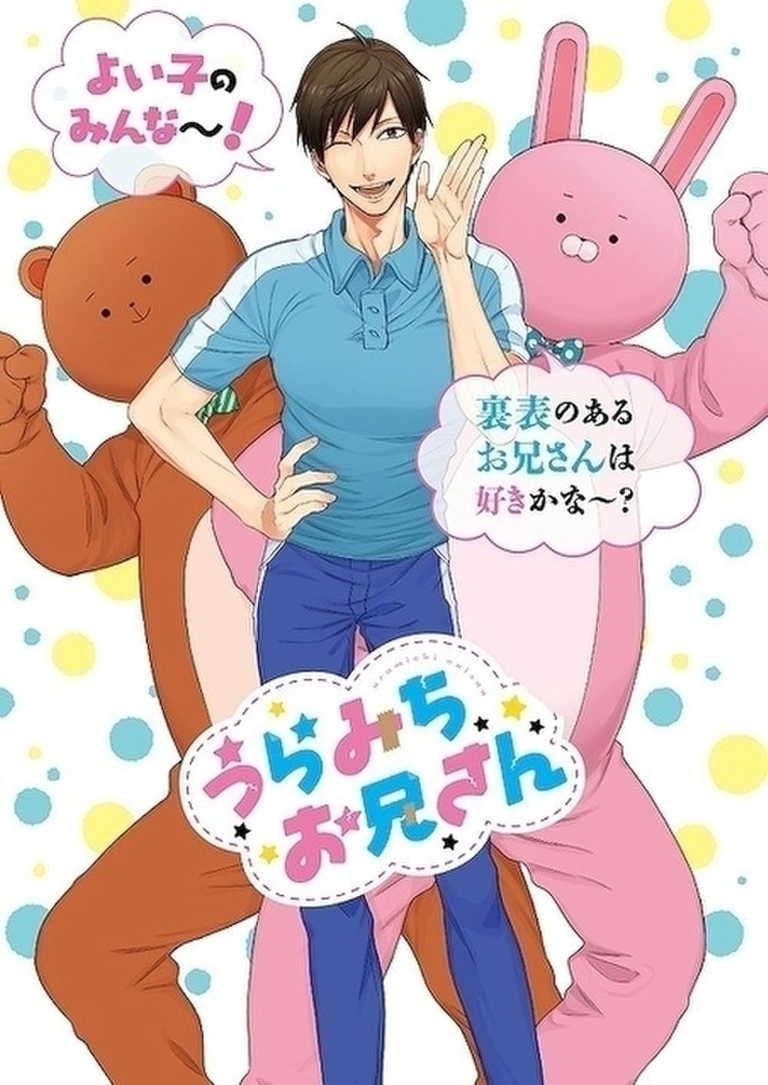
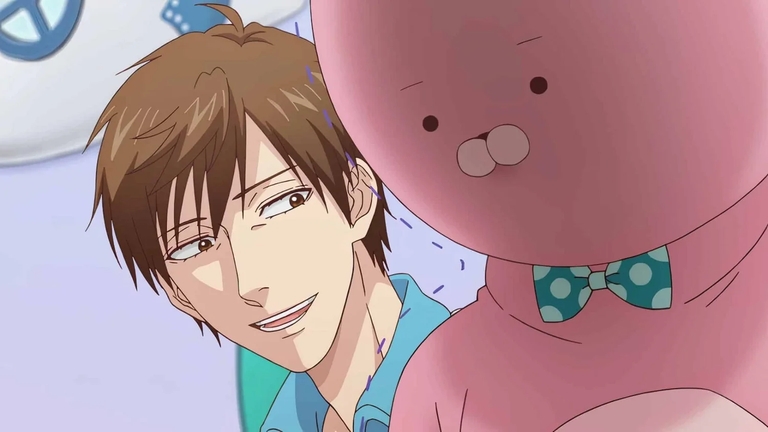
The costume work deserves mention here too. Usao and Kumao, the rabbit and bear mascots, are played by Tobikichi and Mitsuo, two guys who went to college with Uramichi and ended up in the same sinking boat. When they take the heads off, their faces look exactly as tired as youd expect from men wearing fur suits in studio lights. The show keeps cutting between the bright fantasy of the childrens program and the gray break room where everyone smokes and complains about their backs hurting.
Why the Jokes Feel Like bruises
The humor in Uramichi Oniisan doesnt follow normal setup punchline rules. Instead it circles back to the same sore spots over and over until you laugh from recognition rather than surprise. Uramichi will mention his depression in passing, then the scene cuts to him doing a handstand for kids, then it cuts back to him talking about how he hasnt felt joy since his twenties. The repetition isnt lazy writing. It mimics the loop of adult life where you wake up, put on the uniform, say the same lines, go home, and wonder if this is all there is until you die.
Some viewers call the comedy stale because the same gags show up every episode. Iketeru laughs at dirty words. Utano brings up her failing relationship. Uramichi threatens to quit but never does. That criticism misses that this is exactly how actual jobs feel. You see the same annoying coworkers every day. You have the same pointless meetings. The show uses the tedium as a weapon against you. When Uramichi starts a sentence with "Life is..." you know he is about to say something bleak, and you laugh because you have had that exact thought in your own cubicle.
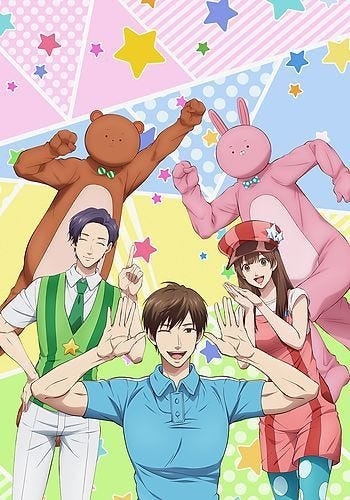
The musical numbers add another layer of weirdness. The opening theme sounds like a normal kids exercise song until you listen to the lyrics about putting your arm through the neck hole and dying inside. Mamoru Miyano performs the opening with too much enthusiasm, which makes the contrast even funnier. The show uses these upbeat sensory experiences to hide the rot underneath, much like how real corporations use casual Friday and free coffee to mask the fact that you are wasting your life doing spreadsheets.
The Cast of Broken Toys
Uramichi might be the main depressed guy, but the supporting cast carries their own specific weights. Tobikichi Usahara plays the rabbit mascot Usao and he hates Uramichi with a weird intensity that comes from shared trauma. They went to college together where Uramichi was the star gymnast and Tobikichi was just some guy. Now they are both mascots for a third rate kids show and Tobikichi never lets him forget it. Their bickering isnt friendly banter. It is two men realizing they peaked at twenty two and taking it out on each other.
Mitsuo Kumatani plays the bear Kumao and he is somehow even more pathetic. He wants to be a stand up comedian but has no talent, so he works the costume gig for money while doing open mics that nobody attends. Then there is Iketeru Daga, whose name literally means "but I am handsome," a grown man who laughs at fart jokes and cannot read analog clocks. He seems like an idiot but his stupidity acts as insulation against the depression that hits the smarter characters. Utano Tadano, whose name means "just a singer," represents the washed up idol archetype. She dated a guy for six years who wont marry her and she sings the same songs every day knowing her career is over.
Even the background characters get this treatment. The director is named Tekito Derekida, which roughly translates to "whatever, lets do it roughly." He embodies that specific type of middle management that has no vision but demands changes anyway. The costume designer Capellini has pasta hair and no screen time because the show knows that creative staff get treated as disposable. Everyone is either burned out, checked out, or too dumb to realize they should be unhappy.
Dark Comedy as a Survival Mechanic
People compare Uramichi Oniisan to Welcome to the NHK or Sayonara Zetsubou Sensei, and those comparisons work but only to a point. NHK deals with severe social withdrawal and mental illness as tragedy with comedy elements. Zetsubou Sensei uses depression as a vehicle for rapid fire satire about society. Uramichi Oniisan occupies a middle space where the depression isnt clinical and dramatic, it is just the background radiation of being thirty one and having a job you hate.
The show belongs to that weird subgenre of dark slice of life that Japanese media does well. It acknowledges that adulthood isnt about big dramatic failures but about the slow leak of hope that happens when you work retail or office jobs for too long. Uramichi isnt going to kill himself. He is just going to keep doing knee bends for children while his knees hurt and his dreams get smaller. That low stakes horror is what makes it relatable. You dont need to have hit rock bottom to understand the feeling of wanting to call in sick but knowing you cant afford to.

Studio Blanc produced the anime adaptation and they kept the visuals simple on purpose. The character designs are plain. The backgrounds are basic studio sets. There is no flash to distract from the deadpan delivery of lines like "Drinking alone is cheaper than therapy." This restraint helps the comedy land harder. When the animation does get expressive, it is usually to show Uramichis inner despair as a black cloud or a horror movie style shadow, which makes it funnier because the show knows it is being dramatic about nothing.
The Horror of Maintenance
What makes Uramichi Oniisan almost scary is that nobody gets saved. There is no episode where Uramichi quits his job to pursue his passion. He doesnt find love that fixes his outlook. The kids dont give him a heartwarming speech that makes the depression go away. The show just ends with him going home to his empty apartment to drink and wake up the next day to do it again. That lack of resolution isnt a flaw. It is the thesis.
The series validates the exhaustion of millennial adulthood without offering false hope. It says yes, your job is probably meaningless. Yes, you are too tired to enjoy your days off. Yes, everyone is faking it. And no, it doesnt get better, but at least you are not alone in feeling that way. That might sound bleak but for people working dead end jobs, it is weirdly comforting. Seeing your own thoughts about capitalism and burnout spoken aloud by an anime character feels like permission to stop pretending you love your work.

The children on the show serve a specific function here. They are innocent and loud and annoying. They ask questions like "Why are you sweating, Oniisan?" or "Why do you look angry when you smile?" The adults have to deflect because they cant tell the truth to a five year old. That dynamic captures the specific hell of customer facing work where you have to perform happiness for people who dont know or care about your actual life. The kids arent villains. They are just mirrors showing how fake the performance is.
Why This Hits Harder Than Other Workplace Anime
Most workplace anime either go full fantasy like Aggretsuko where the protagonist screams death metal to cope, or they romanticize the job like in Shirobako where making anime is hard but magical. Uramichi Oniisan has no fantasy elements and no magic. The only thing Uramichi does to cope is smoke and lift weights obsessively to maintain a body that peaked a decade ago. His muscles arent empowering. They are a reminder of the gymnastics career he lost and the physical labor he now does for a childrens show.
The show also avoids the found family trope where coworkers become your best friends and fix your life. Uramichis coworkers are annoying. He tolerates them. Sometimes they eat together but mostly they just share the same break room and complain about the director. That is what actual work friendships look like. You bond over shared misery, not over heartfelt moments. The series captures that gray area where you dont hate your coworkers enough to quit but you dont like them enough to hang out on weekends.
People who call this show depressing are missing that it is funny because it is true. The jokes land because we have all had that moment in the bathroom mirror at work where you practice smiling before going back to the floor. We have all wanted to answer "How are you?" with "I am contemplating the void" but said "Fine, thanks" instead. Uramichi says the quiet part out loud, and that is the whole appeal.
The series works best when you watch it after a bad shift at your own job. It does not offer solutions because there arent any. Sometimes you just have to keep working because rent is due. The show gets that and doesnt judge you for it. It just sits next to you on the couch, opens a cheap beer, and says yeah, tomorrow is going to suck too. That validation is rare in media that usually demands characters grow and improve. Uramichi doesnt improve. He endures. And for a lot of us, that is enough.