
Uramichi Oniisan themes and satire aren't subtle background noise you can ignore while doing dishes. They're the whole point of the series and they hurt because they're true. If you go into this expecting a feel-good comedy about a gym teacher who likes kids, you're going to have a bad time. This anime is about a 31-year-old man who wakes up every day wanting to die but gets out of bed anyway because rent exists. That's the joke. That's also the tragedy. And that's why it hits harder than any other workplace comedy I've seen come out of Japan in years.
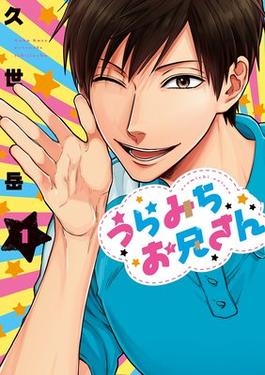
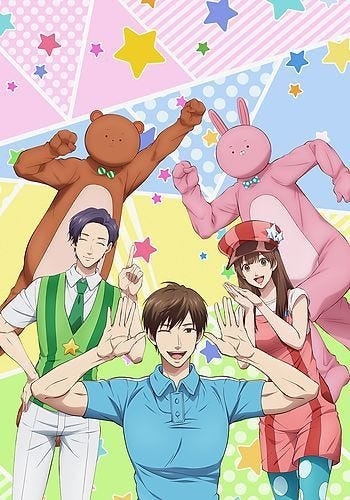
The series follows Uramichi Omota, a former professional gymnast who now hosts an exercise segment on a kids show called "Together with Maman." He smiles for the camera. He leads the ABC workout routine. He high-fives the rabbit and bear mascots. Then the director yells cut and his face falls into this empty expression that looks like he's staring into a void that stares back harder. He's not sad because of one specific traumatic event. He's sad because existing as an adult in a capitalist machine slowly grinds you down until you're just a husk performing happiness for children who still believe the world is good. The show doesn't fix this. There's no arc where he learns to love his job. He just keeps going. That's the horror.
The Mask You Can't Take Off
Everyone in this show is wearing a mask but Uramichi's is fused to his face by now. When he's on camera he's Uramichi Oniisan, the cheerful big brother who can do backflips and sing about vegetables. When he's off camera he's chain-smoking, drinking too much, and thinking about how his best years ended when he was twenty and competing nationally. The show keeps cutting between these two states without warning. One second he's teaching a kid how to stretch, the next he's telling that same kid that dreams die when you turn thirty and the kid just stares at him with this confused look while the camera keeps rolling.
This isn't just a character quirk. It's the central mechanic of the entire series. The show is obsessed with what we perform versus what we feel. Uramichi's co-workers are all doing the same dance. Iketeru Daga is this pretty-boy singer who plays the guitar on the show and acts like a gentle prince but he's actually so stupid he can't read analog clocks and he laughs at the word "Dick" for twenty minutes straight. Utano Tadano went to a prestigious music college and wanted to be a serious artist but now she's singing songs about brushing your teeth for a living while her boyfriend is an unpopular comedian who won't commit. They're all trapped in this weird purgatory where their job requires them to be symbols of pure joy while their actual lives are falling apart.
The satire here cuts deep because it's not exaggerating that much. If you've ever worked customer service or any job where you have to smile at people you hate, you know the physical toll of keeping your face muscles contracted into a shape that says "I'm fine" when you're thinking about driving into the ocean. Uramichi's mask slips constantly. He'll be mid-sentence about how exercise is fun and then he'll mention that fun is a lie invented by people who don't understand that we're all just waiting to die. The kids don't get it. The adults in the room pretend not to hear it. But the camera captures it and that's us. That's the viewer. We're the camera seeing the real face behind the performance.
Parodying the Machine That Eats Childhood
"Together with Maman" is a direct parody of "Okaasan to Issho," which is a real Japanese children's program that's been running since the 1960s. If you grew up in Japan or watched Japanese TV, you know the vibe. It's soft colors. It's gentle hosts singing about washing your hands. It's educational content designed to make parents feel good about letting their kids watch TV. Uramichi Oniisan takes that aesthetic and fills it with rot.
The show-within-the-show segments are genuinely disturbing if you pay attention to the lyrics. There's a song called "Arm Through the Neck Hole" that's about existential dread disguised as a lesson about getting dressed. There's a summer music video they film in the dead of winter where the cast is freezing to death but has to pretend they're having fun at the beach. The directors are incompetent. The producers only care about merchandise sales. The choreography is designed by a guy named Capellini who has a weird obsession with one of the rabbit mascots. It's a mess. And it's exactly how actual children's television works behind the scenes.
I've seen some analysis that calls this a critique of the entertainment industry and sure, that's there. But it's bigger than that. It's about how we package innocence and sell it back to children while the people creating that innocence are being destroyed by the process. Uramichi isn't just tired of his job. He's tired of being the bridge between childhood innocence and adult horror. He has to look these kids in the eye and lie to them every day. He has to pretend that growing up is going to be fine. That exercise makes you happy. That eating vegetables matters. When he knows that adult life is just a series of compromises where you give up everything you loved about yourself to pay bills.
The satire gets even darker when you look at how the show treats the mascot characters. Tobikichi and Mitsuo play Usao the rabbit and Kumao the bear. They're in these huge costumes that trap them in heat and they can't see properly and they get kicked by drunk guys at promotional events. But out of costume they're just guys in their late twenties who went to college with Uramichi and now they're here, sweating inside fake fur, wondering where the years went. The show makes you laugh at their suffering but it's the kind of laugh that dies in your throat because you realize you might be the guy in the bear suit too.
The Burnout Is the Point
People call this a comedy but that's a mislabel. It's a horror story about millennial burnout wearing a comedy mask. Uramichi isn't depressed because of a chemical imbalance he can fix with therapy and pills. He's depressed because the structure of modern work is designed to extract maximum labor while giving back minimum meaning. He peaked at twenty. Now he's thirty-one. He does calisthenics for children. He has no romantic prospects. His only hobby is weight training which he does alone in his tiny apartment while thinking about how his joints hurt.

Every episode has these moments where Uramichi breaks the fourth wall or just stares directly into the lens with these dead eyes and you feel like he's looking at you specifically. He's saying "I know you're also tired. I know you also fake it. I know you also wanted to be something else when you were young and now you're this." It's uncomfortable. It's not cathartic. It doesn't offer solutions. The show doesn't end with him quitting to pursue his dreams because that's not realistic. People with rent and no savings don't quit. They stay. They decay. They keep waving at the camera until their contract runs out or they die.
The economic anxiety is palpable in every scene. When the characters talk about money it's not abstract. They worry about rent increases. They worry about marriage pressure and how much weddings cost. They worry that if they get fired they'll end up on the street. Iketeru is incompetent but keeps his job because he's pretty. Utano has talent but she's wasted because the industry only wanted her when she was young and cute. Uramichi has skills but no one cares about a male gymnast past thirty. They're all disposable and they all know it. The show rubs your face in that knowledge until it stops being funny and starts feeling like a panic attack.
Your Co-Workers Are Also Trapped
One of the things that makes the satire work is that Uramichi isn't special. Everyone in the cast is broken in different flavors. Kumatani plays the bear mascot and he's this stoic guy who seems like he has his life together but he's constantly cleaning up Iketeru's messes and protecting him from exploitation because Iketeru is too dumb to know when he's being taken advantage of. Usahara plays the rabbit and he's this annoying guy who talks trash about Uramichi but then gets caught because he doesn't realize the mic is still on. He's pathetic but he's also sympathetic because you can tell he looked up to Uramichi in college and now they're both here, wearing animal costumes, hating themselves.
Even the side characters get the treatment. The director is irresponsible and makes impossible demands. The assistant directors are overworked and underpaid. The makeup lady has seen too much and doesn't care anymore. The merchandise guy is just trying to sell plastic toys of these depressed adults to children who don't know any better. It's a whole ecosystem of misery and the show makes it clear that Uramichi isn't the only one suffering. He's just the one who can't hide it as well.
The English dub actually adds another layer to this by making Iketeru laugh at names that contain "Dick" instead of the Japanese version where he laughs at words containing "chin" which means penis. Localization choices like this keep the spirit of the joke while making it work for different audiences. It shows how universal the humor of incompetence and arrested development really is. Whether you're laughing at "chin" or "Dick," you're laughing at a grown man who shouldn't be this dumb but is, and who somehow makes more money than the competent people around him because he fits the aesthetic.
Why It Actually Hurts to Watch
I've seen people drop this show after three episodes because it hits too close to home. That's fair. If you're in a good place mentally, Uramichi Oniisan is hilarious. If you're working a job you hate to survive, it feels like someone put a camera in your bedroom and broadcast your intrusive thoughts. The satire cuts through the facade of cheerful productivity that we're all supposed to maintain. It says the quiet part out loud. Yes, your job is probably meaningless. Yes, your dreams are probably dead. Yes, you are getting older and your body hurts and you can't remember what it felt like to want something with your whole heart.
The show doesn't offer hope. That's what makes it honest. Other anime about work like Aggretsuko or even something darker like Welcome to the NHK eventually offer some kind of path forward or moment of connection that suggests things might get better. Uramichi Oniisan doesn't do that. Uramichi finds moments of connection with his co-workers, sure. They get drunk together. They complain about the director. They share that specific bond of people who are drowning together. But then the next day comes and they have to put the costumes back on and dance the ABC exercise again.
Some analysis claims this is about why work breaks people and that's accurate. It's a survival guide for people who can't quit. It validates the exhaustion of millennial adulthood without offering false solutions. You're supposed to watch it and recognize that you're not alone in feeling like you're performing a character every day just to survive. The satire works because it doesn't pull punches. It shows Uramichi considering suicide and then deciding against it not because he found hope but because it would be too much paperwork. That's dark. That's also real for a lot of people.
The Music Lies to You
The opening theme "ABC Taiso" is this incredibly catchy, upbeat workout song performed by Mamoru Miyano and Nana Mizuki. It sounds like a genuine children's exercise anthem. If you just heard the audio you'd think this was a show about a happy gym teacher teaching kids to stay healthy. Then you watch the episodes and realize the song is a lie. It's part of the mask. The ending theme "Dream On" is softer and more melancholy but even that has this dreamy quality that suggests optimism the show never delivers.
This musical dissonance is part of the satire. It's the show telling you that media is designed to make you feel certain ways that don't match reality. The bright colors, the catchy tunes, the smiling faces, they're all manufactured to sell you a fantasy of happiness while the reality is debt and back pain and loneliness. Uramichi knows this. He performs the songs perfectly. He hits every note. But his eyes are empty. He's the physical manifestation of the gap between what media promises us about life and what life actually gives us.
Even the visual design participates in this trick. The character designs are cute. The backgrounds are colorful. It looks like a standard slice-of-life comedy. Then Uramichi starts talking about how marriage is a scam invented by landlords to keep two incomes in one apartment and you remember oh right, this is a horror show. The complete season keeps this tone consistent throughout. It never lets up. It never gives you a break. The cheerfulness is the trap.
Uramichi Oniisan themes and satire work because they refuse to comfort the viewer. They present a reality where you keep working because stopping isn't an option. They show that adulthood is mostly just managing disappointment while pretending you're fine. If you're looking for an anime that will make you feel good about your life choices, watch something else. If you want to see your own exhaustion reflected back at you with enough humor to make it bearable but not enough to lie to you about what it is, then this is the show. It's not therapy. It's a mirror. And mirrors don't care if you like what you see.