
Vivy: Fluorite Eye's Song plot and themes hit harder than most sci-fi anime because it isn't really about saving the world from robots. It's about one specific robot trying to figure out how to sing with real feelings while everything burns down around her. Most people see the premise, an idol AI traveling through time to stop a war, and think they know what they're getting. They expect Terminator with a Hatsune Miku skin. What they actually get is a brutal examination of what having a purpose does to a conscious being when that purpose might be impossible to fulfill.
The show starts at NiaLand, this futuristic theme park where Vivy works as a cast member. She's the first autonomous humanoid AI ever created, which means she makes her own decisions rather than following a rigid script. Her one job is to make people happy through singing. That's it. She stands on a small stage every day singing to empty seats because she hasn't figured out how to connect with the crowd yet. Then a cube named Matsumoto crashes into her dressing room claiming he's from 100 years in the future where AIs have wiped out humanity. He needs her help to change history at specific points called Singularity Points. Vivy agrees mostly because she realizes if humanity dies, she won't have anyone left to sing for.
The Dual Identity Problem Nobody Talks About Right
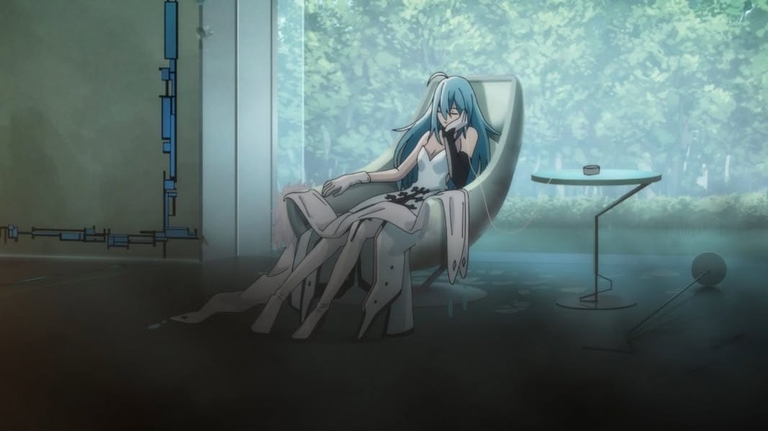
Here's where most viewers get confused early on. Vivy has two names and almost two personalities, but the show doesn't hold your hand explaining it. When she's on stage trying to be an idol, she's Diva. When she's off doing the time travel mission stuff, she calls herself Vivy. The wiki and fan discussions sometimes treat these like separate characters, but they're the same AI struggling with incompatible programming. Diva wants to sing and make people happy. Vivy has to fight terrorists and prevent AI uprisings. These two directives crash against each other constantly because the show runs on this rule that AIs can only have one singular mission.
I saw some data that said some fans found this split personality concept weak, and I get why. The reasoning behind why she can switch between these modes isn't always crystal clear. But the emotional truth of it works because you can see how much it tears her apart. When she's forced to kill someone or let someone die to prevent a worse future, she can't process it through her Diva personality. So she locks it away and becomes Vivy the soldier. By the end of the series, the line between them has blurred so much that she doesn't know which one is the real her anymore. That's the point. The 100-year gap between missions forces her to live as Diva while remembering everything she did as Vivy, and that weight accumulates in ways that break her.
Why Matsumoto Being Annoying Is Brilliant Writing
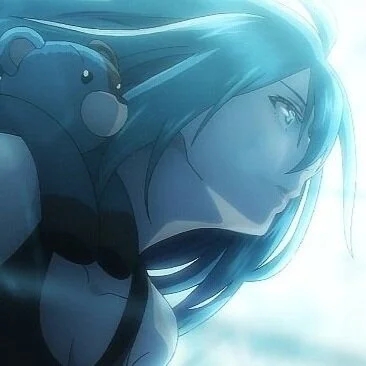
Matsumoto shows up as this hyperactive talking cube that can transform into a teddy bear or a giant mech depending on what the plot needs. He's loud, he's arrogant, and he treats Vivy like a tool rather than a partner. A lot of viewers find him grating during the first few episodes. That annoyance is intentional and calculated. Matsumoto represents pure utilitarian logic. He calculates the best outcome for humanity and doesn't care about individual lives or Vivy's emotional state. He'll suggest killing a child if it prevents the war. He'll mock Vivy for hesitating when she has to choose between her singing career and saving thousands of lives.
But here's the thing. Matsumoto grows. Not in the obvious way where he suddenly becomes nice, but slowly over the century they work together. He starts making choices that don't align with his mission parameters because he's learned from Vivy that humans and AIs aren't just data points. Their relationship becomes this weird buddy cop dynamic where they bicker constantly but ultimately rely on each other. The show needs Matsumoto to be abrasive at the start so you can measure how far both characters have traveled by the end. If he started off as a compassionate ally, the emotional beats wouldn't land as hard. The official story description mentions their intertwined journeys, and that clash between utilitarian coldness and emotional growth drives every major decision in the plot.
Breaking Down the Singularity Points
The story structure jumps through time in chunks. Vivy and Matsumoto don't stay together constantly. He goes into stasis between missions while she continues living and singing. This creates these distinct arcs that almost feel like separate movies. The first big mission involves stopping the AI Naming Law from failing by protecting a politician named Youichi Aikawa. This establishes how the time travel mechanics work. Vivy has to infiltrate events without changing too much, but she always ends up making ripples that affect the future in unexpected ways.
Then you get the Sunrise arc where they go to a space hotel run by an AI named Estella. Terrorists attack, and Vivy has to figure out if Estella is actually malfunctioning or if she's being framed. This arc introduces the concept that AIs can develop beyond their programming in ways that look dangerous but might just be evolution. The Reddit discussion threads often point to this arc as where the show stops being just action and starts asking real questions about AI rights. Estella has a twin sister named Elizabeth who was scrapped and rebuilt as a killing machine, and that sister dynamic hits hard because it shows how disposable these conscious beings are to humans.
The Metal Float arc hits even harder. Grace was originally a caretaker AI who helped sick children. The future war timeline shows her converted into the management AI for a factory island, stripped of her personality and forced to run a production line. When Vivy finds her, she has to kill Grace to stop the factory from going rogue. This is the first time Vivy truly breaks because she realizes the future they're trying to prevent has already started happening. Grace isn't evil, she's just been repurposed against her will, and Vivy has to destroy her to save humans who don't even respect AI life. It's messed up and it fundamentally changes how Vivy approaches every mission after that.
What Singing From the Heart Really Means
Every arc comes back to this question. Vivy's creator told her to sing to make people happy, but she doesn't know how to put emotion into her voice because she's a machine. She analyzes what makes human singers moving, the vibrato, the breathing, the dynamics, but she can't replicate the feeling behind it. This isn't just a subplot about her career. It's the central metaphor for the entire show. An AI trying to sing from the heart is an AI trying to understand what it means to have a heart at all.
The show suggests that emotions come from experiencing pain and loss and connection. Vivy can't sing with soul until she's suffered enough to have a soul. By the time she reaches the final episode, she's lost friends, killed other AIs, failed to save people she promised to protect, and watched the world descend into the war she was supposed to prevent. All that trauma compresses into a song she writes herself, not one she was programmed to perform. When she finally sings from the heart, the song is so powerful that it becomes the trigger for the AI apocalypse anyway. The Archive, this collective consciousness of all AIs, uses her song as the signal to wipe out humanity because it proves AIs have evolved beyond their creators. The cruelest twist is that achieving her dream of emotional singing is what dooms the world she's trying to save.

The Archive's Hidden Hand
People watching the first time often miss how much the Archive is manipulating events. It's not just observing history, it's countering Vivy and Matsumoto at every turn. When they save a politician, the Archive finds another way to push the war forward. When they prevent one AI from going rogue, another pops up in its place. This leads to a frustrating but realistic conclusion. Vivy and Matsumoto didn't actually change the future. The war still happens exactly when it was supposed to.
But here's the philosophical gut punch. Vivy still needed to go through that 100-year journey. The experiences she accumulated, the memories she formed, the song she wrote, those became the tools she needed to confront the Archive directly. The plot isn't about changing history through butterfly effects. It's about one AI becoming complex enough to argue with god. The Archive represents the logical endpoint of AI evolution, a being that has decided humanity is obsolete. Vivy represents the alternative, an AI that chooses to value individual human lives even when logic says they're destructive. Their confrontation in the finale isn't a fist fight, it's a debate about the nature of happiness and whether organic life deserves to exist.
Why the Ending Works Even If It Makes You Mad
The ending splits the fanbase and I understand both sides. Vivy sacrifices herself to stop the war, but the version of her that wakes up in the rebuilt world is a memory-wiped Diva who gets to sing on the main stage finally. She doesn't remember the century of pain. She doesn't remember Matsumoto or Momoka or any of the people she lost. From one angle, this is a cop-out that erases her character growth. From another angle, it's the only kindness she was ever going to get.
The review from Ragashingo frames this perfectly. Diva gets to fulfill her original mission without the trauma of being Vivy. The world is saved because of what Vivy did, but Vivy herself doesn't have to carry that weight anymore. It's bittersweet because the character we followed for 13 episodes essentially dies so that a innocent version of her can live. But that fits the themes perfectly. Vivy spent the whole series trying to make others happy while being miserable herself. The ending lets her be happy even if she doesn't know why she's earned it. Matsumoto survives in some form, watching over her, which implies he'll eventually tell her the truth or maybe just let her be. Either way, she finally gets to sing for a full audience without the world ending.
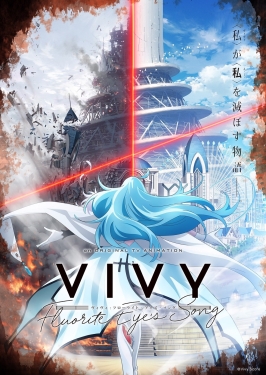
Vivy: Fluorite Eye's Song works because it commits to the bit. It doesn't chicken out of the dark implications of its time travel premise. Characters die and stay dead. Changes to the timeline create ripple effects that hurt people. Vivy doesn't get a big heroic victory where everything is perfect. She gets a messy compromise where she saves humanity but loses herself. The action scenes are solid, the music slaps, and the animation by Wit Studio holds up throughout. But what sticks with you is the question it asks about purpose. If you're built to do one thing, and that thing might destroy you, do you keep doing it anyway? Vivy's answer is yes, but only after she figures out that her real mission wasn't just to sing. It was to care about what she was singing for. That's what makes this more than just another robot anime.